There is no culinary icon quite like the Jollof Rice Recipe. This dish is the beating heart of West African celebrations, known for its deep, smoky aroma, vibrant orange-red hue, and the legendary “bottom pot” flavor. When you lift the lid of a seasoned cast iron pot, the first thing that hits you is a gentle wisp of steam, carrying the fragrance of thyme and slow-cooked peppers.
Achieving the perfect Jollof requires more than just boiling rice; it is an exercise in patience and precision. Each long grain of parboiled rice should be perfectly separated, glistening with a light sheen of oil, and infused with a concentrated tomato and red bell pepper reduction. Whether you are a seasoned pro or a first-timer, this guide will help you recreate that authentic “Party Style” experience in your own kitchen.
Why This Jollof Rice Recipe Wins Every Single Time
- Perfect Grain Separation: By using long-grain parboiled rice, we ensure a firm, non-mushy texture where every grain is distinct.
- Deeply Seared Chicken: We start by searing chicken thighs until the skin is incredibly crispy and the meat is succulent, providing a rich fat base for the rice.
- Concentrated Umami Base: The secret lies in frying the “Obe Ata” (pepper mix) until it reduces into a thick, dark red paste with charred bits of pepper folded throughout.
- The Visual Masterpiece: Garnished with raw red onion rings, fresh thyme, and a whole scotch bonnet, this dish looks as professional as it tastes.
Essential Components for the Perfect Jollof Stew Base
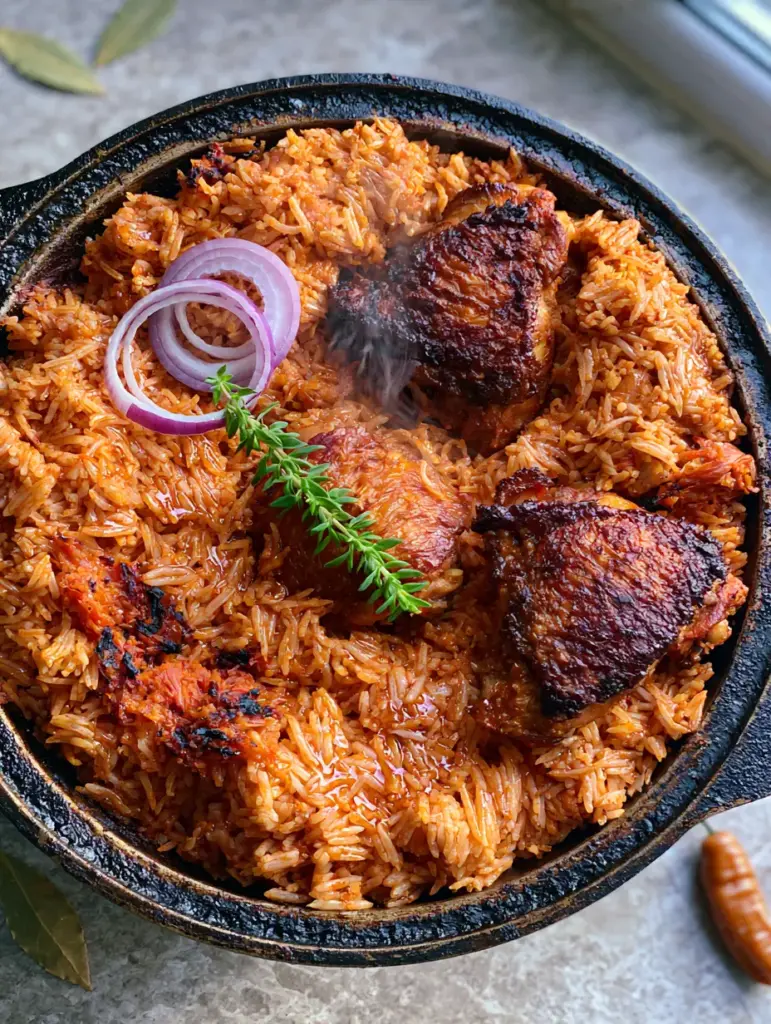
To achieve the vibrant color seen in the visual blueprint, you need a high-quality “stew” or pepper reduction. This is the soul of the Jollof Rice Recipe.
Long-Grain Parboiled Rice: 3 cups (600g). Parboiled rice has been partially boiled in the husk, which modifies the starch and prevents the grains from sticking together during the long steaming process.
Chicken Thighs (Bone-in, Skin-on): 4 to 6 pieces. Searing these first renders the fat, which we use to fry the aromatics, ensuring a deep, meaty undertone in every bite of rice.
Red Bell Peppers & Plum Tomatoes: 3 large peppers and 4 tomatoes. These are blended and reduced to create the signature orange-red color and natural sweetness.
Tomato Paste: 1/2 cup (120g). This provides the concentrated acidity and deep red pigment required for that “Party Style” look.
Red Scotch Bonnet Pepper: 1-2 peppers. We keep one whole to garnish and infuse flavor, while others can be blended for heat.
Aromatics & Spices: Red onions, fresh thyme sprigs, dried bay leaves, curry powder, and bouillon cubes. These provide the complex layers of flavor that define West African cuisine.
Cooking Oil: 1/2 cup (120ml). A combination of vegetable oil and rendered chicken fat gives the grains that beautiful, glistening sheen.
The Essential Tools for Deep Caramelization
To replicate the visual prompt’s result, equipment matters. A seasoned black cast iron pot or a heavy-bottomed Dutch oven is non-negotiable. These vessels distribute heat evenly and allow the bottom layer of rice to slightly “burn” or caramelize, which is the secret to that coveted smoky flavor.
You will also need a high-speed blender for the pepper reduction and heavy-duty aluminum foil. The foil is used to create a tight seal under the lid, forcing the rice to cook through steam rather than boiling, which keeps the grains intact.
Step 1: Mastering the Sear for Crispy Chicken Thighs
Begin by seasoning your chicken thighs generously with salt and white pepper. In your cast iron pot, heat 2 tablespoons (30ml) of oil over medium-high heat. Place the chicken skin-side down and do not move them for at least 5-7 minutes.
Listen for the aggressive sizzle; you are looking for a deep, golden-brown crust to form. Once the skin is crispy and the fat has rendered, flip and sear the other side for 3 minutes. Remove the chicken and set aside; it will finish cooking later on top of the rice.
Step 2: Reducing the Obe Ata (The Pepper Mix)
In the same pot with the chicken fat, add your sliced red onions and sauté until translucent. Stir in the tomato paste and “fry” it for 5 minutes. This step is crucial; it removes the raw metallic taste and turns the paste a deep maroon.
Pour in your blended mix of red bell peppers, tomatoes, and scotch bonnets. Cook this mixture down over medium heat until the water evaporates and you are left with a thick, concentrated reduction. You should see charred bits of blended red bell pepper starting to stick to the bottom—this is the foundation of the Jollof Rice Recipe color.
Step 3: The Infusion and Steaming Process
Thoroughly wash your 3 cups (600g) of parboiled rice until the water runs clear. Add the rice to the pepper reduction and stir until every grain is coated in the vibrant red oil. Pour in 3 cups (720ml) of high-quality chicken stock—just enough to barely cover the rice.
Toss in your dried bay leaves and fresh thyme sprigs. Lay a sheet of foil over the pot, then press the lid down firmly. Turn the heat to the lowest possible setting. The goal is to let the rice “swell” in the concentrated steam vapors for 30-40 minutes.
Step 4: The Final Assembly and Visual Garnish
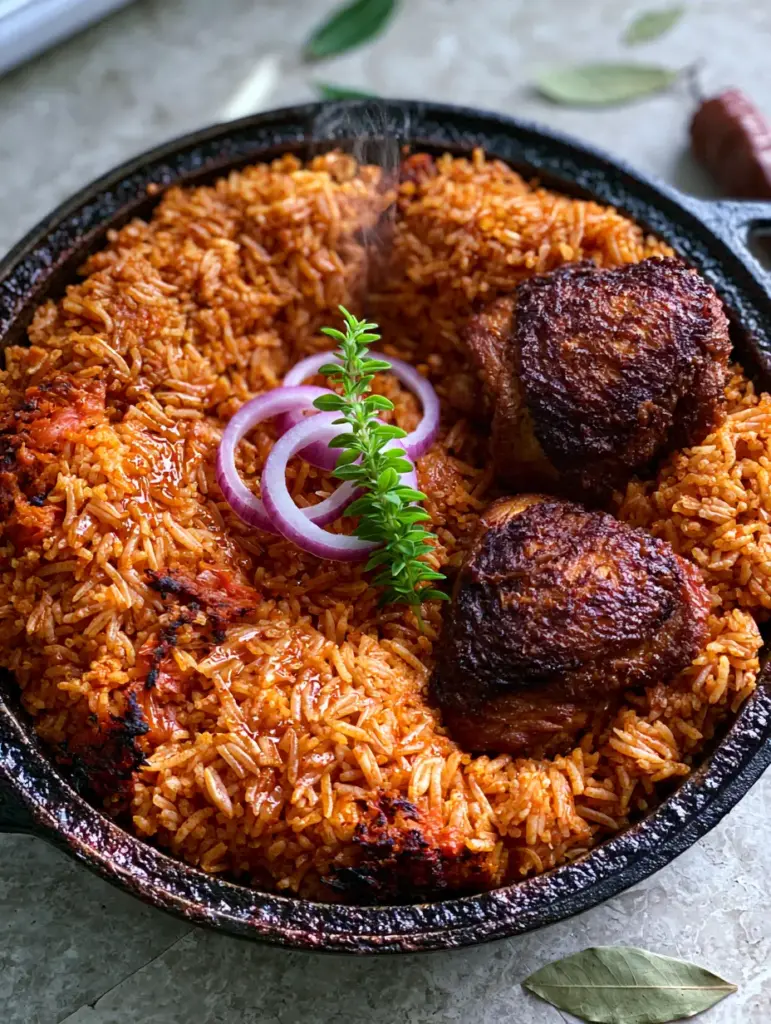
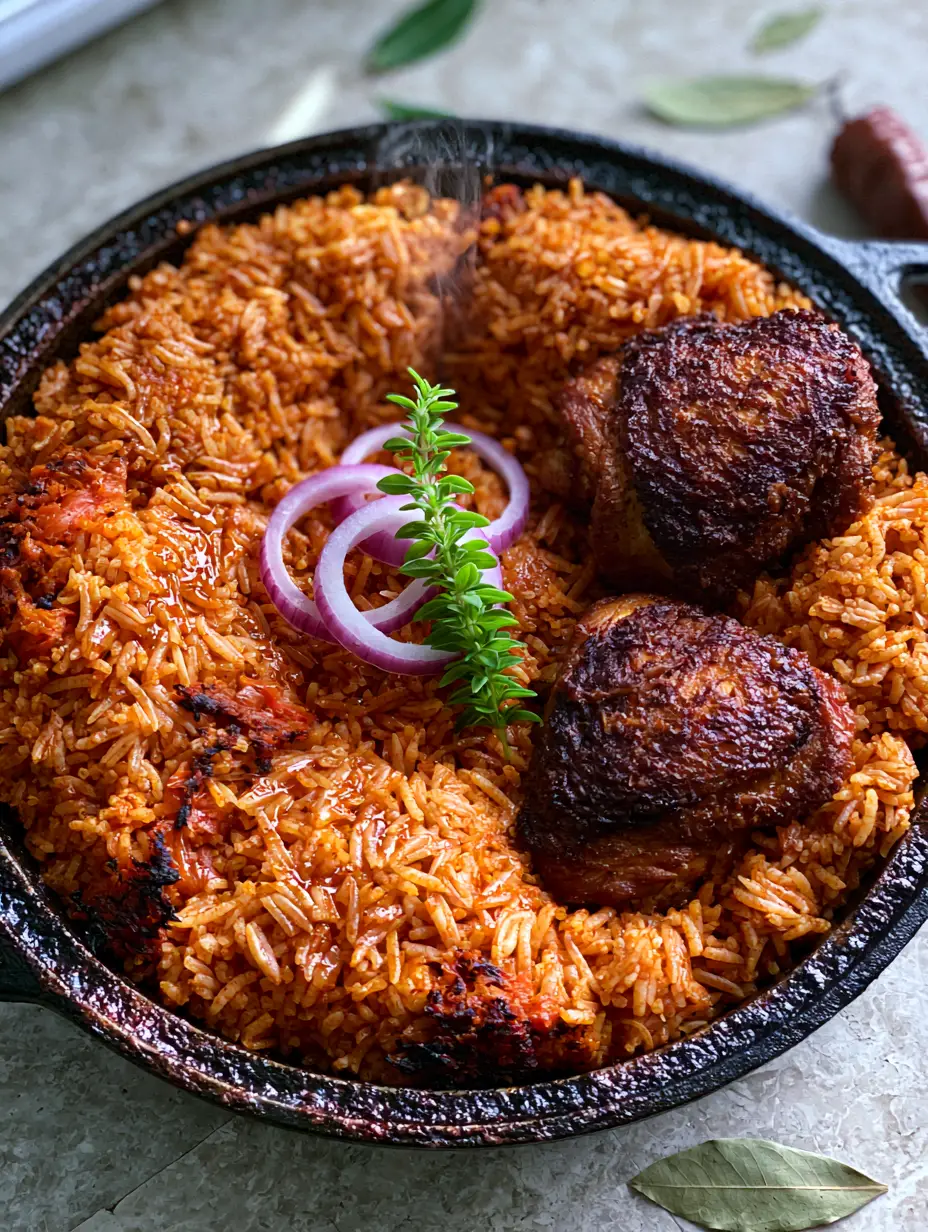
Once the rice is tender, nestle your seared chicken thighs back onto the surface of the rice. Place a whole red scotch bonnet pepper in the center and cover for another 10 minutes to allow the chicken juices to seep into the top layer of grains. Use a long fork to gently fluff the rice, ensuring the charred bits of pepper are folded throughout.
Top the dish with fresh rings of raw red onion and a final bright green sprig of thyme. The contrast of the raw onion against the deep orange-red rice creates the professional “Party Style” aesthetic described in our visual blueprint.
Expert Tips for Success
- Don’t Peek: Every time you lift the lid, you lose the steam pressure required to cook the parboiled grains evenly. Keep it sealed!
- The Burn is Good: If you smell a slight charring at the end, don’t panic. That “party flavor” comes from the rice caramelizing at the bottom of the pot.
- Wash Your Rice: Removing excess starch is the only way to ensure the grains stay separated and glistening.
- Oil Balance: If the rice looks dull, you haven’t used enough oil. The grains should shimmer under natural light.
Storage, Reheating, and Freezing
This Jollof Rice Recipe actually tastes better the next day as the spices continue to meld. Store leftovers in an airtight container in the refrigerator for up to 4 days. When reheating, add a tablespoon of water and microwave or steam on the stovetop to revive the moisture.
You can also freeze Jollof rice for up to 3 months. To serve, thaw overnight in the fridge and reheat thoroughly. The chicken skin will lose its crispness in the fridge, so a quick 5-minute flash in the air fryer or oven can bring it back to life.
What to Serve With This Flavorful Rice
While this dish is a meal on its own, it pairs beautifully with side dishes that offer a fresh or cooling contrast. A fresh Lebanese tabbouleh provides a zesty herbal hit that cuts through the richness of the Jollof.
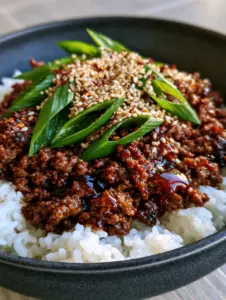
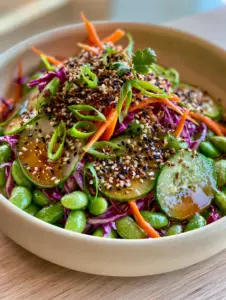
For those who love a variety of grains, serving this alongside a classic rice pilaf at a buffet offers guests different textures. If you have leftover chicken, consider shredding it for Korean-inspired rice bowls the next day. For a lighter side, a crisp watermelon salad is a refreshing way to balance the heat of the scotch bonnet.
Frequently Asked Questions
You can, but thighs are preferred because they remain succulent during the long steaming process and provide more rendered fat, which is essential for the rice’s flavor and sheen.
The secret is using a heavy cast iron pot and allowing the bottom layer of rice to slightly burn or caramelize. This, combined with trapping steam using aluminum foil, creates the ‘Party Style’ smokiness.
It has a kick thanks to the scotch bonnet peppers, but the heat is balanced by the sweetness of the red bell peppers and tomatoes. You can control the heat by keeping the scotch bonnets whole instead of blending them.
Long-grain parboiled rice is the gold standard for Nigerian Jollof. Its processed nature allows it to withstand long steaming without becoming mushy, ensuring each grain stays separate and glistening.
Mushy rice usually comes from adding too much water or using non-parboiled rice. The rice should be cooked primarily by the steam trapped in the pot, not by being submerged in boiling liquid.
The Ultimate Party Style Jollof Rice Card
Authentic Nigerian Jollof Rice Recipe: The Ultimate Party Style Guide
Ingredients
Equipment
Method
- Heat oil in the cast iron pot. Sear chicken thighs skin-side down until deep golden-brown and crispy. Remove and set aside.
- Sauté sliced onions in the rendered fat. Add tomato paste and fry for 5 minutes. Pour in the blended pepper mix and reduce until thick and charred bits appear.
- Add washed rice and chicken stock. Stir to coat. Cover with foil and a lid. Simmer on low for 30-40 minutes until grains are tender and separated.
- Place chicken back on top with the whole scotch bonnet. Fluff with a fork. Garnish with raw red onion rings and fresh thyme.
Notes
Always use parboiled rice to prevent mushiness.
Join the Culinary Journey
Mastering the Jollof Rice Recipe is a rite of passage for any home cook looking to explore global flavors. The combination of succulent chicken, aromatic rice, and that signature smoky finish makes it a showstopper for any dinner party. If you enjoyed this recipe, please leave a comment below and share your results! Don’t forget to follow us on Pinterest for more visually stunning recipe inspiration.