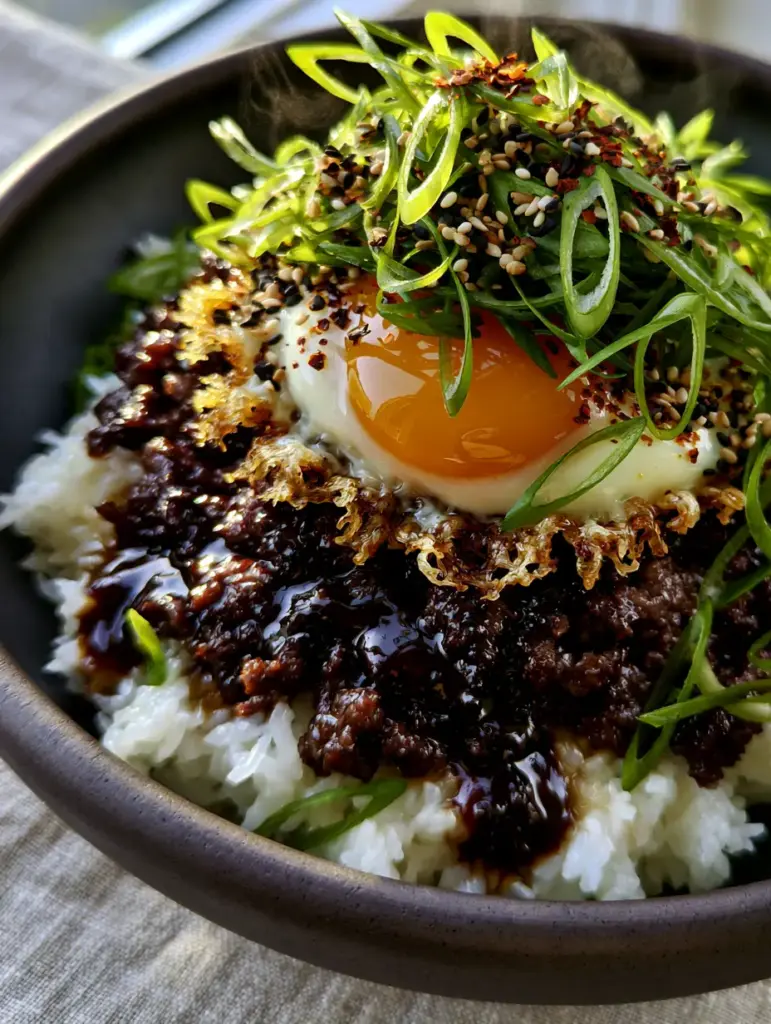
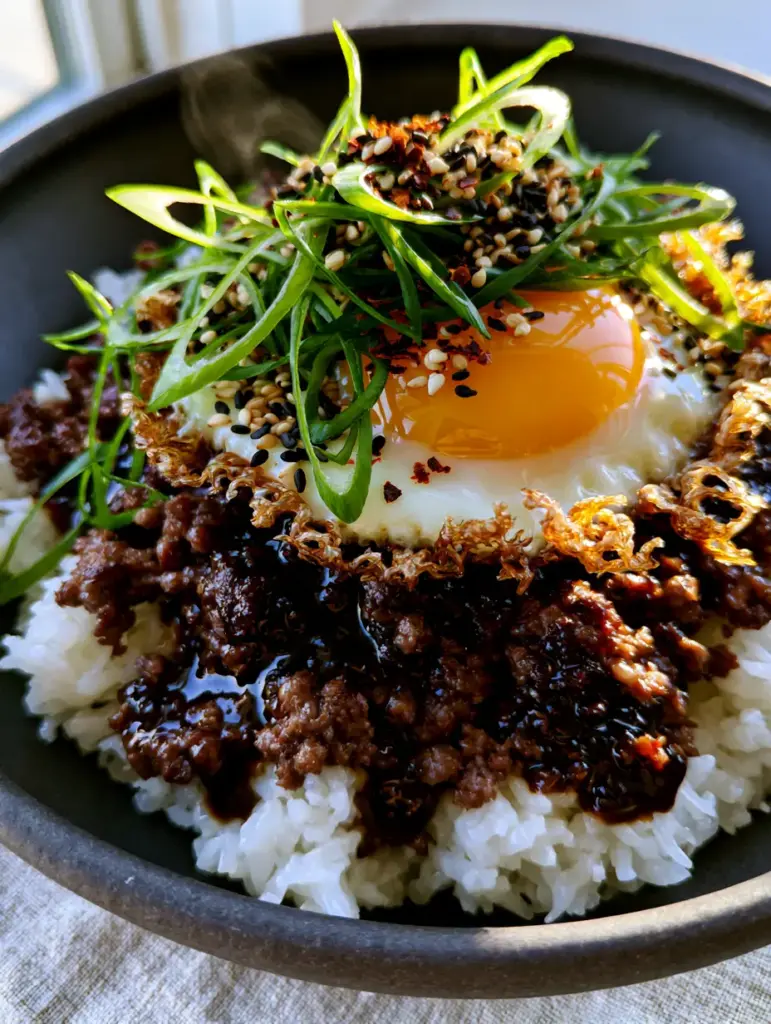
Korean Ground Beef Rice Bowls are the ultimate solution for those nights when you crave deep, complex umami flavors but only have twenty minutes to spare. This dish is a masterclass in texture and visual contrast, featuring a base of steaming white jasmine rice topped with intensely seared beef and a vibrant, liquid orange yolk. The aesthetic appeal of these bowls—traditionally served in a matte charcoal stoneware bowl—is just as satisfying as the first bite.
When you prepare these Korean Ground Beef Rice Bowls, you aren’t just making a quick dinner; you are engaging in a culinary process that balances sweet, salty, and spicy elements perfectly. The glossy soy-ginger glaze coats every morsel of beef, providing a professional-grade finish that looks like it came straight from a gourmet kitchen. Whether you are a seasoned home cook or a weeknight warrior, this recipe delivers consistent, high-impact results every single time.
Why You Will Crave These Caramelized Beef Bowls
- Textural Harmony: The combination of fluffy jasmine rice, tender caramelized beef, and lacy, crispy egg edges creates a multidimensional eating experience.
- Visual Brilliance: The contrast between the bright green scallions, the dark glossy glaze, and the vibrant orange yolk makes this a centerpiece-worthy meal.
- Umami Bomb: A deep soy-ginger reduction provides a savory backbone that is enhanced by the subtle heat of crushed red pepper flakes.
- Nutritional Balance: With high-quality protein, essential carbohydrates, and fresh aromatics, this bowl provides a complete and satiating meal.
The Essential Pantry Elements for Ginger-Soy Perfection
To achieve the specific visual and flavor profile described in our blueprint, choosing the right ingredients is paramount. We aren’t just looking for “beef and rice”; we are looking for specific textures that react to heat in predictable, delicious ways.
1 lb (450g) Lean Ground Beef (85/15 or 90/10): We recommend a slightly leaner beef to ensure the glaze doesn’t become overly greasy, though a small amount of fat is necessary for that “deeply seared” caramelization. The fat renders out and becomes the medium through which the ginger and garlic infuse the meat.
1.5 cups (285g) Jasmine Rice: This long-grain variety is chosen for its floral aroma and its ability to remain “steaming and fluffy” without becoming gummy. Properly rinsed jasmine rice provides the clean, white canvas that makes the dark beef and glossy glaze pop visually.
1/3 cup (80ml) Low-Sodium Soy Sauce: This serves as the liquid gold of the recipe, providing the “glossy dark soy” finish seen in the professional photography. Using low-sodium allows you to control the seasoning precisely without making the dish overly salty as the sauce reduces.
1/4 cup (50g) Light Brown Sugar: Sugar is the secret to the “caramelized” description in our blueprint. As the beef browns, the sugar undergoes the Maillard reaction, creating a sticky, lacquered coating that clings to the protein.
2 tbsp (30g) Freshly Grated Ginger: Fresh ginger is non-negotiable here. It provides a sharp, peppery bite that cuts through the richness of the beef and egg yolk, adding a layer of aromatic complexity that ground ginger cannot replicate.
3 cloves Garlic, minced: Garlic provides the foundational savory notes. When sautéed with the beef, it becomes golden and fragrant, contributing to the “deeply seared” sensory cues we are aiming for.
1 tbsp (15ml) Toasted Sesame Oil: Added at the very end, this oil provides a nutty, roasted aroma that lingers on the palate and adds a secondary level of sheen to the glaze.
4 Large Eggs: These will be transformed into sunny-side-up crowns with “lacy, crispy golden-brown edges.” The liquid yolk acts as a natural secondary sauce for the rice.
Garnishes for Visual Accuracy: You will need 3 sliced green scallions, 1 tsp (5g) toasted white sesame seeds, 1 tsp (5g) toasted black sesame seeds, and 1/2 tsp (2g) crushed red pepper flakes. These are essential for matching the “heavily garnished” gourmet look.
Culinary Tools for the Perfect Sear
To recreate the gourmet macro shot of this dish, you need equipment that can handle high heat. A heavy-bottomed cast iron skillet or a high-quality stainless steel pan is essential for achieving the deep sear on the beef. These materials retain heat efficiently, ensuring the meat browns rather than steams.
For the rice, a dedicated rice cooker is excellent, but a heavy saucepan with a tight-fitting lid works perfectly well. You will also need a non-stick frying pan specifically for the eggs to ensure those “crispy edges” don’t stick to the bottom. Finally, serving this in a dark stoneware bowl isn’t just for aesthetics; the heavy material retains the heat of the jasmine rice, keeping the dish “steaming” as it hits the table.
Master the Art of the 20-Minute Rice Bowl
Step 1: Preparing the Fluffy Jasmine Base
Start by rinsing your 1.5 cups (285g) of jasmine rice under cold water until the water runs clear. This removes excess surface starch, which is the key to achieving the “fluffy” texture seen in the blueprint. Combine the rice with 2.25 cups (540ml) of water and a pinch of salt in a pot. Bring to a boil, then reduce to a low simmer, cover, and cook for 15 minutes. Once done, let it sit covered for 5 minutes before fluffing with a fork.
Step 2: Searing and Caramelizing the Beef
Heat a large skillet over medium-high heat with a splash of neutral oil. Add the 1 lb (450g) of ground beef, breaking it into large chunks. The secret here is to let the beef sit undisturbed for 2-3 minutes. You want to see a deep golden-brown crust form—this is the “deeply seared” look from the prompt. Once a crust has formed, break the meat into smaller crumbles and add the minced garlic and grated ginger, cooking for another minute until fragrant.
Step 3: Engineering the Glossy Soy-Ginger Glaze
In a small bowl, whisk together the soy sauce and brown sugar. Pour this mixture over the seared beef. Reduce the heat to medium and stir constantly. The sugar will begin to bubble and thicken, transforming into a “thick, glossy dark soy and ginger glaze.” This process should take about 3-4 minutes. Once the sauce has reduced and tightly coated the beef, stir in the toasted sesame oil and remove from heat.
Step 4: The Secret to Lacy, Crispy Fried Eggs
While the beef is resting, heat 2 tbsp (30ml) of oil in a non-stick pan over medium-high heat. Wait until the oil is shimmering and slightly wispy with smoke. Crack the eggs into the pan. The high heat will immediately create those “lacy, crispy golden-brown edges” while keeping the “vibrant, liquid orange yolk” intact. Spoon a little hot oil over the whites to set them, but leave the yolks untouched. This creates the perfect “sunny-side up” crown.
Step 5: Assembling the Gourmet Bowl
Now, bring the vision to life. Scoop a generous bed of steaming jasmine rice into your matte charcoal stoneware bowls. Layer a heavy portion of the glazed beef on one side. Carefully place the crispy-edged fried egg on top of the beef. The yolk should look like a glowing jewel in the center of the bowl.
Pro Techniques for Lacy Eggs and Glossy Glaze
Achieving a professional result requires attention to sensory cues. When cooking the beef, listen for a high-pitched sizzle; if the pan sounds quiet, the beef is stewing in its own juices rather than searing. If this happens, increase the heat immediately. A proper sear is what gives the beef its “deeply seared” appearance in the macro photography.
For the glaze, watch the bubbles. Large, slow-popping bubbles indicate the sugar has reached the correct concentration to form a glossy coating. If the sauce looks thin, continue reducing it for another sixty seconds. Unlike a General Tso’s Chicken where the sauce is often thickened with cornstarch, this glaze relies entirely on sugar reduction for its sheen.
Finally, the garnish is not an afterthought. The “ultra-thinly sliced” scallions should be cut on a sharp bias to maximize their surface area and bright green color. Mixing both black and white sesame seeds provides a sophisticated visual contrast that screams “gourmet.” If you enjoy a more intense heat profile, you might even consider a side of Buldak sauce, though the crushed red pepper flakes usually provide the perfect balance.
Preserving Freshness and Reheating Your Bowls
These Korean Ground Beef Rice Bowls are an excellent candidate for meal prep. The caramelized beef actually develops more flavor as it sits in the glaze. Store the beef and rice in airtight containers for up to 4 days. When reheating, add a teaspoon of water to the rice to help it regain its “steaming, fluffy” texture in the microwave.
Important Note: Do not store the fried egg. The “runny yolk” and “crispy edges” are ephemeral textures that do not survive reheating. For the best experience, fry a fresh egg just before you are ready to eat your leftovers. The contrast of the hot egg against the reheated beef is what maintains the integrity of the dish.
Complementary Pairings for a Full Feast
While these bowls are a complete meal on their own, you can expand the menu for a larger dinner party. If you are looking for a side that offers a crisp, refreshing contrast, a Greek Salad might seem unconventional, but the acidity of the vinegar works well. Alternatively, stay within the realm of Asian-inspired flavors by serving this alongside a light Chicken Zucchini Stir Fry for extra greens.
If you prefer a more fusion-style spread, these beef bowls pair surprisingly well with other rice-centric dishes. You could serve them as part of a buffet alongside Peruvian Chicken and Rice or even a light Coconut Chicken Rice Bowl. For dessert, nothing beats the chewy, sweet texture of fresh Mochi to round out the meal.
Frequently Asked Questions
Absolutely. The beef and rice store well in an airtight container for up to 4 days. Always fry the egg fresh just before serving to maintain the runny yolk texture.
Yes, you can substitute ground turkey or chicken. However, you may need to add an extra tablespoon of oil to achieve the same level of caramelization, as poultry is leaner than beef.
Increase the amount of crushed red pepper flakes, or stir in a tablespoon of Gochujang (Korean chili paste) into the soy-ginger glaze while it reduces.
Use a high heat and plenty of oil. The oil should be shimmering and slightly smoking before you crack the egg into the pan. This flash-fries the edges to create that lacy, golden texture.
While jasmine rice is preferred for its aroma and fluffy texture, you can use basmati or even short-grain sushi rice. Just ensure you rinse the rice well to remove surface starch.
The Ultimate Korean Ground Beef Rice Bowls Recipe
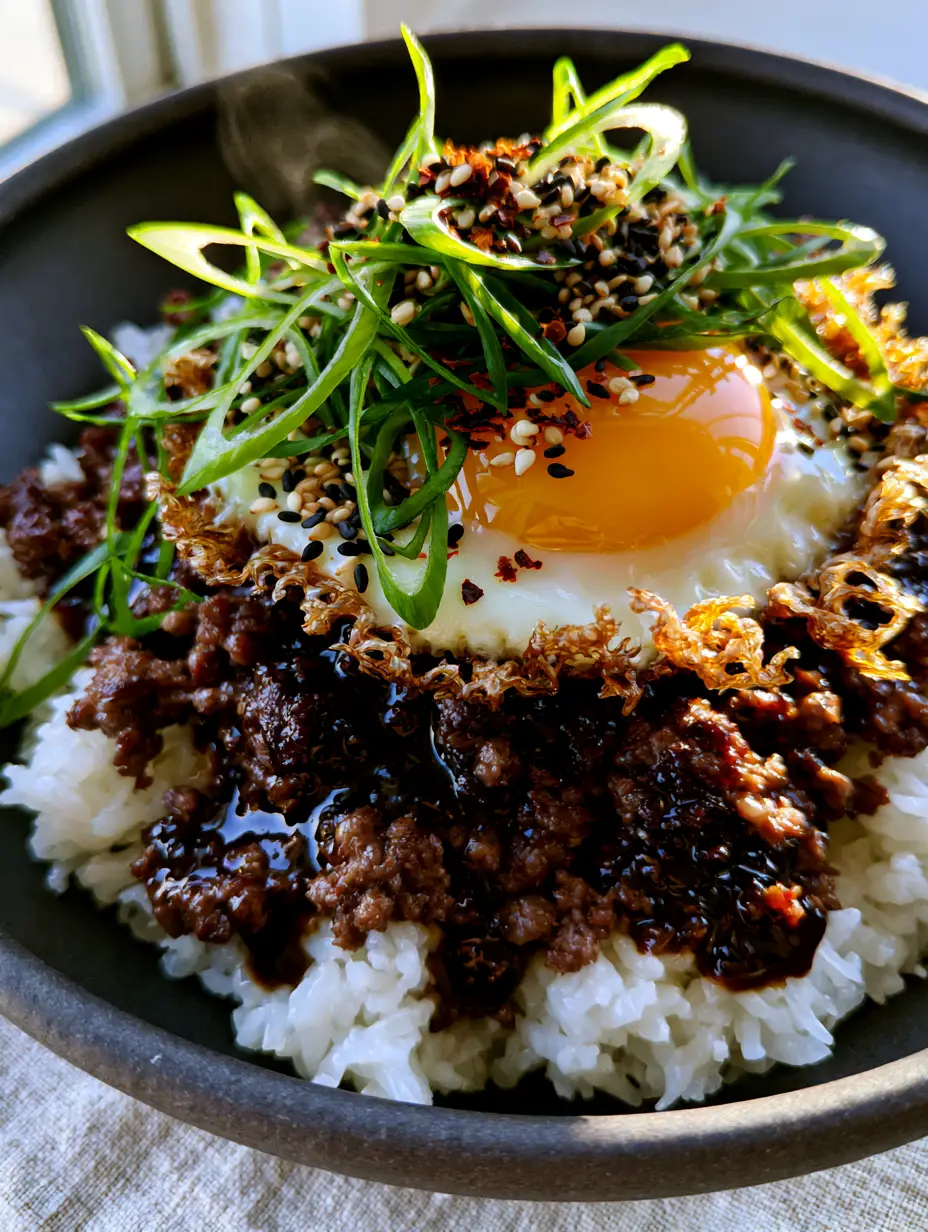
Korean Ground Beef Rice Bowls with Caramelized Soy-Ginger Glaze
Ingredients
Equipment
Method
- Rinse 1.5 cups (285g) jasmine rice until clear. Combine with 2.25 cups (540ml) water. Bring to boil, simmer covered for 15 mins.
- Remove from heat and let sit covered for 5 minutes, then fluff with a fork until steaming and light.
- Heat oil in a skillet. Add 1 lb (450g) ground beef. Leave undisturbed for 2-3 minutes to develop a deep brown crust.
- Add garlic and ginger. Pour in soy sauce and brown sugar. Stir over medium heat until a thick, glossy glaze forms.
- Fry 4 eggs in shimmering hot oil until the edges are lacy and golden-brown, keeping the yolk liquid and orange.
Notes
Always rinse your jasmine rice to prevent clumping.
Closing & Call to Action
Mastering the Korean Ground Beef Rice Bowls is a gateway to understanding how simple ingredients like soy, ginger, and sugar can create a restaurant-quality meal in minutes. The visual appeal of the runny yolk dripping over the caramelized beef is a sensory experience you won’t soon forget. If you enjoyed this recipe, please leave a comment below and let us know how your crispy eggs turned out!
Don’t forget to follow us and save this recipe to your favorite boards on Pinterest. Seeing your recreations of these vibrant bowls is the highlight of our day. Happy cooking!