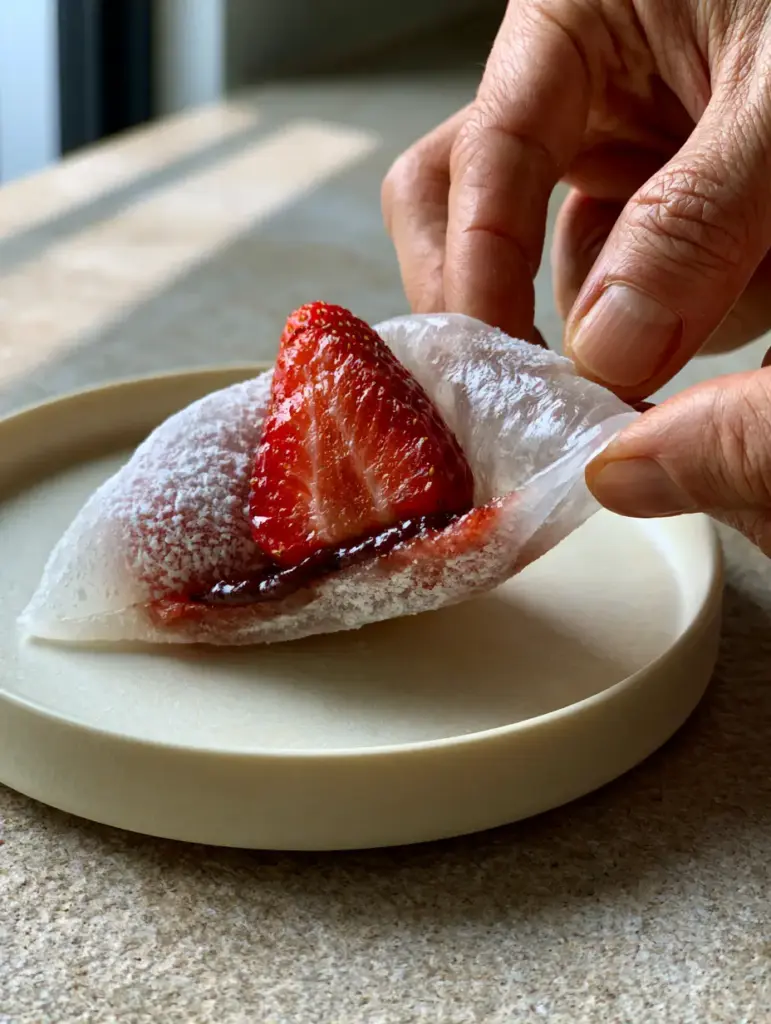
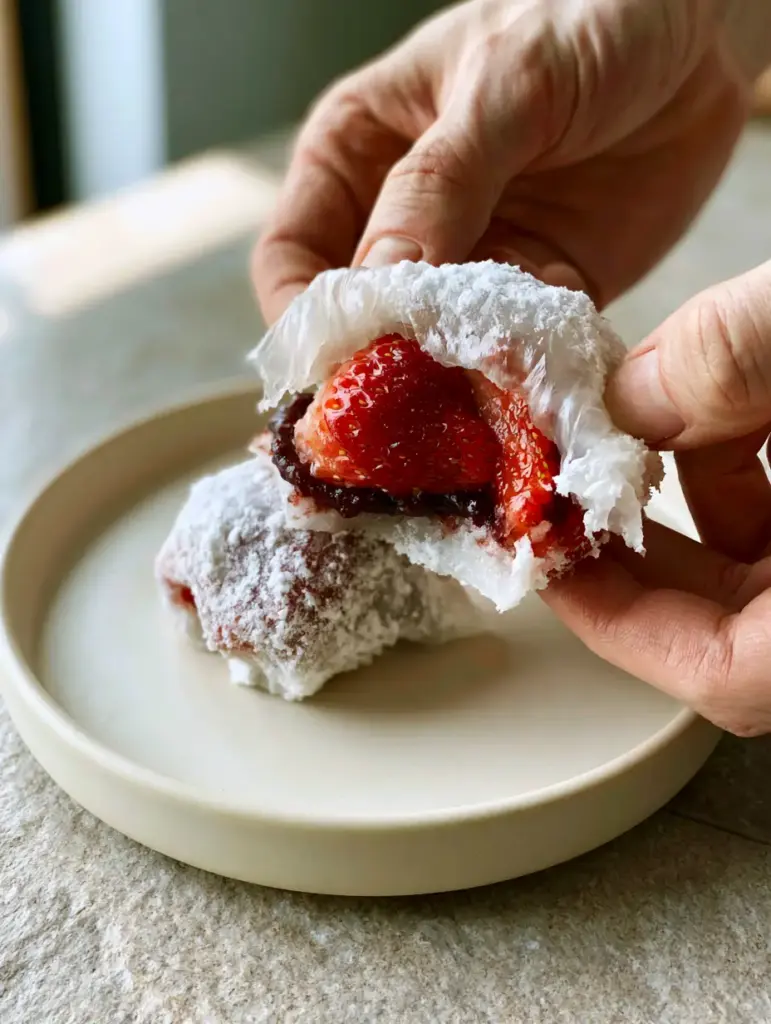
Mochi is a culinary masterpiece that balances delicate textures with vibrant, natural flavors. This specific version, known as Ichigo Daifuku, features an incredibly stretchy, translucent white mochi dough that yields to a juicy, whole red strawberry and a thin, velvety layer of smooth sweet red bean paste.
Imagine the sensory experience of pulling apart a soft, elastic piece of dough, feeling the fine white cornstarch dusting on your fingertips, and revealing the bright crimson fruit hidden inside. Served on a minimalist, matte cream ceramic plate, this dessert is as visually stunning as it is delicious.
Why This Stretchy Strawberry Mochi Works
- The Perfect Stretch: We use specific ratios of glutinous rice flour to ensure a dough that is extremely elastic yet soft to the bite.
- Visual Contrast: The stark white translucent dough provides a beautiful backdrop for the vibrant, juicy red strawberry center.
- Balanced Sweetness: The earthy, smooth sweet red bean paste complements the tart freshness of the fruit without overpowering it.
- Professional Finish: A delicate, fine layer of white cornstarch provides that signature matte look while preventing sticking.
The Essential Components for Translucent Mochi Dough
Glutinous Rice Flour (Shiratamako): 1 cup (160g). This specific type of flour is crucial for achieving that signature elastic, translucent texture seen in high-end Japanese confectionery.
Granulated Sugar: 1/4 cup (50g). Sugar doesn’t just add sweetness; it acts as a softener, keeping the dough pliable even after it cools down.
Filtered Water: 3/4 cup (180ml). Precise hydration is required to transform the dry flour into a workable, stretchy paste during the steaming process.
Smooth Red Bean Paste (Koshi-an): 1/2 cup (120g). Look for the “smooth” variety to ensure a thin, even layer around your fruit that won’t feel grainy.
Fresh Strawberries: 6 large (approx. 150g). Choose berries that are ripe and firm; the vibrant red color is the star of the visual presentation when the mochi is pulled apart.
Cornstarch: 1/2 cup (60g). This is used exclusively for dusting to create the matte surface and ensure the dough doesn’t stick to your hands or the cream ceramic plate.
Pinch of Salt: 1/8 tsp (0.75g). A tiny amount of salt enhances the natural sweetness of the red bean paste and the strawberry. If you enjoy fruit-forward treats, you might also like these strawberry rum cocktails for a summer pairing.
Must-Have Tools for Mochi Success
To achieve the artisan look of the matte, dusted dough, you will need a microwave-safe glass bowl and a silicone spatula for vigorous mixing. A fine-mesh sieve is essential for applying the fine white cornstarch dusting evenly across your work surface.
A sharp paring knife is required to hull the strawberries without damaging the flesh, ensuring they remain juicy inside. Finally, a minimalist, matte cream-colored ceramic plate provides the perfect neutral background for serving.
Mastering the Art of the Perfect Mochi Stretch
Preparing the Vibrant Strawberry Core
Wash the strawberries and pat them completely dry with a paper towel; any moisture will prevent the red bean paste from adhering. Carefully remove the green hulls, keeping the pointed tip of the strawberry intact for the best visual profile.
Divide the smooth red bean paste into six equal portions and flatten each into a small disc. Wrap the paste around each strawberry, leaving the very tip of the berry exposed if you want a “peek-a-boo” effect, or covering it entirely for a clean white exterior.
Steaming the Elastic Dough
Whisk the glutinous rice flour, sugar, and water in a microwave-safe bowl until the mixture is completely smooth and free of lumps. Cover the bowl loosely with plastic wrap and microwave on high for 2 minutes.
Remove the bowl and stir the dough vigorously with a wet silicone spatula; it will begin to look translucent and feel very sticky. Return to the microwave for another 30-60 seconds until the dough is bouncy and has lost its opaque, white-flour appearance.
The Folding and Dusting Technique
Generously dust a clean stone kitchen countertop with the fine white cornstarch. Turn the hot dough onto the starch and sift more cornstarch over the top until the surface is matte and no longer tacky to the touch.
Divide the dough into six pieces. Flatten one piece, place a paste-covered strawberry in the center, and gently stretch the dough over the fruit, pinching it at the bottom to seal. The dough should feel incredibly elastic and soft as you work.
Expert Tips for a Professional Finish
- Keep it Warm: Work with the dough while it is still warm; once it cools completely, it becomes less stretchy and harder to seal.
- Avoid Over-Starching: While starch prevents sticking, too much will mask the translucent beauty of the dough. Brush off excess with a pastry brush.
- Berry Selection: Use medium-sized strawberries; if they are too large, the dough may tear during the stretching process.
- Clean Cuts: If you want to show off the interior like in our photos, use a piece of unflavored dental floss to “cut” the mochi in half cleanly without squashing the dough.
Storage and Freshness Guidelines
Mochi is best enjoyed the day it is made to appreciate the maximum softness of the dough. If you must store it, place the pieces in an airtight container at room temperature for up to 24 hours.
Avoid refrigerating the mochi, as the cold temperature will cause the glutinous rice starches to recrystallize, making the dough hard and brittle. For a different fruit-based chilled treat, check out this mango ice cream recipe.
Creative Pairings for Your Dessert Table
This traditional Japanese treat pairs beautifully with a hot cup of matcha or green tea to balance the sweetness. If you are hosting a themed dinner, consider starting with General Tso’s chicken or a light chicken zucchini stir fry.
For those who love exploring unique mochi flavors, our watermelon mochi offers a refreshing, summery twist on this classic technique. The neutral, minimalist plate allows the vibrant red of the strawberry to truly pop.
Common Questions About Homemade Mochi
Yes! While strawberries are traditional for Ichigo Daifuku, grapes, kiwi pieces, or mango also work beautifully with the red bean paste and stretchy dough.
Use a generous amount of fine white cornstarch or potato starch (toka-ko). Ensure your hands and the work surface are well-dusted, but brush off the excess for the best flavor.
It is best consumed within 24 hours. Because it contains fresh fruit and the dough hardens over time, it does not store well in the refrigerator or for long periods.
Shiratamako (glutinous rice flour) is best for a smooth, stretchy, and translucent dough. Mochiko can be used but may result in a slightly denser, less elastic texture.
If the dough is still opaque, it hasn’t finished cooking. Microwave it in 30-second bursts and stir until it becomes semi-transparent and very sticky.
The Ultimate Strawberry Mochi Recipe

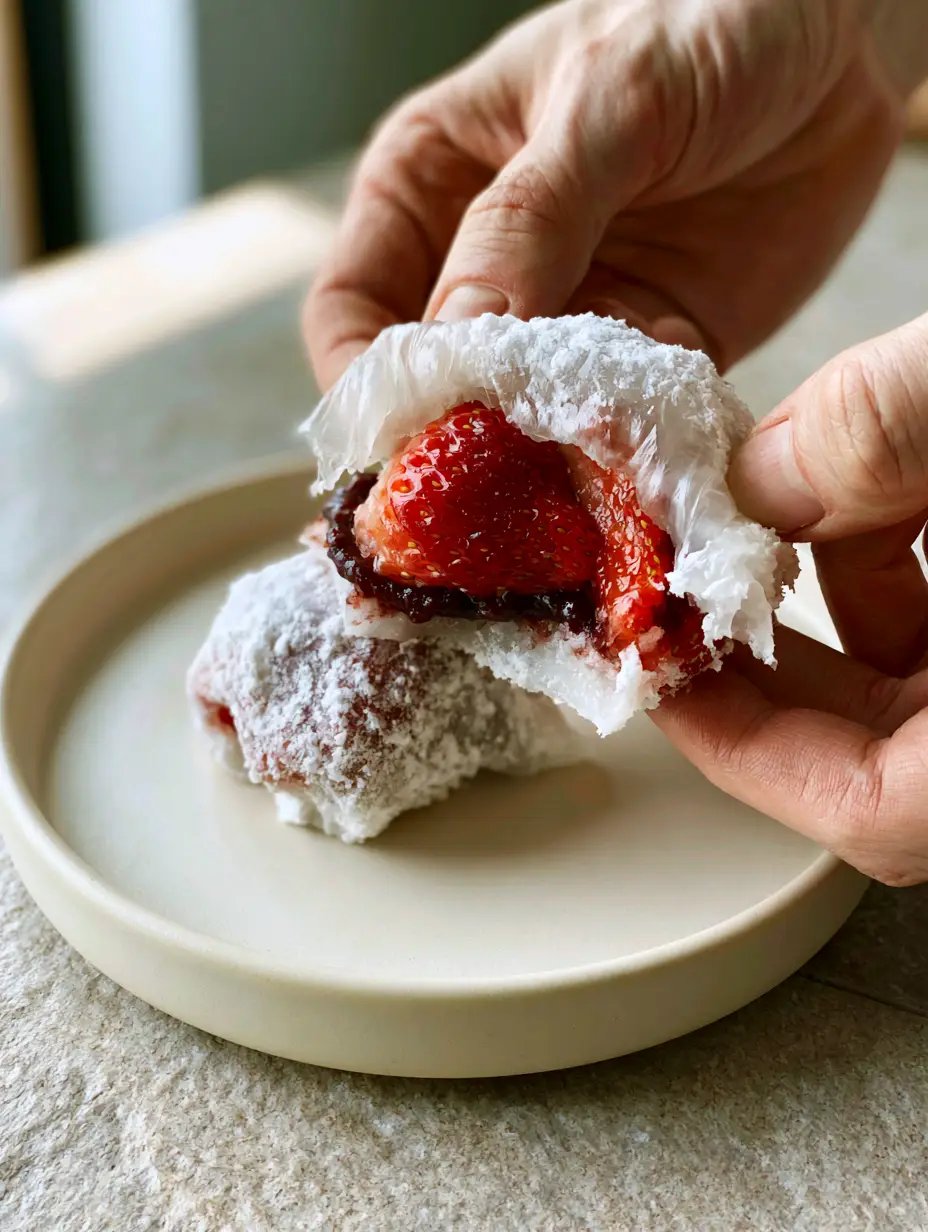
Mochi With Fresh Strawberries and Sweet Red Bean Paste (Ichigo Daifuku)
Ingredients
Equipment
Method
- Wash and thoroughly dry the strawberries. Remove hulls carefully and wrap each berry in a thin layer of smooth red bean paste.
- Whisk flour, sugar, and water in a bowl. Microwave for 2 minutes, stir vigorously with a wet spatula, then microwave for 30-60 seconds until translucent and stretchy.
- Turn the hot dough onto a cornstarch-dusted surface. Divide into 6 pieces and stretch each piece over a paste-covered strawberry, pinching to seal.
Notes
Do not refrigerate the finished mochi as it will become hard.
Closing & Call to Action
Making mochi at home is a rewarding experience that results in a dessert far superior to store-bought versions. The combination of the stretchy, elastic dough and the juicy strawberry center creates a perfect harmony of texture and taste.
If you enjoyed this recipe, please leave a comment below and share your results! Don’t forget to pin this recipe to your favorite dessert boards on Pinterest so you can find it whenever the craving for Ichigo Daifuku strikes.