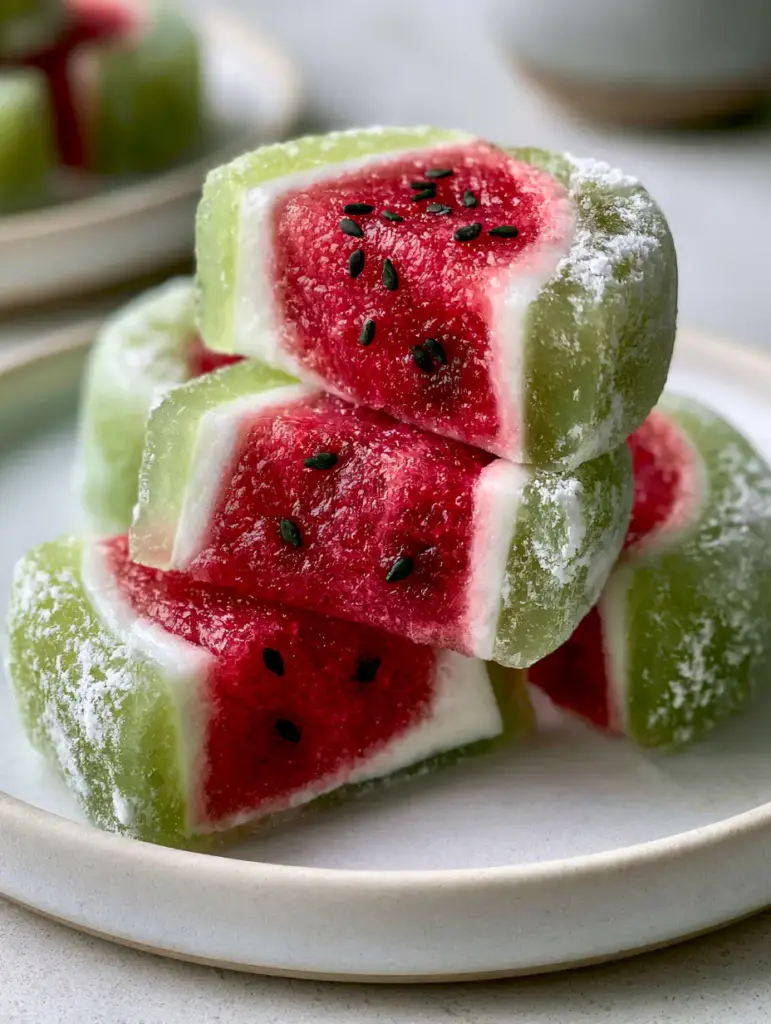
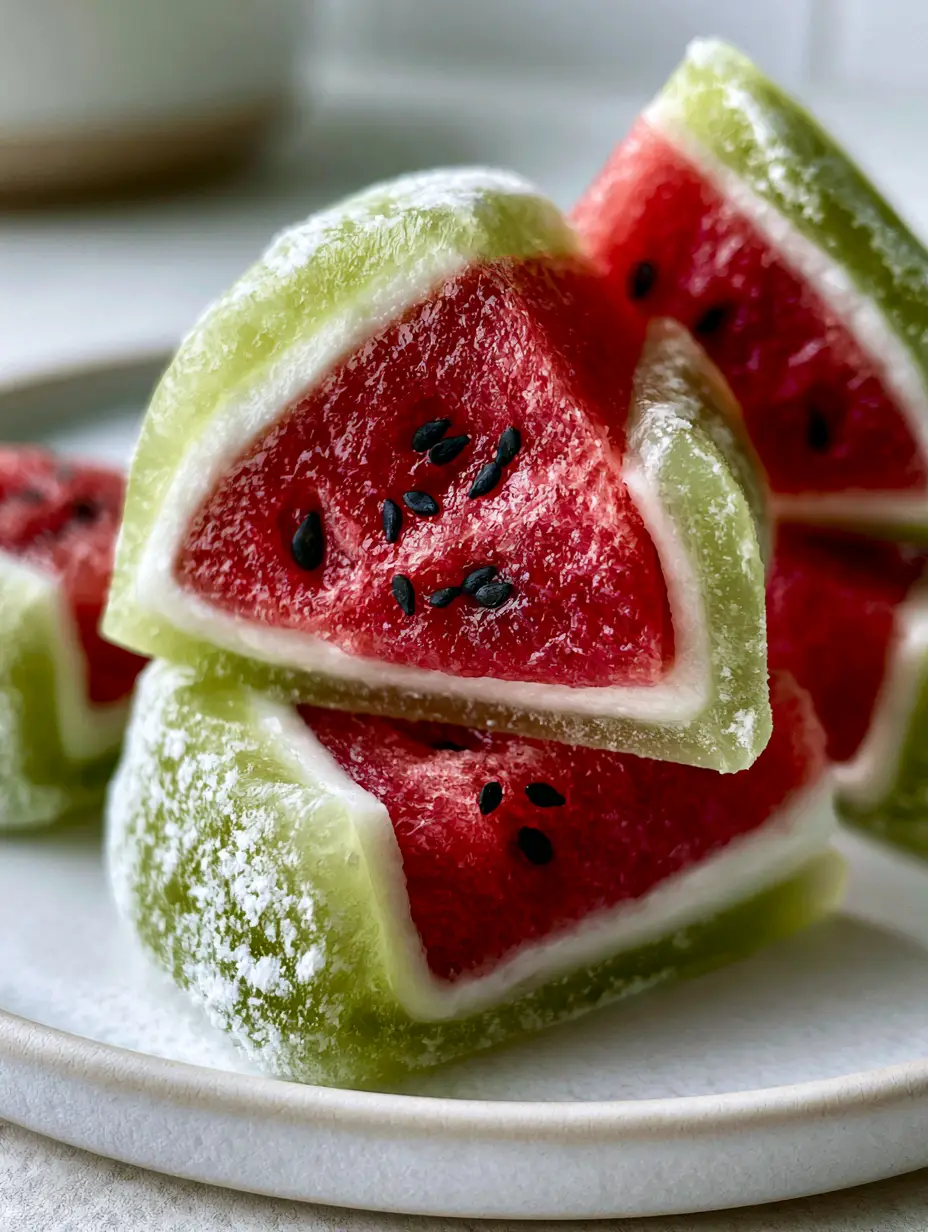
The watermelon mochi is more than just a dessert; it is a masterclass in culinary aesthetics and textural contrast. Imagine a bite that begins with a soft, elastic green shell, transitions through a velvety layer of sweet cream, and finishes with a vibrant, ruby-red core studded with crisp black sesame seeds.
This recipe transforms the traditional Japanese confection into a visual spectacle that mimics the iconic summer fruit. Using the science of glutinous rice flour and precise layering techniques, you will create a treat that looks just as stunning as it tastes.
Inspired by the sharp-cut cross-sections seen in high-end patisseries, this watermelon mochi is designed to be the centerpiece of any dessert platter. Whether you are a fan of traditional mochi or looking for a modern twist on fruit-based sweets, this guide provides the professional bridge between visual art and edible science.
Why You Will Love This Multi-Layered Japanese Confection
- Textural Harmony: The contrast between the chewy, elastic outer dough and the silky, thin white cream layer creates a sophisticated mouthfeel.
- Forensic Accuracy: Every element, from the toasted black sesame “seeds” to the vibrant red core, is engineered to look like a hyper-realistic miniature watermelon.
- Saturated Visuals: The use of natural and food-grade pigments ensures a striking ruby-red and pastel green palette that remains sharp without color bleeding.
- Professional Stability: We utilize specific stabilizers in the cream and dough to ensure that every slice reveals a pristine, sharp-cut cross-section.
Essential Components for Your Vibrant Mochi Masterpiece
To achieve the elastic texture and vibrant colors required for this watermelon mochi, the quality of your ingredients is paramount. Each component serves a functional purpose in maintaining the structure and shelf-life of the dessert.
The Foundation: Glutinous Rice Flour and Sugars
1.5 cups (200g) Shiratamako or Mochiko: This Japanese glutinous rice flour is the backbone of the dough, providing the signature “elastic” and “chewy” texture that defines high-quality mochi. Shiratamako is preferred for its smoother, more refined finish compared to standard rice flour.
0.5 cup (100g) Granulated Sugar: Beyond sweetness, sugar acts as a humectant, keeping the dough soft and preventing it from hardening too quickly as it cools. This ensures your watermelon mochi stays supple for hours.
The Vibrant Core and Decorative Accents
0.5 cup (120ml) Watermelon Juice (Strained): Used as the liquid base for the red core, this provides a natural, subtle flavor and the foundation for the saturated ruby color. If you have extra fruit, consider making watermelon fries as a side snack.
1 tsp (5g) Toasted Black Sesame Seeds: These provide a necessary crunch and are the “culinary forensic” detail that mimics watermelon seeds within the red mochi center. Toasting them briefly enhances their nutty aroma.
The Architectural Layers
0.5 cup (120ml) Heavy Whipping Cream: This forms the “pith” or the thin white layer between the green rind and the red fruit. It must be whipped to stiff peaks to maintain a sharp boundary between layers.
1 tsp (2g) Matcha Powder or Green Food Coloring: This creates the “pastel green” elastic outer dough. Matcha offers a sophisticated earthy note that balances the sweetness of the core.
0.5 cup (60g) Potato Starch (Katakuriko): Essential for dusting, this fine white starch prevents the dough from sticking to your hands and tools without altering the flavor profile. It gives the exterior that classic “light dusting” look.
Professional Equipment for Precision Shaping
To achieve the “sharp-cut cross-section” described in our visual blueprint, you will need a few specific tools to manage the sticky dough and delicate cream.
- Microwave-Safe Glass Bowl: For the “mochitsuki” (mochi-making) process, a heat-proof bowl is essential for even steaming.
- Silicone Spatula: The non-stick properties of silicone make it the only tool capable of folding the elastic dough effectively.
- Sharp Chef’s Knife or Unflavored Dental Floss: To get those pristine edges, a very sharp blade or the “floss method” is required to cut through the layers without compression.
- Fine Mesh Sieve: For dusting the potato starch evenly across your workspace.
Mastering the Ruby-Red Watermelon Core
Crafting the Flavored Center
In a microwave-safe bowl, whisk together 0.75 cup (100g) of glutinous rice flour, 0.25 cup (50g) of sugar, and 0.5 cup (120ml) of strained watermelon juice. Add two drops of red food coloring to achieve that “vibrant, saturated ruby-red” hue seen in the visual blueprint.
Cover the bowl with plastic wrap and microwave for 1 minute. Remove and stir vigorously with a wet silicone spatula until the mixture becomes translucent and incredibly sticky.
Microwave for another 30 to 45 seconds until the dough is fully cooked. It should look shiny and feel very elastic when pulled.
Integrating the Seed Detail
While the red dough is still warm, fold in the 1 tsp (5g) of toasted black sesame seeds. Distribute them evenly so that when the watermelon mochi is sliced, the seeds appear artistically embedded throughout the center.
Transfer the red dough to a surface dusted with potato starch. Roll it into a long cylinder and cut it into equal-sized balls. Set these aside to cool completely before the next step.
Developing the Elastic Green Rind and Cream Barrier
The Pastel Green Outer Layer
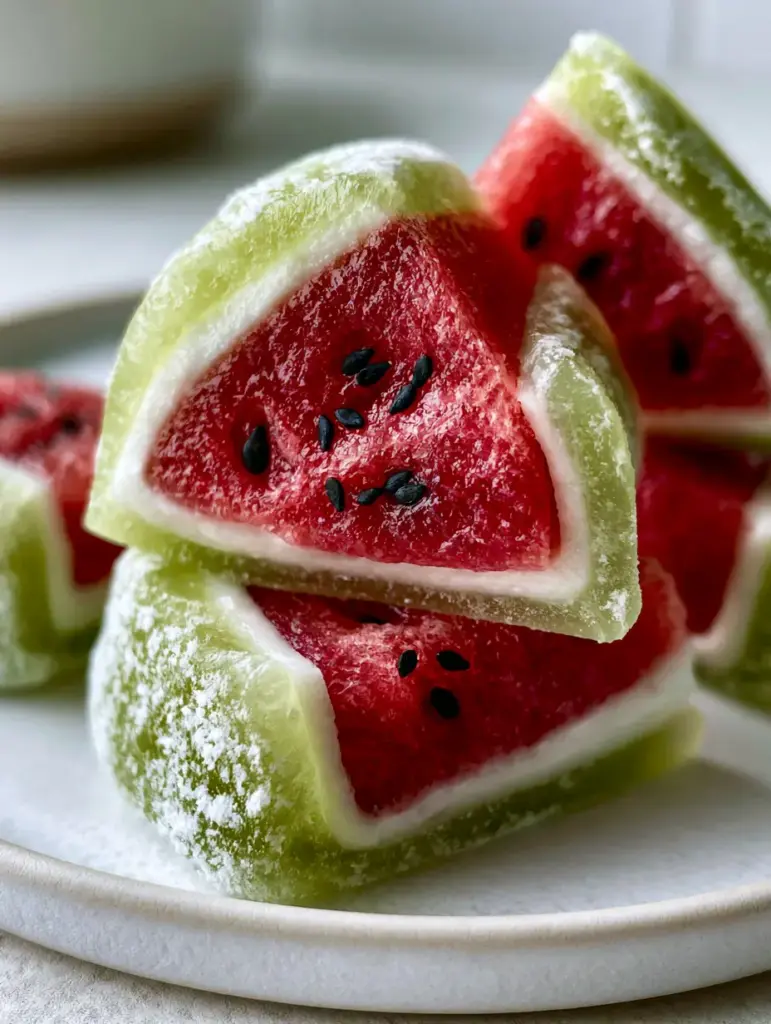
Repeat the mochi-making process using the remaining rice flour, sugar, and 0.5 cup (120ml) of water mixed with matcha powder or green coloring. This dough should be steamed until it reaches a “soft, translucent pastel green” state.
The goal is an elastic dough that can be stretched thinly without tearing. Let this dough rest under plastic wrap to prevent a skin from forming, which would ruin the smooth visual finish.
Stabilizing the White Cream Layer
Whip the heavy cream with a tablespoon of powdered sugar until very stiff peaks form. It is crucial the cream is not runny; it acts as the structural “white pith” that prevents color bleeding between the red and green layers.
Place the cream in a piping bag with a small round tip. This allows for the “thin, perfectly defined middle layer” that defines the professional look of this watermelon mochi.
Final Assembly for Sharp Cross-Sections
Layering and Sealing
Take a portion of the green dough and flatten it into a wide, thin disk. Place a small dollop of the white cream in the center, followed by a cooled red mochi ball. Gently pull the green edges up and over the cream and red core.
Pinch the bottom of the green dough to seal it tightly. Roll the ball gently in your palms to create a perfect sphere, then lightly dust with more potato starch to achieve the “fine white coating” mentioned in the blueprint.
The Forensic Slice
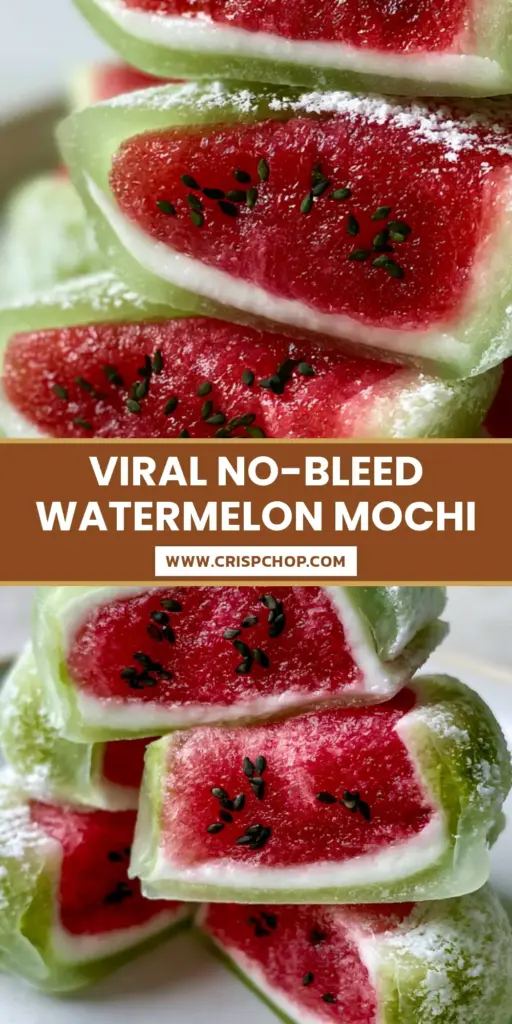
For the ultimate presentation, chill the mochi for 20 minutes to firm up the cream. Use a sharp, slightly damp knife to cut the balls in half. This reveals the pristine layers and the “sharp-cut cross-section” that makes this dish a viral sensation.
If you enjoy these vibrant fruit-inspired colors, you might also love the bright hues in a strawberry rum cocktail or a fresh blackberry jam recipe.
Expert Tips for Mochi Success
- Temperature Control: Never wrap the cream around a warm red core. The heat will melt the cream, leading to color bleeding and a messy interior.
- Starch Management: Use enough potato starch to handle the dough, but brush off the excess with a soft pastry brush before serving to keep the “pastel green” color visible.
- Hydration Levels: If your dough feels too tough, add 1 tsp (5ml) of water at a time during the steaming process until it reaches maximum elasticity.
- The Cutting Secret: Clean your knife between every single cut. Even a tiny amount of red residue will smudge the white cream layer during the next slice.
Pairing Your Watermelon Mochi
This dessert is best enjoyed with light, refreshing accompaniments that don’t overwhelm its delicate flavor. A chilled glass of classic lemonade provides a citrusy brightness that cuts through the sweetness of the cream.
For a full summer spread, serve these after a light meal of baked rainbow trout or a refreshing greek salad. The chewy texture of the watermelon mochi acts as a perfect palate cleanser.
Frequently Asked Questions
While you can, real watermelon has a high water content that will cause the cream layer to dissolve and the outer dough to become soggy quickly. A flavored red mochi core maintains the best texture and visual sharp edges.
Yes, because of the heavy cream layer, it must be kept refrigerated. However, it is best enjoyed within 24 hours as glutinous rice dough can begin to harden in the fridge over time.
The secret is chilling the mochi for 20 minutes before cutting and using a very sharp, slightly damp knife. Wipe the blade clean after every single cut to prevent color bleeding.
Use a generous amount of potato starch (Katakuriko) on your hands and surface. Cornstarch works as a substitute, but potato starch provides a finer, silkier finish that is traditional for mochi.
This usually happens if the mochi dough was too hot when assembled or if the cream wasn’t whipped to stiff enough peaks. Ensure all components are cool before the final assembly.
The Ultimate Watermelon Mochi Recipe
Watermelon Mochi Recipe: A Vibrant Summer Treat with Sweet Cream
Ingredients
Equipment
Method
- Whisk rice flour, sugar, and watermelon juice with red coloring. Microwave in 1-minute intervals, stirring until elastic and translucent.
- Fold in toasted black sesame seeds while the dough is warm. Roll into small balls and let cool completely.
- Mix rice flour, sugar, water, and matcha. Microwave until a soft, pastel green elastic dough forms. Dust with potato starch.
- Flatten green dough, add a thin layer of whipped cream, then place the red core inside. Seal the edges.
- Chill for 20 minutes, then use a sharp damp knife to create a clean cross-section slice.
Notes
Wipe your knife clean between every slice for a pristine white border.
Start Crafting Your Colorful Mochi Today
Creating this watermelon mochi is an exercise in patience and precision, but the reward is a dessert that is as visually stunning as a piece of art. The combination of elastic dough and vibrant layers makes it a standout choice for any summer gathering or special occasion.
We would love to see your sharp cross-sections! Share your photos and tag us, and don’t forget to follow our Pinterest for more visually-inspired recipes. If you’re looking for more unique sweets, check out our mango ice cream for another tropical delight.