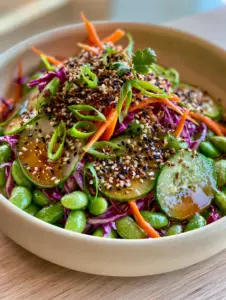
The Japanese edamame salad is more than just a side dish; it is a vibrant explosion of textures and colors that brings the precision of Japanese culinary arts into your home kitchen. This recipe focuses on the harmony between protein-rich legumes and the crisp snap of fresh, raw vegetables.
Visually, this salad is a showstopper, featuring a high-contrast palette of emerald green, deep purple, and bright orange. When plated in a matte ceramic bowl, the glossy, translucent amber dressing catches the light, making every bite look as refreshing as it tastes.
Whether you are looking for a nutrient-dense lunch or a sophisticated starter for a dinner party, this Japanese edamame salad delivers a professional-grade experience with minimal effort. Let’s dive into how to achieve that perfect “glistening” finish and crunch.
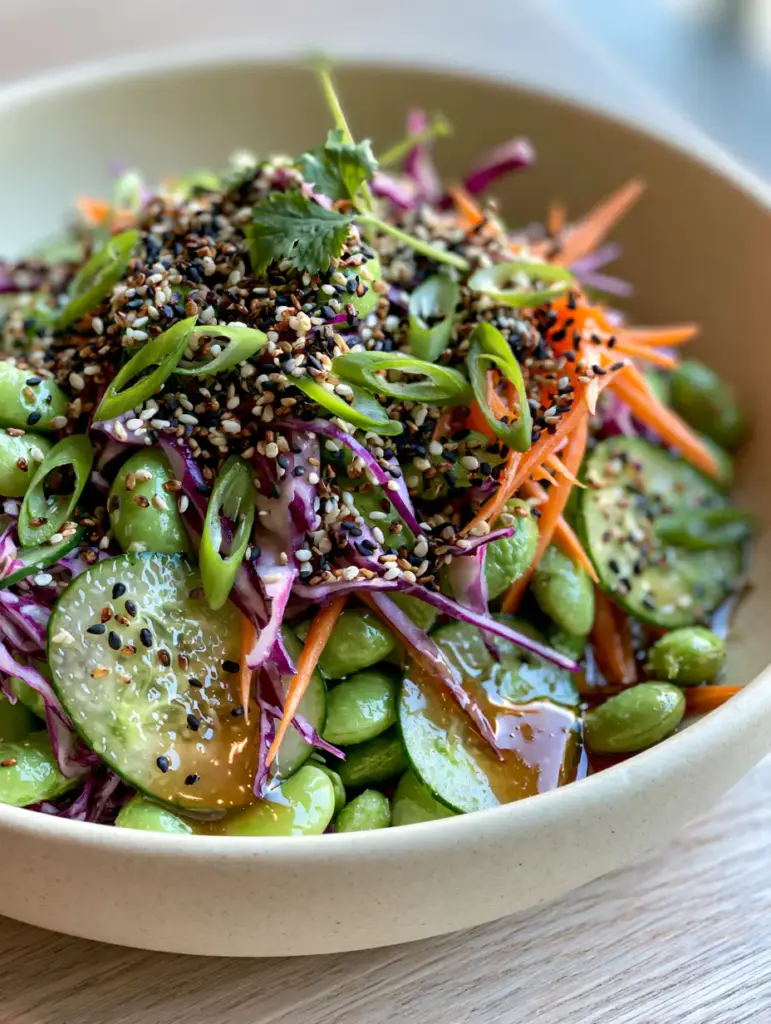
Why This Protein-Rich Crunch Works for Your Healthy Lifestyle
- Textural Masterclass: We combine the “pop” of plump edamame with the rhythmic crunch of shredded purple cabbage and julienned carrots.
- Satiety Meets Flavor: High in fiber and plant-based protein, this salad keeps you full without the post-lunch energy crash.
- Umami-Forward Dressing: The translucent amber dressing uses toasted sesame oil and fresh ginger to create a complex, savory profile.
- Visual Appeal: With vibrant orange, purple, and green hues, this dish is a feast for the eyes and perfect for your social media feed.
The Vibrant Components of Our Japanese Edamame Salad
To achieve the specific visual and flavor profile of a professional Japanese edamame salad, we need ingredients that offer both structural integrity and a wide spectrum of colors.
Shelled Green Edamame: Use 1.5 cups (235g) of frozen or fresh shelled edamame. These provide the protein base and a buttery, firm texture that anchors the salad.
Persian Cucumbers: You will need 2 medium (200g) cucumbers, sliced into thin half-moons. Persian varieties are preferred for their thin skins and lack of bitter seeds, ensuring a crisp “moist” look in the bowl.
Shredded Purple Cabbage: 1 cup (70g) of finely shredded cabbage adds an intense violet contrast and a robust, earthy crunch that holds up well under the dressing.
Julienned Orange Carrots: 1 large (60g) carrot, cut into matchsticks. This adds a natural sweetness and a bright pop of orange that complements the green edamame beautifully.
Sliced Green Scallions: 3 medium stalks (15g), finely sliced on a bias. These provide a mild onion bite and a fresh green garnish that blends into the salad base.
Fresh Cilantro Sprigs: 1/4 cup (4g) of loosely packed leaves. These add a floral high note and a delicate, feathery visual element to the top of the dish.
The Garnish Duo: 1 tsp (3g) each of toasted black and white sesame seeds. This mix creates a sophisticated, professional finish that highlights the texture of the vegetables.
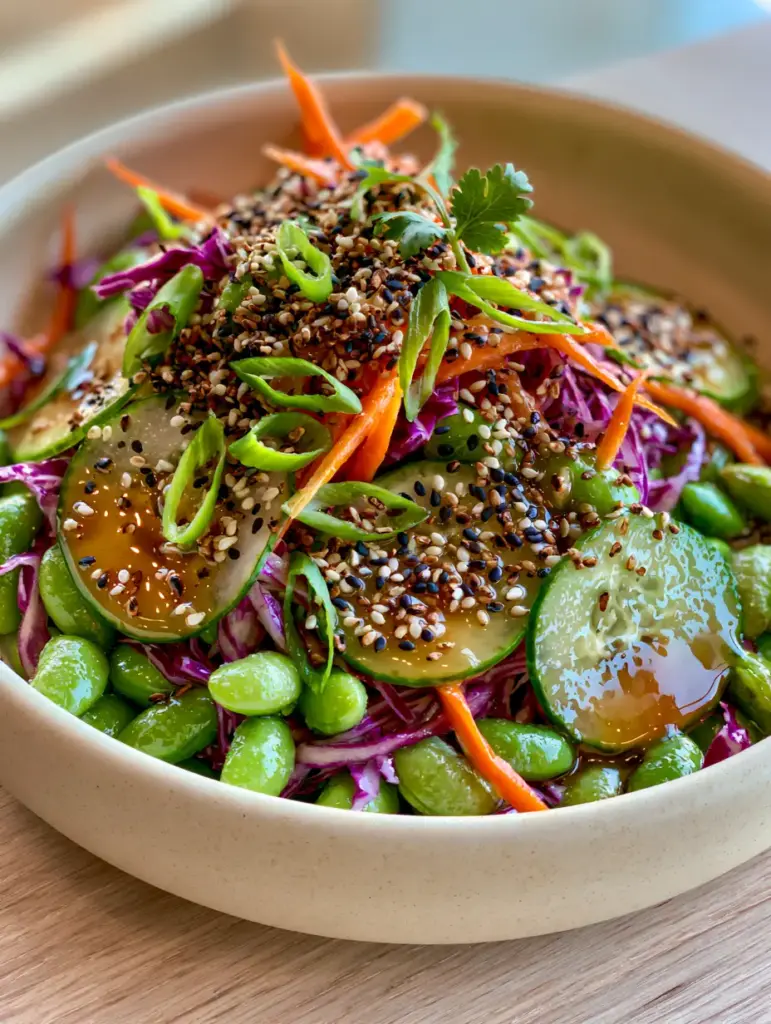
Foundational Elements for the Amber Ginger Glaze
A Japanese edamame salad is only as good as its dressing, which must be glossy and translucent to match our visual blueprint.
Toasted Sesame Oil: 2 tbsp (30ml). This is the aromatic backbone of the dressing, providing that deep, nutty scent and the “amber” hue we desire.
Rice Vinegar: 3 tbsp (45ml). This provides a clean, sharp acidity that cuts through the richness of the oil and brightens the vegetables.
Soy Sauce (or Tamari): 1 tbsp (15ml). Essential for umami and a light seasoning saltiness that seasons the edamame from within.
Honey or Maple Syrup: 1 tbsp (21g). This is the secret to the “glossy” finish; the sugar helps the dressing cling to the vegetables rather than sliding off.
Fresh Grated Ginger: 1 tsp (5g). This adds a spicy, warming undertone that defines the Japanese-inspired flavor profile.
Tools for Perfect Precision Prep
To get the “smartphone-photo-ready” look of a professional Japanese edamame salad, a few specific tools will make your life much easier.
A sharp chef’s knife is non-negotiable for getting those thin, clean half-moons on the cucumbers. If you struggle with uniform cuts, a mandoline slicer set to a 1/8th-inch thickness is a fantastic alternative for the cabbage and carrots.
You will also want a small glass jar for emulsifying the dressing. Shaking the ingredients together creates a much more stable emulsion than whisking, ensuring the dressing stays translucent and glistening rather than separating on the plate.
Step-By-Step to a Vibrant Masterpiece Salad
1. Prepare the Edamame Base
Bring a small pot of salted water to a boil. Add 1.5 cups (235g) of shelled edamame and cook for 3-5 minutes until they are bright green and tender but still have a slight “snap.”
Immediately drain and plunge them into an ice bath. This “shocks” the beans, locking in that vibrant emerald color you see in our blueprint and preventing them from turning a dull olive green.
2. The Precision Vegetable Cut
While the edamame dries, slice your Persian cucumbers into thin half-moons. Shred the purple cabbage as finely as possible to ensure it integrates well with the other ingredients.
For the carrots, use a julienne peeler or a knife to create 2-inch long matchsticks. Combine these with the edamame in a large mixing bowl to see the “rainbow” effect begin to form.
3. Emulsifying the Glossy Dressing
In your glass jar, combine the toasted sesame oil, rice vinegar, soy sauce, honey, and grated ginger. Shake vigorously for 30 seconds.
The dressing should look translucent but thick enough to coat a spoon. The honey acts as an emulsifier here, creating that glistening, moisture-rich look on the cucumbers and edamame.
4. The Final Toss and Garnish
Pour the dressing over the vegetables and toss gently with tongs. You want every surface to be lightly coated so the salad “glistens” under the light.
Transfer the mixture to a matte cream-colored ceramic bowl. Heavily garnish with the toasted black and white sesame seeds, the sliced scallions, and a few choice sprigs of fresh cilantro for a professional finish.
Pro Secrets for the Glossiest Dressing
If your dressing looks thin or watery, it’s likely due to excess moisture on the vegetables. Always pat your edamame and cucumbers dry with a paper towel before adding the dressing.
For an extra layer of flavor, toast your sesame seeds in a dry pan for 2 minutes until they become fragrant. This small step significantly enhances the “toasted” aroma of the entire Japanese edamame salad.
Professional Tip: Let the salad sit for 10 minutes after tossing. This allows the cucumbers to slightly soften and absorb the ginger-soy flavors without losing their structural crunch.
Make-Ahead and Freshness Guidelines
This Japanese edamame salad is an excellent candidate for meal prep. You can prep the vegetables and the dressing separately up to 3 days in advance.
If you have already dressed the salad, it will remain crisp for about 24 hours in the refrigerator. Beyond that, the salt in the dressing will begin to draw moisture out of the cucumbers, leading to a pool of liquid at the bottom of the bowl.
Avoid freezing this salad. The cellular structure of the cucumbers and cabbage will collapse upon thawing, resulting in a mushy texture that ruins the “vibrant” appeal of the dish.
Complete the Meal: Perfect Japanese Pairings
This salad is versatile enough to stand alone, but it truly shines when paired with other Asian-inspired dishes. For a light lunch, serve it alongside a crisp Asian cucumber salad for a double dose of hydration.
If you need more protein, this salad acts as a perfect refreshing side for a coconut chicken rice bowl or a hearty chicken crunch salad. The acidity in the edamame dressing cuts beautifully through richer, savory meats.
Finally, for a traditional finish, follow your meal with a piece of sweet, chewy Japanese mochi to balance the ginger spice with a touch of sweetness.
Answers to Your Top Salad Questions
If you can’t find Persian cucumbers, English (hothouse) cucumbers are the best substitute as they have thin skins and fewer seeds, maintaining the crisp texture.
Yes! Frozen shelled edamame is perfect. Just boil it for 3-5 minutes and immediately shock it in an ice bath to preserve its vibrant green color and firm texture.
The secret is using a sweetener like honey or maple syrup. These act as emulsifiers that help the sesame oil and vinegar stay combined and cling to the vegetables.
Absolutely. You can prep the vegetables and dressing up to 3 days in advance. For the best texture, toss with the dressing shortly before serving.
This recipe can easily be made gluten-free by using tamari or liquid aminos instead of traditional soy sauce in the dressing.
The Official Japanese Edamame Salad Recipe
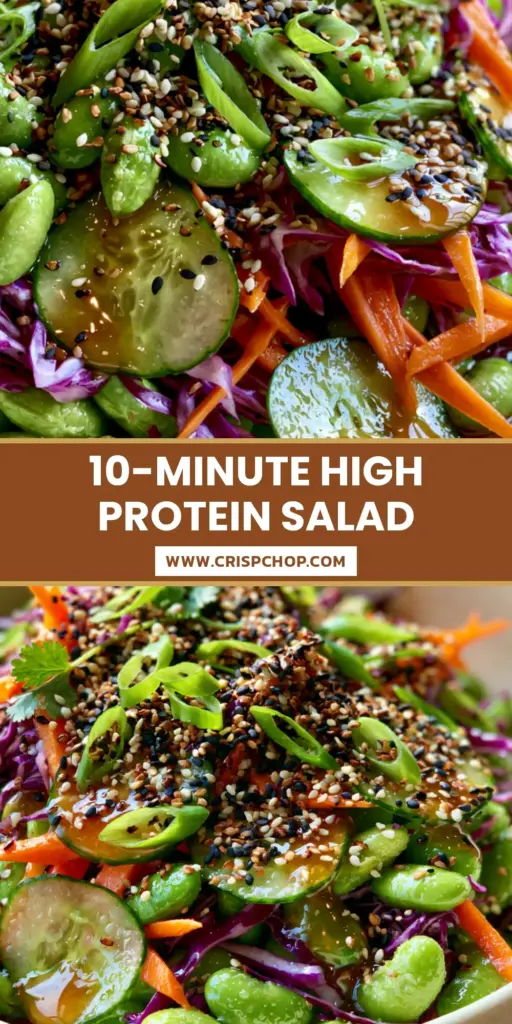
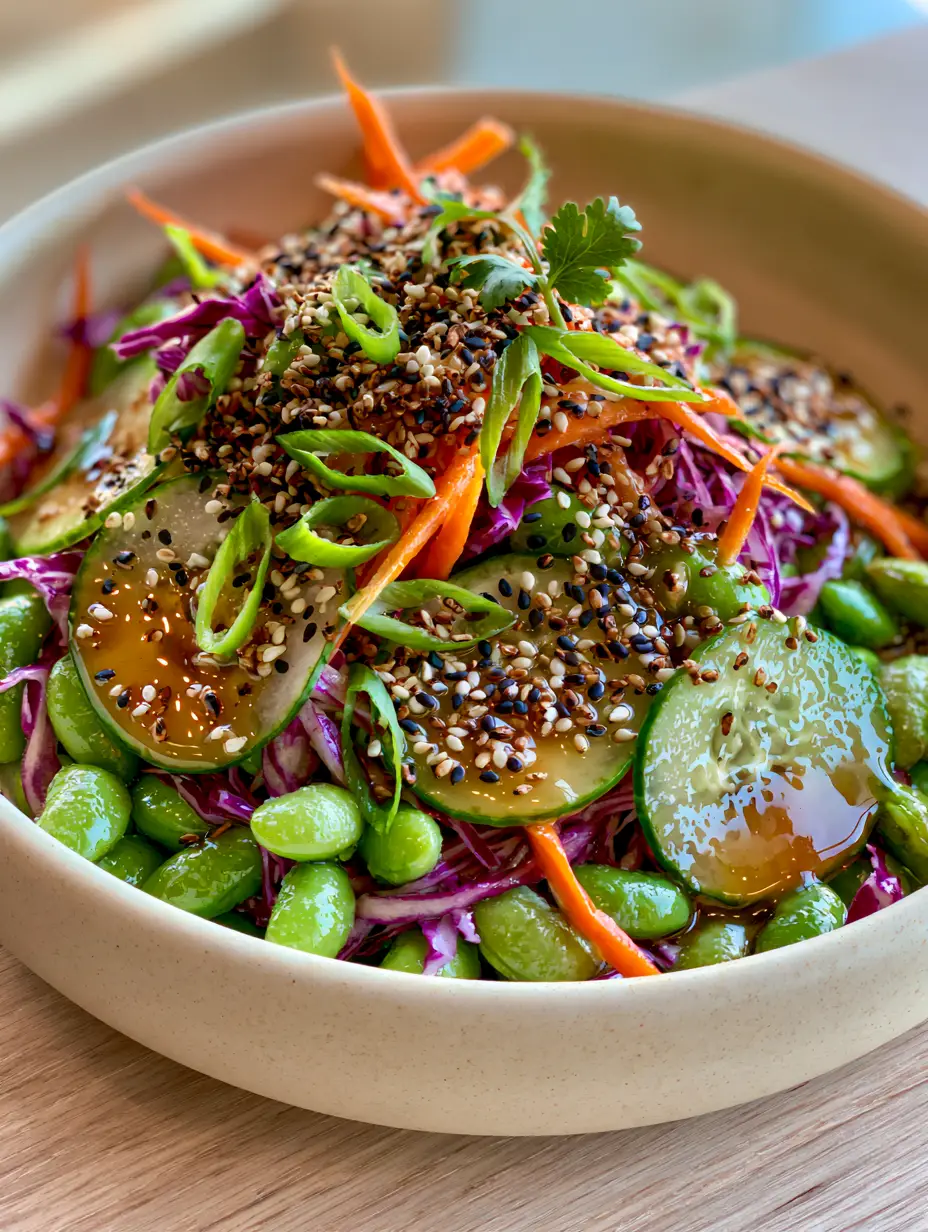
Japanese Edamame Salad with a Glossy Sesame Ginger Dressing
Ingredients
Equipment
Method
- Boil shelled edamame in salted water for 3-5 minutes. Drain and shock in an ice bath to maintain the bright green color.
- Slice Persian cucumbers into half-moons, shred the purple cabbage finely, and julienne the carrots into matchsticks.
- Combine sesame oil, rice vinegar, soy sauce, honey, and ginger in a jar. Shake until a glossy, translucent amber emulsion forms.
- Toss the edamame and vegetables with the dressing in a large bowl until everything glistens.
- Top with toasted sesame seeds, sliced scallions, and cilantro sprigs before serving in a matte ceramic bowl.
Notes
Pat the vegetables dry before dressing to ensure the oil clings properly and stays glossy.
Final Thoughts on This Vibrant Dish
We hope this Japanese edamame salad becomes a staple in your kitchen. Its combination of ease, nutrition, and stunning visual appeal makes it a winner for any occasion. The contrast of the matte bowl against the glistening green edamame and purple cabbage is a culinary delight you’ll want to recreate again and again.
If you enjoyed this recipe, please leave a comment below and let us know how yours turned out! Don’t forget to follow us on Pinterest for more visually-driven recipe inspiration and healthy meal ideas.