The Lebanese tabbouleh recipe is not just a salad; it is a masterclass in herb-centric culinary art. When you look at an authentic bowl of this Levantine treasure, you shouldn’t see a grain salad punctuated by herbs. Instead, you should be greeted by a vibrant, deep emerald green landscape that looks light, airy, and fluffy, rather than wet or heavy.
Achieving this specific visual result—microscopic bits of white bulgur wheat peeking through finely hand-chopped flat-leaf parsley—requires a forensic attention to detail. This recipe focuses on the traditional techniques used in Lebanese kitchens to ensure your salad has that signature light, glistening sheen of golden extra virgin olive oil without ever becoming soggy.
Whether you are serving this as part of a grand mezze platter or a refreshing light lunch, the sensory experience of crisp herbs and zesty lemon droplets is unmatched. Let’s dive into the science of the perfect chop and the secret to moisture management that defines a true Lebanese tabbouleh recipe.
The Anatomy of an Authentic Emerald Masterpiece
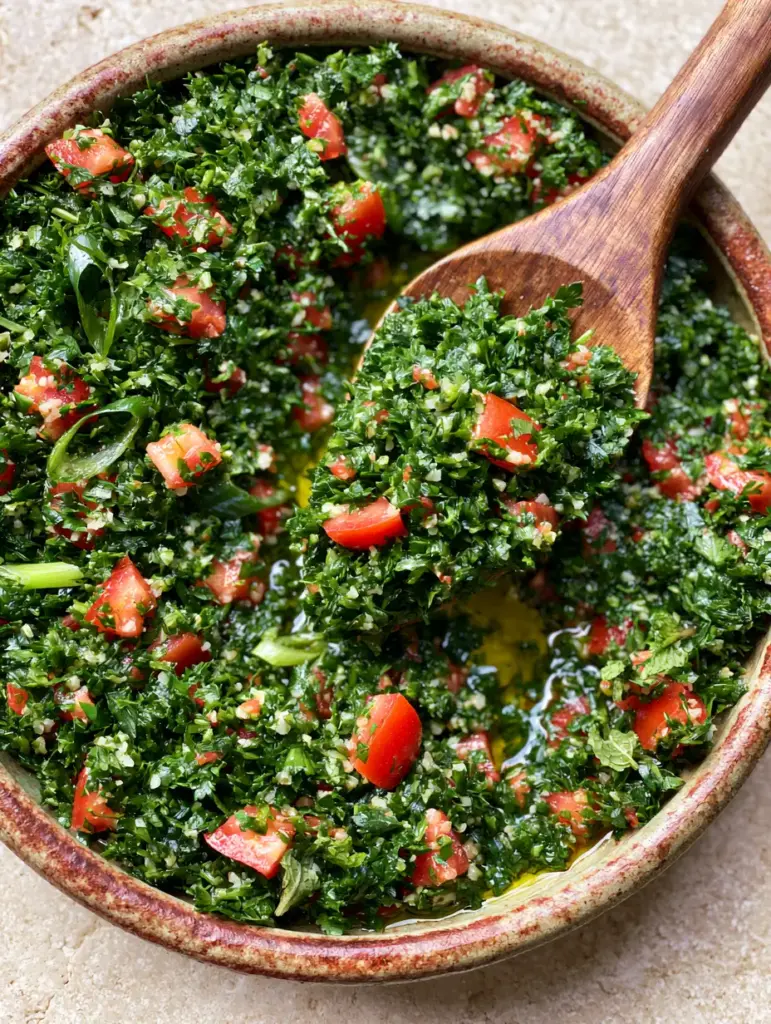
To recreate the stunning visual from our blueprint, we focus on three specific pillars of quality. These elements ensure your dish looks exactly like a professional food photograph every time you prepare it.
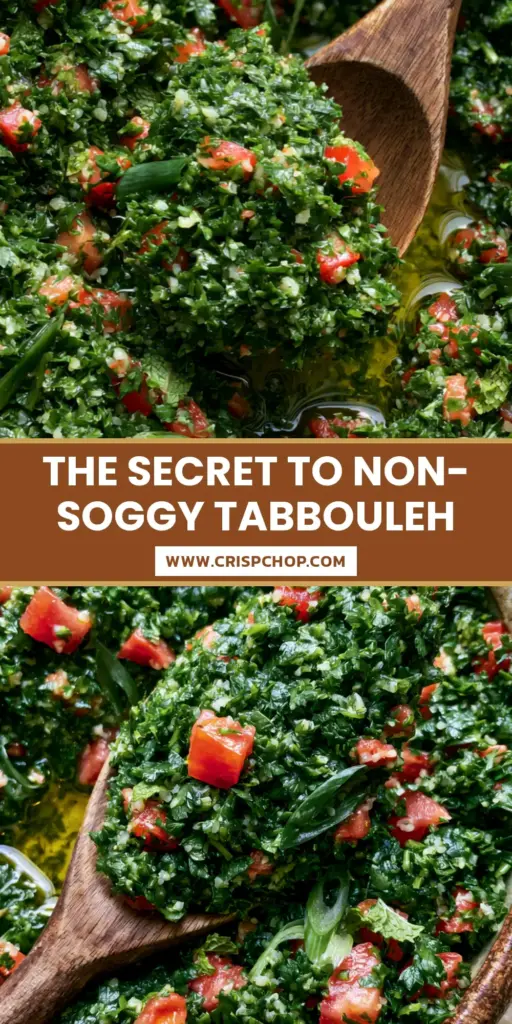
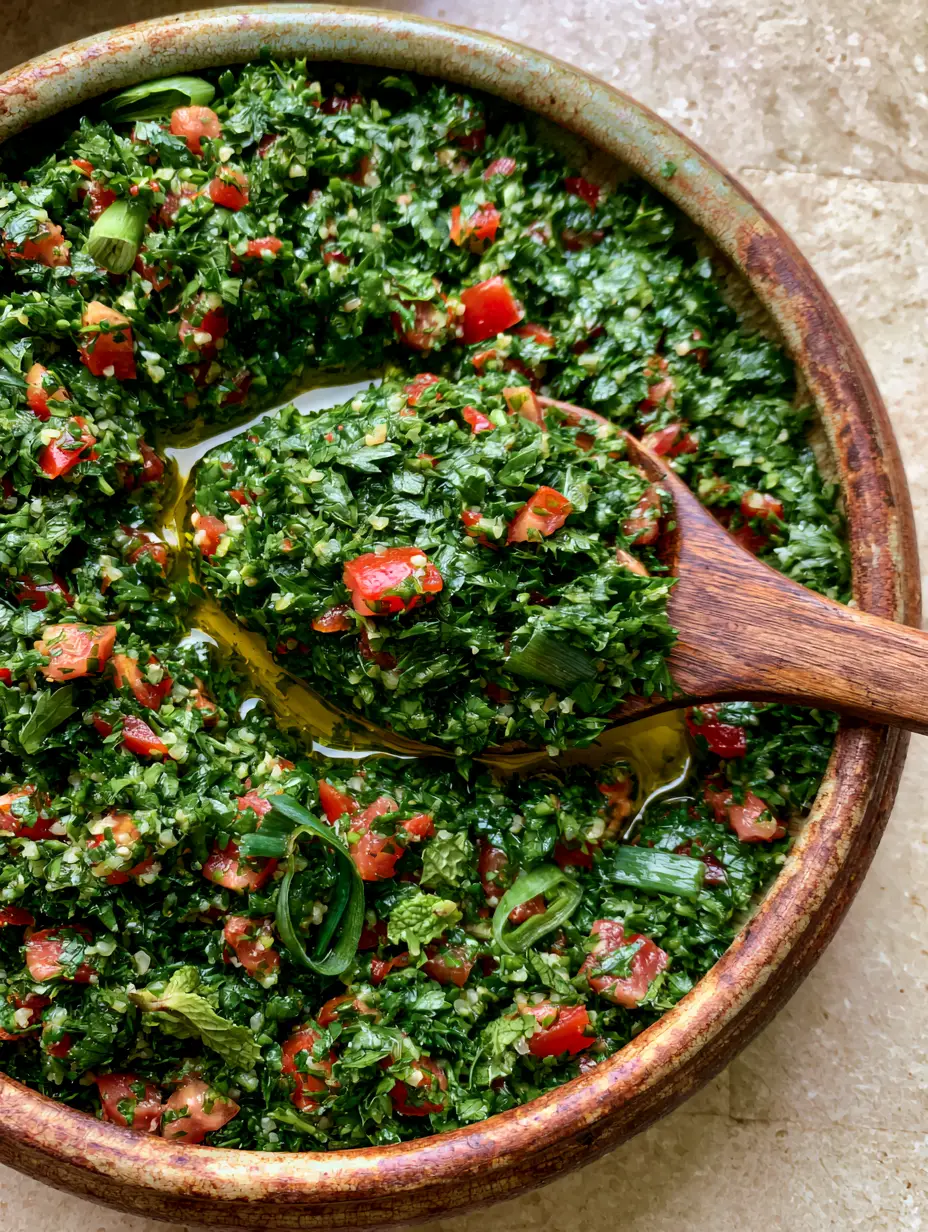
- The Fluff Factor: By using bone-dry parsley and a razor-sharp knife, we achieve an airy texture that mimics a soft moss rather than a dense slaw.
- Jeweled Contrast: Tiny, uniform cubes of firm red tomatoes act as bright rubies against the deep green background, providing pops of sweetness.
- Textural Precision: The bulgur wheat is soaked until tender but remains microscopic, ensuring it provides a delicate bite without dominating the flavor profile.
- Golden Luminescence: A final drizzle of premium extra virgin olive oil provides a glistening sheen that catches the light, just like a handheld smartphone photo in natural morning light.
The Emerald Essence: Essential Ingredients for Tabbouleh
Every ingredient in this Lebanese tabbouleh recipe serves a structural and visual purpose. We do not use fillers; we use flavor foundations.
Flat-Leaf Parsley (3 large bunches): This is the soul of the dish. It must be flat-leaf (Italian) parsley for the correct mouthfeel and ability to be chopped into fine, fluffy shards.
Fresh Mint Leaves (1/2 cup / 15g): Mint adds a cooling top note that brightens the earthy parsley. These must be minced so finely they almost disappear into the green landscape.
Firm Red Tomatoes (2 medium / 250g): We use firm tomatoes to ensure they hold their “jewel” shape. Seeding them is mandatory to prevent excess liquid from ruining the salad’s crispness.
Extra-Fine Bulgur Wheat (#1 Grade) (3 tbsp / 30g): This specific grade is essential. It is fine enough to soften through soaking alone, maintaining that microscopic white appearance described in the visual blueprint.
Scallions (3-4 stalks): Also known as green onions, these provide a mild, peppery bite. We slice them into ultra-thin rounds to integrate seamlessly with the herbs.
Extra Virgin Olive Oil (1/4 cup / 60ml): Use the highest quality oil you have. It provides the “light, glistening sheen” and carries the fat-soluble flavors of the herbs.
Fresh Lemon Juice (3 tbsp / 45ml): The acidity is what “cooks” the bulgur slightly and provides the bright, sharp droplets of flavor.
Sea Salt Flakes and Cracked Black Pepper (to taste): Salt flakes provide a clean salinity, while freshly cracked pepper adds a subtle heat that cuts through the oil.
Professional Tools for the Perfect Chop
To achieve the “hand-chopped” look of an authentic Lebanese tabbouleh recipe, you must avoid the food processor at all costs. A processor will bruise the herbs and release too much chlorophyll, resulting in a wet, muddy mess.
You will need a very sharp Chef’s knife or a traditional Mezzaluna. A sharp blade slices through the cell walls of the parsley cleanly, keeping the fluffiness intact. You will also need a fine-mesh strainer for rinsing the bulgur and a large, rustic ceramic bowl for the final presentation.
Much like preparing a traditional Greek salad, the quality of your knife work determines the final elegance of the dish. If you enjoy the precision of Mediterranean vegetable prep, you might also find the technique for a refreshing watermelon salad quite similar in its need for uniform dicing.
Step-by-Step Evolution of a Lebanese Tabbouleh Recipe
Preparing the Bulgur and Herb Foundation
Start by rinsing your extra-fine bulgur wheat under cold water. Place it in a small bowl and add just enough lemon juice to cover it; the acid will soften the grain while infusing it with flavor. Let this sit for at least 20 minutes until the bulgur is tender but still has a microscopic, pearly appearance.
The most critical step is washing your parsley and mint. After washing, you must ensure the herbs are 100% dry. Use a salad spinner and then lay them out on paper towels. If the herbs are even slightly damp, they will clump together when chopped rather than remaining airy and fluffy.
The Art of the Forensic Chop
Gather a large handful of the dry parsley and roll it tightly into a cigar shape. Using your sharpest knife, shave the parsley into incredibly thin ribbons, then turn the pile and chop again until the pieces are microscopic. Repeat with the mint leaves.
For the tomatoes, slice them into thin planks, remove the watery seeds, and dice the remaining flesh into tiny, uniform 1/8-inch cubes. Slice the scallions into rounds so thin they look like green filigree. The goal is for every ingredient to be roughly the same scale, creating a cohesive, emerald tapestry.
The Final Assembly and Glistening Finish
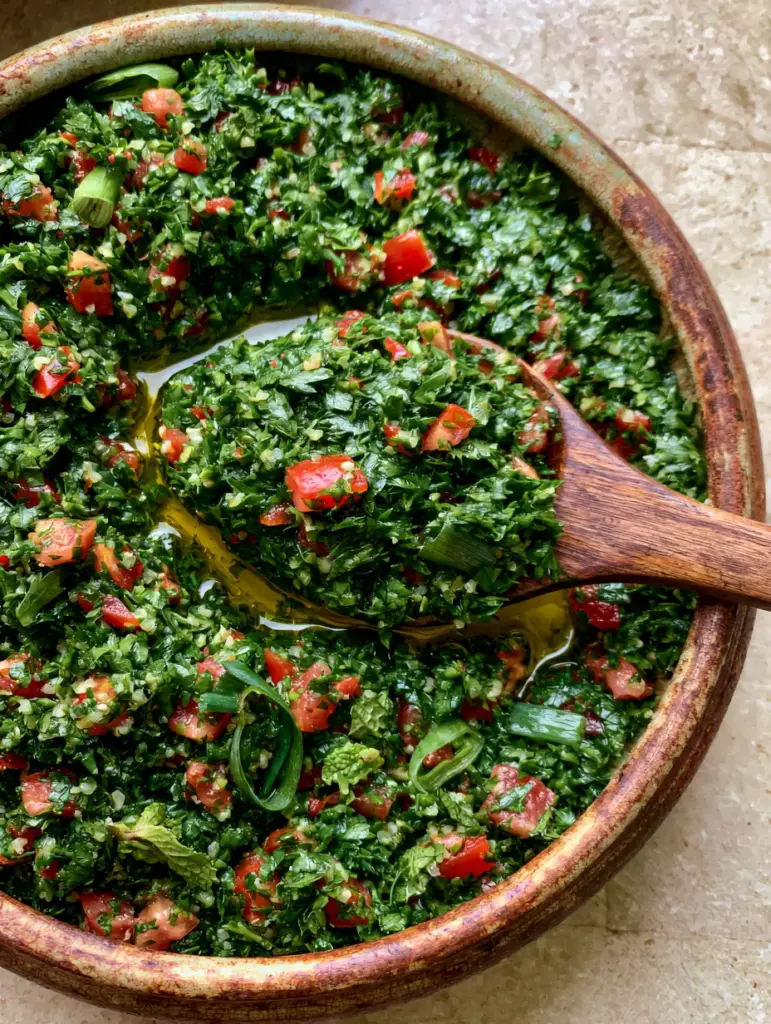
In your rustic ceramic bowl, combine the chopped parsley, mint, tomatoes, and scallions. Fluff them together with a wooden spoon—never press down. Add the soaked bulgur wheat, ensuring you scrape in all the lemon juice it was soaking in.
Drizzle the extra virgin olive oil in a slow stream while tossing gently. You are looking for a light, glistening sheen on the leaves. Season with sea salt flakes and a few cracks of black pepper. The salad should look vibrant and deep emerald green, catching the light as you lift a portion with your wooden spoon.
Expert Tips for Tabbouleh Success
- Never use a food processor: We cannot stress this enough. The heat and speed of blades turn parsley into a paste. Hand-chopping is the only way to get the airy, light texture.
- The “Dryness” Rule: If your parsley is wet, your tabbouleh is ruined. Dry the herbs until they feel like velvet before the knife touches them.
- Tomato Selection: Use Roma or Plum tomatoes. They have a higher flesh-to-seed ratio, which makes them easier to dice into “tiny jewels” without turning into mush.
- Salt at the last minute: Salt draws out moisture. To keep the salad from becoming soggy, add the salt flakes just before serving.
Structural Integrity: Storage and Make-Ahead Advice
A Lebanese tabbouleh recipe is best enjoyed within a few hours of assembly to maintain the “crisp, non-soggy texture” shown in the visual prompt. However, you can prep the ingredients in advance.
Store the chopped herbs and diced tomatoes in separate containers lined with paper towels in the refrigerator for up to 24 hours. Do not mix them with the oil, lemon, or salt until you are ready to serve. Once fully dressed, the salad will stay fresh for about 1 day, though it will lose some of its characteristic fluffiness as the herbs wilt slightly in the acidity.
What to Serve With Authentic Tabbouleh
This salad is a versatile powerhouse. It pairs beautifully with grilled proteins like a seared salmon or acts as a refreshing side to a hearty aromatic rice pilaf.
If you are building a full Mediterranean spread, consider serving it alongside lemon herb roasted potatoes and a variety of dips like hummus and baba ganoush. The acidity of the tabbouleh cuts through the richness of roasted meats and creamy dips perfectly.
Frequently Asked Questions
No, a food processor will bruise the parsley and release too much moisture, resulting in a soggy, wet salad. For the authentic fluffy and light texture, you must hand-chop the herbs with a sharp knife.
There are three secrets: ensure your parsley is bone-dry after washing, seed your tomatoes to remove excess juice, and add the salt only right before serving to prevent the vegetables from releasing water.
Traditional tabbouleh is not gluten-free because it contains bulgur wheat. However, you can substitute the bulgur with hemp seeds or finely riced cauliflower for a similar visual texture if you have dietary restrictions.
Extra-fine bulgur wheat, also known as #1 grade, is best. It is fine enough to soften through soaking in lemon juice and olive oil without needing to be boiled, maintaining a delicate, microscopic appearance.
Authentic Lebanese tabbouleh is an herb salad, not a grain salad. The parsley should be the primary ingredient, giving it a deep emerald green color, while the bulgur should only appear as microscopic white specks.
The Ultimate Lebanese Tabbouleh Recipe Card
Lebanese Tabbouleh Recipe: The Ultimate Guide to Authentic, Fluffy Emerald Salad
Ingredients
Equipment
Method
- Rinse the extra-fine bulgur in a fine-mesh sieve. Place in a small bowl and cover with the lemon juice. Set aside for 20 minutes to soften.
- Ensure washed parsley and mint are completely dry. Bunch the parsley tightly and hand-chop with a sharp knife into microscopic, fluffy bits. Mince the mint leaves similarly.
- Seed the tomatoes and dice into tiny, uniform jewels. Slice the scallions into paper-thin rounds.
- In a rustic ceramic bowl, gently toss the herbs, tomatoes, and scallions. Add the soaked bulgur. Drizzle with olive oil until a glistening sheen forms. Season with salt flakes and pepper.
Notes
Always hand-chop; a food processor will bruise the herbs and ruin the fluffiness.
Bring the Flavors of the Levant to Your Kitchen
Mastering the Lebanese tabbouleh recipe is a rewarding journey into the importance of technique and fresh ingredients. The deep emerald green hues and the light, airy texture make it a showstopper on any table. Remember to focus on the dryness of your herbs and the precision of your chop to achieve that professional, rustic look.
If you enjoyed this recipe, please leave a comment below and share your results! You can find more visual recipe inspiration and follow our culinary journey on our Pinterest page. Don’t forget to pin this recipe for your next healthy meal prep or dinner party!