There is a profound difference between a standard roasted potato and an authentic, high-heat Greek potatoes recipe. When you bite into a truly exceptional Greek wedge, you should experience an audible “shatter” from the jagged, deep-golden crust, immediately followed by the sensation of a cloud-like, steaming white interior. This isn’t just side-dish serendipity; it is a result of specific culinary forensics and structural engineering.
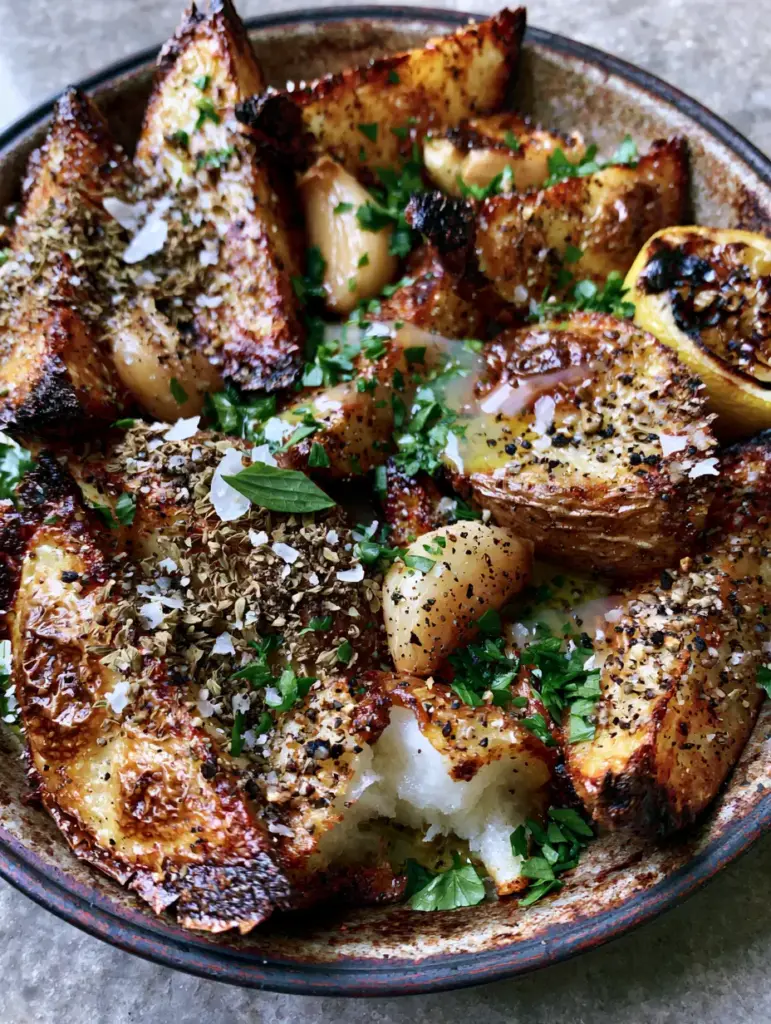
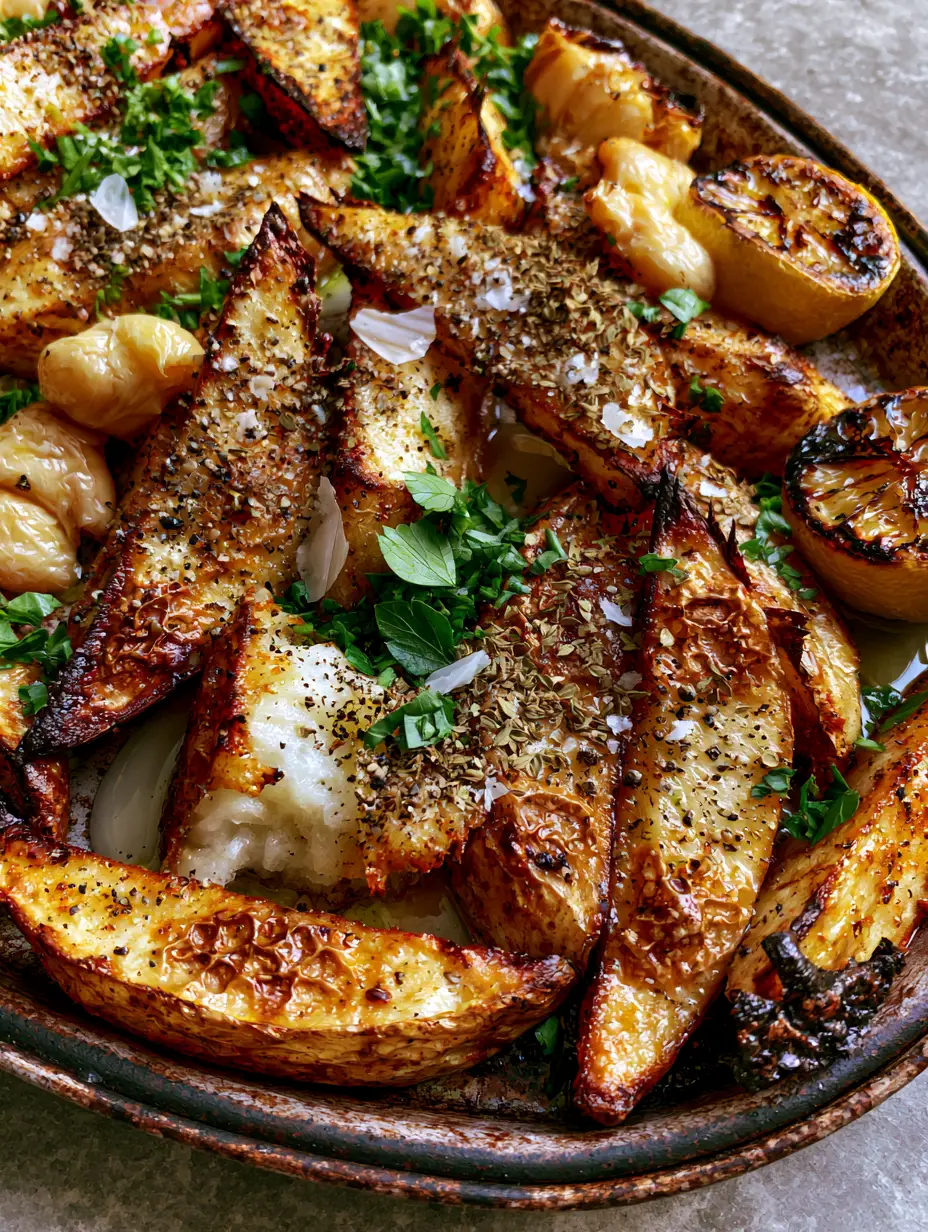
In this guide, we are recreating the exact visual and textural masterpiece described in our culinary blueprint. We are talking about thick-cut wedges with visible surface craters, charred edges that border on blackened perfection, and the bright, aromatic lift of dried oregano and fresh flat-leaf parsley. Whether you are hosting a Sunday dinner or craving a Mediterranean escape, these potatoes are the gold standard.
Achieving this level of crunch requires moving beyond the “toss and bake” method. We will utilize parboiling to gelatinize surface starches and high-velocity roasting to create that signature blistered exterior. Let’s dive into the science of the perfect Greek potatoes recipe.
The Anatomy of the Perfect Shatter-Crisp Wedge
- High-Contrast Textures: A jagged, cratered exterior that provides a glass-like crunch, protecting a fluffy, fully hydrated potato center.
- Charred Aromatics: Whole roasted garlic cloves that turn into spreadable “butter” and lemon halves charred to concentrate their sugars.
- Layered Seasoning: A foundation of cracked black pepper and dried oregano, finished with the bright pop of fresh parsley and flaky Maldon sea salt.
- The Glistening Emulsion: A translucent lemon-olive oil drizzle that adds a luxurious mouthfeel without compromising the potato’s structural integrity.
Foundational Ingredients for Ultimate Texture
To achieve the visual result of “shatter-crisp” edges, we must select ingredients that behave predictably under high heat. Every component in this Greek potatoes recipe serves a structural or flavor-profile purpose.
Russet or Yukon Gold Potatoes: You need 3 lbs (1.36kg) of high-starch potatoes. Russets provide the fluffiest white interior, while Yukon Golds offer a buttery flavor; both are essential for creating the surface starch needed for “craters.”
Extra Virgin Olive Oil: You will use 1/2 cup (120ml) of high-quality oil. This acts as the heat transfer medium that fries the skin of the potato while it roasts, leading to those blistered, charred edges.
Fresh Lemons: You need 3 large lemons. Two will be halved and charred on the sheet pan, while the third provides the fresh juice for the final glistening emulsion.
Whole Garlic Cloves: 8 to 10 cloves, left in their papery skins. Roasting them whole prevents the garlic from acrid burning while allowing the interior to become sweet and soft.
Dried Oregano & Fresh Parsley: 1 tbsp (3g) of dried oregano provides the earthy base, while 1/4 cup (15g) of chopped fresh flat-leaf parsley adds the visual vibrant green contrast.
Seasoning Essentials: 1 tbsp (15g) of flaky sea salt and 1 tsp (2g) of cracked black pepper. The flaky salt is critical for that final visual “sparkle” and hit of salinity.
Baking Soda (The Secret Science): 1/2 tsp (2.5g) added to the boiling water. This breaks down the potato’s pectin, drawing more starch to the surface for maximum jagged edges.
Essential Gear for High-Heat Roasting
You cannot achieve “shatter-crisp” results in a glass dish. The material of your cookware dictates the rate of heat transfer. For this Greek potatoes recipe, a heavy-duty, dark-rimmed rimmed baking sheet is non-negotiable as it absorbs and radiates heat more intensely than light-colored aluminum.
You will also need a large stockpot for parboiling. A stainless steel colander is useful for the “roughing” stage, where we intentionally damage the surface of the potatoes to create those beautiful, charred craters. Finally, a small glass jar is perfect for shaking together your lemon-olive oil emulsion.
The Forensic Method: Step-by-Step Excellence
Phase 1: The Pectin Breakdown
Start by peeling your 3 lbs (1.36kg) of potatoes and cutting them into thick, uniform wedges. Aim for roughly 6-8 wedges per potato to ensure they are substantial enough to maintain a fluffy interior.
Bring a large pot of water to a boil and add a generous pinch of salt and 1/2 tsp (2.5g) of baking soda. Drop the wedges in and boil for 8-10 minutes. You are looking for the edges to be softened and slightly frayed, but the wedge should still hold its shape when lifted with a slotted spoon.
Phase 2: The Surface Roughing
Drain the potatoes into a colander and let the steam escape for 2 minutes. This “steam-drying” is vital; excess moisture is the enemy of the crunch. Once dry, give the colander a vigorous shake.
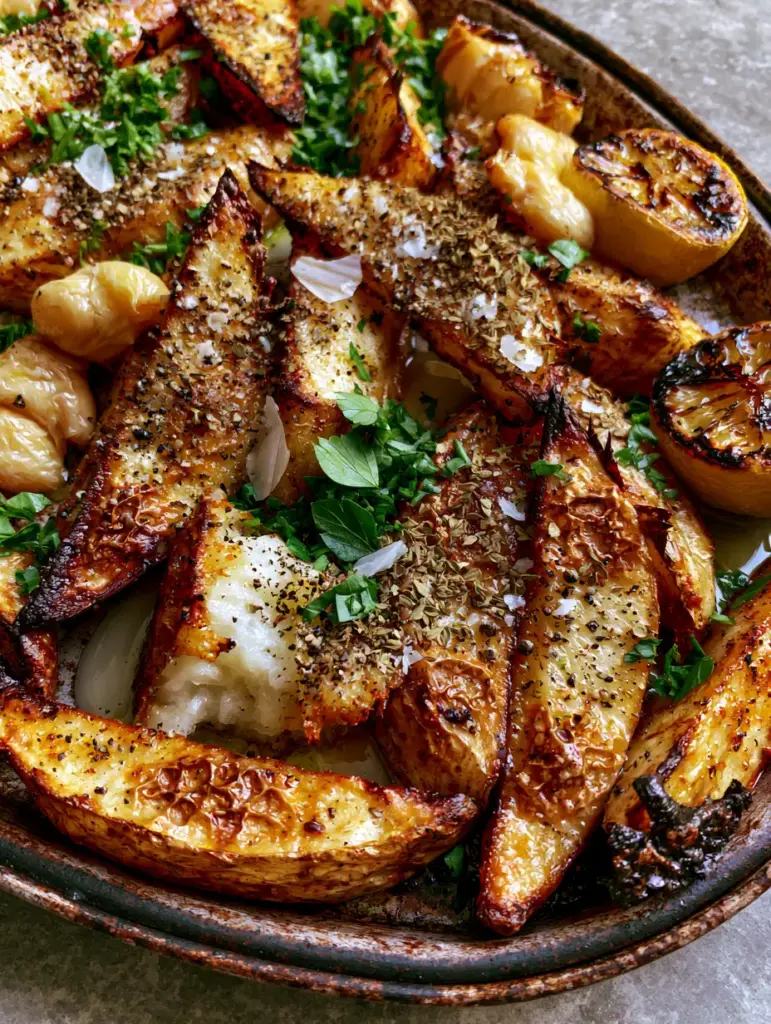
You want to see a thin film of potato “mash” forming on the surface of the wedges. These are the starches that will eventually dehydrate and fry in the oven, creating the “shatter-crisp” craters seen in our visual blueprint. Transfer them to your dark baking sheet.
Phase 3: The High-Heat Roast
Preheat your oven to 425°F (220°C). Drizzle the wedges with 1/4 cup (60ml) of olive oil, dried oregano, and cracked black pepper. Toss thoroughly to coat every jagged edge.
Tuck the 8-10 whole garlic cloves (in skins) and the 2 lemon halves (cut-side down) between the potatoes. Spread everything in a single layer. Roast for 20 minutes, then use a metal spatula to flip the potatoes, ensuring you don’t break the delicate crust. Roast for another 20-25 minutes until the edges are deep golden-brown and charred in spots.
Phase 4: The Final Emulsion and Garnish
While the potatoes are hot, whisk together the remaining 1/4 cup (60ml) of olive oil with the juice of your remaining lemon. As soon as the tray comes out, remove the charred lemons and squeeze their concentrated, smoky juice into the emulsion.
Drizzle the translucent mixture over the steaming potatoes. You will hear a slight sizzle. Immediately shower the tray with the chopped fresh flat-leaf parsley and a generous sprinkle of flaky Maldon sea salt. The result should be a glistening, vibrant masterpiece that looks exactly like a professional food photograph.
Mastering the Potato: Pro-Level Troubleshooting
- Why are my potatoes soggy? This usually happens if the oven temperature is too low or the pan is overcrowded. Ensure the wedges have breathing room so the steam can escape rather than soften the crust.
- The garlic burned: If your garlic cloves are small, leave them in their skins for the entire roasting process. The skin acts as a heat shield, allowing the sugars to caramelize without turning bitter.
- Lack of “Craters”: This is a result of skipping the parboiling or roughing stage. The baking soda in the water is the chemical catalyst for that specific “shatter” texture.
- Oil Choice: Do not use butter for the roasting phase; its milk solids will burn at 425°F (220°C). Stick to extra virgin olive oil for the authentic Greek flavor profile and high smoke point.
Storing and Rejuvenating Your Crispy Spuds
While this Greek potatoes recipe is best enjoyed immediately for maximum “shatter,” you can store leftovers in an airtight container for up to 3 days. Avoid the microwave, as it will turn your crispy masterpieces into mush.
To reheat, place the wedges back on a baking sheet in a 400°F (200°C) oven for 8-10 minutes. This will reactivate the oils and restore much of the original crunch. If you’re planning a larger Mediterranean feast, you can parboil and rough the potatoes a day in advance, storing them in the fridge once cooled to save time on the day of serving.
Building the Ultimate Mediterranean Feast
These crispy wedges are the ultimate companion to a variety of Mediterranean proteins. For a classic pairing, serve them alongside these Greek chicken skewers for a complete street-food inspired meal at home.
If you want to keep the meal light and vibrant, a bowl of Lebanese tabbouleh or a crisp Greek salad provides the perfect acidic contrast to the rich, roasted potatoes. For those who enjoy a fusion approach, these potatoes surprisingly complement the bold flavors of bang bang salmon or even a simple baked honey garlic cod.
Deep-Dive Answers for Potato Perfection
For this specific recipe, fresh is essential. The charred lemon halves provide a unique smoky acidity that bottled juice cannot replicate, and fresh juice is needed for the final glistening emulsion.
Yes. Parboiling with a bit of baking soda breaks down the potato’s surface pectin, creating a starchy slurry that roasts into those signature jagged, crispy craters.
Tossing the oregano with the olive oil before roasting helps protect the herb. However, the slightly charred flavor of the oregano is a traditional characteristic of authentic Greek lemon potatoes.
High-starch potatoes like Russets are best for a fluffy white interior, while Yukon Golds provide a great balance of buttery flavor and crispy edges. Avoid waxy red potatoes as they won’t produce the desired ‘shatter-crisp’ crust.
Softness is usually caused by overcrowding the pan (which creates steam) or not using enough oil. Ensure the potatoes are in a single layer with space between them and the oven is at a true 425°F (220°C).
The Ultimate Crispy Greek Potatoes Recipe
Greek potatoes recipe: The Secret to Shatter-Crisp Roasted Wedges
Ingredients
Equipment
Method
- Bring a pot of salted water with baking soda to a boil. Boil potato wedges for 8-10 minutes until edges are softened but wedges are intact.
- Drain potatoes in a colander and let steam dry for 2 minutes. Shake the colander vigorously to roughen the edges and create a starchy coating.
- Toss potatoes on a dark baking sheet with 1/4 cup olive oil, oregano, and pepper. Add garlic cloves and lemon halves (cut-side down).
- Roast at 425°F (220°C) for 40-45 minutes, flipping halfway, until the edges are deep golden-brown, charred, and blistered.
- Whisk remaining olive oil with the juice of one fresh lemon and the squeezed juice of the charred roasted lemons.
- Drizzle the emulsion over hot potatoes. Top with fresh parsley and flaky sea salt immediately before serving.
Notes
Do not overcrowd the baking sheet or the potatoes will steam instead of crisping.
Closing & Call to Action
Mastering the Greek potatoes recipe is a rite of passage for any home cook looking to elevate their side-dish game. By focusing on the science of starch and the power of high-heat roasting, you create a dish that is as visually stunning as it is delicious. The combination of charred lemon, roasted garlic, and that signature “shatter-crisp” crust is truly unforgettable.
If you enjoyed this forensic look at Mediterranean cooking, please leave a comment below and let us know how your craters turned out! Don’t forget to share your crispy creations on Pinterest and tag us. For more kitchen inspiration, subscribe to our newsletter for weekly recipe deep-dives.