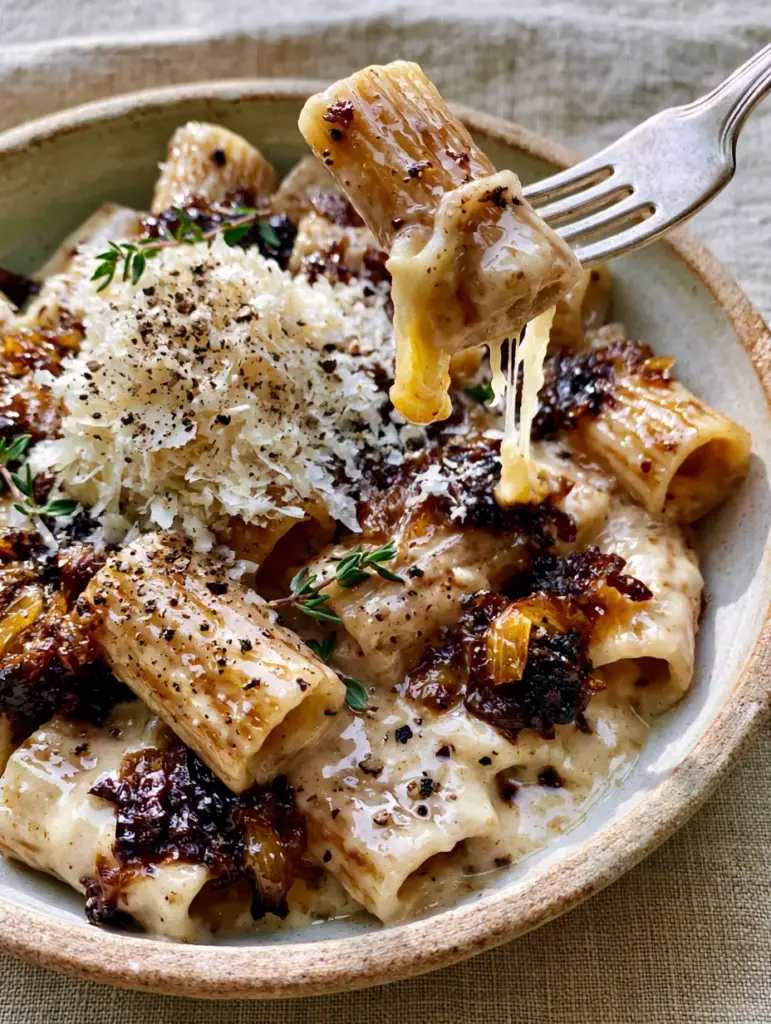
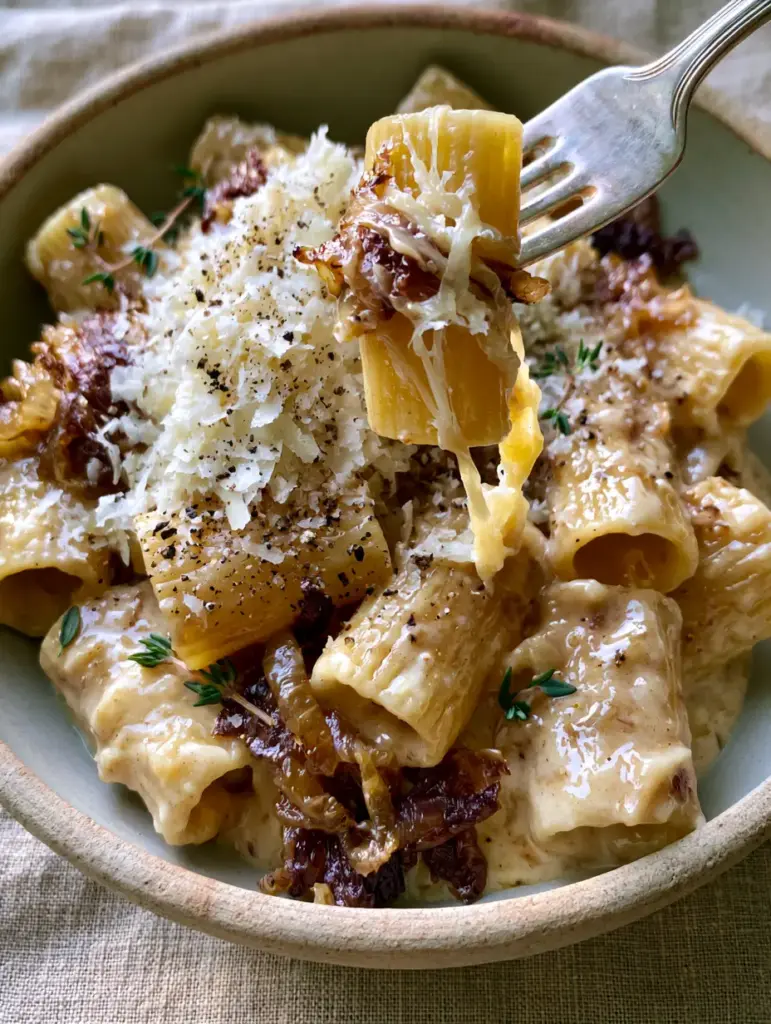
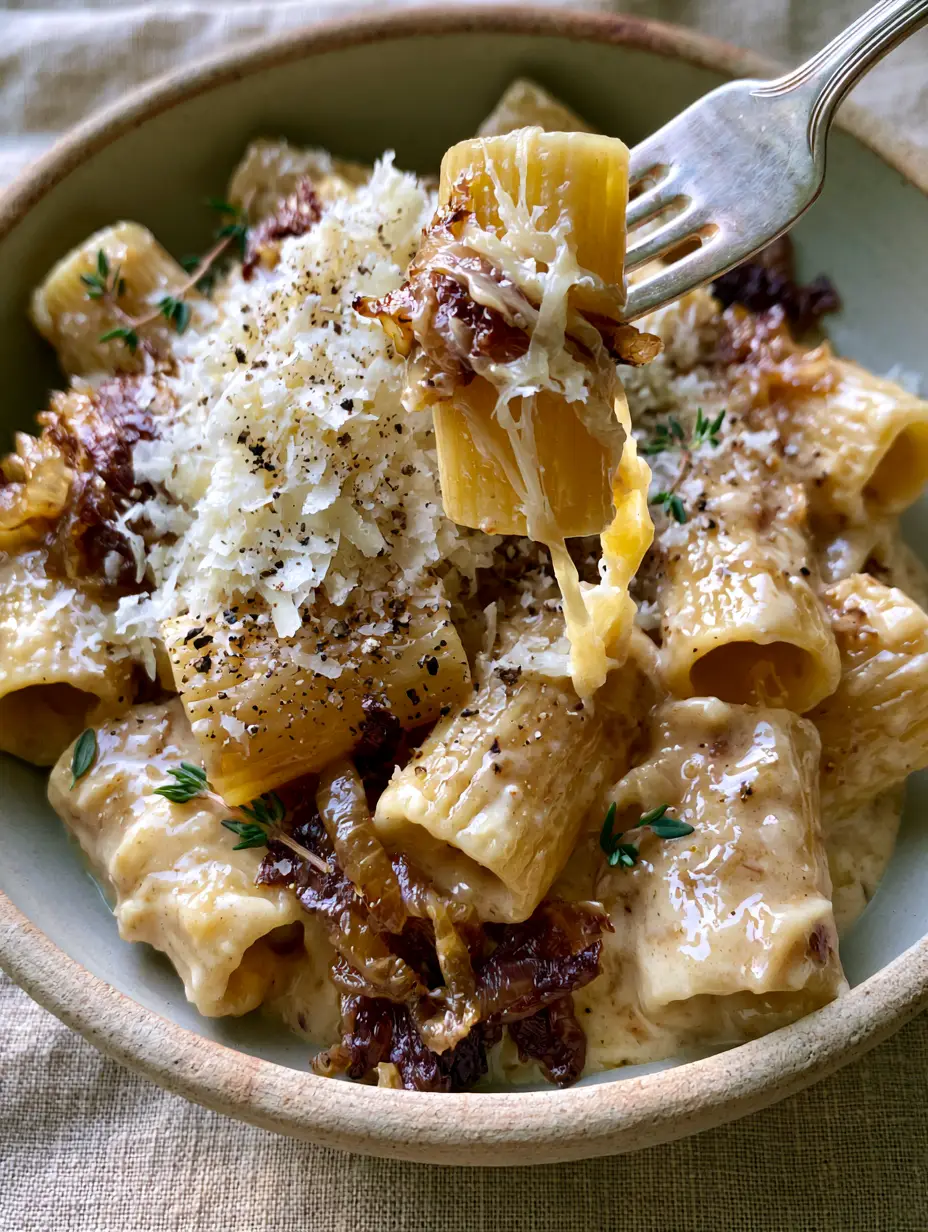
When you crave the soulful, deep-umami satisfaction of a French onion soup but need the heartiness of a main course, this Caramelized Onion Pasta is the ultimate culinary bridge. This isn’t just a quick weeknight meal; it is a slow-cooked masterpiece where simple aromatics transform into jammy, mahogany-hued gems. The result is a rustic, shallow ceramic bowl overflowing with al dente rigatoni, draped in a thick, glossy, pale-beige cream sauce that clings to every ridge of the pasta.
The visual appeal of this dish is undeniable. Imagine lifting a silver fork to see a single rigatoni noodle coated in a velvety sauce, showcasing stringy, melted Gruyere cheese and the glossy sheen of high-quality oil. Scattered fresh thyme leaves and a mountain of finely shaved Parmesan provide the final aromatic and textured flourishes, making it look as though it were captured under soft, natural daylight in a professional studio.
Why This Creamy French Onion Pasta Works Every Single Time
- The Jammy Texture: By slow-cooking the onions until they reach shades of mahogany and dark amber, we unlock a natural sweetness that balances the savory balsamic glaze.
- Perfect Sauce Emulsification: The heavy cream sauce is engineered to be thick and glossy, ensuring no watery residue remains at the bottom of your bowl.
- Structural Integrity: Using rigatoni provides wide tubes and deep ridges that act as the perfect vessels for capturing the jammy onions and melted Gruyere.
- The Cheese Pull: The combination of Gruyere and shaved Parmesan creates that iconic stringy texture that defines comfort food.
Essential Components for the Ultimate Caramelized Onion Pasta
To achieve the visual recipe blueprint and the professional flavor profile, every ingredient in this Caramelized Onion Pasta has a specific scientific and culinary role. We aren’t just tossing things in a pan; we are building layers of flavor from the ground up.
Yellow Onions: You will need 3 large (approx. 900g) onions. Their high sugar content is what allows them to transform into that jammy, mahogany state during the long caramelization process.
Balsamic Vinegar: 2 tbsp (30ml) of high-quality balsamic is used to deglaze the pan. This provides the dark amber color and a necessary acidity to cut through the richness of the cream.
Rigatoni Pasta: 1 lb (454g) of rigatoni is the ideal choice here. The large surface area and hollow center are designed to hold onto thick sauces better than thinner noodles like spaghetti.
Heavy Cream: 1 cup (240ml) of heavy cream creates the “pale-beige” glossy sauce described in our visual prompt. It provides the luxurious mouthfeel that characterizes this dish.
Gruyere Cheese: 1.5 cups (150g) of freshly shredded Gruyere. This is the secret to the stringy cheese pull seen in the Midjourney prompt; it melts beautifully and adds a nutty, earthy depth.
Shaved Parmesan: 1/2 cup (50g) for finishing. Do not use the canned variety; you want large, thin shavings to create that “mountain” of cheese visual.
Fresh Thyme: 1 tbsp (approx. 4g) of leaves. The herbaceous, slightly floral note of fresh thyme is the traditional partner to French onion flavors and adds a pop of green against the amber onions.
Unsalted Butter and Olive Oil: 2 tbsp (30g) butter and 1 tbsp (15ml) oil. The oil prevents the butter from burning during the long onion-cooking process, while the butter provides essential fat for the glossy sheen.
Beef or Vegetable Broth: 1/2 cup (120ml). This acts as a secondary deglazing agent and builds the “French onion” flavor profile without thinning the sauce too much.
Tools You Will Need for Professional Results
Achieving the perfect Caramelized Onion Pasta requires the right thermal conductivity. A heavy-bottomed Dutch oven or a large cast-iron skillet is non-negotiable for caramelizing onions evenly without scorching them.
You will also need a sharp chef’s knife for creating uniform onion slices, a Microplane or vegetable peeler for the shaved Parmesan, and a large pasta pot. A silver fork for serving—and for capturing that perfect Instagram shot—is the finishing touch for your tabletop presentation.
Mastering the Science of the Mahogany Caramelized Onion
Prepping and Slicing the Aromatics
Start by peeling your onions and slicing them into uniform 1/4-inch (6mm) half-moons. Consistency is key here; if the slices are uneven, the thin pieces will burn before the thick pieces become jammy. Strip the fresh thyme leaves from their woody stems, ensuring you have enough for both the sauce and the final garnish.
The Low and Slow Caramelization Process
In your heavy skillet, melt the butter and olive oil over medium-low heat. Add the sliced onions with a pinch of salt to draw out moisture. You aren’t looking for a quick sauté; you are looking for a transformation. Stir every 5 to 8 minutes. After about 40 minutes, the onions will be a deep golden brown. If the pan looks dry, add a splash of water to loosen the brown bits (fond) from the bottom.
Deglazing and Glazing for Depth
Once the onions are soft and mahogany-colored, pour in the 2 tbsp (30ml) of balsamic vinegar. The acid will immediately lift the caramelization from the pan and coat the onions in a dark, jammy glaze. Add the fresh thyme and cracked black pepper at this stage to bloom the spices in the residual heat. The aroma at this point should be intoxicatingly sweet and savory.
Cooking the Rigatoni to Al Dente Perfection
While the onions finish their glaze, boil a large pot of heavily salted water. Cook the rigatoni for 1-2 minutes less than the package instructions. This is crucial because the pasta will finish cooking in the cream sauce. Reserve 1 cup (240ml) of starchy pasta water before draining; this liquid gold is the secret to a glossy, emulsified sauce.
Building the Glossy Pale-Beige Cream Sauce
Turn the heat under the onions to medium and pour in the broth and heavy cream. Stir constantly as the liquid begins to simmer and thicken. The sauce will take on a beautiful pale-beige color as it mingles with the mahogany onions. Gently fold in the shredded Gruyere, stirring until you see those iconic cheese strings beginning to form.
The Final Emulsification and Assembly
Add the al dente rigatoni directly into the sauce. Toss vigorously, adding the reserved pasta water a tablespoon at a time until the sauce is thick, glossy, and heavily coating every noodle. The oil sheen should be visible on the surface, catching the light as you move the pasta.
Expert Tips for the Ultimate Pasta Success
- Patience is the Main Ingredient: You cannot rush caramelized onions. If you turn the heat too high, they will become bitter. The “jammy” texture only comes with time.
- Salt the Water, Not Just the Sauce: Since the sauce is rich and creamy, the pasta itself needs to be well-seasoned from the boiling process to prevent the dish from tasting flat.
- Fresh Thyme Only: Avoid dried thyme for this recipe. The visual “scattered thyme” look and the bright, citrusy notes are only achievable with fresh sprigs.
- The Cheese Temperature: Ensure your Gruyere is at room temperature before adding it to the sauce to prevent clumping and ensure a smooth melt.
Perfect Pairings and Serving Suggestions
This Caramelized Onion Pasta is a rich, decadent dish that benefits from a bright, acidic side. To cut through the cream and cheese, consider serving it alongside a vibrant Lebanese tabbouleh or a classic Greek salad. The fresh herbs and lemon juice in these sides provide a refreshing contrast to the mahogany onions.
If you are hosting a dinner party and looking to round out the menu, this pasta pairs beautifully with seafood starters like a perfectly baked rainbow trout or even a light refreshing watermelon salad during the warmer months. For dessert, something fruity like a homemade blackberry jam thumbprint cookie would be the perfect sweet ending.
Storage and Reheating Guidelines
Because of the high cream and cheese content, this pasta is best enjoyed immediately. However, if you have leftovers, store them in an airtight container in the refrigerator for up to 3 days. To reheat, add a splash of milk or water to a pan and heat over low, stirring constantly to re-emulsify the sauce. Avoid the microwave if possible, as it can cause the cheese fats to separate, losing that glossy sheen.
Frequently Asked Questions
You can caramelize the onions up to 3 days in advance. However, the cream sauce and pasta assembly should be done fresh to ensure the sauce stays glossy and the cheese remains stringy.
Fontina or a high-quality Swiss cheese are the best substitutes for Gruyere as they offer similar melting properties and a nutty flavor profile.
Yellow onions or Vidalia (sweet) onions are best. They have the highest sugar content, which allows them to reach that deep mahogany, jammy texture required for this pasta.
You likely need more pasta water. The starchy water helps emulsify the fats from the cream and butter, creating a glossy sheen rather than a sticky or dry coating.
The Ultimate Caramelized Onion Pasta Recipe
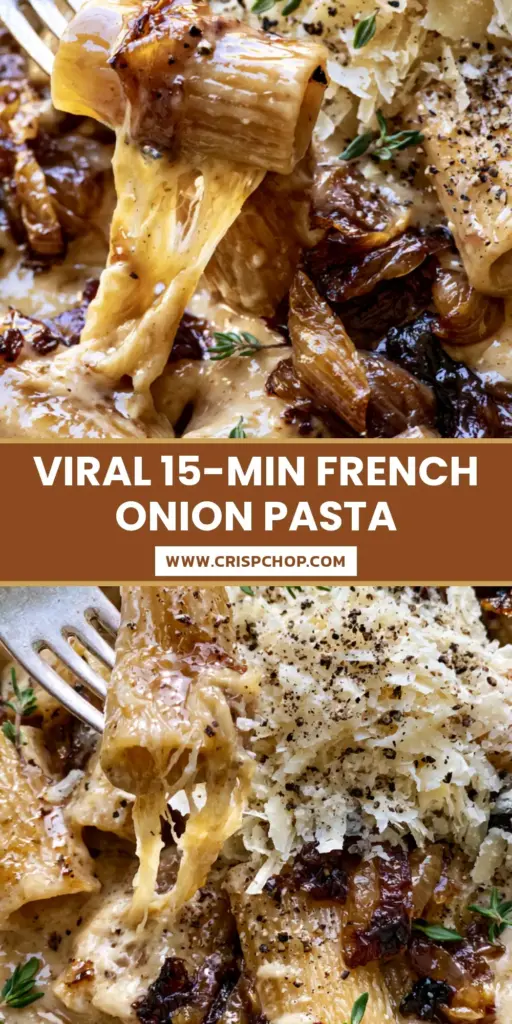
Caramelized Onion Pasta: A Creamy French Onion Rigatoni Recipe
Ingredients
Equipment
Method
- Melt butter and oil in a large skillet over medium-low heat. Add onions and a pinch of salt. Cook, stirring occasionally, for 40-45 minutes until mahogany brown.
- Add balsamic vinegar to deglaze the pan, stirring to coat the onions until they become jammy and dark amber.
- Cook rigatoni in salted water until just shy of al dente. Reserve 1 cup of pasta water.
- Add heavy cream and broth to the onions. Simmer until thickened, then stir in Gruyere until melted and stringy.
- Combine pasta with the sauce, adding pasta water to achieve a glossy sheen. Top with shaved Parmesan, thyme, and black pepper.
Notes
Reserve more pasta water than you think you need to keep the sauce glossy.
Bringing the French Bistro Home
Transforming simple onions and cream into a restaurant-quality Caramelized Onion Pasta is a rewarding culinary journey. The combination of jammy, mahogany onions and the stringy Gruyere cheese creates a sensory experience that is as beautiful to look at as it is to eat. Whether you are cooking for a special occasion or just treating yourself to a cozy night in, this recipe promises to deliver deep, complex flavors in every bite.
If you loved making this dish, please leave a comment below and let us know how your caramelization turned out! Don’t forget to share your creations and follow us on Pinterest for more visual recipe inspiration.