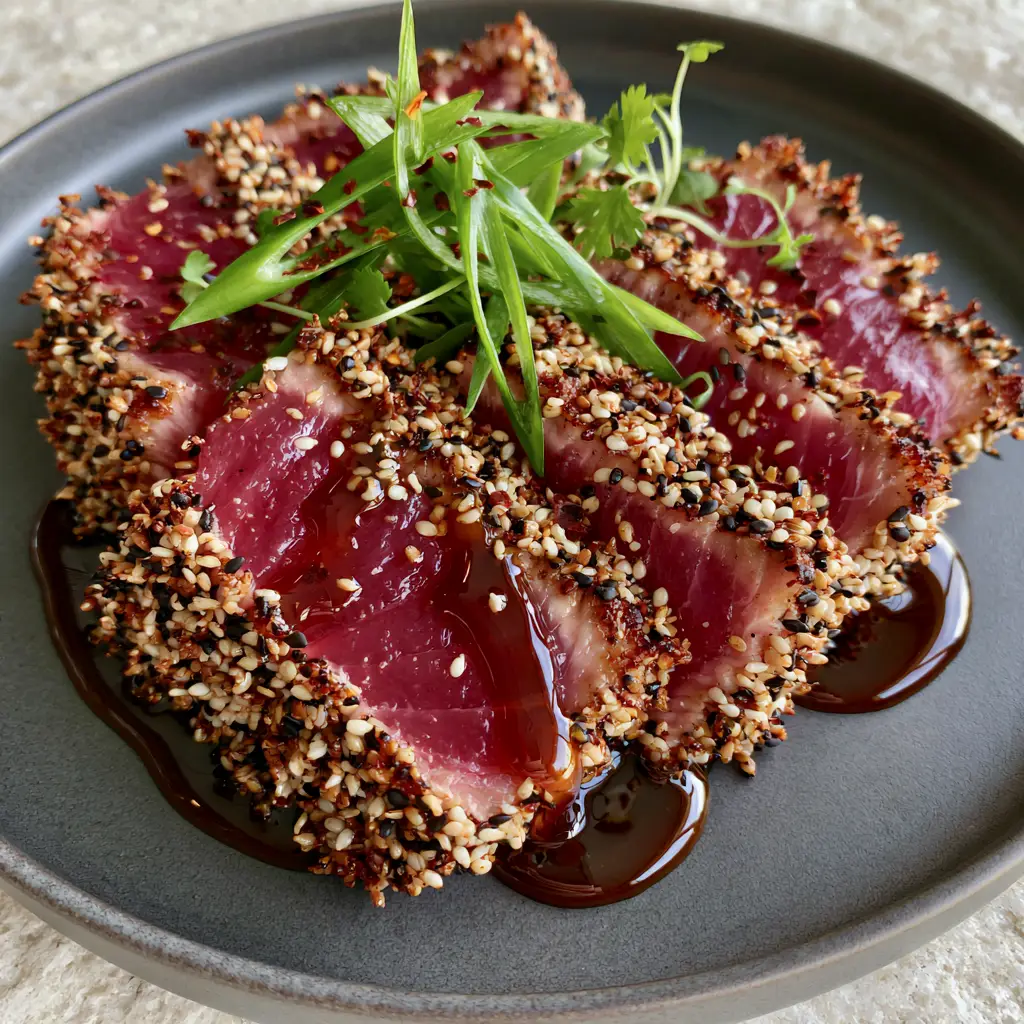
There is a specific culinary magic that happens when high-heat precision meets the delicate, buttery texture of sushi-grade fish. This Sesame Ginger Tuna Steak is not just a meal; it is a visual and sensory masterpiece designed to mimic the high-end aesthetic of a modern bistro. From the crunch of the toasted black and white sesame crust to the vibrant, translucent ruby-red center, every element of this dish is engineered for perfection.
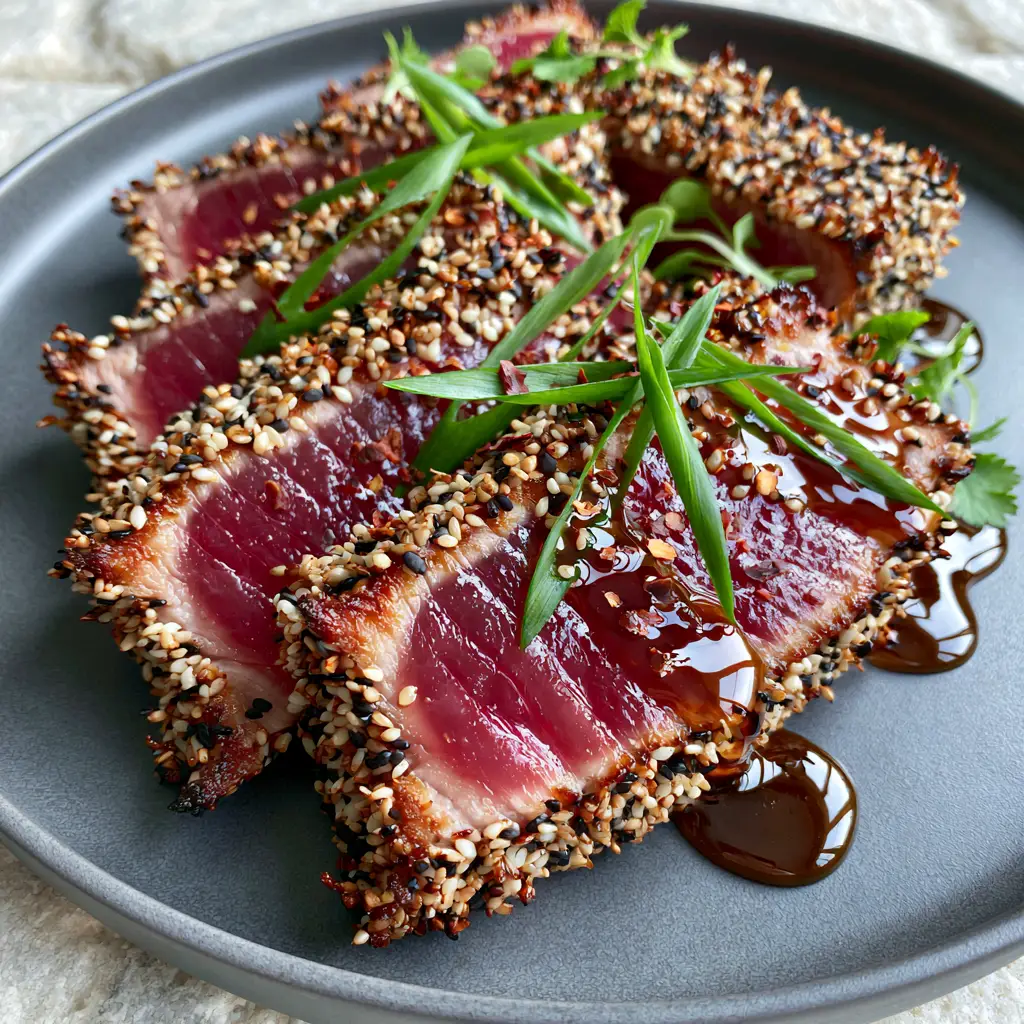
The hallmark of a professional-grade tuna steak lies in the contrast. You are looking for a deep, golden-brown pan-seared edge that gives way to a center that remains cool and jewel-like. When drizzled with a thick, glossy, dark amber ginger-soy reduction, the flavors achieve a balance of salty, sweet, and pungent that is simply unmatched.
In this guide, we will walk through the forensic details of achieving that iconic matte charcoal plate presentation. Whether you are hosting a sophisticated dinner or looking for a high-protein, low-carb powerhouse, this recipe delivers on every promise of flavor and form. Let us dive into the science of the perfect sear.
Why This Sesame Ginger Tuna Steak Recipe Is a Culinary Game-Changer
- Visual Masterpiece: The striking contrast between the black and white sesame seeds against the ruby-red tuna creates a centerpiece-worthy dish every time.
- Texture Contrast: You will experience a “shatter-crisp” exterior from the toasted seeds followed by the melt-in-your-mouth tenderness of rare Ahi.
- Syrupy Soy Reduction: Unlike thin sauces, this glaze has a honey-like viscosity that clings to the fish, ensuring ginger-garlic punch in every bite.
- Speed and Precision: With a total cooking time of under 5 minutes, this is the ultimate impressive meal for busy but discerning home cooks.
The Anatomy of Ingredients for the Perfect Seared Ahi
Ahi Tuna Steaks (Sashimi Grade): You must use 1.5-inch (3.8cm) thick steaks to ensure you can achieve a hard sear without overcooking the center. Look for deep red flesh with minimal connective tissue (sinew).
Black and White Sesame Seeds: Using a 50/50 blend provides the iconic “salt and pepper” visual. The white seeds act as a visual timer, browning as the crust toasts to let you know the sear is complete.
Low-Sodium Soy Sauce: This forms the base of our reduction. Using low-sodium allows you to concentrate the flavors through simmering without the saltiness becoming overpowering.
Fresh Ginger and Garlic: Grating these directly into the sauce releases essential oils that provide a sharp, aromatic contrast to the rich fat of the tuna.
Honey or Brown Sugar: These sugars are the “invisible architects” of the glaze’s viscosity. They undergo caramelization, creating that dark amber, glossy finish seen in our visual blueprint.
Neutral High-Smoke Point Oil: Avocado oil or grapeseed oil (1-2 tbsp / 15-30ml) is essential. Standard olive oil will smoke and turn bitter before the pan is hot enough to toast the seeds properly.
Micro-Cilantro and Scallions: These aren’t just for color; the razor-thin, bias-cut scallions provide a fresh, sulfurous bite that cuts through the soy reduction’s sweetness.
Essential Equipment for a Professional Finish
To achieve the results seen on our minimalist matte charcoal grey ceramic plate, you need the right tools. A heavy-bottomed cast iron or stainless steel skillet is non-negotiable for heat retention.
You will also need a sharp chef’s knife or a yanagiba (sushi knife) to ensure clean, thick medallions. Dull blades will “saw” through the tuna, tearing the delicate crust you worked so hard to build. A microplane is also vital for turning the ginger and garlic into a fine paste that melds into the reduction.
Mastering the Reduction: How to Get That Honey-Like Viscosity
Creating the Dark Amber Base
In a small saucepan, combine 1/2 cup (120ml) soy sauce, 2 tbsp (30ml) honey, 1 tbsp (15ml) rice vinegar, and 1 tsp (5g) of freshly grated ginger. Bring this to a gentle simmer over medium-low heat. You are looking for a reduction by half.
As the water evaporates, the sugars and soy proteins concentrate. You will know it is ready when the bubbles become large and “lazy,” and the sauce coats the back of a spoon. This reduction provides the glossy, dark amber sheen that defines the dish’s aesthetic.
Infusing Aromatics Without Burning
Add your minced garlic in the final 2 minutes of simmering. Garlic contains high amounts of natural sugar and can turn bitter if scorched; adding it late ensures a mellow, savory flavor that complements the ginger perfectly.
The Technical Sear: Achieving the Toasted Sesame Crust
Prepping the Tuna for the Seeds
Pat your tuna steaks extremely dry with paper towels. Any moisture on the surface will create steam, preventing the sesame seeds from adhering and toasting. Brush a very thin layer of toasted sesame oil over the steaks to act as a “glue.”
Press the tuna firmly into a flat plate filled with your mixed sesame seeds. Ensure every side—including the edges—is densely and evenly coated. You want a wall-to-wall crust with no pink flesh showing before it hits the pan.
The 60-Second Rule
Heat your skillet until the oil is shimmering and just starting to whisps of smoke. Place the tuna in the pan. Listen for a loud, aggressive sizzle—this is the sound of the seeds toasting and the proteins coagulating.
Sear for exactly 45-60 seconds per side. Use tongs to sear the narrow edges for 15 seconds each. The goal is a 1/8th inch (3mm) cooked border around a vibrant, translucent ruby-red rare center. Immediately remove from the heat to stop the cooking process.
The Art of the Bias Cut and Presentation
Rest the tuna for 2 minutes before slicing. This allows the internal juices to settle, ensuring the center stays ruby-red and doesn’t “bleed” onto the plate. Use a long, single-stroke motion with your knife to slice into thick medallions.
Arrange the medallions on a matte charcoal plate to make the red of the tuna and the green of the garnishes pop. Drizzle the glaze in a deliberate, artistic zig-zag. Finish with a sprinkle of tiny flecks of red chili flakes and delicate fresh micro-cilantro.
Expert Tips for Success
- Temperature Control: Ensure your tuna is cold, straight from the fridge, before searing. This gives you a longer window to toast the seeds without overcooking the interior.
- The “Gloss” Test: If your glaze is too thin, whisk in a tiny cornstarch slurry (1/2 tsp cornstarch + 1 tsp water) and simmer for 30 seconds to hit that honey-like viscosity instantly.
- Seed Adhesion: If the seeds aren’t sticking, a light brush of whisked egg white is a professional secret for an unbreakable crust.
- Resting is Key: Skipping the rest period will result in the soy glaze sliding off the warm surface of the fish rather than clinging to it.
The Best Pairings for Your Sesame Ginger Tuna Steak
To round out this meal, consider a side that mirrors the Asian-inspired profile. A bowl of savory shrimp fried rice or even a lighter classic chicken fried rice works beautifully to soak up any extra ginger-soy reduction.
If you are planning a themed dinner, start with some baked feta appetizers for a fusion experience, and finish with a light dessert like refreshing mango bingsu or a decadent layered mango crepe cake to cleanse the palate after the umami-rich tuna.
Proper Storage and Reheating Guidelines
Seared tuna is best enjoyed immediately to preserve the texture of the rare center. However, if you have leftovers, store them in an airtight container in the refrigerator for up to 24 hours.
Reheating is generally not recommended as it will cook the tuna through to a “canned” texture. Instead, slice the cold tuna thin and serve it over a salad or in a grain bowl. If you must reheat, use a very quick 30-second flash in a hot pan to crisp the seeds without heating the core.
Frequently Asked Questions
Yes, but it must be high-quality frozen tuna that was flash-frozen at sea. Thaw it completely in the refrigerator and pat dry thoroughly before searing to avoid steaming.
Pat the tuna completely dry, then brush a light layer of sesame oil or whisked egg white onto the fish. Firmly press the steak into the seed mixture to ensure full coverage.
The glaze is ready when it coats the back of a spoon and the bubbles become larger and slower. It should have a syrupy, honey-like viscosity.
Sashimi-grade Ahi (Yellowfin or Bigeye) is best. It is safe for raw consumption and has a firm, meaty texture that holds up to the high heat of searing.
This happens if the steak is too thin or seared for too long. Use a 1.5-inch thick steak and keep it cold until the moment it hits the pan to preserve the rare center.
The Master Recipe: Sesame Ginger Tuna Steak
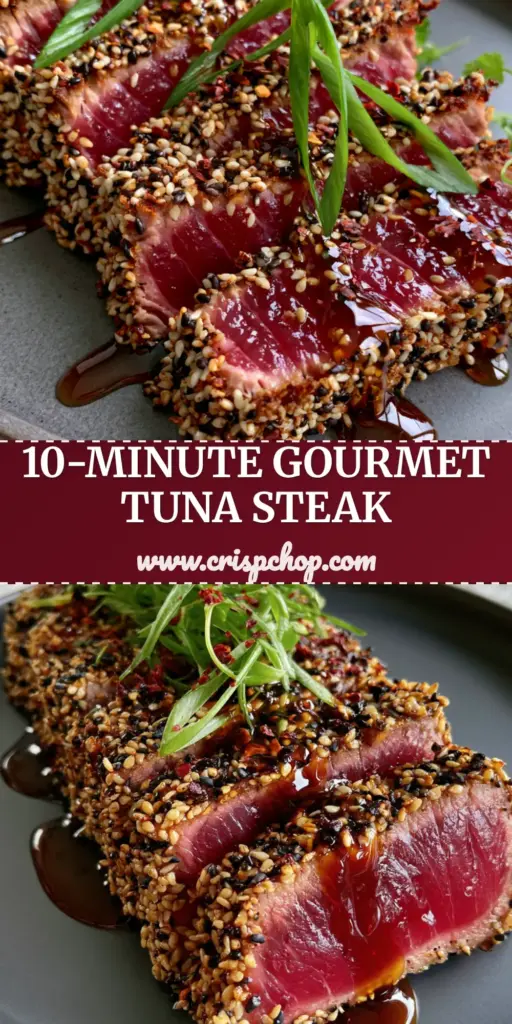
Sesame Ginger Tuna Steak: The Ultimate Guide to a Restaurant-Quality Rare Sear
Ingredients
Equipment
Method
- Combine soy sauce, honey, rice vinegar, and grated ginger in a saucepan. Simmer over medium-low heat until reduced by half.
- Add minced garlic in the final 2 minutes. Stir until the glaze is dark amber and has a honey-like viscosity.
- Pat tuna dry. Mix sesame seeds and press the tuna firmly into the seeds until all sides are densely coated.
- Heat oil in a skillet until shimmering. Sear tuna for 45-60 seconds per side for a ruby-red center.
- Rest the tuna for 2 minutes. Slice into thick medallions using a sharp knife on a bias.
- Arrange on a charcoal plate, drizzle with glaze, and top with scallions, chili flakes, and micro-cilantro.
Notes
Ensure the pan is smoking hot before adding the fish to achieve the golden-brown edges.
Closing and Call to Action
This Sesame Ginger Tuna Steak is the pinnacle of home-cooked luxury. By following these forensic culinary steps—from the seed-crusting technique to the soy reduction—you can recreate a dish that looks like it stepped out of a professional food shoot. The combination of the dark amber glaze and the matte charcoal plate creates a visual harmony that is as satisfying to look at as it is to eat.
If you enjoyed this deep dive into Ahi tuna perfection, please leave a comment below and let us know how your sear turned out! Don’t forget to share your creations with us on Pinterest and subscribe to our newsletter for more elite recipe blueprints.