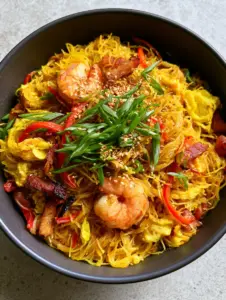
There is a specific, electrifying moment when a bowl of authentic Singapore noodles hits the table. The aroma of toasted curry powder meets the sizzle of high-heat wok cooking, creating a sensory experience that is hard to forget. This dish is a masterclass in texture, combining springy rice vermicelli with snap-crisp vegetables and tender proteins.
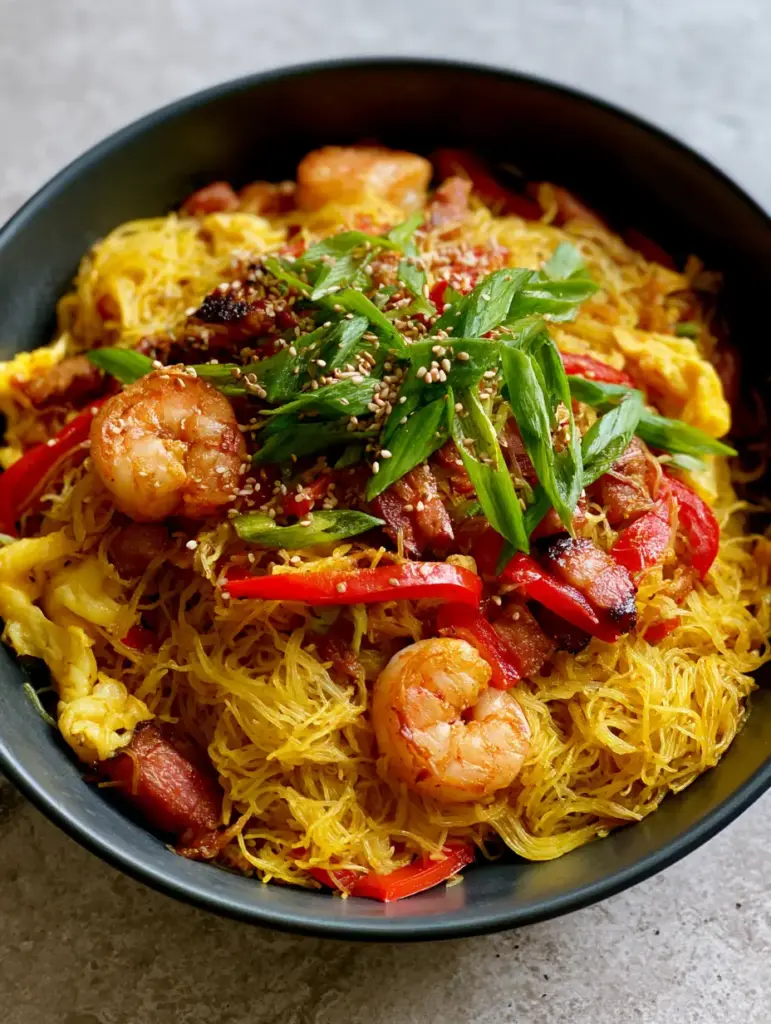
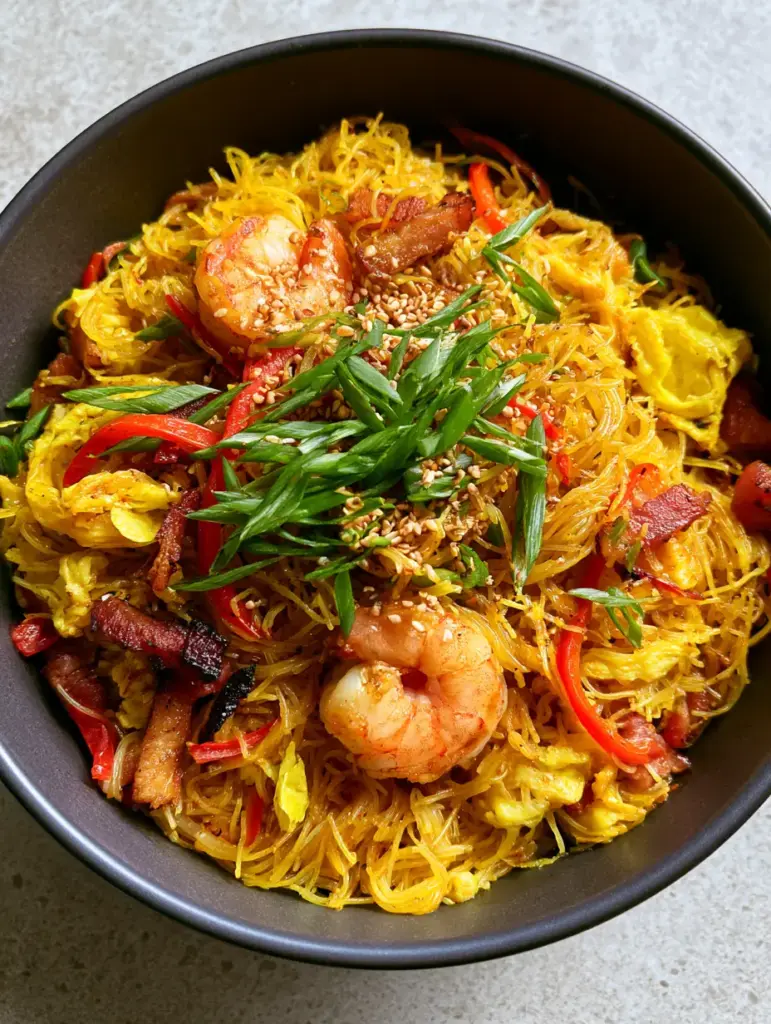
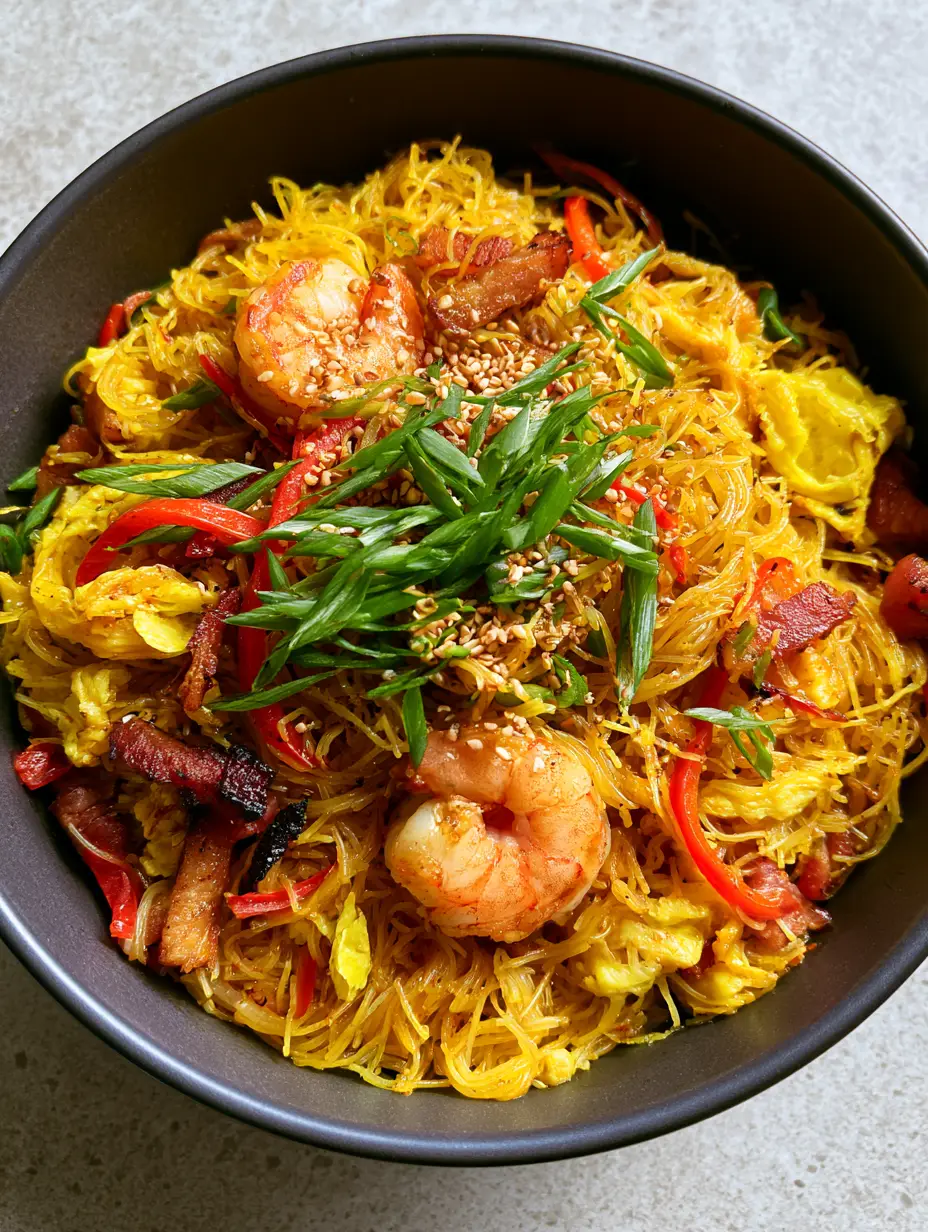
In this guide, we are recreating the exact visual masterpiece described in our culinary blueprint. You can expect vibrant, golden-yellow strands of rice vermicelli that glisten with a light oil sheen. Every bite features plump, seared pink shrimp, charred pork slivers, and the unmistakable crunch of julienned red bell peppers.
Whether you are a seasoned stir-fry enthusiast or a newcomer to Cantonese-style cuisine, this recipe will help you achieve restaurant-quality results at home. We will dive deep into the “wok hei” technique and the science of noodle hydration to ensure your dish never turns out mushy or bland.
The Anatomy of a Perfect Plate: Why This Recipe Works
- Vibrant Visual Appeal: The combination of bright yellow curry-stained noodles against the pop of red bell peppers and green scallions creates a stunning, professional presentation.
- Textural Harmony: We balance the softness of fluffy egg ribbons with the firm bite of seared shrimp and the smoky depth of charred pork slivers.
- Aromatic Depth: By blooming the curry powder in hot oil, we unlock fat-soluble flavor compounds that provide a deep, lingering warmth rather than a raw, powdery finish.
- The Perfect Garnish: A heavy dusting of toasted white sesame seeds and fresh diagonal-cut scallions provides the final layer of texture and visual contrast.
The Secret Ingredients for That Signature Golden Glow
Thin Rice Vermicelli (Mai Fun): You will need 8 oz (225g) of dried noodles. These are the foundation of the dish; look for brands that specify “rice vermicelli” to ensure they maintain their structural integrity during the high-heat stir-fry process.
Madras-Style Curry Powder: Use 2 tbsp (12g) of high-quality yellow curry powder. This is the primary colorant and flavor agent, providing the “vibrant golden-yellow” hue that defines the dish’s aesthetic.
Large Pink Shrimp: Use 8 oz (225g) of peeled and deveined shrimp. When seared correctly, these provide a “plump, seared” appearance and a sweet, oceanic contrast to the savory pork.
Charred Pork Slivers: You will need 4 oz (115g) of cooked pork loin or Char Siu, sliced into thin matchsticks. Searing these separately ensures they achieve those “charred slivers” of savory goodness mentioned in our visual blueprint.
Julienned Red Bell Peppers: One large pepper (approx. 150g) provides the “bright red” visual pop. Slicing them into thin julienne ensures they soften slightly while retaining a necessary snap.
Fluffy Egg Ribbons: Two large eggs, whisked and fried into a thin omelet before being sliced. These “ribbons” add a soft, creamy texture that bridges the gap between the noodles and the protein.
Aromatics and Oil: 3 tbsp (45ml) of high-smoke point oil (like peanut or vegetable oil), 3 cloves of minced garlic (15g), and 1 tsp (5g) of grated ginger. These are the invisible foundations that create the “light oil sheen” and aromatic base.
The Savory Sauce Base: A mixture of 1 tbsp (15ml) light soy sauce, 1 tsp (5ml) Shaoxing wine, and a pinch of sugar. This seasons the dish without darkening the bright yellow color of the curry.
Essential Equipment for Stir-Fry Mastery
To achieve the “steaming hot and fresh” result seen in our professional photography, a well-seasoned carbon steel wok is your best friend. The wide surface area and heat retention allow for the rapid evaporation of moisture, preventing the noodles from steaming and becoming soggy.
If you don’t have a wok, a large 12-inch (30cm) cast-iron or stainless steel skillet is a viable alternative. You will also need a fine-mesh strainer for draining the vermicelli and a pair of long kitchen tweezers or a pasta fork to keep the “strands perfectly separated.”
How to Construct the Ultimate Singapore Noodles
Phase 1: Hydrating the Vermicelli for Maximum Spring
Place your dried rice vermicelli in a large heat-proof bowl and cover with hot (not boiling) water. Let them soak for 3 to 5 minutes until they are pliable but still have a firm “al dente” core.
Drain the noodles immediately and toss them with 1 tsp (5ml) of oil to prevent sticking. This step is crucial for achieving that “perfectly separated” look where every strand is distinct and lightly glistening.
Phase 2: Searing the Proteins and Developing Texture
Heat 1 tbsp (15ml) of oil in your wok over high heat until you see a faint wisp of smoke. Add the shrimp in a single layer, searing for 60 seconds per side until they are pink and opaque with a slight golden crust.
Remove the shrimp and add the pork slivers, stir-frying rapidly for 2 minutes until the edges are “charred” and crispy. Set these aside with the shrimp to keep them from overcooking while we handle the vegetables.
Phase 3: Creating the Fluffy Egg Ribbons
Wipe the wok clean and add a small amount of oil. Pour in the whisked eggs, swirling the pan to create a thin, even sheet. Once set, slide the egg “pancake” onto a cutting board, roll it up, and slice into thin ribbons.
This technique ensures the eggs look like “ribbons” rather than scrambled chunks, contributing to the refined, professional aesthetic of the final dish.
Phase 4: Blooming the Spices and the Final Assembly
Add the remaining oil to the wok and toss in the garlic, ginger, and julienned red bell peppers. After 30 seconds, add the curry powder directly into the oil, stirring for 10 seconds until fragrant and vibrant.
Add the noodles to the wok, using tongs to toss them vigorously so they pick up the curry-infused oil. The noodles should transform into a “vibrant golden-yellow” color almost instantly. Finally, fold in the seared shrimp, charred pork, and egg ribbons.
Expert Tips for Success
- The Noodle Texture Test: Always under-soak your noodles slightly. They will continue to soften as they absorb the sauce and steam in the wok.
- Wok Temperature: If your wok starts to look dry, add a teaspoon of water or chicken broth around the edges rather than adding more oil, which can make the dish greasy.
- Curry Quality: Not all curry powders are created equal. Use a “Madras” blend if you prefer a bit of heat, or a standard “Yellow Curry” for a milder, more aromatic experience.
- Don’t Overcrowd: If you are doubling the recipe, cook it in two batches. Overcrowding the pan drops the temperature, leading to boiled noodles instead of stir-fried ones.
Preserving Your Masterpiece: Storage and Reheating
Singapore noodles are best enjoyed immediately while they are “steaming hot.” However, leftovers can be stored in an airtight container in the refrigerator for up to 3 days.
To reheat, avoid the microwave if possible, as it can make the rice noodles rubbery. Instead, a quick toss in a hot skillet with a splash of water or sauce remnant (coming soon) will revive the texture and the light oil sheen.
What to Serve With This Vibrant Stir-Fry
While this dish is a complete meal on its own, it pairs beautifully with other Asian-inspired textures. Start your meal with some steamed dumplings to contrast the dry-heat of the stir-fry.
If you are looking for a cooling contrast to the curry spices, a chilled strawberry acai refresher is an excellent beverage choice. For a larger spread, consider serving alongside teriyaki pineapple chicken stuffed peppers for a fusion-style feast.
Frequently Asked Questions
Absolutely! Replace the shrimp and pork with extra firm tofu strips and sliced shiitake mushrooms, ensuring you sear them well to maintain that charred texture.
The secret is to under-soak the noodles in hot water, drain them well, and toss them with a teaspoon of oil before they ever hit the wok.
Interestingly, Singapore noodles are a Cantonese creation from Hong Kong. The name was likely chosen to reflect the multicultural flavors of the region, specifically the use of curry powder.
A Madras-style curry powder is traditional, as it offers a robust blend of turmeric, coriander, and cumin with a mild to moderate heat level.
The signature yellow color comes from yellow curry powder, which is bloomed in hot oil during the stir-fry process to evenly coat each strand of rice vermicelli.
The Final Singapore Noodles Recipe Card
Singapore Noodles: The Ultimate Guide to Perfectly Golden Curry Vermicelli
Ingredients
Equipment
Method
- Soak rice vermicelli in hot (not boiling) water for 3-5 minutes until pliable but firm. Drain and toss with 1 tsp oil.
- Heat 1 tbsp oil in a wok. Sear shrimp for 1 min per side until pink. Remove. Add pork slivers and stir-fry until charred. Remove.
- Fry whisked eggs into a thin omelet. Roll up and slice into thin ribbons.
- Heat remaining oil. Add garlic, ginger, and peppers. Stir in curry powder for 10 seconds to bloom the flavor.
- Add noodles, tossing to coat in golden oil. Fold in shrimp, pork, and eggs. Add soy sauce and wine. Toss until steaming.
Notes
Ensure the wok is smoking hot before adding proteins for the best char.
Join the CrispChop Community!
We hope you enjoy crafting this visually stunning and flavor-packed dish! If you made these Singapore noodles, we would love to see your results. Did you achieve those perfect egg ribbons? Was your curry color as vibrant as ours?
Leave a comment below, sign up for our newsletter for more professional culinary guides, and don’t forget to share your photos and pin this recipe to Pinterest so you can find it later!
Happy cooking!
—