There is something inherently magical about the way a few simple, high-quality ingredients can transform a standard weeknight dinner into a restaurant-quality masterpiece. This Middle Eastern Baked Salmon is the epitome of that culinary alchemy, combining the earthy, herbaceous notes of za’atar with the bright, citrusy punch of sumac. Every bite offers a journey of textures, from the flaky, tender fish to the “pop” of blistered cherry tomatoes and the crunch of toasted white sesame seeds.
When you pull this dark metal sheet pan out of the oven, the visual impact is immediate. The salmon fillets boast perfectly charred, caramelized edges that contrast beautifully against the pale-beige ribbons of creamy tahini. It is a high-protein, aesthetic-forward dish that looks just as good on a handheld smartphone photo as it does on your dining table. Whether you are a seasoned home cook or just starting your journey, this recipe provides the foolproof techniques needed for success.
Inspired by the vibrant markets of the Levant, this dish brings together the essential elements of Middle Eastern hospitality. The ruby-red pomegranate arils offer a sweet-tart finish that cuts through the richness of the tahini, while the roasted asparagus provides an earthy base. If you enjoy the depth of flavor found in our Traditional Tahini Kofta, this salmon preparation will quickly become a new favorite in your rotation.
Why You Will Crave This Middle Eastern Sheet Pan Salmon
- The Perfect Char: Using a dark metal sheet pan ensures the salmon develops those coveted caramelized edges while remaining succulent and flaky in the center.
- Explosive Flavor Profile: The combination of sumac and za’atar creates a crust that is simultaneously savory, tangy, and deeply aromatic.
- Textural Harmony: Experience the contrast between creamy tahini, juicy bursting tomatoes, and the snap of toasted asparagus tips.
- Vibrant Presentation: Garnished with fresh flat-leaf parsley and jewel-like pomegranate arils, this dish is a feast for the eyes before the first forkful.
- Effortless Cleanup: As a true one-pan meal, you spend less time at the sink and more time enjoying your culinary creation.
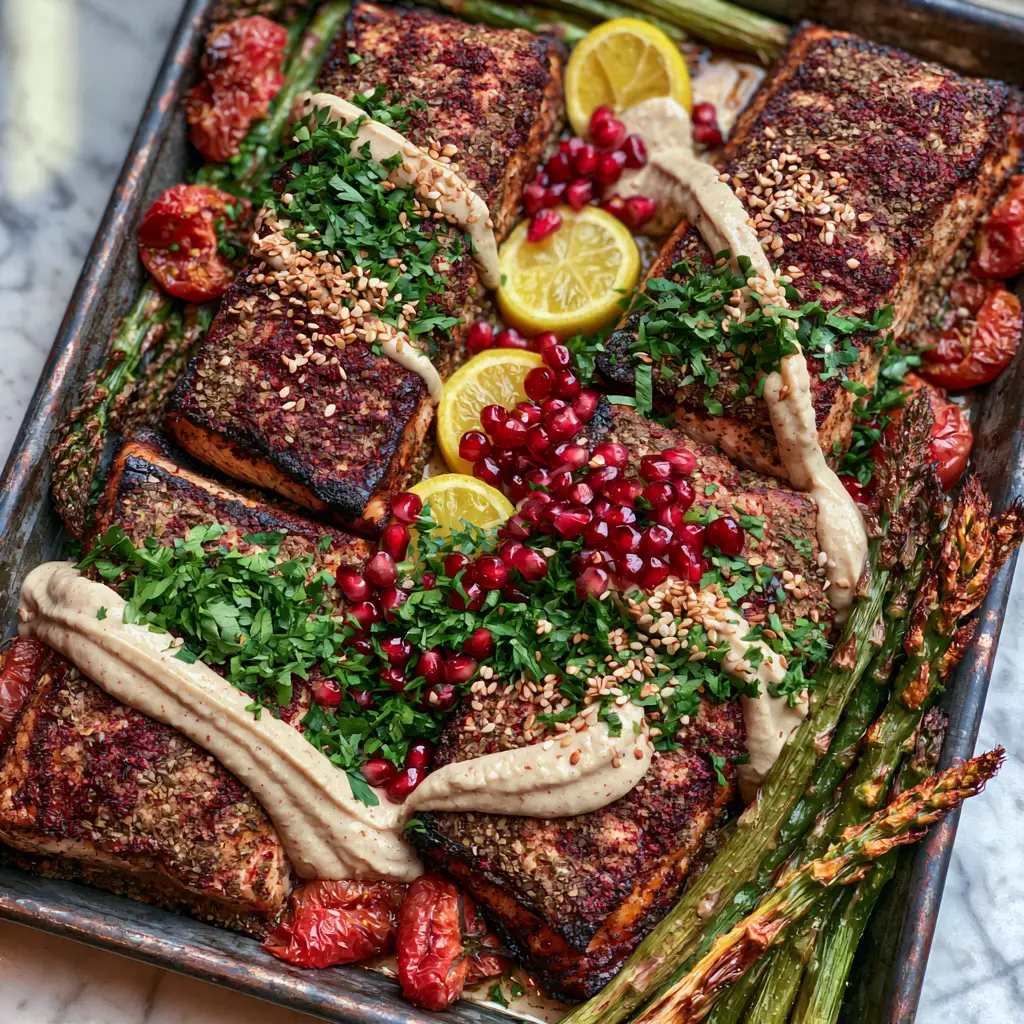
The Essential Ingredients for Levantine-Style Baked Salmon
The Foundation: Fresh Salmon and Robust Seasonings
4 (6oz/170g) Salmon Fillets: Choose center-cut fillets of similar thickness to ensure they cook evenly. High-quality, skin-on salmon provides a moisture barrier that keeps the flesh tender under high heat.
2 tbsp (30ml) Extra Virgin Olive Oil: This is your primary heat conductor. It helps the spices adhere to the fish and facilitates the caramelization process on the sheet pan.
1 tbsp (8g) Sumac: This deep red spice is essential for that authentic Middle Eastern tang. It provides a dry, lemony acidity that balances the natural oils of the salmon.
2 tbsp (12g) Za’atar: A blend of dried thyme, oregano, marjoram, and toasted sesame seeds. It adds an earthy, herbaceous crust that defines the “Middle Eastern Baked Salmon” identity.
1 tsp (6g) Kosher Salt: Salt is more than a seasoning; it draws out moisture initially then allows the flavors to penetrate deep into the protein fibers. If you like a different flavor profile, consider comparing this to our Lemon Garlic Baked Salmon.
The Roasted Vegetable Medley
1 lb (450g) Asparagus: Trim the woody ends to ensure every bite of the roasted asparagus is tender. The tips will become delightfully toasted in the oven’s dry heat.
2 cups (300g) Cherry Tomatoes: As these roast, the skins will blister and burst, creating a natural sauce that mingles with the salmon juices. This technique is similar to our approach in Sheet Pan Salmon and Asparagus.
The Creamy Finish and Vibrant Garnishes
1/4 cup (60ml) Tahini: Look for a high-quality, pourable tahini made from 100% roasted sesame seeds. It should be thick and creamy, ready to be artistically drizzled over the fillets.
1/2 cup (85g) Pomegranate Arils: These ruby-red seeds provide a necessary pop of sweetness and acidity. They transform the dish’s aesthetic into a high-end culinary experience.
1/4 cup (15g) Fresh Flat-Leaf Parsley: Chopped finely, this herb adds a final layer of freshness and a vibrant green contrast to the dark spice rub.
1 tbsp (9g) Toasted White Sesame Seeds: These reinforce the nutty notes found in the za’atar and tahini drizzle. A light toast enhances their aromatic oils.
1 Lemon, cut into half-moons: Bright yellow lemon wedges are tucked between the salmon pieces to provide fresh juice for squeezing over the dish just before eating.
Pro Equipment for Achieving Professional Results
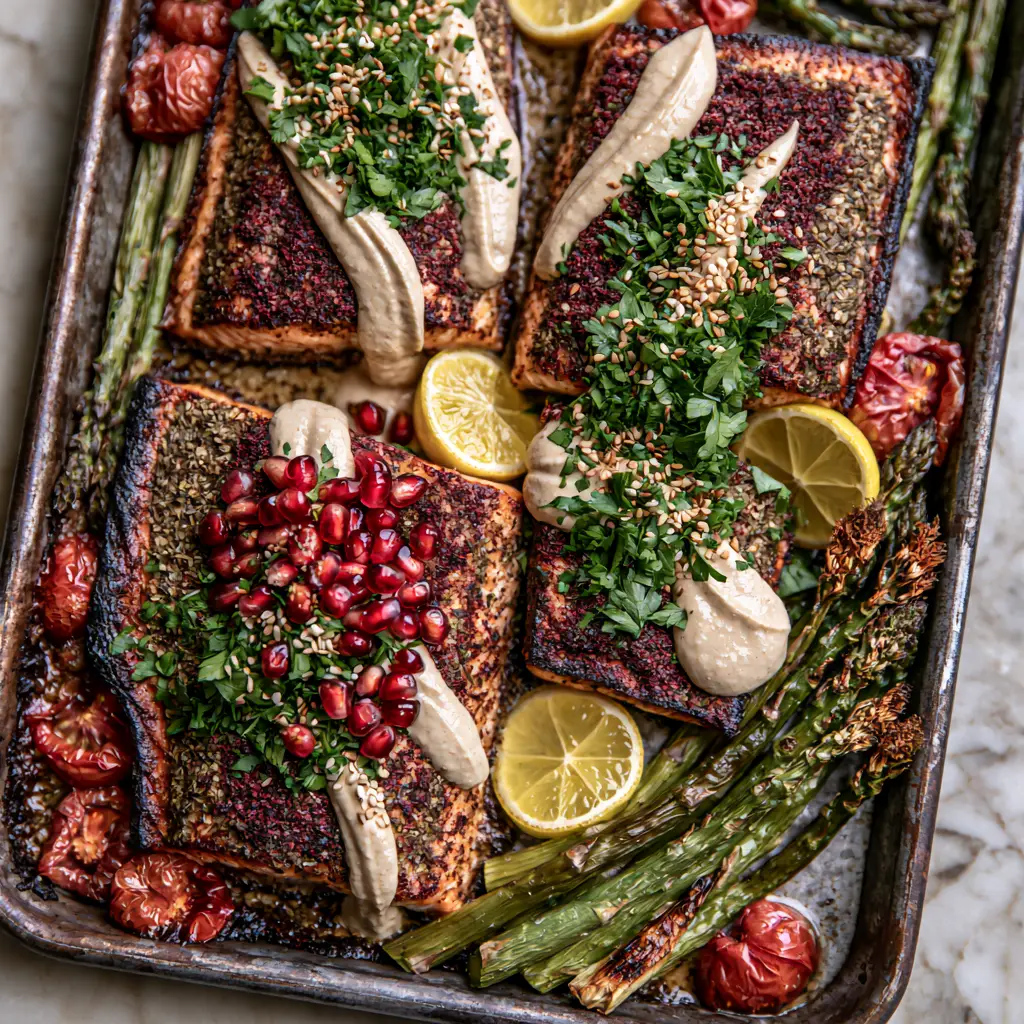
To achieve the specific “Visual Recipe Blueprint” of charred edges and blistered tomatoes, equipment choice is paramount. A dark metal sheet pan is superior to light-colored pans because dark surfaces absorb more heat, promoting faster caramelization and better searing. This prevents the salmon from steaming and ensures the asparagus tips become toasted rather than soggy.
Additionally, a micro-perforated cooling rack is not used here; we want the ingredients in direct contact with the pan. A sharp chef’s knife is necessary for clean cuts on the flat-leaf parsley, preventing bruising and ensuring the green remains vibrant. Finally, a small whisk or squeeze bottle is helpful for creating those professional ribbons of tahini drizzle seen in the Midjourney prompt.
Mastering the Technique: Step-by-Step Instructions
Phase 1: Preheating and Vegetable Prep
Preheat your oven to 425°F (220°C). This high temperature is the secret to achieving the “blistered” and “toasted” textures described in our visual guide. Line your dark metal sheet pan with a thin layer of olive oil rather than parchment paper to maximize heat transfer.
Toss the asparagus and cherry tomatoes with 1 tablespoon of olive oil and a pinch of salt directly on the pan. Spread them to the outer edges to leave space in the center for the salmon. This ensures the vegetables begin roasting immediately, developing toasted tips while the fish preps.
Phase 2: Seasoning the Salmon Crust
Pat the salmon fillets completely dry with a paper towel. This is a critical step; any surface moisture will cause the fish to steam rather than sear. Rub the remaining olive oil over the top and sides of each fillet.
In a small bowl, combine the sumac, za’atar, and kosher salt. Generously coat the top of each fillet with the spice blend, pressing it down slightly to form a visible, textured spice crust. This herb-forward crust is what differentiates this from a Miso Baked Salmon.
Phase 3: The High-Heat Roast
Place the salmon fillets in the center of the pan, nestled among the vegetables. Slide the pan into the middle rack of the oven. Bake for 12-15 minutes, depending on the thickness of your fillets.
Look for the visual cues: the salmon should be opaque and flake easily with a fork, and the edges should appear slightly charred and caramelized. The cherry tomatoes should be wrinkled and beginning to burst, releasing their juices onto the dark metal pan. For a similar high-heat method, see our Salmon in Foil guide, though this version focuses on the open-air char.
Phase 4: The Finishing Touches
Once removed from the oven, let the salmon rest for 2-3 minutes. This allows the juices to redistribute, ensuring a succulent bite. While resting, whisk your tahini with a teaspoon of warm water if it is too thick to drizzle smoothly.
Artistically drizzle the creamy tahini in thick ribbons over the salmon. Scatter the ruby-red pomegranate arils, the chopped parsley, and the toasted sesame seeds over the entire pan. Tuck the bright yellow lemon half-moons between the salmon pieces for a stunning, handheld-photo-ready finish.
Expert Tips for the Ultimate Middle Eastern Salmon
- The Dryness Rule: Always pat your salmon dry. Moisture is the enemy of the caramelized edge. A dry surface allows the za’atar crust to “fry” slightly in the olive oil.
- Tahini Consistency: If your tahini is bitter, whisk in a drop of honey or maple syrup. This balances the sesame’s natural tannins and complements the pomegranate arils.
- Don’t Overcrowd: Ensure there is space between the asparagus spears. If the pan is too crowded, the vegetables will release steam, preventing the asparagus tips from becoming toasted.
- Carry-over Cooking: Remove the salmon when it is just slightly under your desired doneness. The internal heat will continue to cook the fish as it rests on the hot sheet pan.
Preserving the Flavor: Storage and Reheating
Middle Eastern Baked Salmon is best enjoyed fresh, but leftovers can be stored in an airtight container in the refrigerator for up to 2 days. To maintain the texture of the crust, avoid the microwave when reheating. Instead, place the salmon in a 300°F (150°C) oven for 8-10 minutes until warmed through.
Freezing is not recommended for this specific dish, as the tahini drizzle and fresh pomegranate arils do not hold their texture well upon thawing. If you must freeze, do so only with the seasoned salmon before adding the garnishes.
What to Serve with Your Middle Eastern Masterpiece
This salmon is a complete meal on its own, but it pairs beautifully with a side of fluffy couscous or lemon-scented quinoa. The grains are perfect for soaking up the tahini drizzle and tomato juices. If you want to lean further into the Mediterranean theme, a side of Middle Eastern Kofta can turn this into a spectacular family-style feast.
For a lighter option, a simple cucumber and radish salad with a lemon-sumac dressing echoes the flavors of the salmon crust. If you love the combination of fruit and fish, you might also enjoy our Baked Pineapple Salmon for a tropical twist on a similar cooking method.
Frequently Asked Questions
While bottled works in a pinch, fresh lemon half-moons are recommended for this recipe as the oils from the zest provide a superior aroma that complements the za’atar.
Yes, but ensure it is completely thawed and patted dry with paper towels to prevent excess moisture from steaming the fish and ruining the charred edges.
The salmon is done when it reaches an internal temperature of 145°F (63°C) or when the flesh easily separates into flakes with a fork while remaining moist in the center.
Whisk in a teaspoon of warm water or extra virgin olive oil at a time until you reach a pourable, ribbon-like consistency.
Sumac has a bright, tangy, and slightly fruity flavor profile similar to lemon juice but with a more balanced acidity, making it perfect for cutting through the richness of salmon.
The Complete Middle Eastern Baked Salmon Recipe
Middle Eastern Baked Salmon with Za'atar and Tahini Drizzle
Ingredients
Equipment
Method
- Preheat oven to 425°F (220°C). Lightly oil a dark metal sheet pan.
- Toss asparagus and tomatoes with 1 tbsp olive oil and salt on the pan; move to the edges.
- Pat salmon dry. Rub with oil and coat with sumac, za'atar, and salt mix.
- Place salmon in the center. Bake for 12-15 minutes until charred and flaky.
- Drizzle with tahini. Top with pomegranate, parsley, sesame seeds, and lemons.
Notes
Use a dark metal pan for the best charred edges and toasted vegetable tips.
Closing & Call to Action
This Middle Eastern Baked Salmon is more than just a recipe; it is a sensory experience that brings the bold, bright flavors of the Levant to your home kitchen. From the first sight of the charred edges to the last bite of creamy tahini and sweet pomegranate, it is a dish designed to impress. The simplicity of the sheet pan method makes it accessible, while the sophisticated spice profile makes it memorable.
If you enjoyed this recipe, please leave a comment below and let us know how your salmon turned out! Don’t forget to sign up for our newsletter for more elite-level recipes delivered straight to your inbox. For more visual inspiration and to save this recipe for later, follow us and share this post on Pinterest.