There is a specific, soul-warming magic that occurs when the scent of spiced, searing meat hits a hot pan. This middle eastern kofta is not just a meal; it is a sensory journey that transports you directly to the bustling spice markets of the Levant. With every bite, you experience the smoky depth of charred beef, the bright citrus punch of sumac, and the silkiness of a perfectly emulsified tahini sauce.
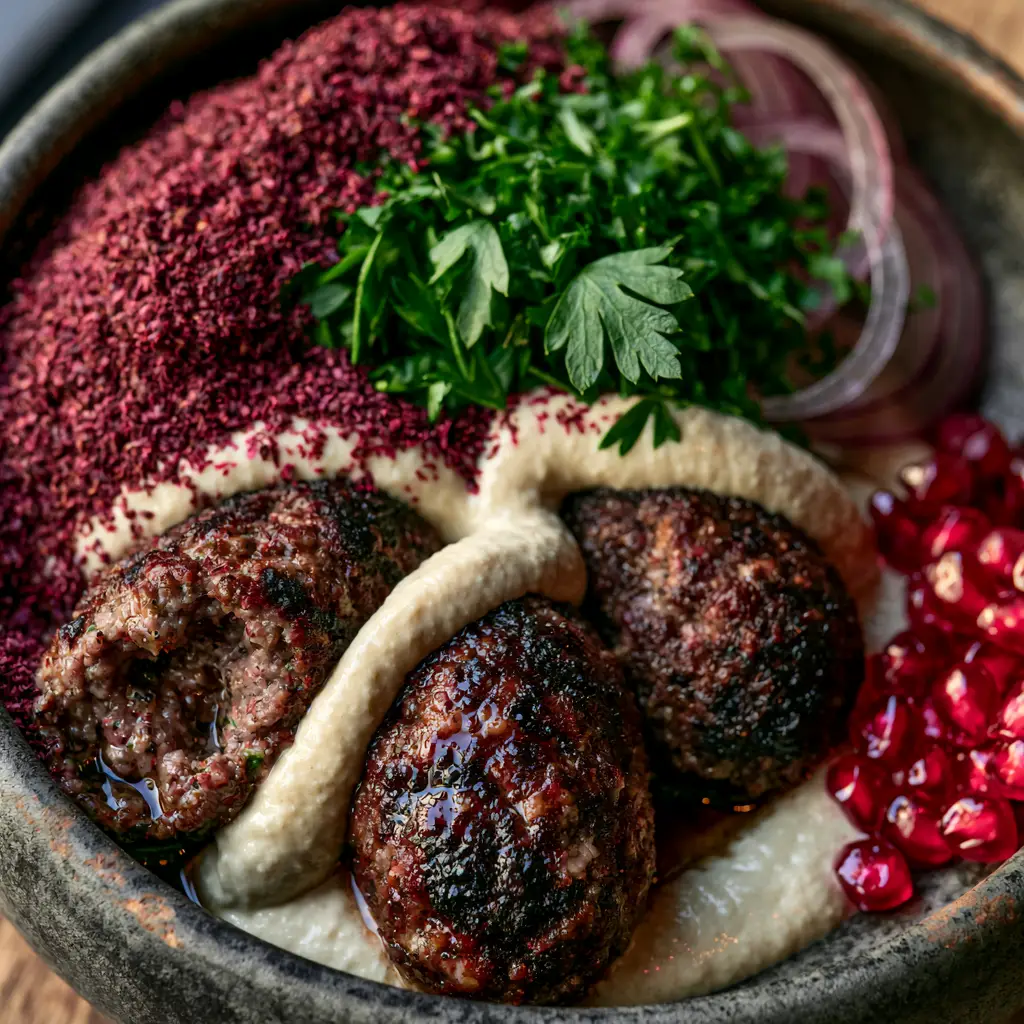
In this recipe, we are focusing on achieving a specific visual and textural masterpiece: the “charred-yet-tender” balance. Imagine three oval-shaped ground beef koftas, glistening with their natural juices, nestled in a matte charcoal ceramic bowl. The deep crimson dusting of sumac and the jewel-like shine of pomegranate seeds create a vibrant contrast that makes this dish as beautiful as it is delicious.
Whether you are looking for a high-protein weeknight dinner or a centerpiece for a Mediterranean feast, this recipe delivers on every front. Let’s dive into the culinary science of making the perfect middle eastern kofta that looks exactly like a professional food photograph.
The Irresistible Allure of Perfectly Charred Beef Kofta
- Textural Contrast: A deeply caramelized, charred exterior that gives way to a moist, tender, and herb-flecked interior.
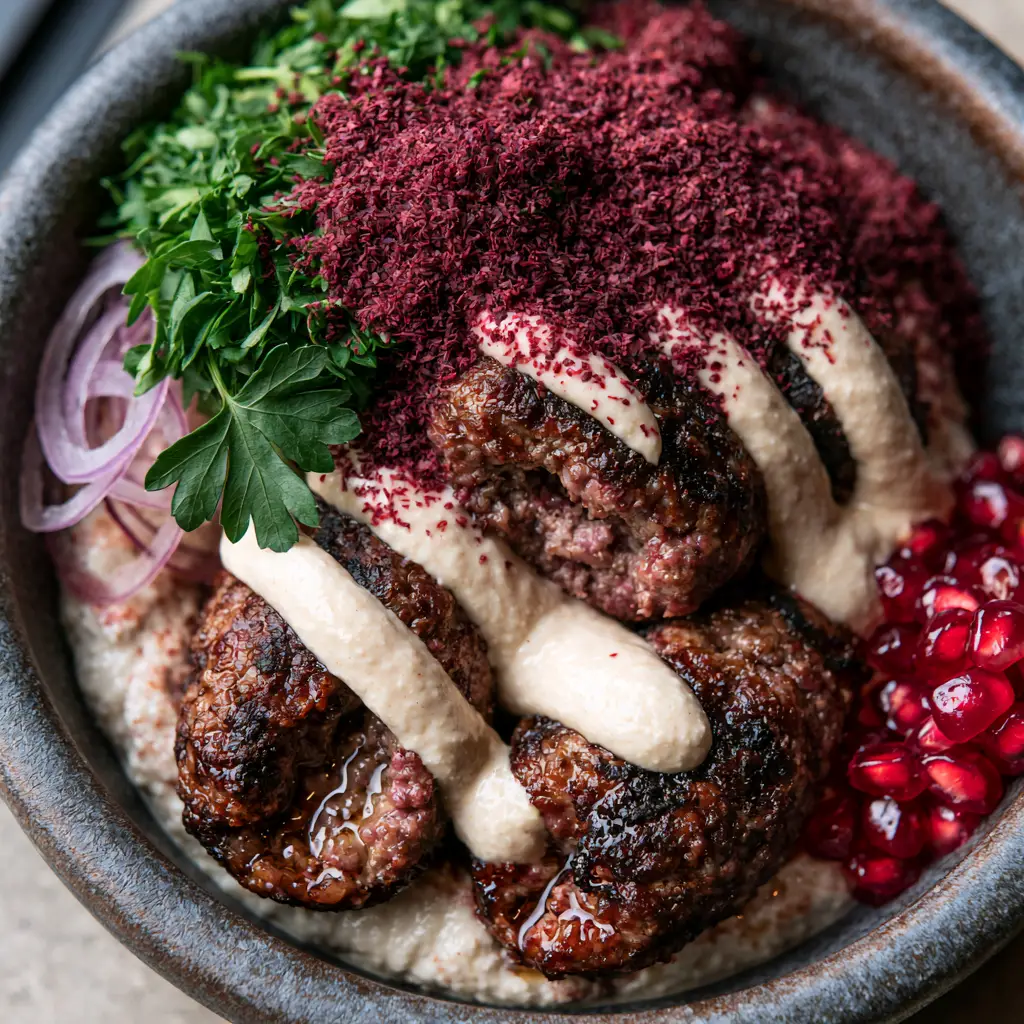
- The “Ivory Drizzle”: A thick, creamy pale-ivory lemon tahini sauce artfully zig-zagged over the meat for a cooling finish.
- Vibrant Garnishes: Emerald-green flat-leaf parsley and translucent red onion rings provide a fresh, crisp crunch.
- Acidic Brightness: Deep red sumac powder and ruby red pomegranate seeds add essential pops of acidity to cut through the richness of the beef.
Essential Components for Authentic Beef Kofta
Ground Beef (80/20 Blend): You need exactly 1 lb (450g) of high-quality ground beef. The 20% fat content is non-negotiable, as it provides the “glistening juices” and prevents the meat from becoming dry during the high-heat charring process.
Grated Yellow Onion: One medium (150g) onion, grated and squeezed dry. Removing the excess moisture ensures your middle eastern kofta stays structurally sound and doesn’t “steam” in the pan.
Fresh Flat-Leaf Parsley: Half a cup (15g) of finely chopped leaves. Parsley isn’t just a garnish here; it’s a foundational herb that adds a peppery, earthy undertone to the meat mixture.
The Warm Spice Trio: A blend of 1 tsp (2g) ground cumin, 1 tsp (2g) ground coriander, and 1/2 tsp (1g) ground allspice. These spices create that unmistakable “Middle Eastern” aroma that fills your kitchen.
Pure Tahini Paste: 1/2 cup (120ml) of premium roasted sesame paste. This forms the base of our pale-ivory sauce, providing a nutty, rich mouthfeel.
Fresh Lemon Juice: 3 tbsp (45ml) of freshly squeezed juice. The acidity is crucial for thickening the tahini through a fascinating chemical reaction and balancing the savory beef.
Sumac Powder: 1 tbsp (8g) of deep red sumac. This spice provides a unique, dry tartness that is far more complex than vinegar or lemon alone.
Pomegranate Seeds: 1/4 cup (40g) of ruby-red arils. These act as “jewels” in the bowl, providing a burst of sweetness and a high-end visual finish.
Tools for Achieving a Professional Culinary Result
To achieve the “perfectly charred” look described in our visual blueprint, a heavy-bottomed cast-iron skillet or a stainless steel pan is essential. These materials retain heat efficiently, allowing for the Maillard reaction to occur rapidly without overcooking the center of the meat. You will also need a fine-mesh grater for the onion and a high-quality whisk to ensure the tahini sauce reaches a velvety, zig-zag-ready consistency.
Mastering the Meat: Prepping and Shaping the Kofta
The Secret to the Perfect Texture
Place your 1 lb (450g) ground beef in a large mixing bowl. Add the squeezed-dry grated onion, 3 cloves of minced garlic (15g), and the spice blend. Use your hands to “knead” the meat for about 2 minutes. This isn’t just mixing; you are slightly breaking down the protein fibers to create a cohesive, bouncy texture that won’t crumble on the fork.
Shaping the Signature Ovals
Divide the mixture into portions roughly the size of a large egg. Roll them between your palms to form smooth, oval shapes about 3 inches (7.5cm) long. This specific shape, as seen in our charcoal bowl visual, ensures even cooking and a beautiful presentation. Once shaped, let them rest in the refrigerator for 15 minutes to firm up the fats.
The Art of the Sear: Creating the Charred Crust
High-Heat Execution
Heat 2 tbsp (30ml) of high-smoke-point oil (like avocado or light olive oil) in your skillet over medium-high heat. Wait until the oil is shimmering and just starting to wisper smoke. Carefully place the koftas in the pan, ensuring they are not touching. You want to hear a loud, aggressive sizzle the moment they hit the metal.
Visual Cues for Perfection
Do not move the meat for at least 3 minutes. Look for a “deep golden-brown crust” forming at the base. Flip the ovals and cook for another 3-4 minutes. The exterior should be “perfectly charred and glistening with juices,” while the interior remains tender and succulent. Once cooked to an internal temperature of 160°F (71°C), remove them to a warm plate.
Developing the Pale-Ivory Lemon Tahini Sauce
The Science of Tahini Emulsification
In a medium bowl, whisk 1/2 cup (120ml) tahini with 3 tbsp (45ml) lemon juice and 1 clove of minced garlic. You will notice the mixture thickens and “seizes” almost instantly—this is normal! Slowly whisk in 1/4 cup (60ml) of ice-cold water, one tablespoon at a time. The cold water encourages the fat molecules to emulsify into a “thick, creamy pale-ivory” sauce that is light and airy.
Assembly: Crafting the Vibrant Kofta Bowl
Grab your matte charcoal ceramic bowl to provide the perfect dark backdrop for the colors. Place three of the charred koftas in the center. Using a spoon, create an “artful zig-zag pattern” of tahini sauce over the meat. Now, the garnishes: a heavy dusting of crimson sumac, a handful of bright emerald-green parsley, and those thin, translucent rings of red onion. Finally, tuck a small pile of ruby red pomegranate seeds in the corner for that “jewel-like shine.”
Expert Tips for Success
- The Onion Trick: Never skip squeezing the liquid out of the grated onion. Excess water is the enemy of a good sear and will make your kofta soggy.
- Cold Water Tahini: Always use ice-cold water for your sauce. It yields a much whiter, fluffier result than room-temperature water.
- Rest the Meat: Let the kofta rest for 5 minutes after cooking. This allows the juices to redistribute, ensuring they are “glistening” rather than running out when you bite in.
- The Char Factor: If your pan isn’t hot enough, you’ll get brown meat instead of charred meat. Don’t be afraid of a little smoke!
Flavor Pairings and Serving Suggestions
While this middle eastern kofta is a star on its own, it pairs beautifully with a variety of Mediterranean sides. Serve it alongside a heap of fluffy basmati rice or warm, pillowy pita bread. If you are hosting a larger gathering, consider adding a seafood option like this Middle Eastern baked salmon to create a surf-and-turf feast. For those who love the nutty flavor profile, you might also enjoy comparing this version with a more traditional tahini kofta bake.
If you’re looking for more protein-heavy inspiration for the week, our lemon garlic baked salmon offers a similarly bright, citrusy profile that complements the spices found in the beef.
Frequently Asked Questions
You can bake them at 400°F (200°C) for 12-15 minutes, but you will lose the ‘perfectly charred’ exterior that defines this specific visual recipe. For the best result, sear them first and finish in the oven if needed.
Absolutely! While this recipe specifies beef for its specific glistening texture, a 50/50 mix of beef and lamb or pure lamb works beautifully. Just ensure the fat content remains around 20% for the best char.
The keys are squeezing all the liquid out of the grated onions and kneading the meat mixture for a full 2 minutes to develop the proteins, which act as a natural binder.
Sumac is a dried berry powder with a tart, citrusy flavor. If you can’t find it, a mix of lemon zest and a tiny pinch of salt can mimic the acidity, though you’ll miss the iconic deep crimson color.
This is a natural reaction where the tahini seizes. Simply keep whisking and add ice-cold water one tablespoon at a time; it will eventually transform into a smooth, pale-ivory sauce.
The Ultimate Middle Eastern Kofta Recipe
Middle Eastern Kofta with Creamy Lemon Tahini and Vibrant Sumac
Ingredients
Equipment
Method
- In a large bowl, combine ground beef, grated onion, garlic, parsley, and spices. Knead by hand for 2 minutes until cohesive.
- Shape the mixture into oval patties (about 3 inches long). Rest in the fridge for 15 minutes.
- Heat oil in a skillet over medium-high heat. Sear koftas for 3-4 minutes per side until a deep charred crust forms.
- Whisk tahini, lemon juice, and garlic. Gradually add ice water until pale-ivory and creamy.
- Place koftas in a bowl, drizzle with tahini in a zig-zag, and top with sumac, parsley, red onions, and pomegranate seeds.
Notes
Use ice-cold water for the whitest, fluffiest tahini sauce.
Bringing the Flavors of the Levant Home
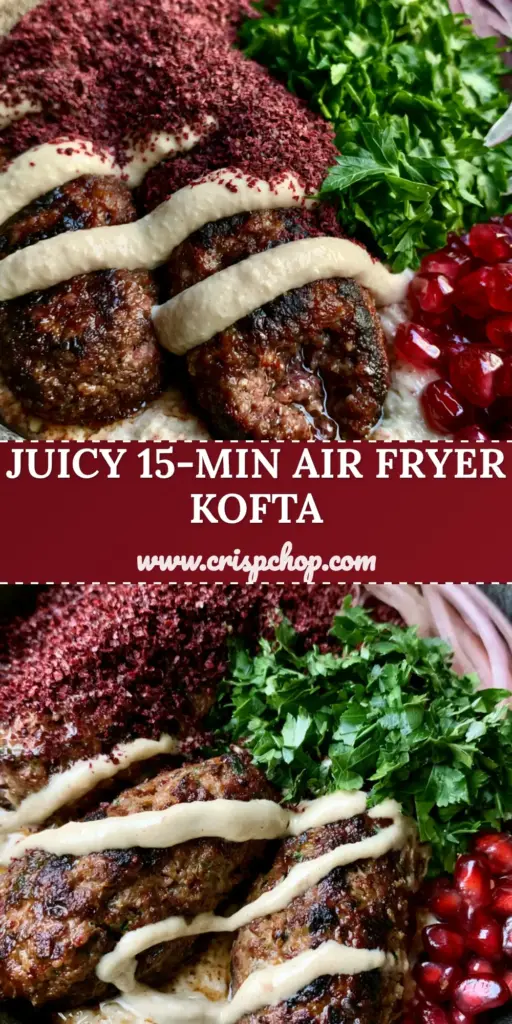
Creating an authentic middle eastern kofta is about more than just following steps; it’s about embracing the bold colors and aromatic spices of the region. From the charred exterior of the beef to the jewel-like pomegranate seeds, every element of this dish is designed to excite the palate and the eyes. If you enjoyed this recipe, please leave a comment below and share your results! Don’t forget to follow us on Pinterest for more culinary inspiration.