There is a specific kind of magic that happens when high-heat roasting meets the natural sugars of tropical fruit and the rich fats of Atlantic salmon. This Baked Pineapple Salmon isn’t just a meal; it is a visual and sensory masterpiece designed for the home cook who craves restaurant-quality results with sheet-pan simplicity.
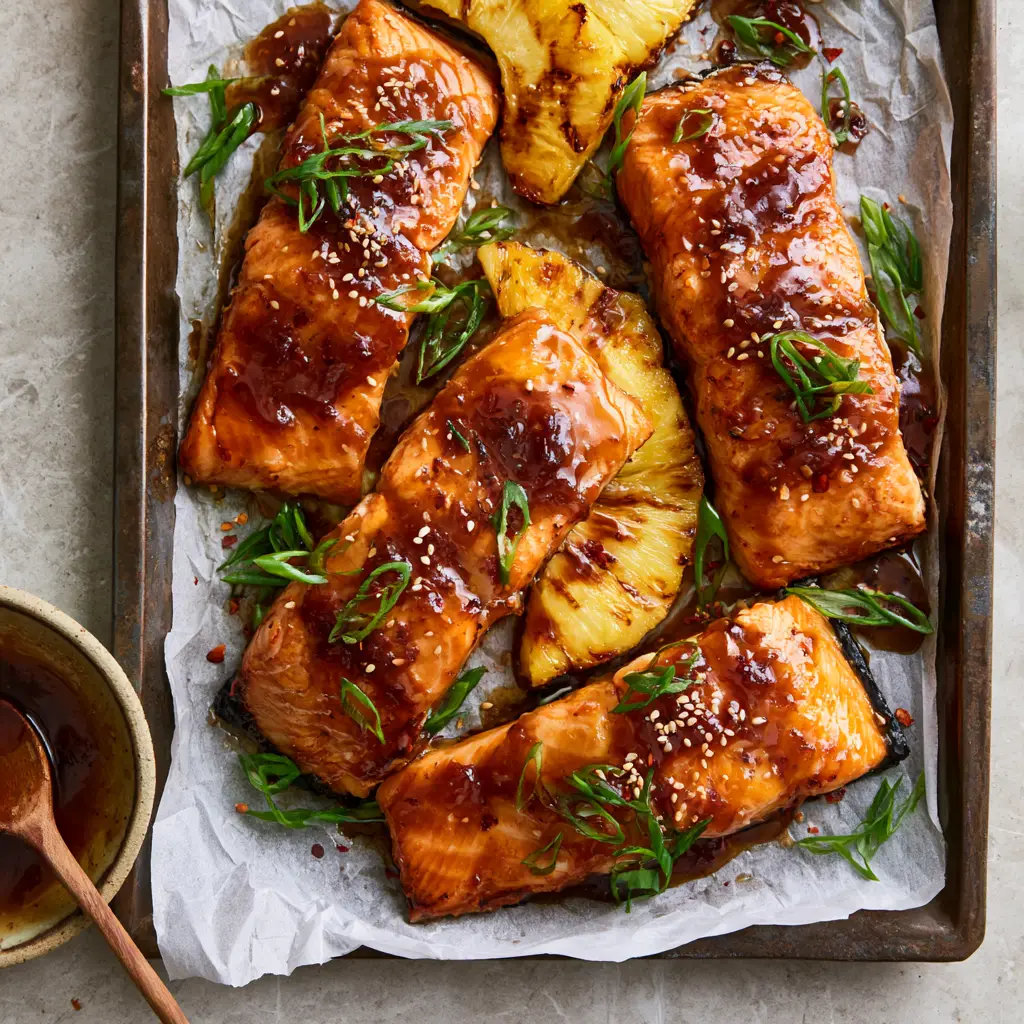
Imagine pulling a rustic, dark metal pan from your oven to find deep orange salmon fillets, their edges slightly charred and crisp, while a thick amber honey garlic glaze bubbles violently across the surface. Nestled beside the fish are thick wedges of pineapple, their edges caramelized into golden-brown perfection, releasing a sweet aroma that cuts through the savory garlic.
This recipe captures that exact “golden hour” aesthetic seen in high-end food photography, balancing the vibrant green of fresh scallions and the crunch of toasted sesame seeds against a backdrop of crumpled white parchment paper. Whether you are prepping for a quick weeknight win or a weekend dinner party, this dish delivers on every promise of flavor and texture.
Why This Sheet Pan Salmon Recipe Works Every Single Time
- The Texture Contrast: By roasting at a precise temperature, we achieve a succulent, flaky interior while the honey-based glaze creates a sticky, glistening exterior crust.
- Caramelized Fruit Chemistry: The pineapple wedges undergo a Maillard reaction on the sheet pan, intensifying their sweetness and providing a juicy, acidic counterpoint to the rich Atlantic salmon.
- The “Bubbling” Glaze Technique: We utilize a high-sugar honey garlic reduction that reaches a boiling point in the oven, ensuring the sauce clings to the fish rather than sliding off onto the parchment.
- Visual Presentation: With the contrast of red chili flakes, white sesame seeds, and bright green scallions, this dish is naturally “camera-ready” without any extra effort.
The Anatomy of Flavor: Ingredients and Essential Substitutions
Atlantic Salmon Fillets: You will need 4 large fillets, approximately 6 oz (170g) each. Atlantic salmon is preferred for this recipe due to its higher fat content, which prevents drying out during the caramelization process.
Fresh Pineapple Wedges: Use 1/2 of a medium fresh pineapple, sliced into thick 1-inch (2.5cm) wedges. While canned pineapple works in a pinch, fresh fruit provides the structural integrity needed to achieve those charred, caramelized edges without turning to mush.
Raw Honey: 1/2 cup (120ml) of honey forms the base of our amber glaze. It provides the viscosity needed for that glistening, translucent look described in our visual blueprint.
Fresh Garlic: 4 cloves (approx. 20g), finely minced. The garlic toasts within the honey glaze, adding a nutty, savory depth that balances the fruit’s sweetness.
Low-Sodium Soy Sauce: 2 tbsp (30ml) to add umami and that essential amber hue to the sauce. If you are gluten-free, Tamari is a perfect 1:1 substitution.
Rice Vinegar: 1 tbsp (15ml) to provide a bright acidic lift. This cuts through the richness of the fish and the sugar of the glaze.
Toasted Sesame Oil: 1 tsp (5ml) added at the end of the glaze prep for an aromatic, nutty finish that permeates the entire pan.
Garnish Trio: You will need 2 green onions (scallions), 1 tsp (5g) toasted white sesame seeds, and 1/2 tsp (2g) dried red chili flakes. These are not just for show; they provide the final layers of crunch and heat.
Foundational Fats: 1 tbsp (15ml) of a high-smoke point oil like avocado or light olive oil is essential for coating the pineapple to ensure it sears against the dark metal pan.
Crucial Kitchen Tools for Professional Results
To achieve the aesthetic of a high-end food blog, the tools you use matter as much as the ingredients. A dark metal sheet pan is superior here because dark surfaces absorb more heat, which is the secret to getting those “slightly charred edges” on the salmon and pineapple.
You will also need quality white parchment paper. Do not use silicone mats if you want the “rustic” look; crumpled parchment allows the sauce to pool slightly around the edges of the fish, creating those concentrated “flavor bombs” of bubbling glaze.
The Blueprint to Perfection: Step-by-Step Instructions
Phase 1: Preparing the Glistening Amber Reduction
In a small saucepan over medium heat, combine the honey, minced garlic, soy sauce, rice vinegar, and toasted sesame oil. Whisk constantly as the mixture comes to a gentle simmer.
Allow the sauce to reduce for 3-5 minutes until it coats the back of a spoon. It should look like liquid amber. Set aside 1/4 cup (60ml) of this glaze into a small ceramic bowl with a wooden spoon for serving; this ensures you have “extra glossy sauce” for the final presentation.
Phase 2: Preparing the Salmon and Pineapple
Preheat your oven to 400°F (200°C). While the oven heats, pat your salmon fillets extremely dry with paper towels. Moisture is the enemy of caramelization; a dry surface ensures the glaze sticks and the skin (if present) becomes crisp.
Crumple a large sheet of white parchment paper, then flatten it back out onto your dark metal sheet pan. This “crumple technique” creates micro-ridges that trap the sauce. Arrange the four salmon fillets and the thick pineapple wedges across the pan, ensuring they aren’t overcrowded.
Phase 3: The High-Heat Roast and Baste
Generously brush the salmon and pineapple with the honey garlic glaze. Use a pastry brush to ensure the glaze gets into the flakes of the fish. Season the pineapple lightly with a pinch of salt to draw out its natural sugars.
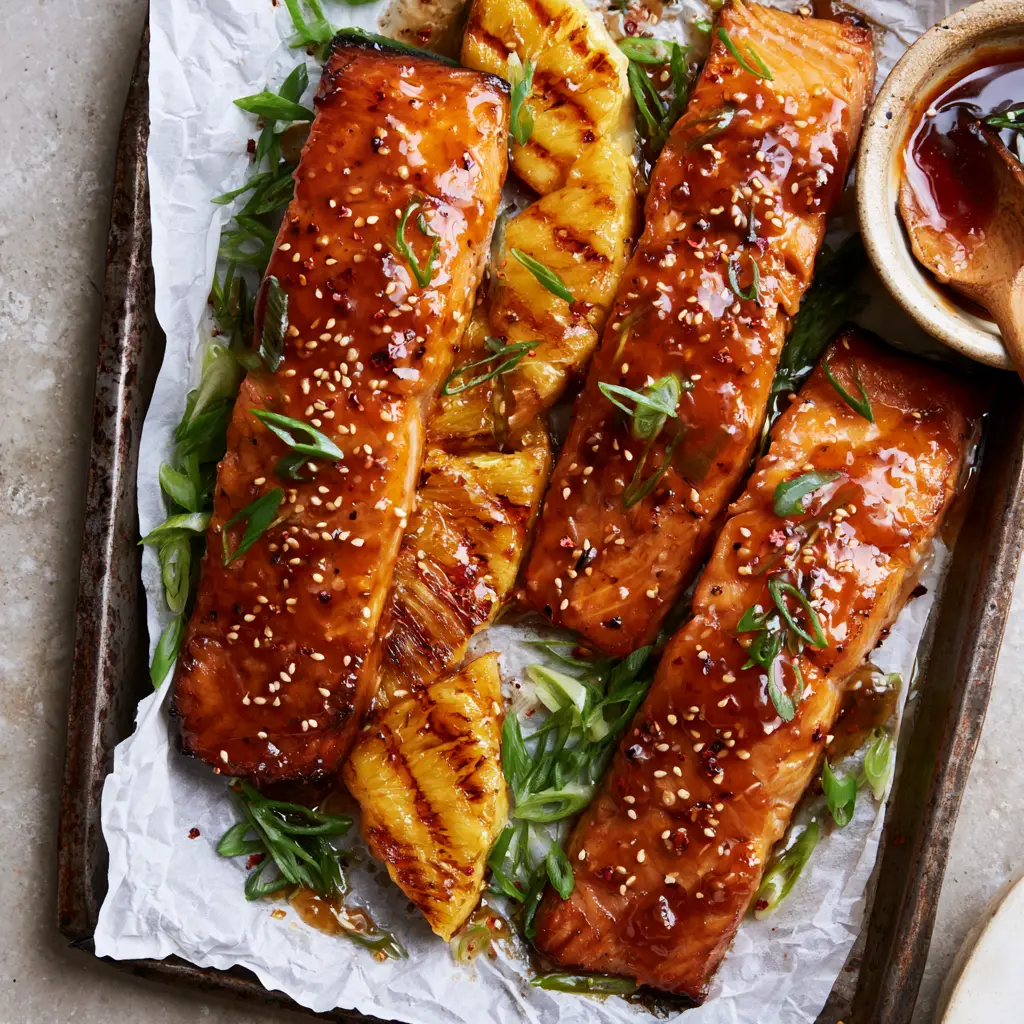
Slide the pan into the center rack of the oven. Bake for 12-15 minutes. At the 10-minute mark, open the oven and carefully apply a second layer of glaze to the salmon. This “double glazing” is what creates that thick, translucent appearance.
Phase 4: The Broil Finish for Visual Impact
Switch your oven to the “Broil” setting for the final 2 minutes. Watch closely! You are looking for the glaze to start “bubbling and glistening” and for the pineapple wedges to develop “golden-brown caramelized grill marks.” The salmon should be flaky and deep orange, with just a hint of char on the thinnest edges.
Master Chef Strategies for Success
- Dry the Fish: I cannot overstate this. If the salmon is damp, the glaze will slide off and pool at the bottom of the pan, resulting in steamed fish rather than roasted perfection.
- The Wooden Spoon Trick: When serving the extra sauce on the side, place a small wooden spoon in the bowl. This adds a rustic, “handheld smartphone photo” feel to your table setting.
- Slicing Scallions: Slice your green onions on a sharp bias (diagonal). This creates long, elegant shards that look far more professional than standard rings.
- Internal Temperature: For the most succulent texture, pull the salmon when the internal temperature reaches 135°F (57°C). Residual heat will bring it to the perfect 145°F (63°C) while it rests.
The Best Accompaniments for Baked Pineapple Salmon
This dish is a complete flavor profile on its own, but it pairs beautifully with starches that can soak up the extra honey garlic sauce. A bed of coconut lime rice or a simple quinoa pilaf works wonders.
If you enjoy the profile of this dish, you might also love our classic honey garlic baked salmon or for a different citrus twist, try the lemon garlic butter version. For those who prefer a bit more kick, our sweet chili salmon is a fantastic alternative that uses similar roasting techniques.
If you find yourself with extra salmon but want a completely different texture, consider using leftover fillets in a creamy salmon pasta the following day.
Preserving Quality: Storage and Reheating
Storage: Store leftovers in an airtight container in the refrigerator for up to 3 days. Keep the pineapple and salmon in the same container, as the pineapple juice helps keep the fish moist.
Reheating: Avoid the microwave if possible, as it can make the salmon rubbery. Instead, place the salmon and pineapple back on a sheet pan, cover loosely with foil, and warm in a 300°F (150°C) oven for 8-10 minutes.
Expert Troubleshooting: Frequently Asked Questions
Absolutely. While the recipe calls for 1/2 tsp of red chili flakes as a garnish, you can whisk 1 tsp of Sriracha or Sambal Oelek into the glaze while it simmers for extra heat.
Yes, but fresh is highly recommended. Canned pineapple contains more moisture and may not achieve the same charred, caramelized edges as fresh wedges. If using canned, ensure you pat the fruit very dry before roasting.
The salmon is done when it reaches an internal temperature of 145°F (63°C). Visually, the flesh will be opaque and should flake easily when pressed with a fork.
For this recipe, skin-on or skin-off both work. If you leave the skin on, ensure the skin side is down on the parchment to help the fillet hold its shape during the high-heat broil.
If the glaze is thin, it likely wasn’t reduced long enough on the stovetop. Ensure it simmers until it has a syrupy, amber consistency before brushing it onto the salmon.
The Ultimate Baked Pineapple Salmon Recipe Card
Baked Pineapple Salmon with a Bubbling Honey Garlic Glaze
Ingredients
Equipment
Method
- In a small saucepan, combine honey, garlic, soy sauce, rice vinegar, and sesame oil. Simmer over medium heat for 3-5 minutes until thickened into an amber reduction.
- Pour 1/4 cup (60ml) of the glaze into a side bowl for serving.
- Place dry salmon fillets and pineapple wedges on a parchment-lined dark sheet pan. Coat pineapple in oil and brush salmon heavily with glaze.
- Bake at 400°F (200°C) for 12-15 minutes, basting the salmon again halfway through.
- Broil for 2 minutes until the glaze is bubbling and the pineapple edges are charred.
- Scatter green onions, sesame seeds, and chili flakes over the pan. Serve immediately with the reserved sauce.
Notes
Use a dark metal pan for the best caramelization results on the fruit.
Join the Crisp Chop Culinary Community
The beauty of this Baked Pineapple Salmon lies in its simplicity and the high-impact visual of that bubbling glaze against the charred fruit. It’s a recipe that proves healthy eating doesn’t have to be boring or visually dull. We would love to see your recreation of this sheet-pan wonder!
Did yours come out with those perfect charred edges? Leave a comment below and tell us about your experience. If you found this guide helpful, please share it with your friends and follow us on Pinterest for more visually stunning recipe inspiration.