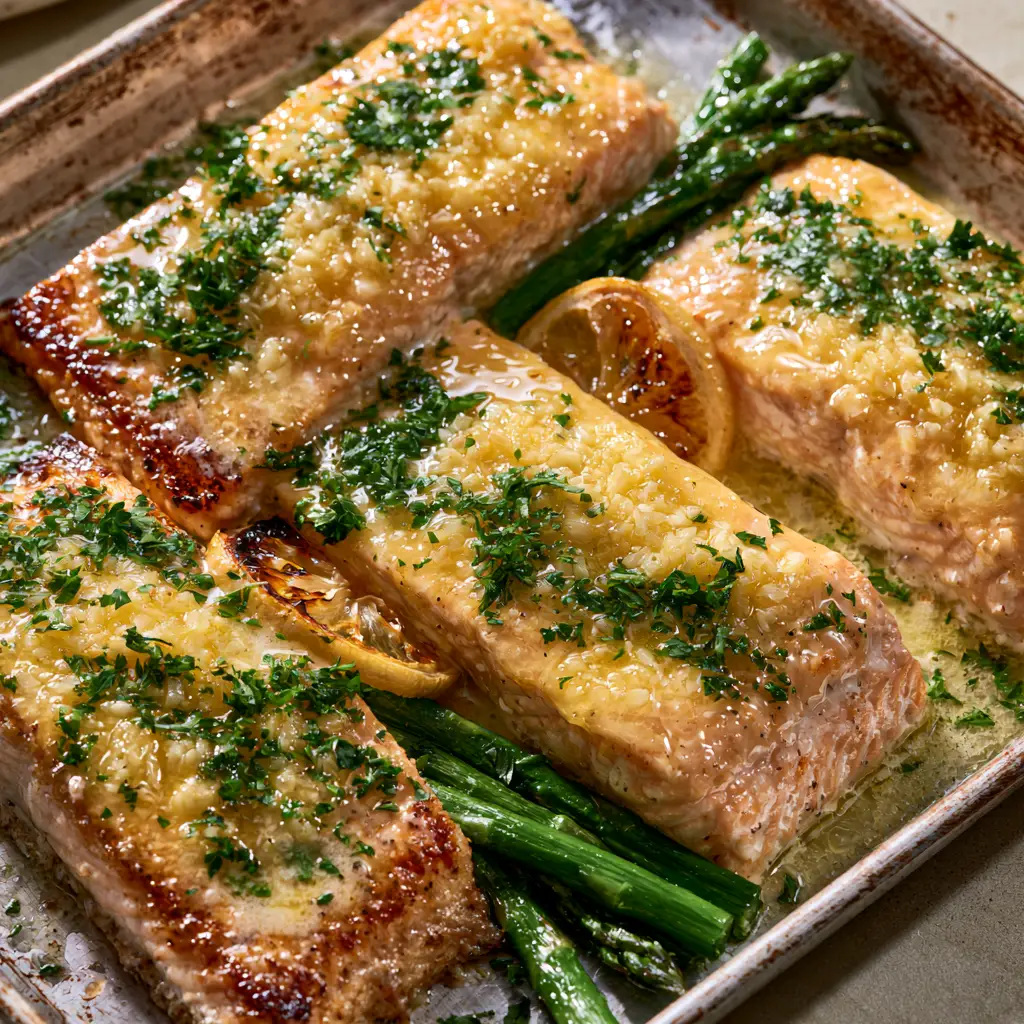
When it comes to achieving restaurant-quality results in your own kitchen, few dishes rival the elegance and simplicity of the Baked Lemon Garlic Butter Salmon. This isn’t just a meal; it is a sensory experience defined by thick, flaky Atlantic salmon fillets bathed in a heavy, glossy, translucent golden-yellow garlic butter glaze. The sight of vibrant green chopped parsley scattered over a golden-brown seared crust is enough to make any home cook feel like a Michelin-starred chef.
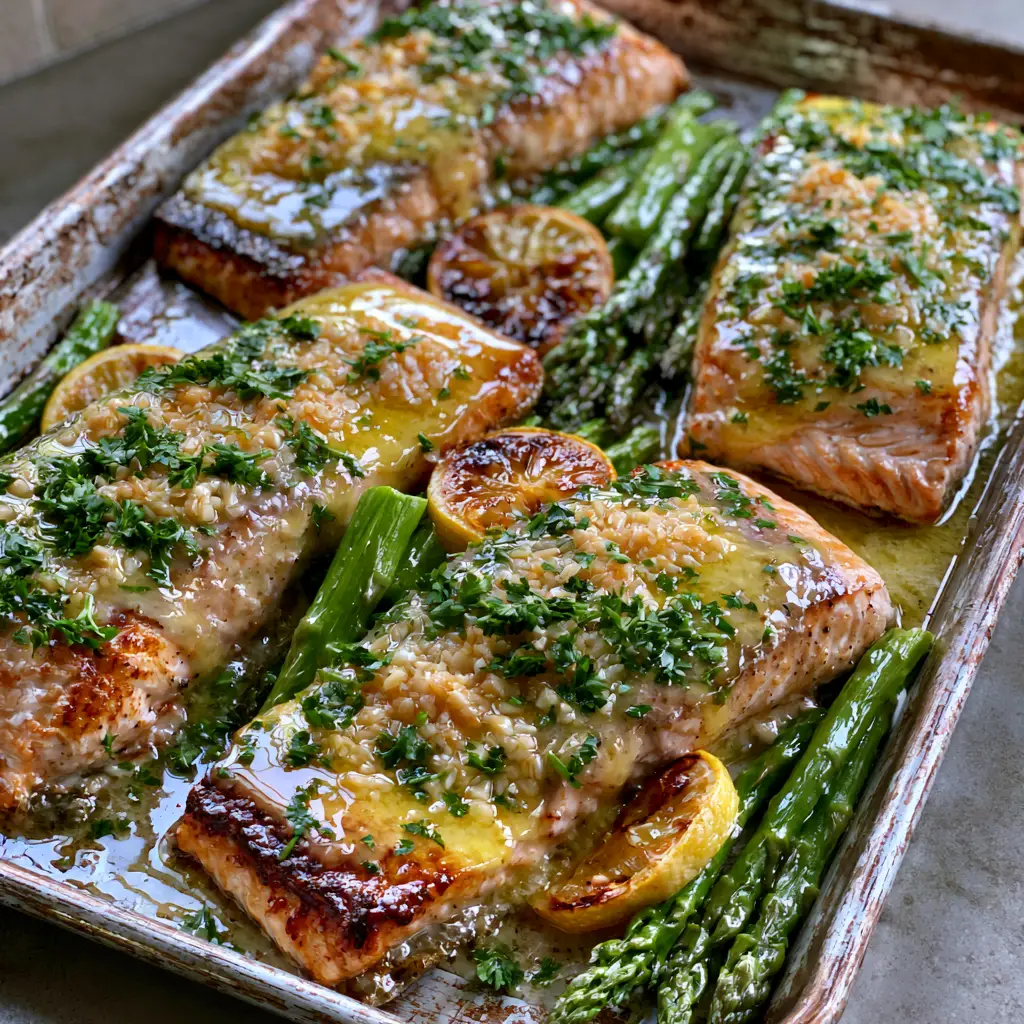
The beauty of this recipe lies in its visual and textural contrast. We are targeting a high-shine glisten on the sauce that catches the soft, bright natural daylight on your dining table. By roasting everything on a single rustic metal sheet pan, we allow the juices from the charred lemon wheels to mingle with the garlic butter, creating a sophisticated emulsion that coats both the fish and the bright green tender-crisp asparagus spears.
Whether you are preparing a quick weeknight dinner or hosting a formal gathering, this Baked Lemon Garlic Butter Salmon delivers on every promise. It is structurally sound, scientifically seasoned, and visually stunning. Let’s dive into the culinary mechanics of creating the perfect sear and flake.
Why This Flaky Atlantic Salmon Recipe Wins Every Time
- Unrivaled Texture: We utilize a high-heat roasting method to achieve a golden-brown seared crust on the salmon edges while maintaining a moist, flaky interior.
- Glossy Garlic Emulsion: The glaze isn’t just melted butter; it’s a thick, translucent coating designed to cling to every crevice of the fillet.
- Built-in Side Dish: By pairing the salmon with roasted green asparagus, you create a complete, nutritionally balanced meal on a single silver sheet pan.
- Aromatic Depth: The combination of minced raw garlic bits and cracked black pepper provides a sharp, savory counterpoint to the rich, fatty Atlantic salmon.
- Visually Stunning: The contrast between the charred lemon slices and the vibrant parsley makes this dish “camera-ready” for any occasion.
The Foundational Ingredients for a Glossy Garlic Butter Glaze
To achieve the visual perfection described in our blueprint, every ingredient must serve a specific culinary purpose. We don’t just use salt for flavor; we use it to draw out moisture for a better sear. We don’t just use butter for richness; we use it as a vehicle for the garlic aromatics.
Atlantic Salmon Fillets: You will need 4 thick fillets, approximately 6oz (170g) each. Atlantic salmon is preferred for its high fat content, which ensures the meat remains flaky and succulent even under high heat.
Unsalted Butter: Use 1/2 cup (113g) of high-quality butter. This forms the base of our translucent golden glaze and provides the “high-shine” finish seen in the professional photography.
Fresh Garlic: 6 cloves (30g), finely minced. We use a generous amount to ensure those “minced raw garlic bits” are visible on the surface of the fish after baking.
Fresh Lemon: 2 large lemons. One will be juiced for the sauce, while the other is sliced into rounds to become the charred lemon wheels that nestle between the salmon.
Fresh Parsley: 1/4 cup (10g), finely chopped. This provides the “heavy scattering of vibrant green” that cuts through the richness of the butter.
Asparagus: 1 lb (450g) of bright green spears. Ensure they are trimmed to a uniform length so they cook at the same rate as the salmon fillets.
Foundational Seasonings: 1 tsp (6g) Kosher salt and 1 tsp (2g) cracked black pepper. The coarse grind of the pepper is essential for the rustic, textured look of the final dish.
Extra Virgin Olive Oil: 1 tbsp (15ml). A small amount of oil is used to coat the asparagus, ensuring they become tender-crisp rather than dried out during the roasting process.
Essential Equipment for the Perfect Sheet Pan Bake
Achieving the right “rustic metal” aesthetic and the perfect sear requires the correct tools. While the ingredients provide the flavor, the equipment provides the heat distribution necessary for culinary success.
Silver Sheet Pan: A standard 13×18 inch (33x45cm) rimmed baking sheet is ideal. The silver surface reflects heat efficiently, helping to create those caramelized edges on the lemon wheels.
Small Saucepan: For melting the butter and infusing it with garlic. This step ensures the garlic softens slightly before hitting the oven, preventing it from burning while remaining visible.
Sharp Chef’s Knife: Essential for finely mincing the garlic and chopping the parsley into a vibrant green dust.
Silicone Basting Brush: This tool is critical for applying the “heavy, glossy” layer of glaze evenly across the thick fillets.
Step-by-Step Mastery: Achieving the Golden-Brown Seared Crust
Step 1: Tempering and Prepping the Protein
Start by taking your salmon fillets out of the refrigerator 15-20 minutes before cooking. Bringing the fish to room temperature ensures even cooking throughout the thickest part of the fillet. Pat the skin and flesh completely dry with paper towels; moisture is the enemy of a golden-brown seared crust.
Step 2: Preparing the Glossy Garlic Butter Glaze
In a small saucepan over medium-low heat, melt the 1/2 cup (113g) of unsalted butter. Once melted, add the minced garlic. Stir for only 60 seconds—just until the garlic is fragrant but hasn’t lost its raw, white appearance. Remove from heat and whisk in the fresh lemon juice and half of the cracked black pepper. This creates the translucent golden-yellow liquid that will define the dish’s visual appeal.
Step 3: Arranging the Sheet Pan Components
Preheat your oven to 400°F (200°C). Place the 4 salmon fillets on the silver sheet pan, leaving ample space between them. Arrange the trimmed asparagus spears around the fish. Nestle the lemon slices in the gaps. Drizzle the asparagus with olive oil and a pinch of salt. This layout allows the air to circulate, ensuring the asparagus becomes tender-crisp rather than steamed.
Step 4: The Glazing Process
Using your basting brush, liberally coat each salmon fillet with the garlic butter mixture. Ensure you use at least two-thirds of the sauce here, allowing it to pool slightly on the edges of the fish. This pooling is what creates the “heavy, glossy” look once the proteins set. Sprinkle the remaining cracked black pepper over the top.
Step 5: The High-Heat Roast and Broil
Slide the pan into the center rack of the oven. Bake for 12-15 minutes, depending on the thickness of your fillets. For that specific “golden-brown seared crust” and “charred lemon wheels” seen in the blueprint, switch the oven to Broil for the final 2-3 minutes. Watch closely! You want the butter to bubble and the edges of the salmon to darken into a rich caramel color.
Step 6: The Vibrant Green Finish
Remove the pan from the oven. The salmon should now be opaque and flake easily with a fork. Immediately pour any remaining garlic butter from the saucepan over the fillets to refresh the glisten. Scatter the heavy scattering of vibrant green chopped parsley over the entire tray. The residual heat will wake up the aroma of the herbs without wilting them into a dull color.
Expert Tips for Perfect Sheet Pan Salmon
- The Flake Test: Use a fork to gently press the center of the fillet. If the layers of muscle separate easily (the flake), it is done. Internal temperature should reach 145°F (63°C).
- Don’t Overcrowd: If the asparagus is piled on top of each other, it will steam. Spread it out in a single layer to get those charred, roasted tips.
- Butter Quality Matters: Since the glaze is a primary component, use a European-style butter with higher fat content for a more translucent and stable emulsion.
- Garlic Size: Ensure your garlic is “finely minced” rather than pressed. Pressed garlic turns into a paste that can burn and become bitter, whereas minced bits stay distinct and sweet.
How to Store and Reheat Your Lemon Garlic Salmon
While this dish is best served fresh to maintain the tender-crisp texture of the asparagus, leftovers can be stored in an airtight container in the refrigerator for up to 3 days. To reheat, avoid the microwave, which can make the salmon rubbery.
Instead, place the salmon and asparagus back on a sheet pan, cover loosely with foil to retain moisture, and warm in a 275°F (135°C) oven for 10-15 minutes. This low-and-slow method preserves the integrity of the garlic butter glaze. If you have extra salmon, it works beautifully in a creamy salmon pasta the next day.
What to Serve With This Sheet Pan Meal
This Baked Lemon Garlic Butter Salmon is a complete meal on its own, but if you are looking to expand the spread, consider these options. A light quinoa salad or a side of jasmine rice is excellent for soaking up the extra garlic butter sauce. If you enjoy the flavor profile of this dish, you might also love our classic salmon and asparagus or the slightly sweeter honey garlic baked salmon.
For those who prefer a bit of zest, the original lemon garlic baked salmon offers a more citrus-forward approach, while the lemon and dill version provides a more herbal, cooling finish.
Frequently Asked Questions
Yes, but you must thaw them completely and pat them extremely dry with paper towels to ensure the garlic butter glaze adheres properly and the edges get that golden-brown sear.
Keep the asparagus in a single layer on the sheet pan and ensure the oven is fully preheated to 400°F. Overcrowding the pan creates steam, which leads to mushy vegetables.
The salmon is perfectly cooked when it reaches an internal temperature of 145°F (63°C) and the flesh flakes easily with a fork while still appearing slightly translucent in the very center.
Leaving the skin on helps protect the delicate flesh from the high heat of the sheet pan, and it makes the fillets easier to flip or serve without falling apart.
Atlantic salmon is ideal because its higher fat content makes it very forgiving during baking, resulting in the ‘thick, flaky’ texture shown in our visual guide.
The Ultimate Baked Lemon Garlic Butter Salmon Recipe
Ready to create this glossy, buttery masterpiece? Follow the recipe card below for the exact measurements and timings to achieve that perfect Atlantic salmon flake and charred lemon finish.
Baked Lemon Garlic Butter Salmon: The Ultimate 20-Minute Sheet Pan Masterpiece
Ingredients
Equipment
Method
- Preheat oven to 400°F (200°C). Pat salmon fillets completely dry with paper towels to ensure a good sear.
- Melt butter in a small saucepan over medium-low heat. Add minced garlic and sauté for 60 seconds. Whisk in lemon juice and half the pepper.
- Place salmon and asparagus on the sheet pan. Drizzle asparagus with olive oil and salt. Nestle lemon wheels between the salmon.
- Brush salmon liberally with the garlic butter glaze using a silicone brush.
- Bake for 12-15 minutes. Switch to broil for the final 2 minutes until the edges are golden-brown and seared.
- Pour over remaining butter and scatter fresh parsley over the entire pan before serving.
Notes
Always pat the salmon dry before glazing to ensure the sauce sticks.
Closing & Call to Action
Mastering the Baked Lemon Garlic Butter Salmon is a milestone for any home cook. It combines technical searing skills with the ease of sheet pan cooking. The result is a dish that looks like it belongs in a magazine but tastes like home. If you enjoyed this recipe, please leave a comment below or sign up for our newsletter for more culinary blueprints. Don’t forget to share your creations and pin this recipe to your favorite boards on Pinterest!