There is something inherently sophisticated yet incredibly simple about a perfectly baked salmon with lemon and dill. When you pull that parchment-lined sheet pan out of the oven, the first thing you notice is the glistening garlic butter glaze catching the light, reflecting a meal that looks like it belongs in a high-end bistro. This recipe isn’t just about feeding yourself; it’s about the sensory experience of flaky, medium-rare fish paired with the earthy snap of charred asparagus.
The beauty of this dish lies in its visual and culinary harmony. The bright green of the fresh dill sprigs contrasts beautifully against the deep pink of the salmon, while translucent lemon wheels provide a zesty acidity that cuts through the richness of the butter. Whether you are an experienced home cook or a beginner looking for a foolproof weeknight win, this guide will ensure your salmon is never dry and your vegetables are never mushy.
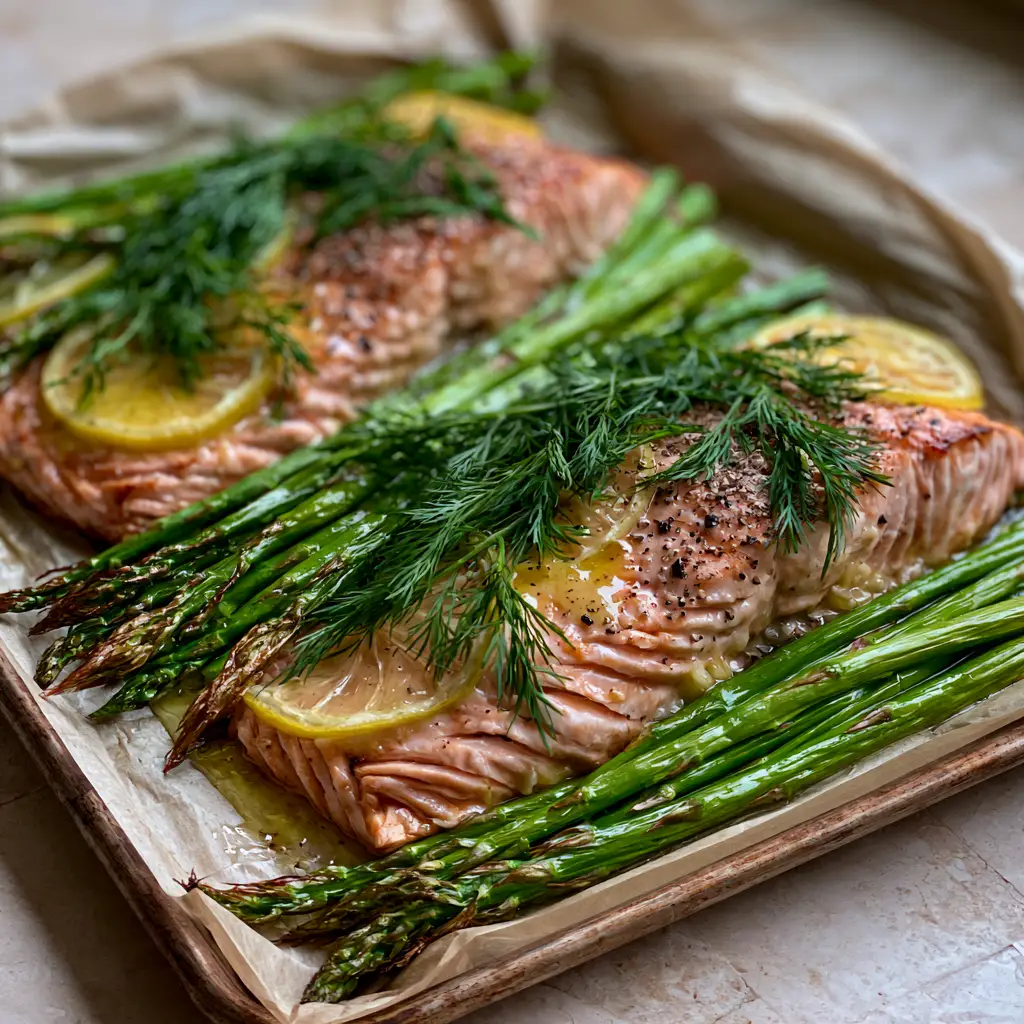
Why This Glistening Garlic Butter Salmon Works
- Perfectly Flaky Texture: By utilizing a specific oven temperature and center-cut fillets, we achieve visible flaky layers that melt in your mouth.
- One-Pan Efficiency: We nestle the slender asparagus spears tightly alongside the fish, allowing the garlic butter to flavor the entire meal simultaneously.
- Visual Sophistication: The combination of charred tips on the asparagus and the heavy garnish of cracked black pepper creates a professional, “handheld smartphone photo” aesthetic.
- Balanced Flavor Profile: The fat from the butter, the acid from the lemon, and the herbaceous notes of the dill create a classic triumvirate of flavor.
The Essential Ingredients for Baked Salmon with Lemon and Dill
Selecting the right components is the first step toward culinary excellence. For this baked salmon with lemon and dill, we focus on freshness and fat content to ensure a moist final result.
Center-Cut Salmon Fillets: You want two thick, center-cut fillets (approx. 6oz (170g) each) because their uniform thickness ensures even cooking and that coveted medium-rare center. These fillets provide the structural integrity needed for those beautiful flaky layers.
Slender Asparagus Spears: Choose the thin variety of asparagus for this recipe. Their high surface-area-to-volume ratio allows them to develop crispy, slightly charred tips in the same amount of time it takes the salmon to reach perfection.
Unsalted Butter: We use 3 tbsp (42g) of high-quality unsalted butter as the base for our glaze. Using unsalted butter allows us to control the sodium levels manually with coarse kosher salt.
Fresh Garlic: Three cloves of finely minced garlic are whisked into the melted butter. This creates a pungent, aromatic base that permeates the fish as it roasts.
Fresh Dill Sprigs: Unlike dried herbs, fresh feathery dill provides a bright, grassy aroma that is essential for the “heavy garnish” look. It should be added both during the last minute of cooking and as a fresh topper.
Lemon Wheels: One large organic lemon, sliced into thin, translucent wheels. These are layered directly over the fish to protect it from direct heat and infuse it with citrus oils.
Foundational Seasonings: You will need 1 tbsp (15ml) of extra virgin olive oil for the asparagus, along with a generous amount of coarse cracked black pepper and kosher salt. These “invisible” ingredients are what bridge the flavors together.
Must-Have Tools for Professional Results
Achieving the rustic, parchment-lined look described in our visual blueprint requires a few specific kitchen essentials. These tools ensure even heat distribution and easy cleanup.
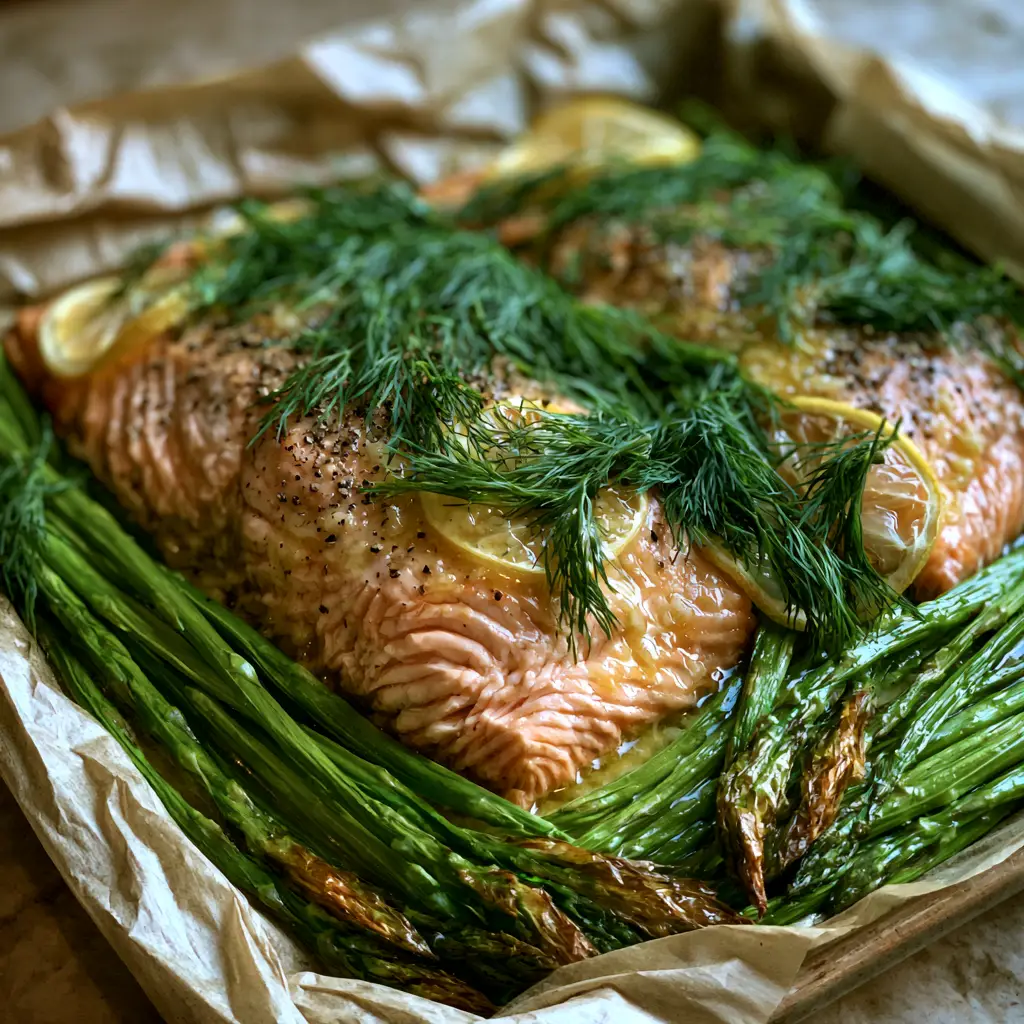
A heavy-duty rimmed baking sheet is non-negotiable for preventing any garlic butter from escaping into your oven. We line this with unbleached parchment paper, which not only prevents sticking but also provides that matte, rustic background for your final presentation.
You will also need a sharp chef’s knife to achieve those translucent lemon wheels and a small saucepan or microwave-safe bowl to melt your garlic butter. A digital meat thermometer is highly recommended for those who want to guarantee a perfect medium-rare internal temperature of 125°F (52°C).
Step-by-Step Instructions to Culinary Perfection
Preparing the Sheet Pan Foundation
Preheat your oven to 400°F (200°C). While the oven heats, tear a sheet of parchment paper slightly larger than your baking tray and press it into the corners. This creates the “rustic” base seen in professional food photography.
Pat your salmon fillets completely dry with a paper towel. This is a critical forensic step; any moisture on the skin or surface will steam the fish rather than allow the garlic butter to sear and glisten.
The Garlic Butter Glaze and Asparagus Prep
In a small bowl, combine the melted butter, minced garlic, and a pinch of salt. Place the salmon fillets in the center of the pan and the slender asparagus spears tightly alongside them.
Drizzle the asparagus with the olive oil and a sprinkle of salt, tossing them directly on the pan to coat. Brush the salmon generously with the garlic butter glaze, ensuring it pools slightly in the natural crevices of the flaky layers.
Layering and Roasting for Texture
Top the salmon fillets with your thin lemon wheels, overlapping them slightly like shingles. Season the entire tray with a heavy hand of coarse cracked black pepper. The pepper should be visible and bold against the pink flesh.
Slide the pan into the center rack of the oven. Bake for 10-12 minutes. You are looking for a visual cue: the asparagus tips should be turning a dark, crispy brown, and the salmon should yield slightly when pressed but remain translucent in the very center.
The Final Garnish and Sensory Cues
Once removed from the oven, immediately shower the dish with the fresh, feathery dill sprigs. The residual heat will wake up the oils in the dill, hitting you with a wave of fresh aroma. The salmon should have a glistening sheen from the melted butter, and the lemon wheels should appear soft and slightly charred at the edges.
Expert Tips for the Perfect Baked Salmon
- Mind the Thickness: If your fillets are particularly thin, reduce the cooking time by 2 minutes to avoid overcooking. Always aim for that medium-rare center for the best mouthfeel.
- The Asparagus Crowd: Nestling the asparagus “tightly” as per the blueprint helps them steam slightly while they char, keeping the centers tender while the tips get crispy.
- Temperature Control: If you prefer a more well-done fish, look for the white protein (albumin) just starting to bead on the sides, but for the “flaky layers” look, pull it just before that happens.
- Acid Balance: If the dish feels too rich, a tiny squeeze of fresh lemon juice over the charred asparagus right before serving can brighten the entire plate.
How to Store and Reheat Leftovers
Baked salmon is best enjoyed immediately, but it can be stored in an airtight container in the refrigerator for up to 2 days. To maintain the integrity of the baked salmon with lemon and dill, avoid the microwave if possible.
To reheat, place the salmon and asparagus back on a parchment-lined tray in a 275°F (135°C) oven for about 8-10 minutes. This low-and-slow method prevents the fish from becoming rubbery and preserves the glistening quality of the garlic butter.
What to Serve with Garlic Butter Salmon
This dish is a complete meal on its own, but it pairs beautifully with light, Mediterranean-inspired sides. Consider serving it alongside a side of silky pasta if you are feeling indulgent, or keep it low-carb with a simple green salad.
If you enjoy the combination of citrus and seafood, you might also love our original lemon garlic salmon or perhaps a more adventurous pineapple-glazed version. For those who want more greens, our salmon with wilted spinach is an excellent companion recipe.
Frequently Asked Questions
Slender green beans or broccolini work well, as they have similar cooking times to salmon fillets. Ensure they are cut thinly to achieve those charred tips.
Yes, but ensure it is completely thawed and patted extremely dry with paper towels. Any excess moisture will prevent the garlic butter from glazing properly.
Look for the visual cue of ‘flaking.’ Press the top of the fillet gently with a fork; if the layers separate easily and the center is still slightly translucent, it is perfect.
For this specific recipe, 400°F (200°C) is ideal. The higher heat is necessary to char the asparagus tips while the salmon remains tender and medium-rare inside.
Parchment paper provides a non-stick surface that doesn’t reflect heat as intensely as foil, leading to a more even, gentle bake that keeps the salmon moist.
The Master Recipe: Baked Salmon with Lemon and Dill
Baked Salmon with Lemon and Dill: The Ultimate Sheet Pan Guide
Ingredients
Equipment
Method
- Preheat oven to 400°F (200°C). Line a sheet pan with parchment paper. Pat salmon dry with paper towels to ensure a glistening finish.
- Place salmon in the center. Arrange asparagus tightly alongside. Drizzle asparagus with olive oil and salt.
- Whisk melted butter and garlic. Brush generously over salmon. Layer lemon wheels on top and season heavily with cracked black pepper.
- Roast for 10-12 minutes until asparagus tips are charred and salmon is flaky and medium-rare (125°F/52°C).
- Remove from oven and immediately top with fresh dill sprigs while the butter is still sizzling.
Notes
Choose thin asparagus for the best char.
Closing & Call to Action
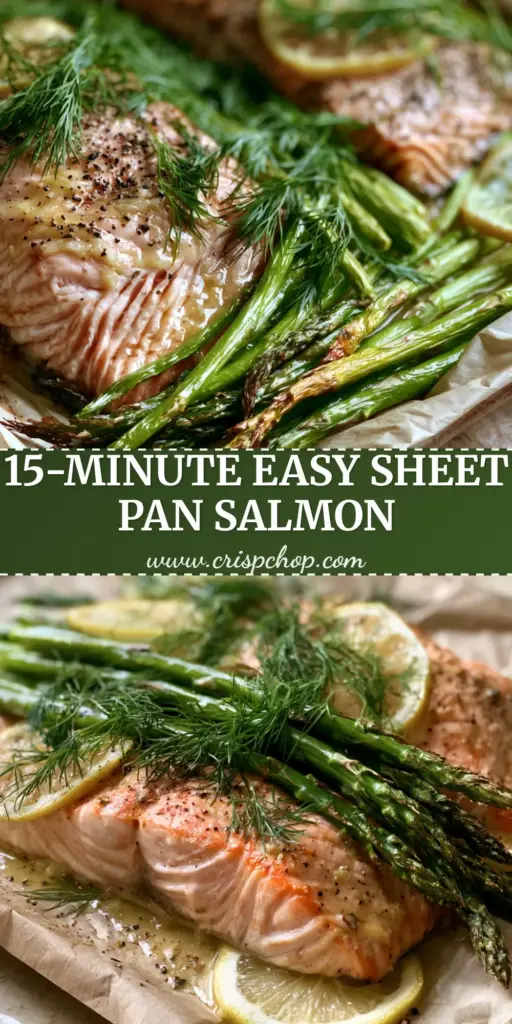
Creating a restaurant-quality baked salmon with lemon and dill at home is all about respecting the ingredients and watching for those specific visual cues. From the charred asparagus tips to the glistening garlic butter, every element of this dish is designed to satisfy both the palate and the eye. If you enjoyed this recipe, please leave a comment below and share your results! Don’t forget to pin this recipe to your favorite board on Pinterest for your next weeknight dinner inspiration.