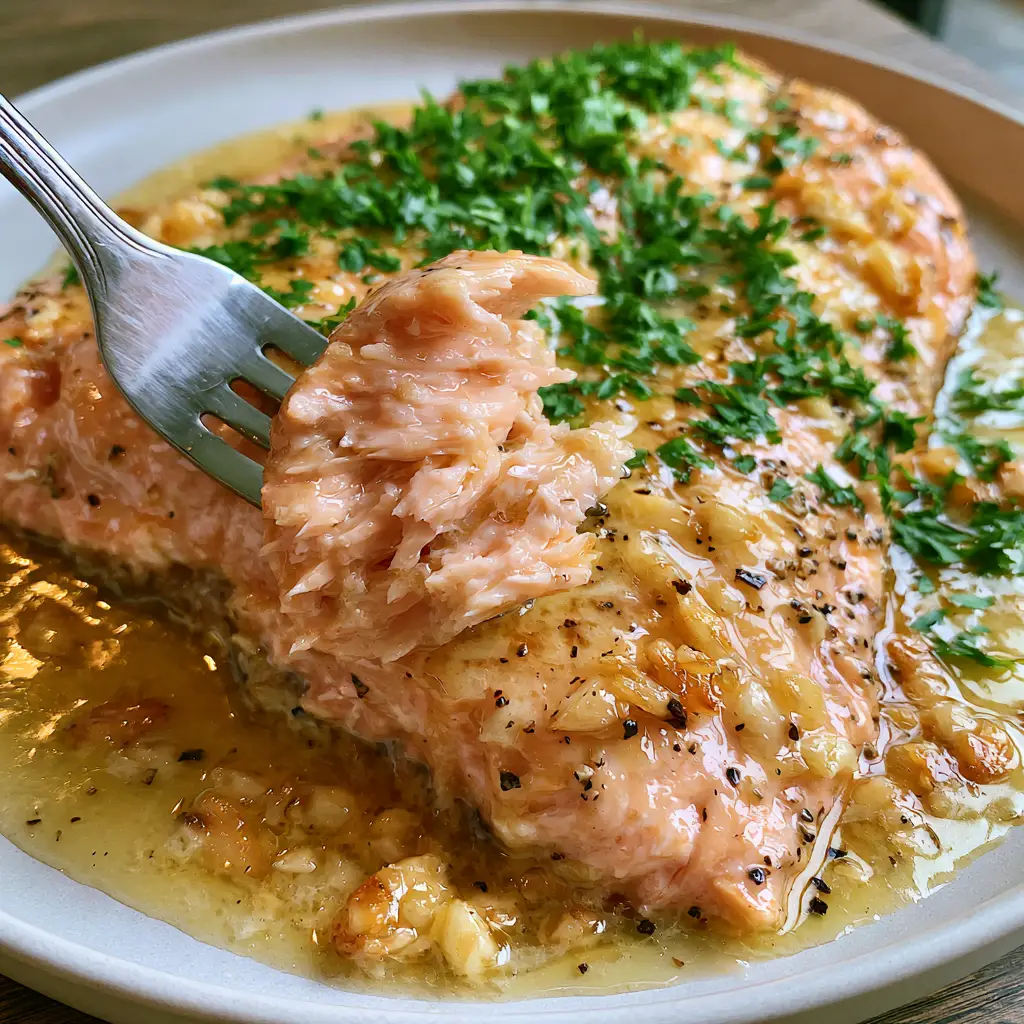
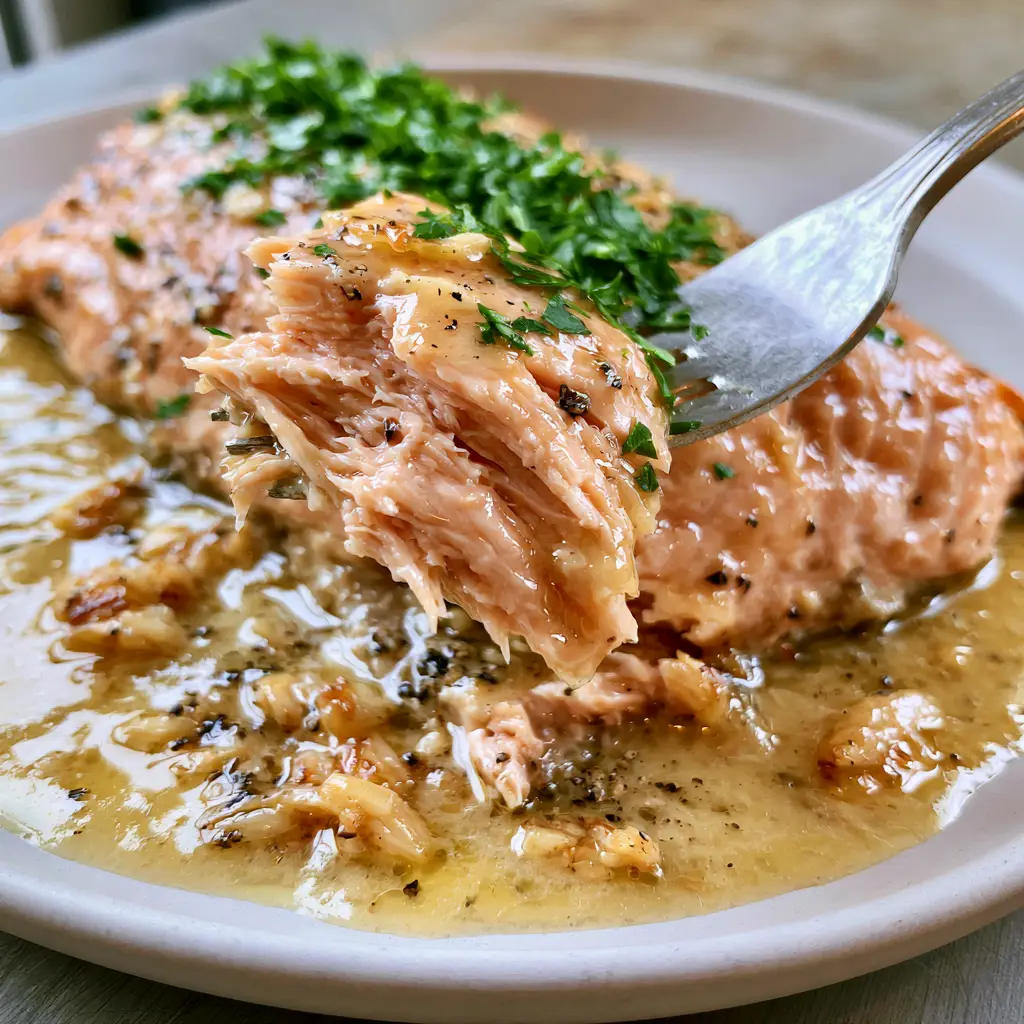
There is nothing quite as inviting as a perfectly prepared Baked Salmon fillet resting on a clean ceramic plate, its pink flakes glistening under a layer of liquid gold. When you press a silver fork into the side of a thick Atlantic fillet, you expect that characteristic “fork-pull”—the moment where the fish separates into moist, succulent layers with almost no resistance. This recipe is designed to deliver that exact sensory experience, combining the rustic charm of sautéed garlic with the refined elegance of a bright lemon juice glaze.
Visualizing the perfect meal starts with the texture: the contrast between the coarse sea salt crystals and the tender, roasted meat of the fish. As the soft afternoon sunlight hits the sauce, you can see the flecks of cracked black pepper and the bright, vibrant green of freshly chopped parsley. This isn’t just a quick weeknight dinner; it is a masterclass in balancing fats, acids, and aromatics to elevate a simple protein into a gourmet centerpiece.
Why This Fork-Tender Atlantic Salmon Works Every Time
- The Succulent Flake: By using Atlantic salmon, we leverage a higher fat content that ensures the meat remains moist and provides that iconic “glistening” appearance even after roasting.
- Textural Harmony: The combination of sautéed minced garlic bits and coarse sea salt creates a sophisticated mouthfeel that contrasts beautifully with the soft, melted butter.
- Acid Balance: A targeted lemon juice glaze cuts through the richness of the butter, brightening the entire flavor profile and adding a glossy sheen to the final presentation.
- Aromatics: Freshly chopped parsley isn’t just a garnish here; it provides a grassy, peppery finish that complements the deep, earthy heat of the cracked black pepper.
The Anatomy of a Perfect Garlic Butter Glaze
To achieve the “liquid gold” status seen in high-end photography, you need more than just melted butter. The secret lies in the gentle sautéing of the garlic and the emulsification of the lemon juice. If you enjoyed our garlic butter baked salmon, you will find this version even more refined in its textural execution.
Atlantic Salmon Fillets: Choose thick-cut fillets (about 1.5 inches (3.8cm) thick) to ensure they can withstand high-heat roasting without drying out. The thickness is crucial for achieving that “handheld smartphone photo” look where the center remains blush-pink and moist.
Unsalted Butter (1/2 cup (113g)): Using unsalted butter allows you to control the seasoning precisely with your coarse sea salt. It acts as the primary vehicle for the garlic and lemon flavors.
Fresh Garlic (4 cloves): Minced finely and sautéed until just golden, these bits provide the “visual bits” mentioned in our blueprint. Avoid jarred garlic, as it lacks the pungent oils necessary for a true Baked Salmon masterpiece.
Fresh Lemon Juice (2 tbsp (30ml)): This is the “glaze” component. When whisked into the warm butter, it creates a slightly thickened, glossy sauce that clings to the flakes of the fish.
Coarse Sea Salt & Cracked Black Pepper: These are your finishing touches. The coarse grains of salt provide a visual pop and a burst of flavor, while the cracked pepper adds a rustic, bold heat.
Fresh Parsley (1/4 cup (15g)): Flat-leaf or curly parsley works, but it must be chopped fresh just before serving to maintain its bright green color against the golden sauce.
Essential Equipment for Seafood Success
To recreate the professional results of this Baked Salmon, you need the right tools. A heavy-rimmed baking sheet or a matte white ceramic baking dish is ideal for heat distribution. You will also need a small saucepan to craft the garlic butter infusion, ensuring the garlic bits are sautéed to perfection rather than burned in the oven.
A digital meat thermometer is also highly recommended. To get that “perfectly roasted” look without overcooking the interior, you want to pull the salmon when it hits an internal temperature of 125°F (52°C) for a medium-rare finish that carries over to a perfect medium.
Step-by-Step: Mastering the Roasted Flake
Preparing the Salmon for the Heat
Start by bringing your salmon fillets to room temperature for about 15 minutes (15 min). This ensures even cooking throughout the thickest part of the fish. Pat the skin and the flesh extremely dry with paper towels; moisture is the enemy of a glistening roast, as it creates steam rather than a sear.
Season the fillets generously with the coarse sea salt and cracked black pepper. Press the seasoning into the flesh so it adheres during the roasting process. Preheat your oven to 400°F (200°C), which is the “sweet spot” for achieving a roasted exterior while maintaining a moist interior.
Infusing the Golden Garlic Butter
In a small skillet over medium-low heat, melt the 1/2 cup (113g) of butter. Once bubbling gently, add your minced garlic. Sauté for 2-3 minutes, watching for the garlic to turn a pale golden brown—this is the “sautéed minced garlic bits” stage. Remove from heat immediately and whisk in the lemon juice until the sauce looks thick and glossy.
This emulsification is what creates the “thick, glossy golden” sauce described in the visual blueprint. If the butter separates, simply add a teaspoon of water and whisk vigorously to bring it back together into a cohesive glaze.
The Roasting Process and Sensory Cues
Place the salmon on your baking tray and drizzle half of the garlic butter mixture over the top. Slide it into the center rack of the oven. Roast for 10-12 minutes, depending on the thickness of your fillet. Look for the “glistening, moist pink flakes” to start separating slightly at the edges.
The smell should be intoxicating—a mix of toasted butter and sharp citrus. If you notice the edges of the garlic bits getting too dark, you can loosely tent the fish with foil, but usually, at 400°F (200°C), the timing aligns perfectly with the protein coagulation.
The Finishing Flourish
Once the salmon is out of the oven, immediately pour the remaining garlic butter sauce over the fillets. The heat from the fish will keep the sauce liquid and glistening. Scatter the generous handful of bright green chopped parsley over the top. The contrast of the green against the pink fish and golden sauce is what creates that “authentic and unedited” look.
Expert Tips for the Ultimate Baked Salmon
- The Spoon Test: Before serving, spoon some of the butter from the bottom of the dish back over the salmon. This “basting” creates that extra layer of shine for your photos.
- Avoid the White Stuff: That white substance (albumin) that sometimes seeps out of salmon is just protein, but it can ruin the “glistening” look. To minimize it, don’t overcook the fish!
- Consistency is Key: Try to buy fillets of similar thickness so they all reach that “fork-pull” texture at the exact same time.
- Salt Selection: If you don’t have coarse sea salt, use Maldon sea salt flakes for an even more dramatic visual “flecked” appearance.
Sourcing and Storing Your Seafood
For the best Baked Salmon, look for “Center Cut” Atlantic salmon. These are the most uniform in shape and yield the most succulent flakes. If you have leftovers, they can be stored in an airtight container for up to 2 days, though the “glistening” sauce will solidify in the fridge.
To reheat, do so gently in a pan over low heat with a splash of water or extra butter to loosen the sauce. Avoid the microwave, as it will toughen the delicate protein fibers and destroy the “fork-pull” texture you worked so hard to achieve.
Pairing Your Salmon for a Complete Feast
This rich, buttery salmon pairs beautifully with light, acidic sides. Consider serving it alongside a crisp salad or a light pasta dish like our lemon pepper salmon-inspired orzo. For a full Mediterranean spread, you might even pair it with mediterranean baked feta eggs for a brunch-style feast.
If you are planning a summer gathering, perhaps for a 4th of July food celebration, this salmon provides a sophisticated alternative to traditional grilled meats. Follow it up with a refreshing mango tres leches cake or some mango lime mini cupcake bites for a tropical dessert finish.
Frequently Asked Questions About Baked Salmon
Yes, but ensure it is completely thawed and patted dry with paper towels to remove excess moisture, which prevents the sauce from clinging and the fish from roasting properly.
The salmon is done when it reaches an internal temperature of 125-135°F (52-57°C) and the flakes separate easily with a fork (the fork-pull test). It should remain moist and pink in the center.
Yes, leaving the skin on during roasting helps keep the fish moist and provides a protective layer against the heat of the pan, though you can easily remove it before serving if preferred.
Atlantic salmon is generally preferred for its higher fat content, which leads to a more succulent, glistening flake compared to leaner wild varieties like Sockeye.
Butter can separate if the heat is too high or the lemon juice is added too quickly. Whisk in a teaspoon of warm water to help re-emulsify the sauce into a glossy glaze.
The Ultimate Roasted Garlic Butter Salmon Recipe
Ready to create this masterpiece in your own kitchen? Follow the detailed recipe card below to achieve the glistening, flaky results that look like they jumped straight off a professional food blog. Don’t forget to focus on the garlic sauté—it is the soul of this dish!
Baked Salmon with Glistening Garlic Butter and Fresh Herbs
Ingredients
Equipment
Method
- Preheat oven to 400°F (200°C). Pat the salmon fillets completely dry with paper towels.
- Season the fillets generously with coarse sea salt and cracked black pepper, pressing them into the flesh.
- In a small saucepan over medium-low heat, melt butter and sauté minced garlic until golden bits form. Stir in lemon juice to emulsify.
- Drizzle half the sauce over the salmon. Roast for 10-12 minutes until the internal temperature reaches 125-130°F (52-54°C).
- Pour the remaining sauce over the hot salmon and top with a generous scatter of fresh parsley.
Notes
Baste the fish with the pan juices halfway through for maximum glisten.
Closing & Call to Action
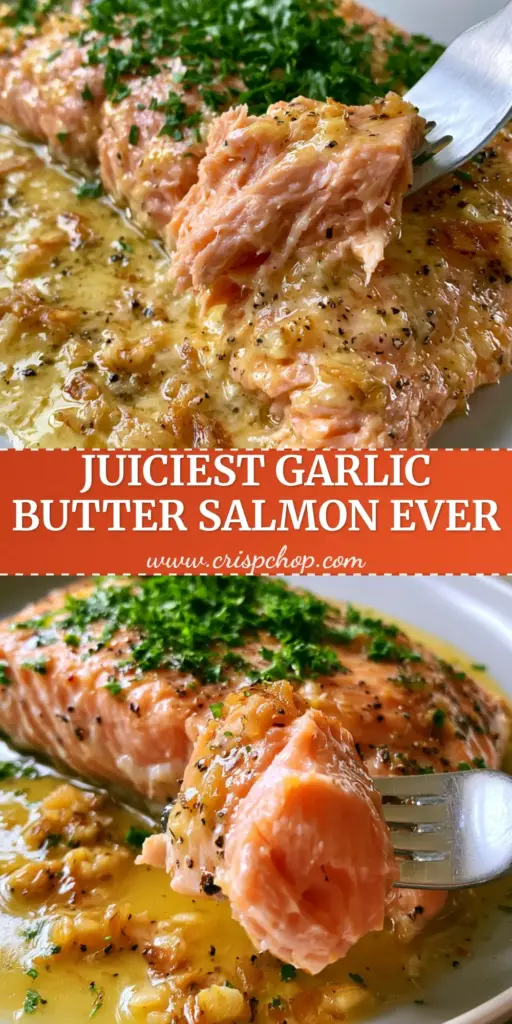
Mastering Baked Salmon is a milestone for any home cook. The combination of high-quality Atlantic salmon and a handcrafted garlic butter sauce creates a dining experience that is both comforting and luxurious. The “fork-pull” texture is a testament to your skills in the kitchen!
If you enjoyed this recipe, please leave a comment below and let us know how your garlic butter glaze turned out. We love seeing your recreations, so be sure to tag us or share this recipe to your favorite boards on Pinterest. For more seafood inspiration, check out our tuna steak recipe or try something spicy with our sesame ginger tuna steak.