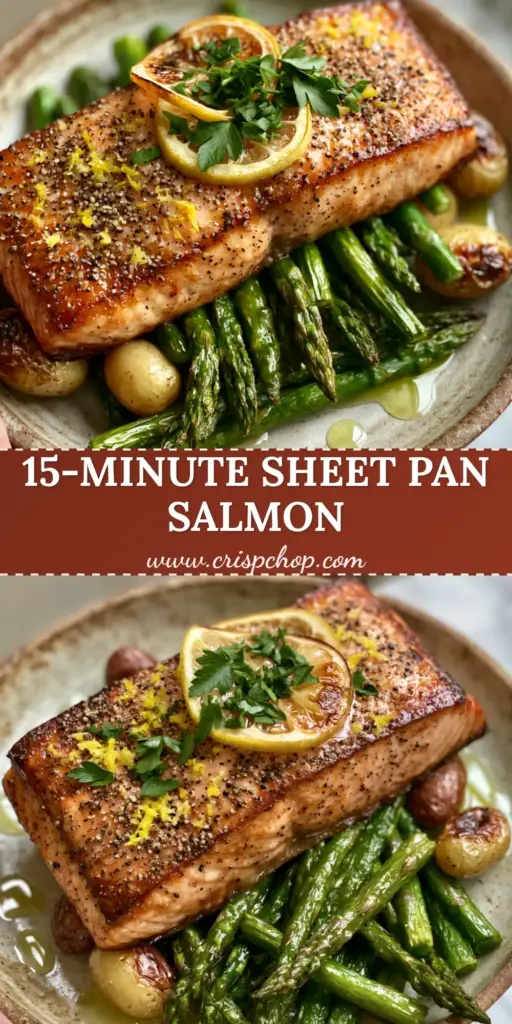
There is a specific kind of culinary magic that happens when high-quality Atlantic salmon meets the abrasive, aromatic heat of coarse-cracked black pepper and the bright, acidic lift of fresh citrus. This Lemon pepper salmon isn’t just a meal; it’s a sensory experience designed to mimic the vibrant, sun-drenched aesthetic of a high-end bistro lunch. Imagine a thick, succulent fillet with golden-seared crispy edges, glistening under a velvet-smooth lemon-butter glaze that catches the morning light just right.
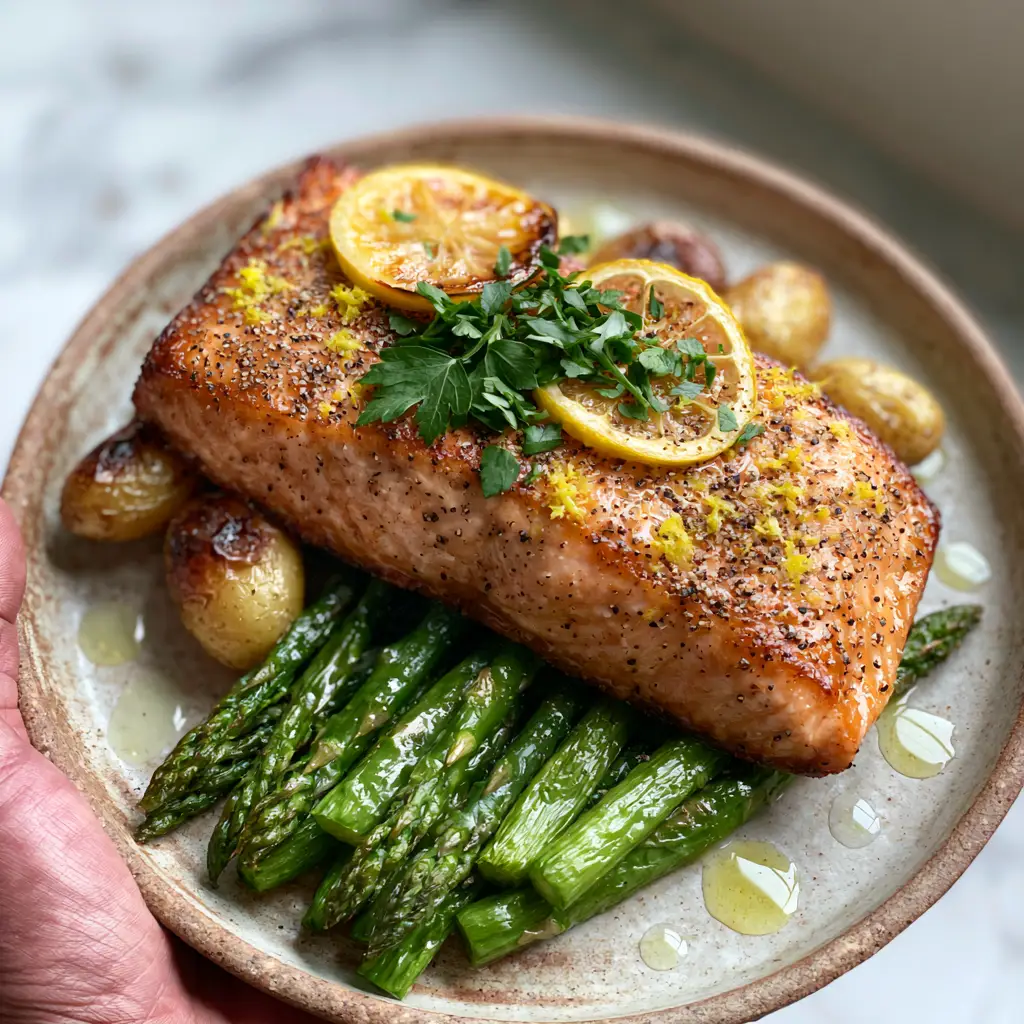
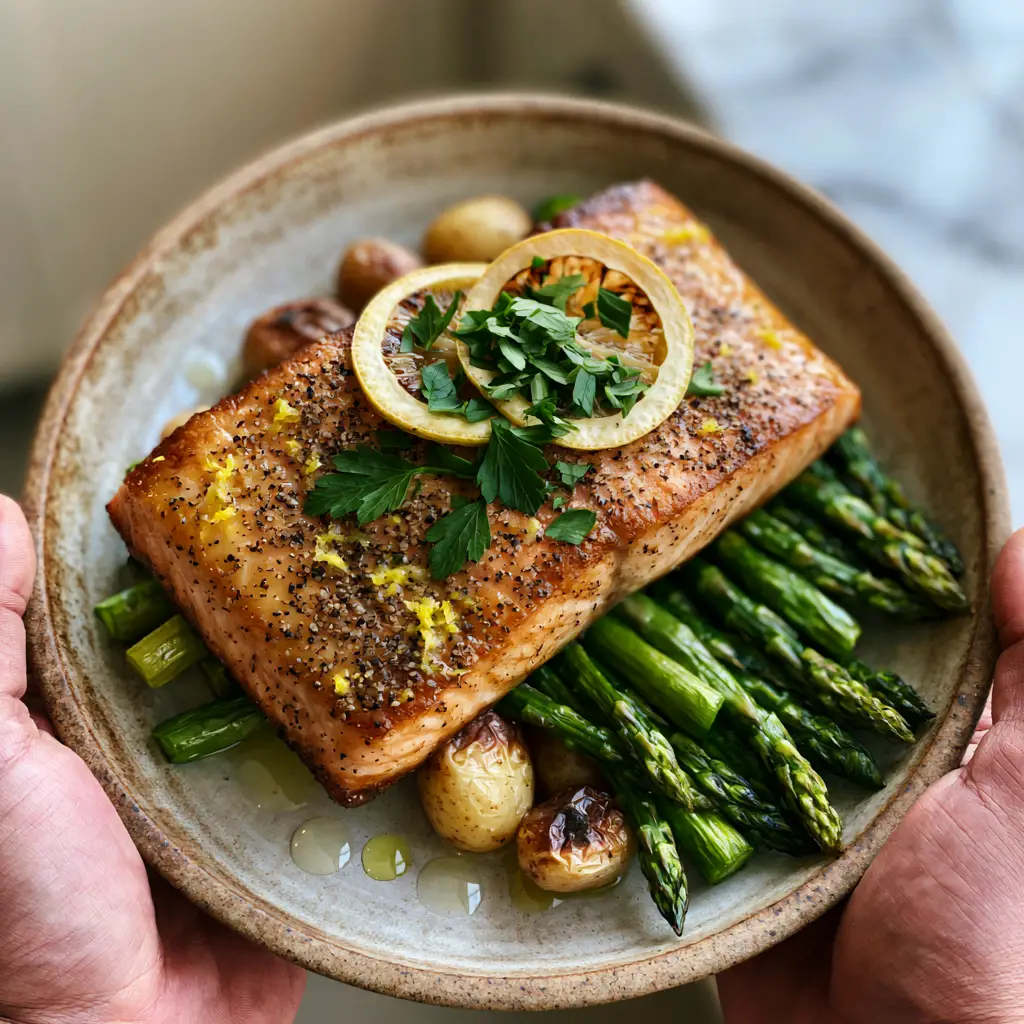
The visual appeal is undeniable—from the charred lemon rounds resting atop the fish to the vibrant green of tender-crisp asparagus and the rustic, blistered skins of baby gold potatoes. Whether you are preparing this for a quiet weeknight or a sophisticated weekend gathering, the combination of textures—the flake of the fish, the snap of the greens, and the creamy interior of the roasted potatoes—creates a professional-grade dish that is surprisingly achievable in your own kitchen.
Why This Pan-Seared Masterpiece Works
- Textural Contrast: We achieve a definitive “crunch” on the salmon’s exterior while maintaining a buttery, medium-rare center that flakes at the touch of a fork.
- Forensic Flavor Balancing: The heavy use of coarse-grind black pepper provides a woody heat that perfectly offsets the rich, fatty profile of the Atlantic salmon and the bright zing of the lemon zest.
- One-Plate Harmony: By roasting the asparagus and potatoes together, we ensure the earthy, salty notes of the vegetables complement the acidic glaze of the main protein.
- Visual Integrity: This recipe is engineered to look exactly like a professional food photograph, utilizing charred lemons and fresh flat-leaf parsley for a high-contrast finish.
The Essential Pantry List for Restaurant-Quality Fish
To achieve the specific result seen in our visual blueprint, we must select ingredients that offer both structural integrity and flavor depth. Do not substitute the coarse pepper for fine-ground table pepper; the texture is vital for that signature crust.
Atlantic Salmon Fillets: Opt for thick-cut fillets (about 6oz or 170g each) to ensure the center remains succulent while the outside develops a golden-brown sear. Atlantic salmon provides the high fat content necessary for that “glistening” look.
Coarse Cracked Black Pepper: This provides the “bite” and the visual “crust.” Use a pepper mill on the coarsest setting or crush whole peppercorns in a mortar and pestle for the best results.
Fresh Lemons: You will need the zest for aromatic brightness, the juice for the glaze, and thin rounds to char in the pan for a professional garnish.
Unsalted Butter (28g or 2 tbsp): Butter is our “invisible” foundational ingredient that creates the emulsion for the glaze, adding a silkiness that olive oil alone cannot provide.
Baby Gold Potatoes (225g or 1/2 lb): These have thin skins that blister beautifully under high heat, providing a creamy, waxy interior that pairs perfectly with the salmon.
Fresh Asparagus (225g or 1/2 lb): Look for medium-thickness spears. They should be “tender-crisp,” meaning they hold their shape but yield easily to a bite.
Extra Virgin Olive Oil: Essential for roasting the vegetables and providing that “clear droplet” sheen mentioned in our visual prompt.
Fresh Flat-Leaf Parsley: Chopped finely, this adds a pop of cool green color and a herbal finish that cuts through the richness of the butter sauce.
The Culinary Toolkit: Equipment for the Perfect Sear
Achieving the “golden-seared crispy edges” described in our Midjourney prompt requires specific heat conduction. A heavy-bottomed stainless steel pan or a well-seasoned cast-iron skillet is non-negotiable for the salmon. These materials hold heat consistently, preventing the temperature drop that leads to steaming rather than searing.
You will also need a large rimmed baking sheet for the roasted vegetables. This allows enough surface area for the baby potatoes to blister without crowding, which would cause them to mush. A microplane is recommended for the lemon zest to ensure the citrus oils are released without including the bitter white pith.
The Step-by-Step Guide to the Ultimate Lemon Pepper Salmon
Preparing the Roasted Vegetable Bed
Preheat your oven to 400°F (200°C). Half the baby gold potatoes and toss them on the baking sheet with 1 tbsp (15ml) of olive oil and a generous pinch of salt flakes. Roast for 15 minutes before adding the asparagus spears to the same tray.
Roast for another 10-12 minutes until the potato skins are visibly blistered and the asparagus is vibrant and tender. This timing ensures the vegetables are ready exactly when the salmon finishes resting.
The Secret to the Perfect Salmon Sear
Pat the salmon fillets completely dry with paper towels. This is the most important step for a crispy exterior. Season the flesh side heavily with the coarse cracked black pepper and a pinch of salt, pressing the pepper into the flesh so it adheres.
Heat 1 tbsp (15ml) of high-smoke point oil in your skillet over medium-high heat. When the oil shimmers, place the salmon flesh-side down. Do not move it for 3-4 minutes. You are looking for a deep, golden-brown crust to form—a visual cue that the Maillard reaction is complete.
Crafting the Glistening Lemon-Butter Glaze
Flip the salmon carefully. Drop the butter and the thin lemon slices into the pan. As the butter melts and begins to foam, use a spoon to continuously baste the salmon with the citrus-infused fat.
Add the lemon juice and half of the zest to the pan in the final minute of cooking. The butter will emulsify with the juice to create a glistening, slightly thickened glaze. Remove the pan from the heat when the salmon is just opaque in the center.
Expert Tips for Success
- Don’t Overcrowd the Pan: If you are doubling this recipe, sear the salmon in batches. Overcrowding lowers the pan temperature, resulting in grey, boiled-looking fish rather than crispy edges.
- The “Cold Butter” Trick: Add your butter to the pan when it is slightly cold. This slows down the browning process, allowing the lemon juice to incorporate into a thick, creamy emulsion rather than separating.
- Zest at the End: Always add the remaining fresh lemon zest just before serving. The heat of the pan can dull the color of the zest; adding it fresh ensures that “bright yellow” look from our visual blueprint.
- Rest the Fish: Let the salmon rest for 2-3 minutes on the plate before serving. This allows the juices to redistribute, ensuring a succulent, flaky texture.
Preserving the Flavor: Storage and Reheating
While this Lemon pepper salmon is best enjoyed immediately for maximum crispiness, leftovers can be stored in an airtight container in the refrigerator for up to 2 days. To reheat, avoid the microwave, which will turn the salmon rubbery.
Instead, place the salmon and vegetables in a pan over low heat with a splash of water and cover with a lid for 3-5 minutes. This creates a gentle steam environment that warms the fish without overcooking the delicate proteins. Note that the potatoes may lose their blistered crunch but will remain flavorful.
Creative Pairings: What to Serve with Salmon
This dish is a complete meal on its own, but it fits perfectly into a larger seasonal menu. If you love the bright flavors of citrus and seafood, you might also enjoy our baked salmon with lemon butter cream sauce for a richer, more indulgent alternative.
For those looking for a quicker preparation, the sheet pan lemon garlic butter salmon offers a similar flavor profile with even less cleanup. If you are hosting a summer gathering, consider pairing this salmon with a refreshing pineapple mango rum punch to complement the citrus notes, or serve a mango tres leches cake for a tropical dessert finish.
Common Questions About Searing Salmon
Yes, but ensure it is fully thawed and patted dry. Frozen salmon often releases more moisture, so you may need to sear it slightly longer to achieve the same golden-brown crust.
The key is moisture removal. Pat the skin completely dry with paper towels and let the salmon sit at room temperature for 15 minutes before searing in a very hot, heavy-bottomed pan.
Atlantic salmon is generally preferred for this specific visual result because its higher fat content creates a more glistening, succulent appearance and a milder flavor that pairs well with heavy lemon.
For succulent, flaky salmon, aim for an internal temperature of 135°F (57°C) for medium, or 145°F (63°C) if you prefer it fully opaque and well-done.
Coarse pepper provides a structural ‘crust’ and a textural pop that ground pepper cannot. It also withstands the high heat of searing without burning as quickly as fine powder.
The Final Recipe: Lemon Pepper Salmon
Lemon pepper salmon with Blistered Baby Potatoes and Roasted Asparagus
Ingredients
Equipment
Method
- Preheat oven to 400°F (200°C). Toss halved baby gold potatoes with olive oil and salt flakes on a baking sheet. Roast for 15 minutes.
- Add asparagus spears to the baking sheet. Roast for an additional 10 minutes until potatoes are blistered and asparagus is tender-crisp.
- Pat salmon fillets dry. Season the flesh side heavily with coarse cracked black pepper and salt.
- Heat oil in a skillet over medium-high heat. Place salmon flesh-side down and sear for 3-4 minutes until golden-seared crispy edges form.
- Flip the fish. Add butter, lemon rounds, and lemon juice. Baste the salmon with the melting butter glaze for 2-3 minutes.
- Remove from heat. Top with fresh lemon zest and chopped parsley. Serve over the roasted vegetables.
Notes
Use cold butter for a thicker, more emulsified lemon sauce.
Join the CrispChop Culinary Community
This Lemon pepper salmon is a testament to how simple ingredients, when treated with professional technique, can create a world-class dining experience at home. The contrast of the spicy pepper, the tart lemon, and the buttery salmon is a flavor profile that never goes out of style. We invite you to try this recipe and share your results!
Did you achieve those perfect golden-seared edges? Let us know in the comments below! Don’t forget to follow us on Pinterest for more visually stunning recipe inspiration and kitchen tips. If you enjoyed this, please share it with your fellow home cooks!