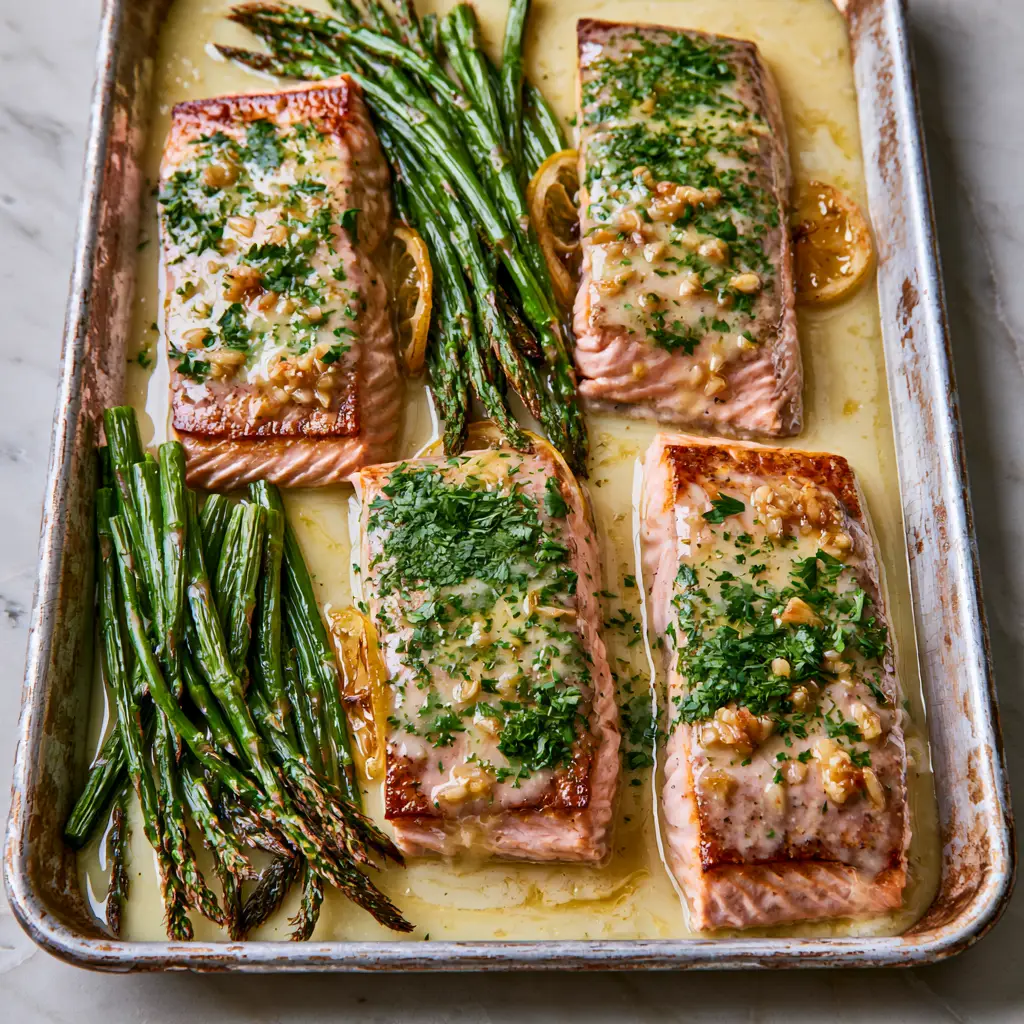
There is a specific kind of culinary magic that happens when high-quality protein meets the conductive heat of a rustic metal sheet pan. This Baked salmon with lemon butter cream sauce isn’t just a meal; it is a sensory experience designed to replicate the high-end bistro feel right in your own kitchen. Imagine thick-cut, succulent salmon fillets with perfectly seared, golden-brown edges that give way to moist, flaky pink centers, all nestled against vibrant green asparagus with charred, crispy tips.
The star of the show is the thick, glossy, pale-yellow garlic lemon butter sauce that pools elegantly around the fillets. Every bite is punctuated by the punch of sautéed minced garlic, the brightness of freshly chopped parsley, and the deep, concentrated tang of caramelized lemon wheels. Whether you are looking for a sophisticated weeknight dinner or a centerpiece for your 4th of July food spread, this recipe delivers on every professional metric.
Why This Sheet Pan Salmon Recipe Works
- Dual-Texture Mastery: By pan-searing the salmon before finishing it in the oven, we achieve a restaurant-grade crust while maintaining a buttery, tender interior.
- One-Pan Efficiency: Using a rustic metal sheet pan allows the asparagus to roast in the salmon’s natural juices, creating a cohesive flavor profile with minimal cleanup.
- Emulsified Sauce Stability: We use a specific technique to ensure your lemon butter cream sauce remains glossy and thick, never broken or greasy.
- Visual Sophistication: From the charred asparagus tips to the caramelized lemon wheels, this dish is a masterpiece of “un-edited” realistic food aesthetics.
The Gourmet Pantry: What You’ll Need for Succulent Salmon
To achieve the exact visual and flavor profile of this Baked salmon with lemon butter cream sauce, ingredient selection is paramount. We aren’t just looking for sustenance; we are looking for specific chemical reactions—like the Maillard reaction on the fish skin and the caramelization of the citrus sugars.
Thick-Cut Salmon Fillets: You will need 4 fillets (approximately 6oz (170g) each). The thickness is vital to ensure the center remains pink and moist while the exterior achieves that golden-brown sear.
Fresh Asparagus Spears: Use 1 lb (450g) of slender green asparagus. Slender spears are preferred here as they achieve that “tender-crisp” texture and charred tips in the same time it takes to finish the salmon.
Unsalted European-Style Butter: 1/2 cup (115g) of high-fat butter. European butter has a lower water content, which is the secret to a thick, glossy, pale-yellow sauce that doesn’t separate.
Fresh Garlic Cloves: 4 large cloves, meticulously minced. We sauté these until they are just golden to provide those visible “bits of sautéed garlic” described in our visual blueprint.
Heavy Cream: 1/4 cup (60ml) of heavy whipping cream. This is the “bridge” ingredient that transforms a standard butter sauce into a luxurious cream sauce that clings to the fish.
Fresh Lemons: 2 large lemons. One will be juiced for the sauce, and the other will be sliced into thin wheels to be tucked between the fillets and caramelized under the broiler.
Fresh Parsley: 1/2 cup (15g) of finely chopped flat-leaf parsley. A “heavy dusting” is required to provide the vibrant green contrast against the pale-yellow sauce.
High-Smoke Point Oil: 2 tbsp (30ml) of avocado or grapeseed oil. This is a foundational invisible ingredient required to sear the salmon at high heat without smoking out your kitchen.
Seasoning: Kosher salt and freshly cracked black pepper. Essential for drawing out the natural flavors of the seafood and vegetables.
Essential Tools for the Professional Home Cook
To replicate the 45-degree angle smartphone photo aesthetic, you need the right gear. A rustic metal sheet pan is non-negotiable; its heat conductivity is superior to glass or ceramic, which is how we get those charred asparagus tips. You will also need a heavy-bottomed stainless steel or cast-iron skillet for the initial sear. A microplane for zesting and a sharp chef’s knife for the meticulous mincing of garlic and parsley will ensure your textures are refined rather than rustic.
Step-by-Step Mastery: Achieving the Perfect Sear and Bake
Creating this Baked salmon with lemon butter cream sauce requires a specific sequence of heat application. We move from the stovetop to the oven to ensure every component reaches its peak texture simultaneously.
Step 1: Preparing the Foundation
Preheat your oven to 400°F (200°C). Pat your salmon fillets bone-dry with paper towels. This is a critical culinary step; moisture is the enemy of a golden-brown sear. Season generously with kosher salt and black pepper on all sides.
Step 2: The High-Heat Pan Sear
Heat 2 tbsp (30ml) of oil in your skillet over medium-high heat until it shimmers. Place the salmon fillets skin-side up (flesh-side down) into the pan. Press down lightly with a spatula to ensure even contact. Sear for 3-4 minutes until a deep, golden-brown crust forms. The visual cue you are looking for is a crisp, opaque edge about 1/4 inch up the side of the fillet.
Step 3: Organizing the Sheet Pan
Transfer the seared salmon fillets, seared-side up, to your rustic metal sheet pan. Arrange the slender asparagus spears around the fish. Toss the asparagus in a light coating of olive oil and salt. Tuck the thin lemon wheels between the fillets; this positioning allows the lemon sugars to caramelize against the heat of the fish and the pan.
Step 4: The Finishing Bake
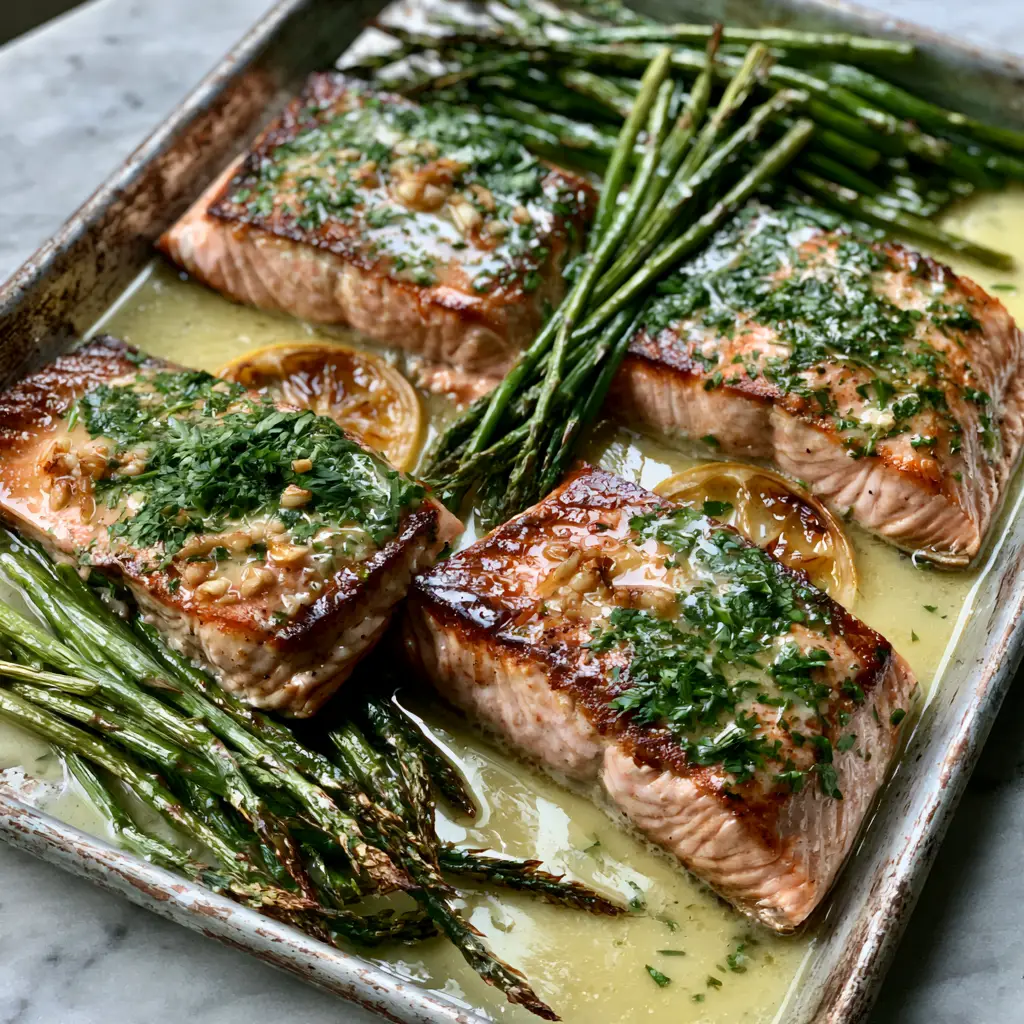
Slide the sheet pan into the oven. Bake for 6-8 minutes. You are looking for two sensory cues: the asparagus tips should be slightly charred and crispy, and the salmon should feel firm but have a slight give when pressed, indicating a moist, flaky pink center (internal temperature of 130°F (54°C)).
Step 5: Emulsifying the Lemon Butter Cream Sauce
While the salmon bakes, return your skillet to medium heat. Add 1 tbsp (15g) of butter and sauté the minced garlic for 1 minute until fragrant but not brown. Pour in the lemon juice and heavy cream, whisking constantly. Once simmering, reduce heat to low and whisk in the remaining cold butter, one tablespoon at a time. This “monter au beurre” technique creates the thick, glossy, pale-yellow shimmer seen in the photography.
Step 6: The Final Assembly
Pour the sauce over the salmon and asparagus, allowing it to pool slightly on the rustic pan. Apply a heavy dusting of chopped fresh parsley. The soft side-light of your kitchen should catch the shimmer of the sauce, highlighting the visible bits of sautéed garlic.
Expert Tips for Success
- Cold Butter Secret: Always use cold butter when finishing your sauce. The cold fat emulsifies more slowly with the liquid, resulting in a thicker, glossier texture that won’t break.
- Don’t Crowd the Pan: Ensure the asparagus is in a single layer. If they are piled up, they will steam instead of getting those charred, crispy tips.
- Carry-over Cooking: Remove the salmon from the oven when it is 5 degrees below your target temperature. The residual heat from the metal sheet pan will finish the cooking process perfectly.
- Acid Balance: If your sauce feels too “heavy,” add an extra teaspoon of lemon juice. The acid cuts through the butter fat to brighten the entire dish.
Storage, Reheating & Freezing
While this Baked salmon with lemon butter cream sauce is best enjoyed fresh to preserve the “tender-crisp” asparagus, you can store leftovers in an airtight container for up to 2 days. To reheat, avoid the microwave, which will turn the salmon rubbery. Instead, place the salmon and asparagus back on a sheet pan, cover loosely with foil, and warm in a 275°F (135°C) oven until the sauce begins to shimmer again.
Freezing is not recommended for this specific recipe, as the lemon butter cream sauce will likely separate upon thawing, and the asparagus will lose its structural integrity.
What to Serve With This Gourmet Salmon
This dish is a complete meal on its own, but it pairs beautifully with starches that can soak up that extra glossy sauce. Consider serving it alongside a bed of jasmine rice or a simple herb-roasted potato. If you are exploring more seafood options, our tuna steak recipe offers a similar high-protein elegance. For those who love the convenience of one-pan cooking, this recipe is a natural evolution from our sheet pan lemon garlic butter salmon or our classic baked salmon.
If you’re hosting a larger gathering, you might also consider adding a unique side like mediterranean baked feta eggs for a brunch-style spread, or follow up the meal with a light dessert like mango pancakes.
Frequently Asked Questions
Yes, but you must thaw it completely and pat it bone-dry. Frozen salmon often contains more moisture, which can prevent the golden-brown crust from forming.
The secret is the dual-cooking method: sear the salmon skin-side down in a hot skillet for 3 minutes before transferring it to the preheated metal sheet pan to finish in the oven.
Look for a vibrant green color and charred tips. A fork should easily pierce the stem with just a small amount of resistance.
For moist, flaky pink centers, aim for 125°F-130°F (52°C-54°C). The temperature will rise slightly as it rests on the hot sheet pan.
Sauces usually break if they get too hot or if the butter is added too quickly. Whisk in cold butter cubes over low heat, allowing each to emulsify before adding the next.
The Master Recipe: Baked Salmon with Lemon Butter Cream Sauce
Baked salmon with lemon butter cream sauce: The Ultimate Sheet Pan Guide
Ingredients
Equipment
Method
- Pat salmon fillets dry with paper towels and season with salt and pepper.
- Heat oil in a skillet over medium-high. Sear salmon flesh-side down for 3-4 minutes until golden-brown edges form.
- Place salmon on a rustic metal sheet pan. Add asparagus spears and lemon wheels between fillets.
- Bake at 400°F (200°C) for 6-8 minutes until asparagus tips are charred and salmon is flaky.
- Sauté garlic in butter, add lemon juice and cream. Whisk in cold butter until thick and glossy.
- Drizzle sauce over the pan, top with a heavy dusting of parsley, and serve immediately.
Notes
Use cold butter to finish the sauce to prevent breaking.
Closing & Call to Action
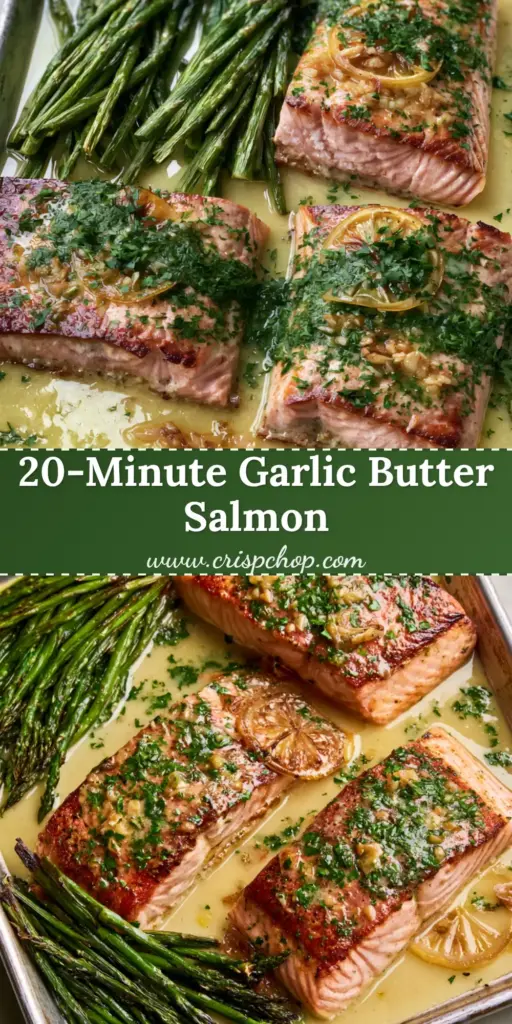
Mastering the Baked salmon with lemon butter cream sauce is a rite of passage for any enthusiastic home cook. It combines technical pan-searing skills with the ease of sheet pan roasting, resulting in a dish that looks as professional as it tastes. The combination of succulent pink salmon, charred asparagus, and that thick, glossy garlic butter sauce is truly unbeatable.
Did you achieve those perfectly charred asparagus tips? Tell us in the comments below! If you enjoyed this recipe, please share it with your friends and follow us on Pinterest for more culinary inspiration. Don’t forget to sign up for our newsletter to get the latest kitchen-tested recipes delivered straight to your inbox!