When searching for the ultimate Asian Dinner Recipes, few dishes satisfy the craving for texture and depth quite like this Honey Soy Charred Chicken Udon. This isn’t your average stir-fry; it is a masterclass in the Maillard reaction, featuring chicken with deeply caramelized, crispy edges and noodles coated in a light-reflective, dark amber glaze.
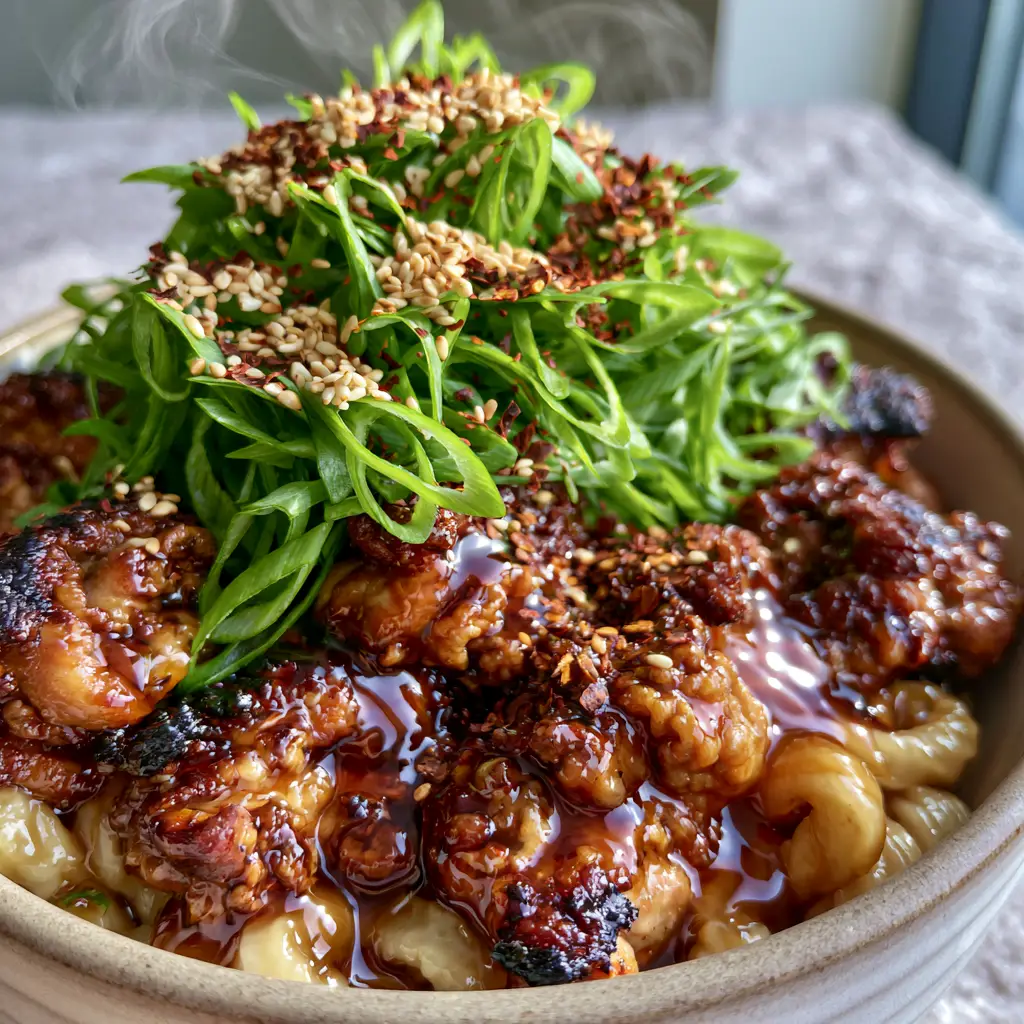
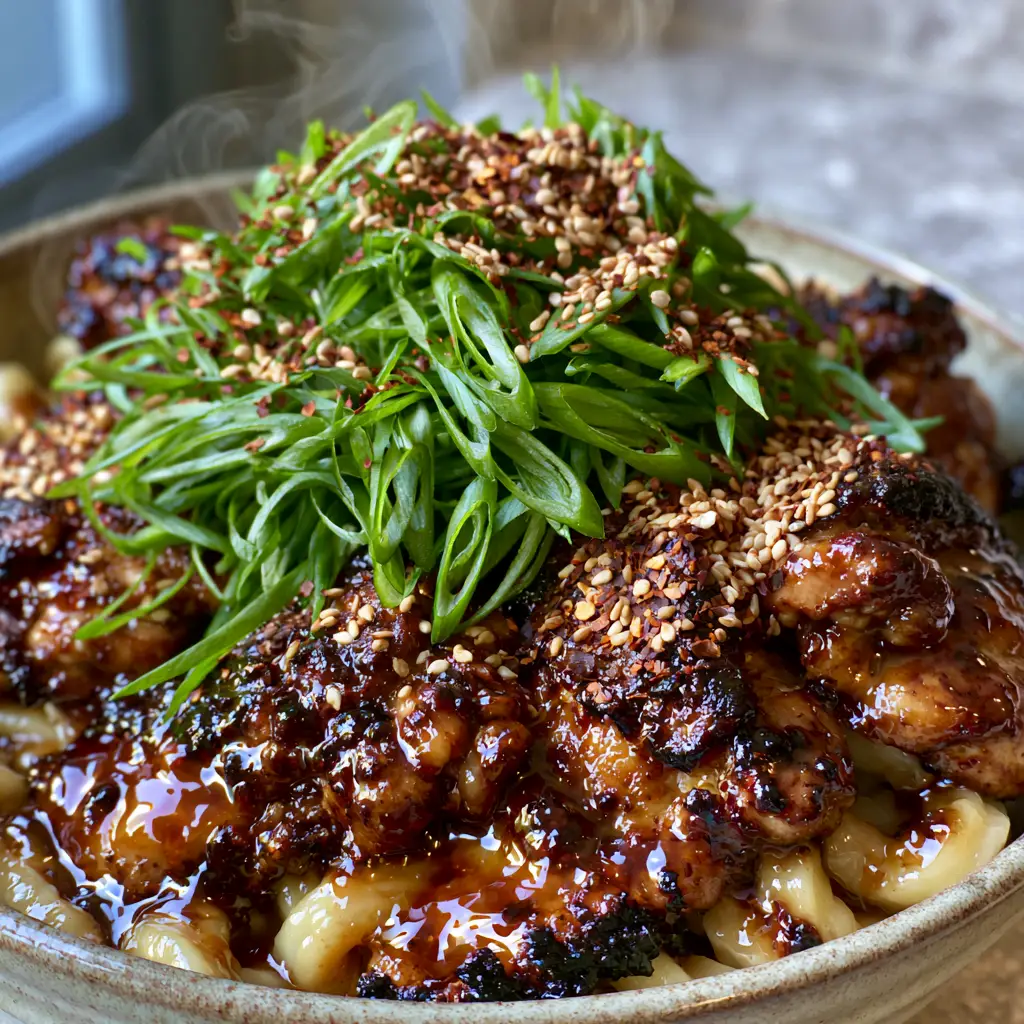
The visual appeal of this dish is as striking as its flavor profile. Imagine thick, chewy wheat udon noodles glistening under a translucent honey-soy reduction, topped with a vibrant forest of fresh scallions and the subtle crunch of toasted sesame seeds.
Whether you are a seasoned home cook or just starting your journey into Asian Dinner Recipes, this recipe provides the sensory feedback you need. From the audible sizzle of the chicken hitting a hot pan to the rising steam that carries notes of toasted ginger and garlic, this is a multi-sensory culinary experience.
Why This Glossy Honey Soy Udon Wins Every Time
- The Signature Char: Unlike boiled or poached proteins, these chicken thigh chunks are seared until they develop a “crispy charred edge” that provides a smoky contrast to the sweet glaze.
- The Gloss Factor: A specific ratio of honey to soy sauce ensures a “translucent dark amber honey-soy glaze” that clings to every strand of the thick wheat udon.
- Textural Contrast: You get the bounce of the udon, the tenderness of the chicken, and the sharp, fresh bite of “thinly sliced fresh green scallions.”
- Visual Vibrancy: The “dense cluster” of garnishes, including “toasted white sesame seeds” and “crushed red chili flakes,” makes this bowl look like it came straight from a professional kitchen.
Essential Ingredients for the Perfect Charred Chicken Bowl
Boneless Skinless Chicken Thighs: 1.5 lbs (680g). We use thighs because their higher fat content allows for high-heat searing without drying out the meat, essential for those crispy charred edges.
Fresh or Frozen Udon Noodles: 16 oz (450g). These “thick wheat udon noodles” provide the necessary surface area to hold the heavy glaze and offer a satisfying, chewy mouthfeel.
Honey: 1/3 cup (115g). The primary sweetener that creates the “dark amber” color and provides the viscous, glossy sheen that catches the light in food photography.
Low-Sodium Soy Sauce: 1/4 cup (60ml). This provides the deep umami base and salt content needed to balance the honey, forming the “honey-soy glaze” foundation.
Toasted Sesame Oil: 1 tbsp (15ml). A foundational invisible ingredient that adds an aromatic, nutty depth that high-heat oils lack.
Fresh Scallions: 1 bunch. You will need a “dense cluster” of “thinly sliced fresh green scallions” to provide a bright flavor pop and visual contrast against the dark sauce.
Toasted White Sesame Seeds: 1 tbsp (9g). These provide a “generous dusting” of texture and visual interest, highlighting the glossy surface of the noodles.
Crushed Red Chili Flakes: 1 tsp (2g). Essential for a subtle heat that cuts through the richness of the honey-soy reduction.
Cornstarch Slurry: 1 tsp (3g) cornstarch mixed with 1 tbsp (15ml) water. This is the secret to achieving that “thick, translucent” glaze consistency described in the visual prompt.
Professional Tools for Restaurant-Quality Stir Fry
To master Asian Dinner Recipes like this one, heat retention is everything. A heavy-bottomed cast iron skillet or a traditional carbon steel wok is required to achieve the “crispy charred edges” on the chicken without steaming the meat.
You will also need a sharp chef’s knife for those “thinly sliced fresh green scallions” and a set of long kitchen tongs to toss the udon noodles vigorously, ensuring they are “heavily coated” in the glaze. A high-heat neutral oil, like grapeseed or canola, is vital for the searing process.
Step-by-Step: Mastering the Sear and Glaze
Prepare the Flavor Foundation
In a small bowl, whisk together the soy sauce, honey, minced garlic, and grated ginger. This mixture will eventually become the “translucent dark amber honey-soy glaze.” If you enjoy more complex profiles, consider trying this after mastering our sesame ginger tuna steak for a different take on umami.
Boil and Refresh the Udon
Bring a large pot of water to a boil. Drop the “thick wheat udon noodles” in and cook according to package directions—usually only 2-3 minutes. Drain and rinse under cold water immediately to stop the cooking process and maintain that signature “glossy” texture.
Searing for Maximum Char
Pat the chicken thigh chunks completely dry with paper towels. Heat 2 tbsp (30ml) of neutral oil in your skillet over high heat until it just begins to smoke. Add the chicken in a single layer, leaving space between pieces.
Do not move the chicken for 3-4 minutes. You are looking for a “visual cue” of deep browning and “crispy charred edges.” Flip and sear the other side until fully cooked through and beautifully blackened in spots.
Emulsifying the Dark Amber Glaze
Reduce the heat to medium and pour in the honey-soy mixture. As the sauce hits the pan, you should see “rising steam” and immediate bubbling. Stir in the cornstarch slurry and whisk constantly for 60 seconds until the sauce transforms into a “thick, translucent glaze.”
The Final Toss and Garnish
Add the udon noodles to the pan. Use tongs to lift and fold the noodles into the sauce until they are “heavily coated.” The noodles should look “glossy” and catch the “bright natural highlights” from your kitchen lighting.
Turn off the heat. Top the dish with a “dense cluster” of “thinly sliced fresh green scallions,” a “generous dusting of toasted white sesame seeds,” and the “crushed red pepper flakes.” Serve immediately while the “wisps of visible steam” are still rising.
Pro Tips for Achieving the Ultimate Maillard Reaction
- Dry Your Protein: Moisture is the enemy of the char. If the chicken is wet, it will steam rather than sear, and you won’t get those “crispy charred edges.”
- Crowding the Pan: If you cook too much chicken at once, the pan temperature drops. Work in batches to maintain the high heat necessary for professional Asian Dinner Recipes.
- Noodle Timing: Udon noodles can become mushy quickly. Slightly undercook them in the water, as they will finish softening when tossed in the hot glaze.
- The Gloss Secret: If your sauce looks dull, add a teaspoon of butter or a splash of sesame oil at the very end to emulsify the fats and increase the light reflectivity.
Meal Prep, Storage, and Reheating
This dish is best enjoyed fresh to appreciate the “wisps of visible steam” and the texture of the charred chicken. However, leftovers can be stored in an airtight container in the refrigerator for up to 3 days.
To reheat, avoid the microwave if possible, as it can make udon noodles rubbery. Instead, toss the leftovers in a hot skillet with a splash of water or extra soy sauce to loosen the glaze. This helps revive the “glossy” appearance and keeps the chicken tender.
Complete Your Menu: What to Serve Next
This bold, savory bowl pairs beautifully with other vibrant Asian Dinner Recipes. If you are looking for more stir-fry inspiration, our chicken fried rice is a classic staple that uses similar searing techniques.
For those who crave more heat, try the bold flavors of our pad kee mao (Drunken Noodles). To balance the salty-sweet glaze of the udon, a light fruit-based dessert like a mango pancake or a refreshing mango bingsu provides the perfect tropical finish.
Common Questions About Stir-Fried Udon
You can, but thighs are recommended. Chicken breasts dry out faster at the high temperatures needed to create the signature charred edges described in this recipe.
Use high heat and a heavy pan. Pat the chicken very dry before cooking and avoid moving the pieces for at least 3 minutes. This allows the crust to form quickly while the inside remains juicy.
It has a mild, customizable heat from the crushed red chili flakes. You can adjust the amount of flakes to suit your preference or omit them entirely for a strictly savory-sweet profile.
The secret is a combination of honey for viscosity and a cornstarch slurry. Emulsifying these over medium heat creates a translucent glaze that clings to the noodles without becoming greasy.
Rinsing removes excess surface starch and stops the cooking process. This prevents the noodles from becoming gummy and ensures they stay bouncy and glossy when tossed in the sauce.
The Ultimate Honey Soy Charred Chicken Udon Recipe
This recipe brings the authentic textures and bold visuals of high-end Asian Dinner Recipes directly to your home kitchen. Focus on the high-heat sear and the translucent quality of the sauce for the best results.
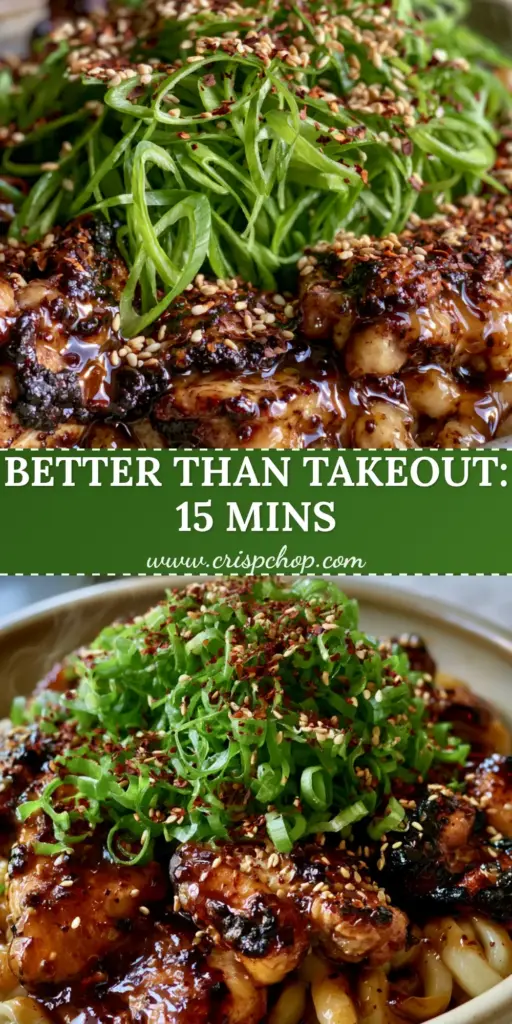
Asian Dinner Recipes: Honey Soy Charred Chicken Udon
Ingredients
Equipment
Method
- Cook udon noodles in boiling water for 2-3 minutes until tender. Drain and rinse with cold water to maintain a glossy texture.
- Heat oil in a skillet over high heat. Sear chicken thigh chunks without moving for 3-4 minutes to achieve crispy charred edges.
- Add honey-soy mixture and cornstarch slurry to the pan. Stir until a thick, translucent dark amber glaze forms and starts bubbling.
- Add noodles to the pan and toss with tongs until heavily coated and glossy. Top with a dense cluster of scallions, sesame seeds, and chili flakes.
Notes
Rinsing udon in cold water prevents them from becoming mushy in the sauce.
Conclusion: Bring the Heat to Your Kitchen
Mastering Asian Dinner Recipes is all about balancing the elements: heat, sweet, salt, and texture. This Honey Soy Charred Chicken Udon delivers on every front, from the smoky “charred edges” of the chicken to the “glossy” finish of the noodles. We invite you to share your results and tag your photos! For more visual inspiration and dinner ideas, follow us on Pinterest and save this recipe to your favorite boards.