There is a specific kind of magic that happens inside a high-end steakhouse kitchen. The air is thick with the scent of searing proteins, and every plate that emerges looks like a work of art. Today, we are capturing that exact energy with this Texas Roadhouse Style Baked Salmon. This isn’t just a simple weeknight fish dish; it is a masterclass in texture and flavor, designed to replicate the juicy, flaky, and buttery experience you crave from your favorite restaurant booth.
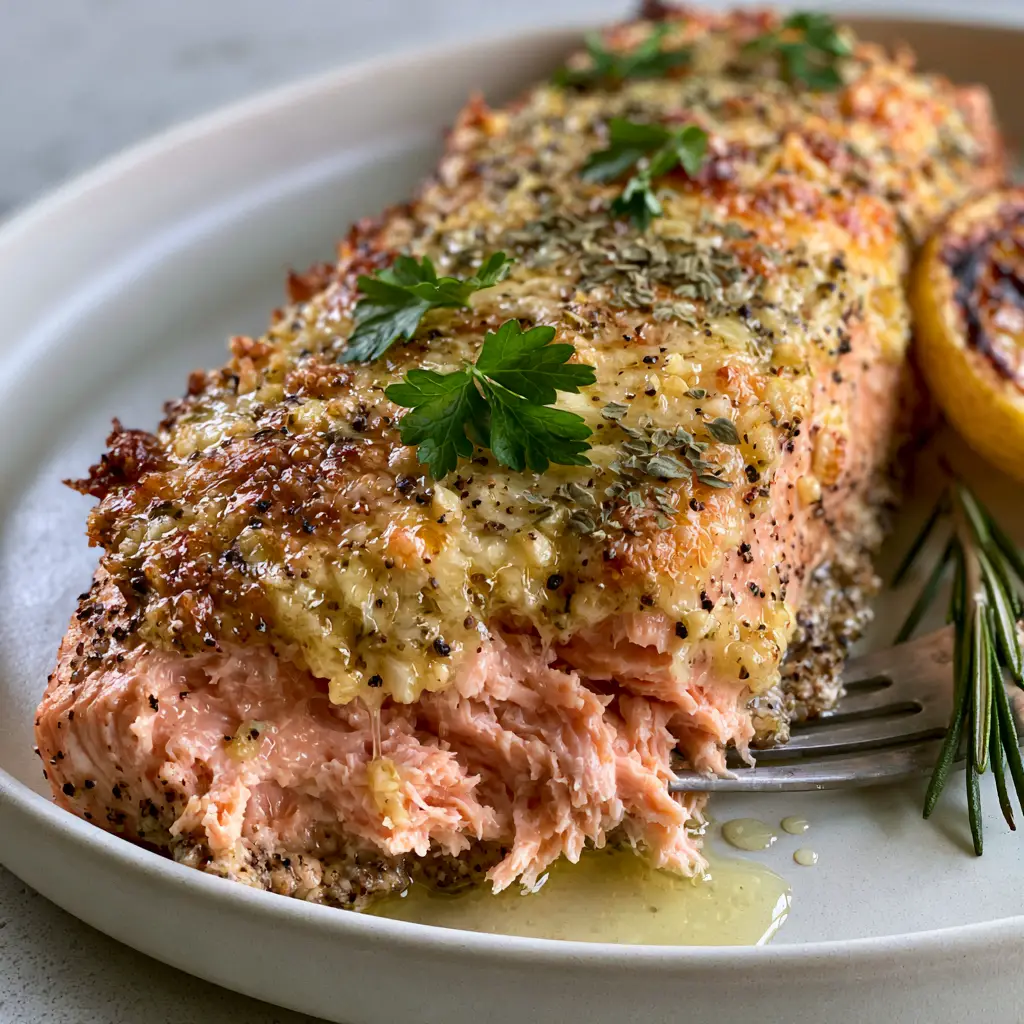
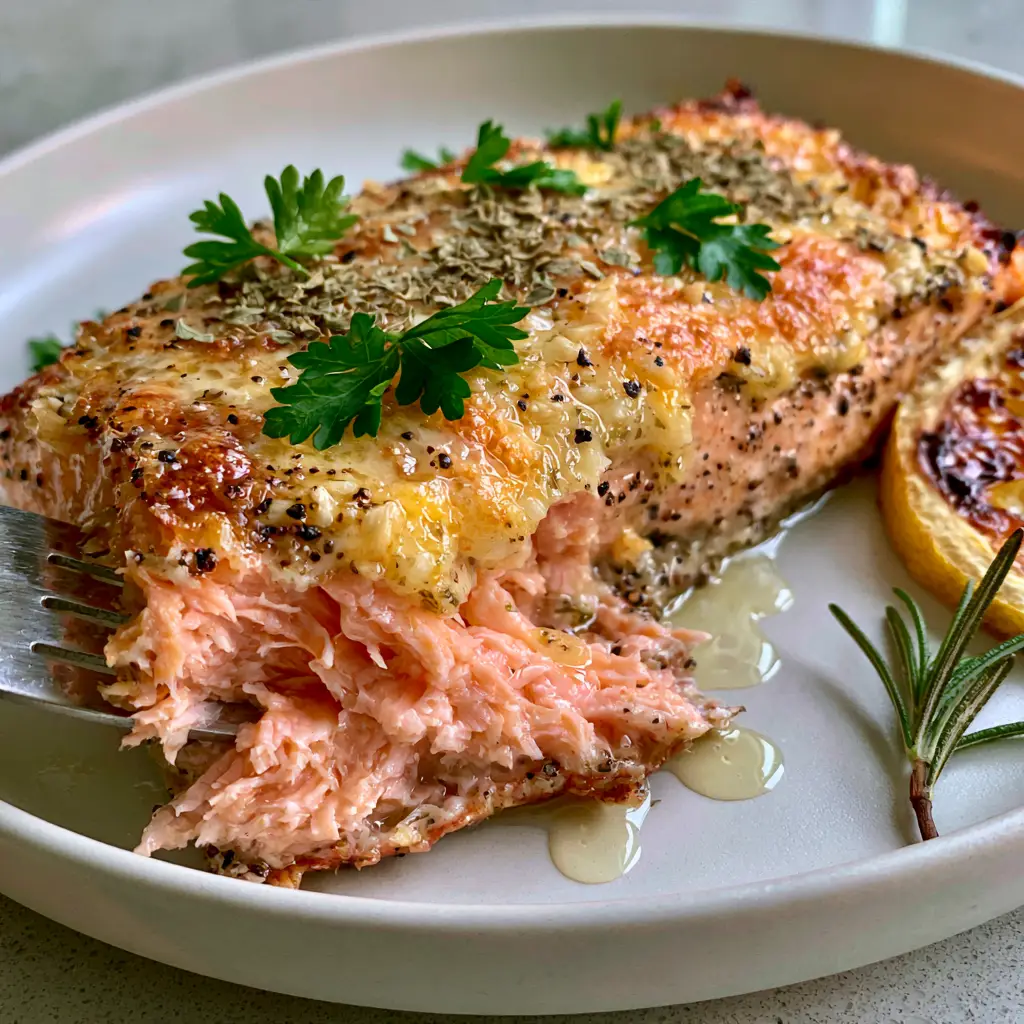
Imagine a thick, center-cut Atlantic salmon fillet, its surface transformed into a bubbling, golden-brown landscape of garlic and herbs. As you press your fork into the crust, the fish gives way effortlessly, revealing pink, succulent layers that have been perfectly insulated by a rich lemon-butter glaze. The contrast between the savory, slightly charred herb topping and the buttery interior is what makes this Texas Roadhouse Style Baked Salmon a true standout in the world of seafood recipes.
Whether you are a seasoned home cook or just beginning your culinary journey, this recipe provides the sensory cues and technical precision needed for success. We aren’t just baking fish; we are engineering a dining experience. From the glistening butter droplets on the crust to the aromatic presence of fresh rosemary, every element has been curated to ensure your kitchen feels like a professional steakhouse.
Why This Texas Roadhouse Style Baked Salmon Outshines the Restaurant Version
- The Signature Bubbling Crust: Unlike standard baked fish, our method uses a specific ratio of softened butter and aromatics to create a thick, golden-brown crust that sizzles as it leaves the oven.
- Superior Moisture Retention: By utilizing a high-fat butter glaze, we create a thermal barrier that prevents the delicate salmon proteins from drying out, ensuring “pull-apart” flakiness every time.
- Vibrant Herb Profile: The combination of fresh-chopped parsley, dried oregano flakes, and aromatic rosemary provides a multi-layered flavor profile that balances the richness of the Atlantic salmon.
- Steakhouse Visuals: We include professional techniques like charring the lemon slices to add a smoky acidity that cuts through the butter, just like the plating at top-tier restaurants.
The Pantry Essentials for That Iconic Golden-Brown Herb Crust
To achieve the “Forensic Visual Accuracy” of a true Texas Roadhouse Style Baked Salmon, each ingredient must serve a specific culinary purpose. We don’t just use salt for flavor; we use it to draw out moisture for a better sear. We don’t just use garlic for scent; we use it to create the structural “crunch” in our herb crust.
Thick Atlantic Salmon Fillets: You need fillets at least 1.5 inches (3.8cm) thick. This thickness allows the crust to bubble and brown without overcooking the center of the fish.
Unsalted Butter (High-Fat Content): Use 4 tbsp (56g) of softened butter. High-quality butter contains less water, which is crucial for achieving those glistening droplets and a golden-brown finish rather than a soggy one.
Fresh Garlic: Use 3 cloves (15g), finely minced. Minced garlic provides the “nubby” texture visible in the crust, offering sharp savory notes that mellow during the baking process.
Fresh Parsley and Dried Oregano: You will need 2 tbsp (8g) of fresh parsley and 1 tsp (2g) of dried oregano. The dried oregano provides an earthy base, while the fresh parsley adds that bright green “pop” visible in the final photo.
Lemon Zest and Juice: The zest of 1 lemon adds citrus oils to the crust, while the juice provides the acidity needed to “cut” through the fat of the salmon and butter glaze.
Cracked Black Pepper and Sea Salt: Use 1 tsp (2g) of coarsely cracked pepper. The “cracked” nature is key—you want to see those dark flecks against the golden butter crust.
Fresh Rosemary and Lemon Slices: These are your “plating powerhouses.” One sprig of rosemary and two charred lemon slices per plate provide the aromatic finish that defines the Texas Roadhouse Style Baked Salmon aesthetic.
Culinary Tools for Flawless Oven-Baked Seafood
While the ingredients are the soul of the dish, your equipment provides the structure. To get that perfectly rendered fat and the bubbling surface, a standard baking sheet often isn’t enough. I recommend using a heavy-rimmed baking sheet or a ceramic baking dish that retains heat evenly.
A modern matte white ceramic plate, as suggested in our visual blueprint, isn’t just for looks; it provides a neutral background that makes the pink tones of the salmon and the green of the herbs truly stand out. You will also need a sharp chef’s knife for mincing the garlic and parsley to the precise consistency required for a uniform crust.
Lastly, a digital meat thermometer is your best friend. To achieve the juicy layers shown in our handheld smartphone photo, you want to pull the salmon when it hits an internal temperature of 125°F (52°C). The carry-over cooking will bring it to a perfect 130-135°F (54-57°C).
Mastering the Bubbling Butter Glaze: A Step-by-Step Guide
Phase 1: Preparing the Salmon for the Heat
Remove your 2 fillets (approx. 6oz/170g each) from the refrigerator 15 minutes before cooking. Pat them extremely dry with paper towels; any surface moisture will steam the fish instead of allowing the butter to “bubble” and crust.
Season the fillets generously with sea salt on all sides. This foundational step ensures the internal flakes are seasoned, not just the topping. If you enjoy a variety of flavors, you might compare this to my lemon garlic butter salmon which uses a similar citrus-heavy base.
Phase 2: Compounding the Steakhouse Herb Butter
In a small bowl, combine 4 tbsp (56g) of softened butter, 3 cloves of minced garlic, 1 tsp (2g) of dried oregano, 1/2 tsp (1g) of cracked black pepper, and the zest of half a lemon. Use a fork to mash these together until a thick paste forms.
This paste is the secret to the Texas Roadhouse Style Baked Salmon. Unlike a liquid glaze that runs off, this paste sits on top of the fillet, creating that thick, “golden-brown” layer as the heat of the oven causes the fats to render and the garlic to toast.
Phase 3: The High-Heat Bake and Broil
Preheat your oven to 400°F (205°C). Place the salmon fillets on your baking dish and spread the butter herb paste thickly over the top of each fillet. Surround the fish with your lemon slices and a single sprig of rosemary.
Bake for 10-12 minutes. For the final 2 minutes, switch the oven to “Broil.” Watch closely! You are looking for the “Visual & Sensory Cue” of the butter actively bubbling and the garlic bits turning a deep, toasted gold. This is when the glistening droplets form on the surface.
Sensory Cues: How to Know Your Salmon is Perfectly Flaky
When you pull the Texas Roadhouse Style Baked Salmon from the oven, listen for the sizzle. The butter should be whistling against the ceramic plate. The smell will be a heady mix of toasted garlic, woody rosemary, and caramelized lemon.
Look at the texture. The top should no longer look wet, but rather have a textured, matte-to-glossy finish where the herbs have fused with the butter. Use a fork to gently pull at the corner of the thickest part. The layers should separate easily into large, moist “petals,” revealing a translucent pink center that signals perfect doneness.
If you find yourself loving this texture, you might also enjoy the unique crust on my pistachio crusted salmon, which offers a similar crunch with a nutty twist.
Professional Secrets for the Juiciest Steakhouse Fillets
- Don’t Over-Mince the Garlic: If the garlic is too fine (like a paste), it will burn. If it’s too large, it won’t soften. Aim for “minced,” about the size of coarse sea salt.
- The Carry-Over Rule: Fish continues to cook for several minutes after leaving the oven. Pulling it slightly “early” ensures the center remains “juicy” and “pink” as seen in our visual guide.
- Cold Butter vs. Softened: Never use melted butter for the crust. Softened butter (room temperature) allows you to build height, which is essential for that thick steakhouse appearance.
- Char the Lemons: For an extra layer of flavor, sear your lemon slices in a hot pan for 30 seconds before placing them on the baking sheet. This releases the sugars and provides those beautiful charred edges.
Best Side Dishes to Pair with Texas Roadhouse Style Baked Salmon
To truly replicate the Texas Roadhouse experience, you need sides that can stand up to the richness of the herb butter. A loaded baked potato or seasoned rice pilaf are classic choices that soak up any extra melted butter glaze.
If you prefer a lighter pairing, consider the vegetable-forward approach found in my baked salmon and asparagus recipe. The snap of fresh greens provides a wonderful contrast to the soft, flaky fish.
For those who want a complete seafood-themed evening, serving this fillet alongside a small portion of creamy salmon pasta can turn a simple dinner into a multi-course gourmet event. The richness of the pasta cream complements the lemon-herb notes of the baked fillet perfectly.
Storage and Reheating Without Drying Out the Fish
Leftover Texas Roadhouse Style Baked Salmon can be stored in an airtight container in the refrigerator for up to 2 days. However, reheating salmon is a delicate process.
To maintain the “juicy, pink layers,” avoid the microwave. Instead, place the salmon in a covered pan over low heat with a splash of water or a small knob of butter. This creates a steam-oven effect that gently warms the fish without tightening the proteins into a rubbery texture.
Alternatively, cold leftover salmon is incredible when flaked over a salad. The garlic-herb butter crust solidifies into a flavorful topping that acts almost like a savory dressing component.
Frequently Asked Questions
Yes, but ensure it is completely thawed and patted extremely dry with paper towels. Any excess moisture will prevent the butter crust from bubbling and browning correctly.
To get crispy skin, start the salmon in a hot, oiled oven-safe pan on the stovetop for 2-3 minutes skin-side down before adding the butter crust and transferring to the oven to finish.
At 400°F, a thick fillet typically takes 10-12 minutes. Always use a meat thermometer to pull the fish at an internal temperature of 125°F for the juiciest results.
Baking at 400°F (205°C) is ideal for Texas Roadhouse Style Salmon because it is hot enough to render the butter and create a crust without overcooking the delicate fish inside.
Garlic can react with the acid in lemon juice, causing a harmless color change. To prevent this, mix the garlic with the butter first to coat it in fat before adding the lemon zest or juice.
The Ultimate Texas Roadhouse Style Baked Salmon Recipe Card
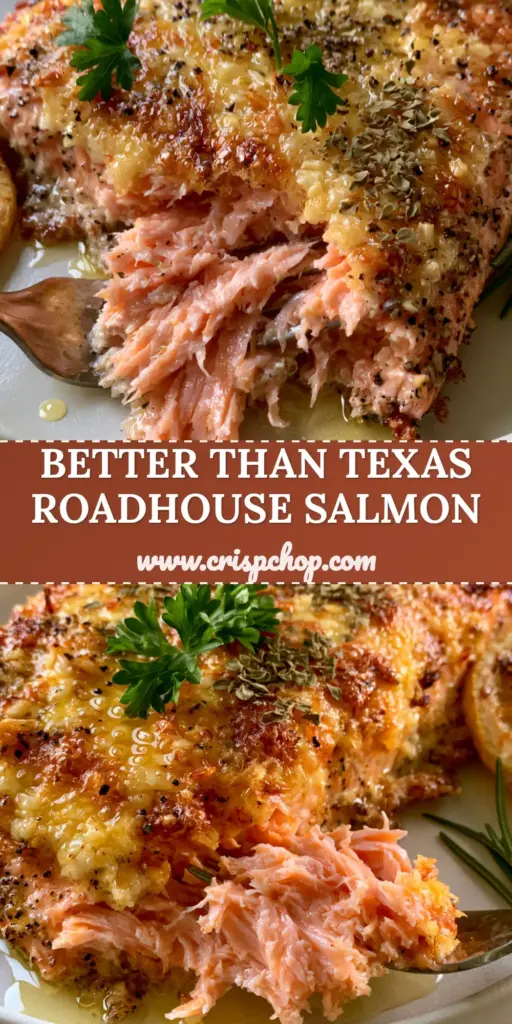
Texas Roadhouse Style Baked Salmon with Bubbling Lemon Herb Butter
Ingredients
Equipment
Method
- Pat the salmon fillets extremely dry with paper towels. Season all sides with sea salt.
- Mash softened butter, minced garlic, lemon zest, oregano, and black pepper into a thick paste.
- Spread the butter mixture thickly over the top of the salmon fillets. Place on a baking dish with lemon slices and rosemary.
- Bake at 400°F (205°C) for 10-12 minutes. Broil for the final 2 minutes until the butter is bubbling and the crust is golden-brown.
Notes
Pull the salmon at an internal temp of 125°F for maximum juiciness.
Closing & Call to Action
Mastering the Texas Roadhouse Style Baked Salmon is about more than just following a recipe; it is about embracing the sensory details that transform a meal into a memory. From the sound of the bubbling butter to the sight of the charred lemon and fresh rosemary, this dish is designed to impress every sense.
If you enjoyed this deep dive into steakhouse-style seafood, I would love to hear from you! Did your crust get that perfect golden-brown hue? Leave a comment below and let me know. Don’t forget to share your culinary creations on Pinterest and follow us for more restaurant-quality recipes made accessible for the home kitchen.
For more salmon inspiration, don’t miss our guide on honey garlic baked salmon or our popular miso-glazed version for an umami-packed alternative.