If you have ever wandered through the heart of Acadiana, you know that the secret to Louisiana’s soul lies in its sauces. Catfish Opelousas is more than just a meal; it is a sensory journey through the bayou, combining the rustic, smoky char of blackened fish with the decadent luxury of a seafood-laden cream sauce.
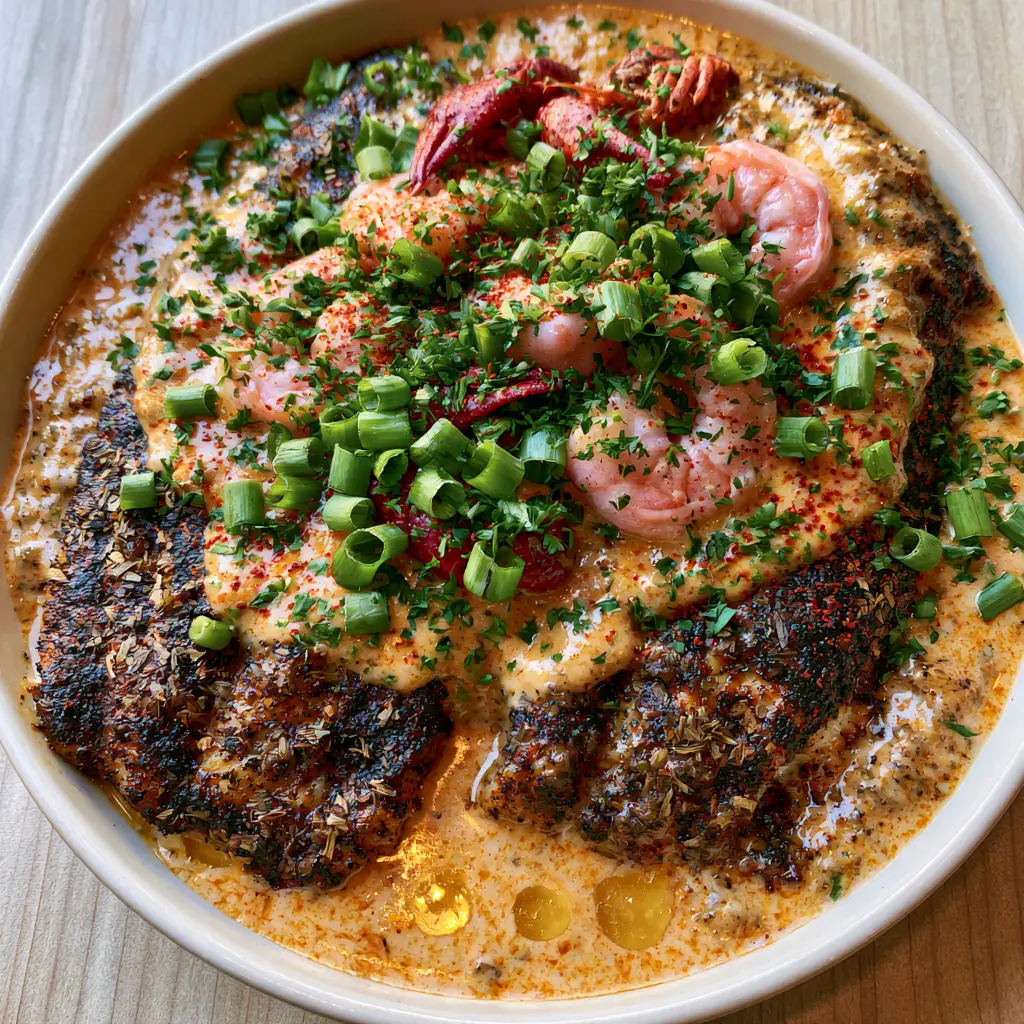
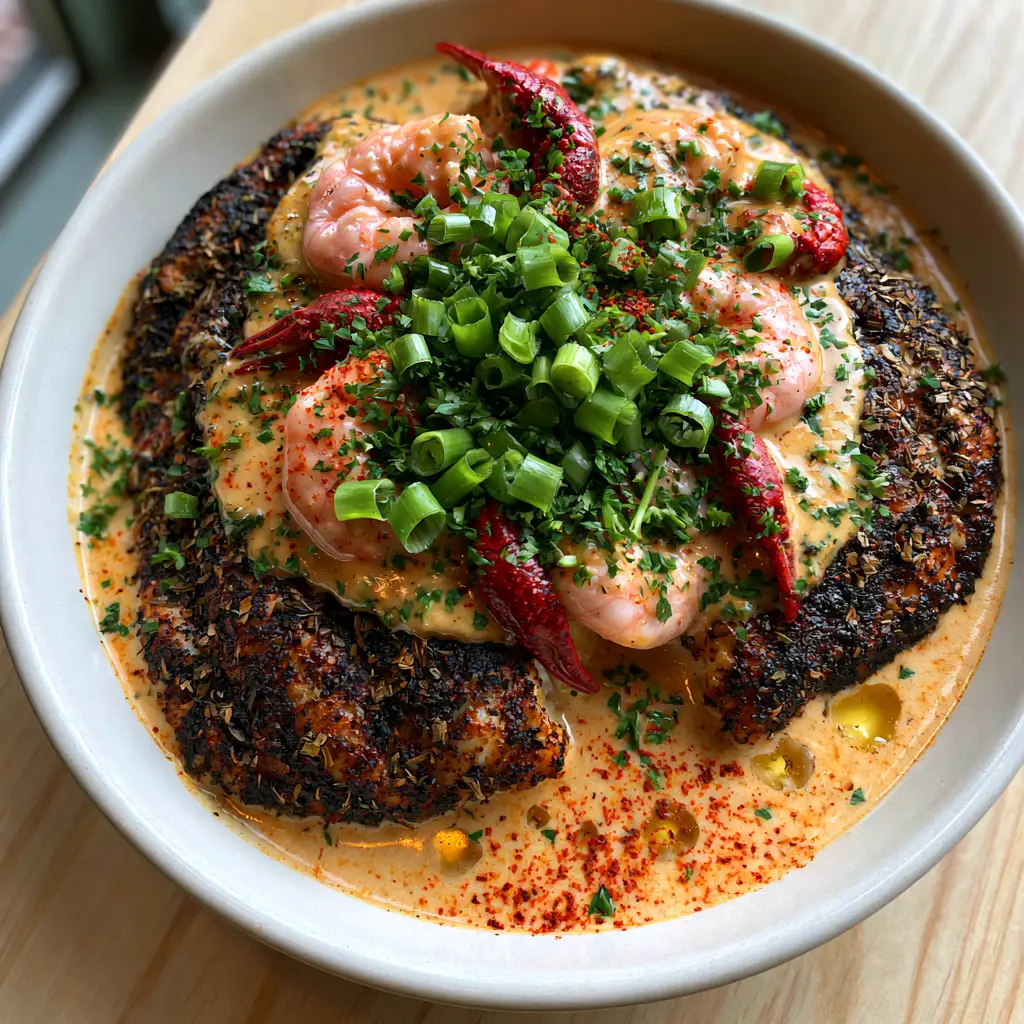
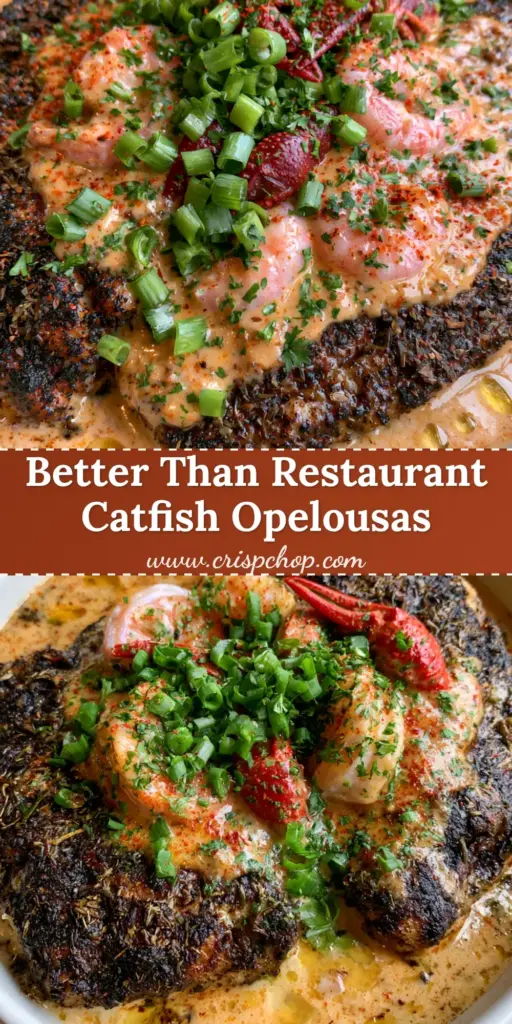
Our rendition of Catfish Opelousas captures the exact visual brilliance of a high-end French Quarter bistro. Imagine two thick, mahogany-hued catfish fillets, their crust crackling with spice, submerged in a velvety, pale-orange cream sauce that glows with droplets of melted golden butter.
This dish is a celebration of texture and color, featuring succulent pink jumbo shrimp and tender red crawfish tails nestled into a sauce so rich it clings to the back of a spoon. Topped with vibrant green scallions and a whisper of cayenne pepper, this is the definitive guide to making this legendary dish at home.
Why This Authentic Opelousas Style Recipe Works
- The Blackened Contrast: The heavy, dark char on the catfish provides a smoky bitterness that perfectly balances the sweet, luscious cream sauce.
- Seafood Trifecta: By combining catfish, jumbo shrimp, and crawfish tails, you achieve a complex “oceanic” profile that defines high-end Cajun cuisine.
- Visual Precision: We use specific techniques to ensure your sauce achieves that iconic peachy-orange hue and glossy, professional finish.
- Textural Harmony: The crunch of the blackened crust against the “snap” of poached shrimp and the silkiness of the sauce creates a world-class mouthfeel.
Hand-Selected Components for an Authentic Bayou Feast
Thick Catfish Fillets: You need substantial fillets to withstand the high heat of blackening without falling apart. Each fillet should be roughly 6 to 8 ounces (170-225g) to ensure the interior remains moist while the exterior chars.
Blackened Seasoning Blend: A forensic mix of smoked paprika, garlic powder, onion powder, dried thyme, dried oregano, and heavy doses of cracked black pepper. This creates the “dark, charred” visual confirmed in our blueprint.
Jumbo Shrimp & Crawfish Tails: Use 16/20 count shrimp for a “jumbo” visual impact. The crawfish tails should be pre-cooked (fat-on if possible) to add that essential orange tint to the sauce.
Heavy Cream & Seafood Stock: The base of our pale-orange sauce. Using a high-quality seafood stock (240ml) ensures the sauce tastes like the sea rather than just dairy.
Unsalted Butter: You will use this for both the sauce base and the “golden droplets” finish. Using unsalted butter (115g) allows you to control the sodium levels precisely.
Aromatic Trinity: Minced shallots and garlic provide the invisible flavor foundation. We skip the chunky bell peppers to maintain the “glossy, thick” texture described in the visual prompt.
Garnish Essentials: Freshly chopped scallions (green onions) and minced Italian parsley provide the vibrant green contrast. A final dusting of red cayenne pepper adds heat and a “macro-shot” professional finish.
Professional Tools for Perfect Searing and Poaching
To achieve the “heavily coated, dark, charred” look of the fish, a heavy-duty cast iron skillet is non-negotiable. It retains the intense heat required to transform dry spices into a savory crust without burning the delicate fish flesh.
You will also require a wide, shallow saucepan for the Opelousas sauce. This allows for faster reduction and better control over the emulsification of the cream and butter. A fine-mesh strainer is helpful if you want an ultra-smooth, velvety sauce, though many prefer the rustic texture of the minced aromatics.
Step-by-Step Culinary Path to Catfish Opelousas
1. Preparing the Blackened Crust
Pat the catfish fillets completely dry with paper towels; moisture is the enemy of a good char. Dredge each fillet heavily in the spice blend, pressing the herbs and peppers into the flesh until no pink fish is visible.
Heat your cast iron skillet until a drop of water dances and evaporates instantly. Add a thin layer of high-smoke-point oil (like avocado oil) and sear the fish for 3-4 minutes per side until a deep, dark mahogany crust forms.
2. Crafting the Peachy-Orange Opelousas Sauce
In your saucepan, melt 2 tbsp (30g) of butter and sauté the minced shallots until translucent. Stir in a small teaspoon of tomato paste—this is the secret to achieving that “thick pale-orange” hue visually confirmed in the prompt.
Whisk in the seafood stock and heavy cream (240ml). Simmer over medium heat until the liquid reduces by half, thickening naturally into a glossy, velvety consistency that smells of garlic and sea salt.
3. Poaching the Seafood Topping
Gently lower the jumbo shrimp and crawfish tails into the simmering sauce. Watch for the shrimp to turn from translucent to a succulent pink, which usually takes about 3 minutes.
Just before serving, whisk in 2 more tablespoons of cold butter. This “monter au beurre” technique creates the “visible droplets of golden butter” that catch the light in the final presentation.
4. Assembly and Final Garnishing
Place the blackened fillets into a shallow white ceramic bowl. This choice of dishware allows the peachy sauce to pool beautifully around the base of the fish.
Ladle the sauce and the seafood directly over the center of the fillets. Finish with a heavy sprinkle of scallions and parsley, then apply a delicate “light dusting” of cayenne and cracked black pepper from a height of six inches for even distribution.
Expert Tips for a Chef-Quality Presentation
- Control the Smoke: Blackening creates significant smoke. Ensure your kitchen is well-ventilated or perform the searing step on an outdoor burner if possible.
- Don’t Overcook the Shellfish: Add the crawfish last, as they are usually pre-cooked. They only need to be warmed through to remain “plump and red.”
- The Butter Temperature: Ensure the finishing butter is cold when added to the sauce; this prevents it from breaking and ensures those “glossy droplets” remain visible.
- The Sauce Color: If your sauce looks too white, add a pinch more of smoked paprika or a tiny drop of crawfish fat to deepen the orange hue.
Preserving Your Louisiana Seafood Creation
Catfish Opelousas is best enjoyed immediately to appreciate the contrast between the hot, crisp fish and the cool, creamy sauce. However, if you have leftovers, store the fish and sauce in separate airtight containers for up to 2 days.
To reheat, place the sauce in a small saucepan over low heat, adding a splash of cream to loosen it. Warm the fish in a 350°F (175°C) oven for 5-8 minutes until just heated through. Avoid the microwave, as it will turn the jumbo shrimp rubbery.
What to Serve With This Cajun Classic
This dish is incredibly rich, so it pairs best with sides that can soak up the extra Opelousas sauce. A bed of white rice or creamy stone-ground grits is traditional and highly recommended.
If you are looking for a lighter alternative, consider serving it alongside a simple steamed vegetable. For those who love seafood-forward menus, you might enjoy comparing the creaminess of this sauce to our creamy salmon pasta or our lemon garlic baked salmon.
For a complete Southern experience, a side of crusty French bread is essential for “mopping” the bowl. Much like our baked salmon in foil, this dish relies on moisture retention to keep the seafood tender and flavorful.
Frequently Asked Questions
Yes, redfish or snapper are excellent substitutes, though catfish is the traditional choice for its ability to hold up to the intense blackening process.
Absolutely. Just ensure they are fully thawed and patted dry before adding them to the sauce so they don’t dilute the creamy consistency.
The color comes from a combination of tomato paste, smoked paprika, and the natural orange fats found in high-quality crawfish tails.
It has a kick due to the cayenne and black pepper, but the heavy cream and butter in the Opelousas sauce help mellow the heat significantly.
Opelousas style refers to a dish originating from Opelousas, Louisiana, typically featuring blackened fish topped with a rich, seafood-heavy cream sauce containing shrimp and crawfish.
The Definitive Catfish Opelousas Recipe
Catfish Opelousas: The Ultimate Cajun Seafood Masterpiece
Ingredients
Equipment
Method
- Dredge catfish fillets in blackened seasoning until heavily coated on all sides.
- Heat oil in a cast iron skillet over high heat. Sear fish for 3-4 minutes per side until charred and dark.
- In a separate pan, melt 2 tbsp butter and sauté shallots. Stir in tomato paste.
- Add seafood stock and heavy cream. Simmer until reduced by half and thickened.
- Add shrimp and crawfish tails. Poach for 3 minutes until shrimp are pink and succulent.
- Whisk in remaining cold butter to create golden droplets and a glossy finish.
Notes
Do not overcook the shrimp; remove from heat as soon as they turn pink.
Experience the Soul of the Bayou Tonight
Catfish Opelousas is a testament to the fact that home cooking can be just as elegant and visually stunning as a restaurant meal. The combination of charred spices and rich seafood cream is a flavor profile you won’t soon forget.
If you enjoyed this deep dive into Louisiana flavors, please leave a comment below and let us know how your blackened crust turned out! Don’t forget to share your creations with us and follow our latest culinary adventures on Pinterest.