There is a specific kind of culinary magic that happens when high-heat roasting meets the rich, nutty depth of sesame. This Tahini Kofta recipe is more than just a meal; it is a sensory journey that transforms humble ground beef and garden-fresh vegetables into a masterpiece of Mediterranean flavor. Imagine hand-formed, juicy beef cylinders sporting deep brown sear marks, nestled among vegetables that have been kissed by the flame of a hot oven.
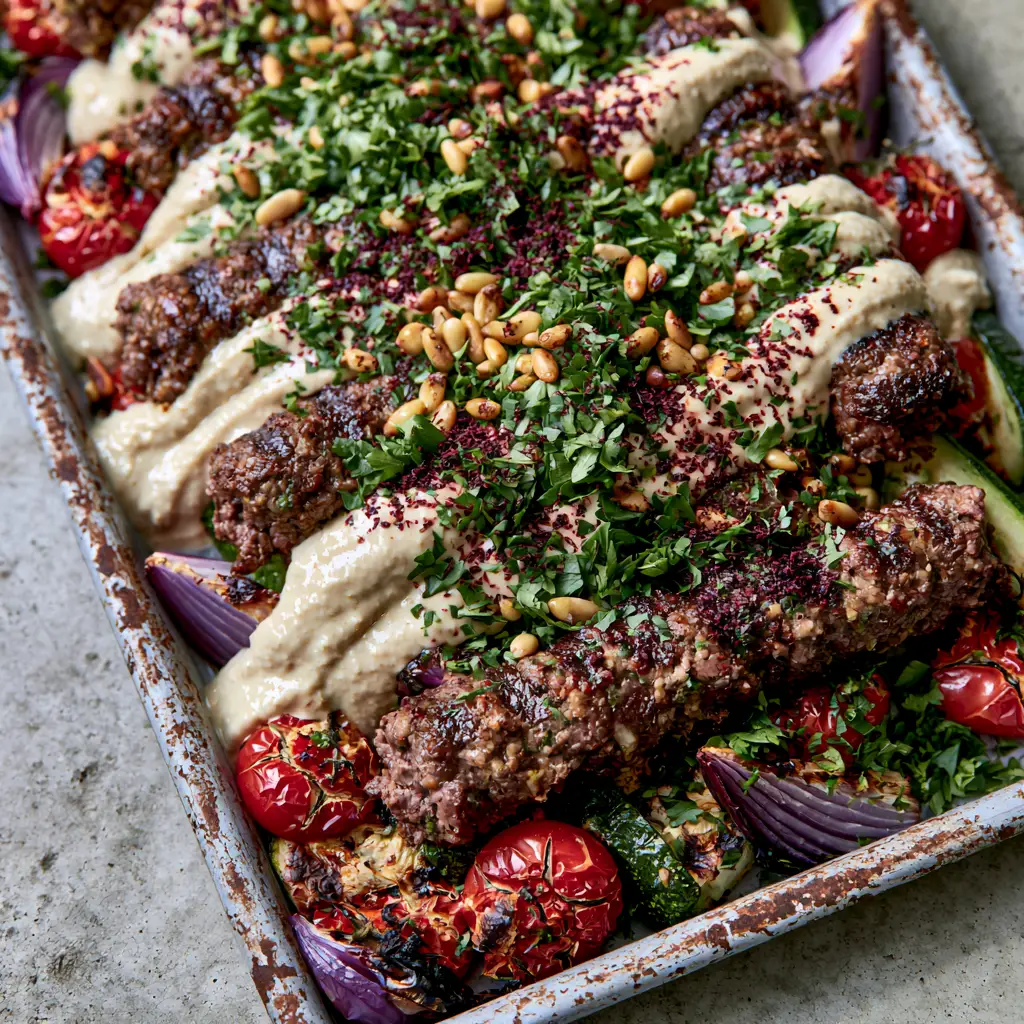
The visual appeal of this dish is undeniable, especially when served on a rustic, weathered metal sheet pan that highlights the vibrant colors. From the cracked skins of blistered cherry tomatoes to the heavy, ivory ribbons of velvety tahini sauce, every element is designed to provide a contrast in texture and temperature. This is the kind of dish that stops the scroll and demands a place at your center table.
Whether you are a seasoned fan of Middle Eastern Kofta or a newcomer to these aromatic spices, this sheet pan method ensures success every time. By utilizing high-conductivity metal and strategic ingredient placement, we achieve a professional-grade char that rivals any outdoor grill. Let’s dive into the forensic details of making this visually stunning and scientifically sound dinner.
The Irresistible Texture and Flavor Profile of This Sheet Pan Feast
- The Perfect Sear: We utilize high-fat-content beef and a preheated pan to ensure those deep brown sear marks that lock in moisture and create a savory crust.
- Blistered and Charred Aromatics: Cherry tomatoes are roasted until their skins crack, releasing sweet juices that mingle with the charred edges of purple red onions.
- The Velvety Finish: A thick, ivory-colored tahini sauce provides a cooling, creamy contrast to the warm, spice-forward meat.
- Crunch and Zest: Toasted golden pine nuts and a sharp dusting of dark red sumac add the final layer of professional-grade complexity.
Foundational Ingredients for the Perfect Sheet Pan Kofta
Ground Beef (80/20 Blend): Using a slightly higher fat content is crucial for achieving that “glistening meat” look and ensuring the cylinders remain juicy after a high-heat roast. Use 1 lb (450g) for a standard batch.
Tahini Paste: This is the heart of our sauce; look for a high-quality, toasted sesame paste that is pourable and smooth. You will need 1/2 cup (120ml) to create those heavy ribbons.
Cherry Tomatoes: These provide the “blistered” visual element; their high sugar content allows the skins to crack and caramelize quickly at 425°F (220°C). Use 1 cup (150g) of whole tomatoes.
Zucchini: Sliced into rounds, these act as a tender, green base that absorbs the rendered fats from the beef. You will need 1 large (approx. 250g) zucchini.
Red Onion: Cut into thick wedges, these provide the “charred” purple accents that look so striking against the light-grey background. Use 1 medium (150g) onion.
Fresh Flat-Leaf Parsley: This isn’t just a garnish; it provides the “vibrant explosion” of green that cuts through the richness of the tahini. Use 1/2 cup (15g) finely chopped.
Sumac and Pine Nuts: These are the finishing touches; sumac offers a citrusy punch, while 2 tbsp (30g) of toasted pine nuts provide a necessary textural snap.
Invisible Essentials: You will also need 2 tbsp (30ml) of extra virgin olive oil for searing, 1 tsp (6g) of kosher salt for seasoning, and 1/2 tsp (3g) of black pepper to enhance the beef’s natural profile.
Crucial Kitchen Tools for High-Heat Roasting
To achieve the look of our rustic weathered metal sheet pan, you need a heavy-gauge rimmed baking sheet. Aluminum or carbon steel is preferred over non-stick because it allows for better browning and “fond” development on the bottom of the kofta.
A high-quality citrus press is also essential for the tahini sauce, as fresh lemon juice is the only way to achieve that bright, ivory color. Finally, a sharp chef’s knife is required to get those clean, tender roasted zucchini slices and finely chopped parsley shown in the macro close-up.
Mastering the Deep Brown Sear and Tender Interior
Step 1: Tempering and Shaping the Beef
Start by bringing your ground beef to room temperature for about 20 minutes before shaping. This ensures that when the meat hits the hot pan, the exterior sears immediately without the interior staying raw or becoming rubbery.
Form the beef into hand-formed cylinders, roughly 3 inches long and 1 inch thick. Aim for uniformity so they cook evenly, and press a small indentation in the center of each to prevent them from “bulging” during the roasting process.
Step 2: Preparing the Vegetable Medley
Slice your zucchini into 1/2-inch rounds and cut the red onion into thick wedges, keeping the root intact so they don’t fall apart. Toss the zucchini, onions, and whole cherry tomatoes in a light coating of olive oil and salt.
This oil coating is scientifically necessary to conduct heat to the vegetable skins, resulting in those iconic cracked skins on the tomatoes and charred edges on the onions. Arrange them on the rustic metal sheet pan, leaving space for the kofta.
Step 3: The High-Heat Roast
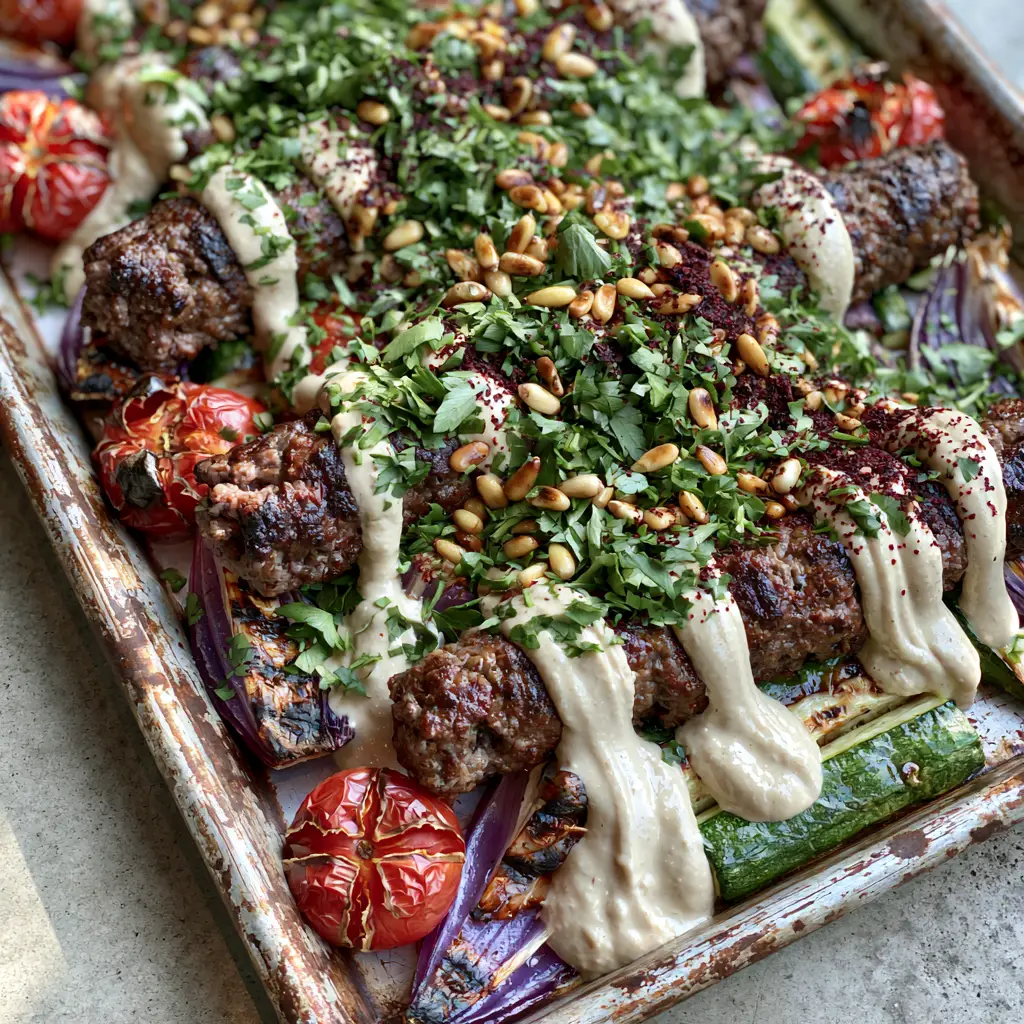
Place the kofta cylinders on the pan and roast at 425°F (220°C) for 15-18 minutes. You are looking for a specific sensory cue: the meat should be glistening and deep brown, and the tomato skins should be visibly split.
If your oven has a convection setting, use it for the last 3 minutes. This moving air is what creates the gentle highlights on the meat and ensures the zucchini slices become tender and slightly browned on the edges.
Crafting the Velvety Ivory Tahini Drizzle
While the meat roasts, whisk together the tahini, fresh lemon juice, a minced garlic clove, and a pinch of salt. At first, the mixture will “seize” and become thick and grainy—this is normal culinary science at work.
Slowly whisk in 2-4 tbsp (30-60ml) of ice-cold water. The cold water emulsifies the fats in the sesame paste, turning it into a velvety, ivory-colored sauce that is thin enough to drizzle in ribbons but thick enough to hold its shape on the meat.
The Final Flourish: Garnishing for Maximum Impact
Once the pan comes out of the oven, do not wait for it to cool before adding the garnishes. Sprinkle the dark red sumac over the entire tray immediately so the residual heat wakes up the dried spice’s essential oils.
Add the toasted golden pine nuts and a generous explosion of fresh chopped parsley. Finally, use a spoon to create those artful, heavy ribbons of tahini sauce across the kofta and vegetables, ensuring some of the sauce pools slightly in the “rustic” grooves of the pan.
Expert Tips for Success
- Don’t Overwork the Meat: When forming the kofta cylinders, use a light touch. Over-mixing the beef leads to a dense, tough texture rather than the juicy interior we see in the macro close-up.
- Dry Your Vegetables: Ensure the zucchini and tomatoes are bone-dry before adding oil. Any surface moisture will cause them to steam rather than roast, preventing those charred edges.
- Toast the Nuts Separately: Pine nuts go from golden to burnt in seconds. Toast them in a dry pan on the stove for 2 minutes before adding them to the finished sheet pan.
- Balance the Tahini: If your tahini sauce is too bitter, add a tiny drop of honey or maple syrup to balance the tannins without making it “sweet.”
Storage, Reheating, and Freezing
This Tahini Kofta is best served fresh to maintain the contrast between the creamy sauce and the seared meat. However, leftovers can be stored in an airtight container in the refrigerator for up to 3 days.
To reheat, place the meat and vegetables back on a sheet pan in a 350°F (175°C) oven until warmed through. It is highly recommended to store the tahini sauce separately and drizzle it on fresh after reheating to maintain that velvety texture.
What to Serve With This Tahini Kofta
This dish is a complete meal on its own, but it pairs beautifully with a side of fluffy basmati rice or warm pita bread. If you are looking to create a full Mediterranean spread, consider serving it alongside a Middle Eastern Baked Salmon for a “surf and turf” feast.
For those who enjoy variety in their sheet pan rotations, this recipe shares similar roasting techniques with our Baked Salmon and Asparagus, making it a great skill-builder for one-pan cooking enthusiasts. The acidity in the tahini sauce also complements the richness of a Creamy Salmon Pasta if served as part of a larger buffet.
Frequently Asked Questions
Yes, but turkey is much leaner. To prevent it from drying out, add a tablespoon of olive oil to the meat mixture and reduce the cooking time by 3-5 minutes.
Keep the tomatoes whole and ensure they are dry before coating with oil. High heat (425°F) is essential to crack the skins quickly before the interior structure collapses.
Sumac has a bright, citrusy, and slightly astringent flavor. If you can’t find it, a pinch of lemon zest mixed with a tiny bit of salt is the best substitute to mimic that acidity.
The secret is using a high-conductivity metal sheet pan and preheating the oven to at least 425°F (220°C). The 80/20 fat ratio in the beef also helps the meat caramelize in its own juices.
Tahini naturally seizes when liquid is first added. To fix this and achieve a velvety ivory texture, continue whisking while slowly adding ice-cold water until it emulsifies into a smooth ribbon-like consistency.
The Perfect Tahini Kofta Recipe Card
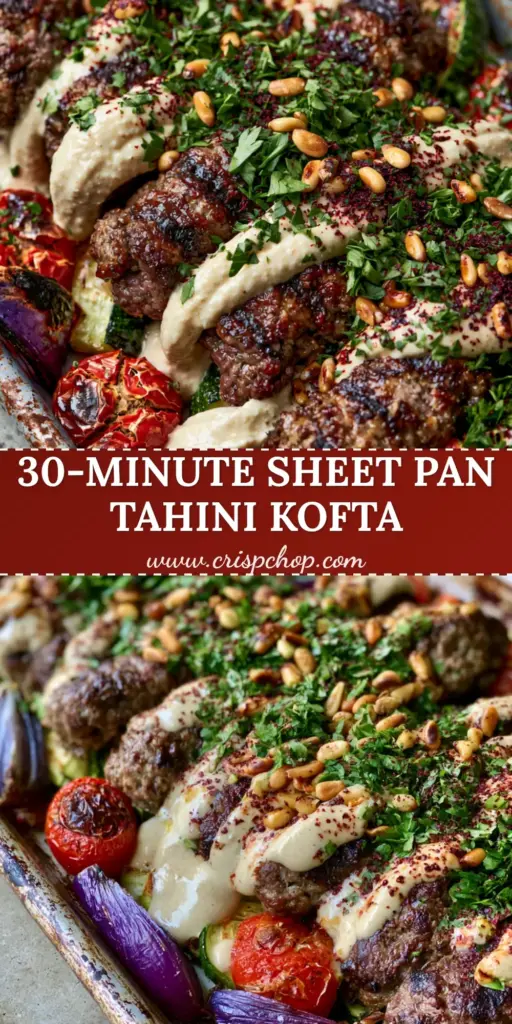
Tahini Kofta: The Ultimate Mediterranean Sheet Pan Dinner
Ingredients
Equipment
Method
- Mix ground beef with salt and pepper. Form into hand-molded cylinders, roughly 3 inches long. Place on the rustic sheet pan.
- Toss zucchini rounds, red onion wedges, and cherry tomatoes with olive oil. Arrange them around the beef cylinders.
- Roast at 425°F (220°C) for 15-20 minutes until tomatoes have cracked skins and beef shows deep brown sear marks.
- Whisk tahini, lemon juice, and cold water until it becomes a thick, velvety ivory sauce.
- Drizzle heavy ribbons of tahini over the pan. Top with parsley, toasted pine nuts, and a dusting of sumac.
Notes
Preheat your pan for even better searing results.
Conclusion: A Masterpiece of Mediterranean Cooking
Creating this Tahini Kofta is an exercise in balancing textures and bold flavors. From the deep brown sear of the beef to the vibrant red of the blistered tomatoes, every element on the rustic metal sheet pan serves a purpose. It is a dish that proves how simple ingredients, when treated with the right culinary techniques, can become something truly extraordinary.
We invite you to try this recipe and see the results for yourself! If you love the way this looks and tastes, please leave a comment below and share your photos with us. Don’t forget to follow Pinterest for more visually stunning recipe inspiration!