Native Jollof Rice is the soulful, rustic cousin to the world-famous party jollof. While the standard version relies on vegetable oil and tomato paste, this “Village Rice”—often called Iwuk Edesi—is defined by its deep reddish-orange hue, the pungent umami of ground crayfish, and the unmistakable earthy fragrance of red palm oil.
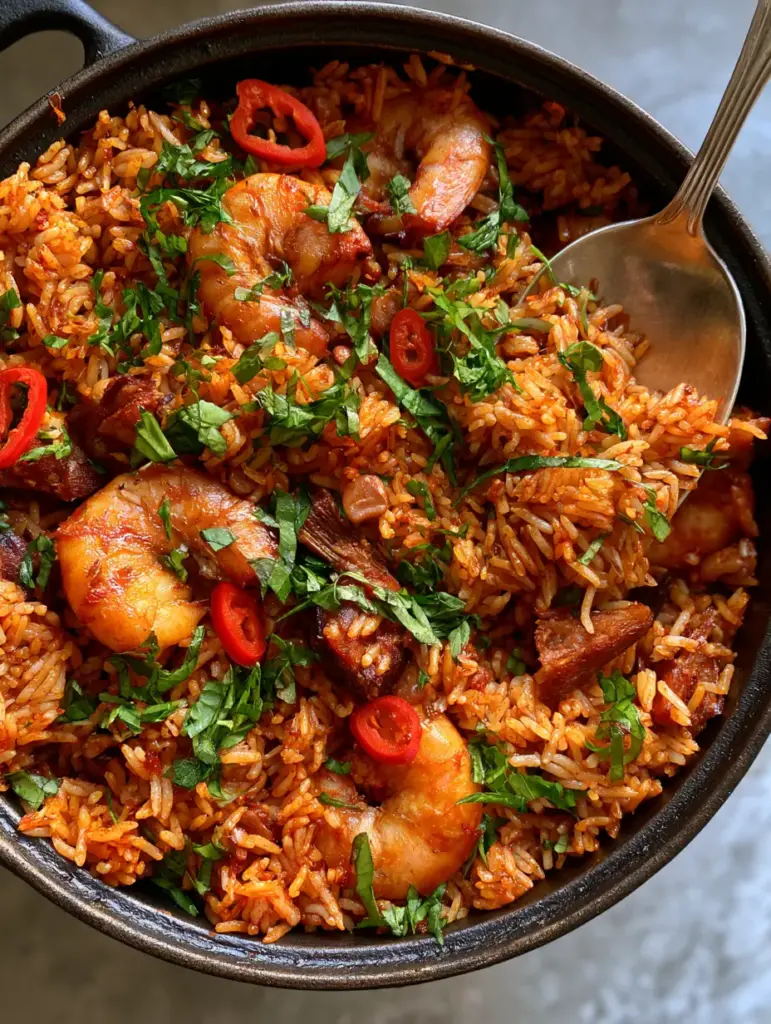
Imagine a heavy black cast iron pot sitting on a light-grey stone surface, steam vapors rising to catch the soft natural daylight. Inside, every grain of long-grain rice is glistening and separate, perfectly infused with the essence of smoked dried fish and seared jumbo prawns. This recipe bridges the gap between traditional heritage and modern culinary precision.
Whether you are a seasoned cook or exploring West African flavors for the first time, this Native Jollof Rice delivers a sensory explosion. The heat from sliced red scotch bonnet peppers cuts through the richness of the palm oil, while chiffonade-cut scent leaves add a bright, basil-like herbaceous finish that ties the whole dish together.
Why You Will Love This Rustic One-Pot Masterpiece
- Distinctive Grain Texture: By using parboiled long-grain rice and specific steaming techniques, we ensure every grain is vibrant reddish-orange and perfectly separate, never mushy.
- Layered Umami Profile: The combination of flaked smoked dried fish and toasted ground crayfish powder creates a depth of flavor that rivals any gourmet seafood dish.
- Visual Brilliance: The contrast between the succulent seared jumbo prawns, the bright red scotch bonnet rounds, and the fresh green scent leaves makes this a centerpiece-worthy meal.
- Authentic Smoky Aroma: Unlike modern versions, this recipe captures the “village” essence using high-quality palm oil and traditional seasoning techniques.
Foundational Ingredients for Authentic Village Rice
To achieve the specific visual and flavor profile of our Native Jollof Rice, you must use high-quality, authentic ingredients. Each component plays a dual role in both the structural integrity and the aesthetic appeal of the final dish.
Parboiled Long-Grain Rice: 3 cups (600g). This variety is essential because the starch has been pre-gelatinized, ensuring the grains stay distinct and absorb the palm oil without clumping. If you enjoy this texture, you might also like the complexity of Persian jeweled rice.
Red Palm Oil: 1/2 cup (120ml). This provides the vibrant reddish-orange color and a unique, earthy fat base that vegetable oil simply cannot replicate. Do not bleach the oil; we want that rich, sunset glow.
Jumbo Prawns: 10-12 large pieces, peeled and deveined. These provide the “hero” protein of the dish. Searing them separately ensures they remain succulent and don’t overcook during the rice steaming process.
Smoked Dried Fish: 1 cup (approx. 150g), deboned and flaked into chunks. Look for smoked catfish or tilapia. This provides the foundational “smoky” note described in our visual blueprint.
Ground Crayfish Powder: 3 tbsp (30g). This is the secret weapon of West African cuisine, acting as a natural flavor enhancer that provides a deep, savory seafood backbone.
Red Scotch Bonnet Peppers: 3-4 peppers. Two will be blended into the base, and two will be sliced into thin rounds for that bright visual pop and sharp heat.
Fresh Scent Leaves (African Basil): 1/2 cup (15g), chiffonade-cut. These leaves have a unique clove-like aroma. If unavailable, a mix of Thai basil and mint is a functional substitute.
Aromatic Base: 1 large red onion, finely diced, and 3 cloves of minced garlic. These invisible foundations provide the sweetness and aromatic lift required for a balanced flavor profile.
Seafood Stock or Water: 3.5 cups (840ml). Using a high-quality stock ensures the rice is seasoned from the inside out. For a different seafood profile, consider our grilled shrimp and avocado bowls for your next meal prep.
Essential Kitchen Tools for the Perfect Sear and Steam
To replicate the visual result of a rustic, smoky feast, the right tools are non-negotiable. A heavy black cast iron pot is the preferred vessel, as it retains heat evenly and creates the perfect environment for steaming.
You will also need a wide stainless steel skillet for searing the prawns to achieve that deep golden-brown crust. A sharp chef’s knife is required for the chiffonade-cut scent leaves and the precise rounds of scotch bonnet peppers that garnish the final presentation.
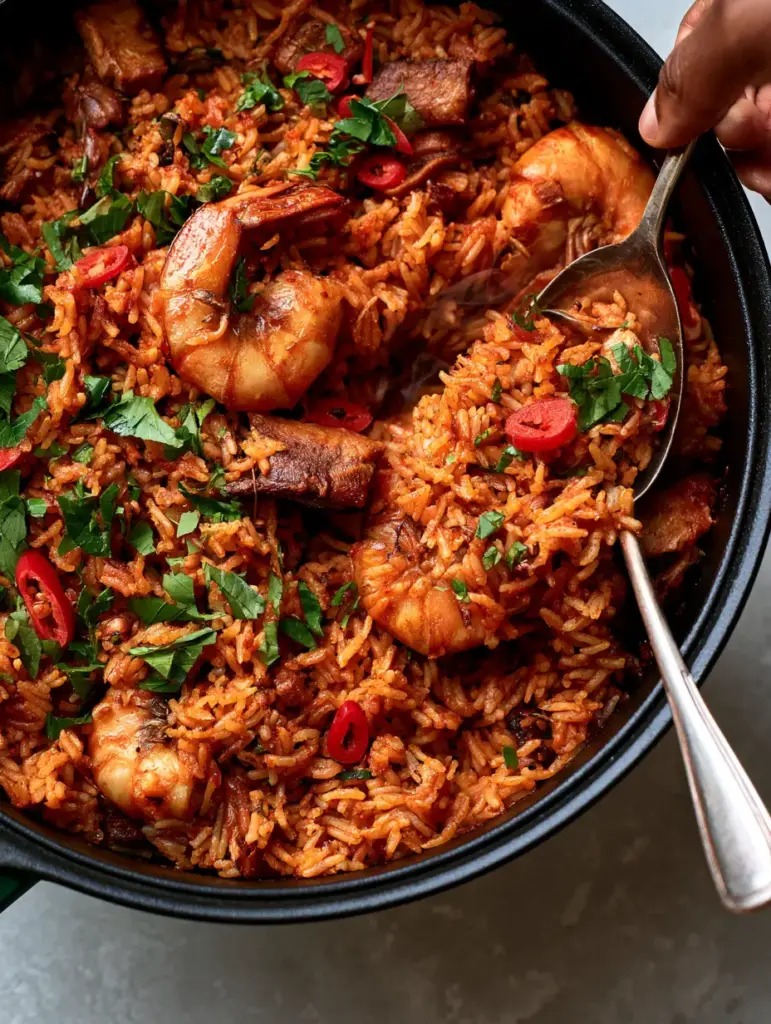
Lastly, a heavy silver spoon—just like the one in our visual prompt—is the best tool for “folding” the rice rather than stirring it, which prevents the grains from breaking and keeps them separate and glistening with oil.
Mastering the Art of Native Jollof Rice: Step-by-Step
1. Preparing the Seafood and Smoked Base
Begin by seasoning your jumbo prawns with a pinch of salt. In your skillet, heat 1 tbsp (15ml) of palm oil over high heat. Sear the prawns for 2 minutes per side until they turn opaque and develop a succulent, golden exterior. Remove and set aside.
Next, prepare the smoked fish. Soak the dried fish in hot salted water for 5 minutes to soften, then carefully remove the bones and flake the flesh into large, recognizable chunks. Set these aside to be folded into the rice later.
2. Building the Aromatic Palm Oil Foundation
Place your rustic black cast iron pot over medium heat and add the remaining red palm oil. Once the oil begins to shimmer (but before it smokes), add the diced onions. Sauté until translucent and fragrant, about 5 minutes.
Stir in the minced garlic, ground crayfish powder, and the blended scotch bonnet peppers. You will notice the kitchen filling with a pungent, savory aroma. This is the base of the Native Jollof Rice—ensure the crayfish toasts slightly in the oil to unlock its full umami potential.
3. The Parboiling and Infusion Process
Wash the parboiled rice thoroughly in warm water until the water runs clear. Add the washed rice to the cast iron pot, stirring constantly for 3-4 minutes. This “toasting” step coats every grain in the vibrant reddish-orange palm oil, ensuring they stay separate.
Pour in the seafood stock and add the flaked smoked fish. Season with salt or a seasoning cube. The liquid should sit about an inch above the rice. Bring to a boil, then immediately reduce the heat to the lowest setting.
4. The Low-Oxygen Steam
Cover the pot with a sheet of foil before placing the lid on top. This traps the steam vapors, which is the secret to perfectly cooked rice. Let it simmer undisturbed for 20-25 minutes. You are looking for the rice to be tender but still have a slight “bite” or al dente texture.
5. Finishing with Color and Fragrance
Remove the lid and foil. Gently fold in the seared jumbo prawns, the chiffonade-cut scent leaves, and the thin rounds of bright red scotch bonnet peppers. The heat from the rice will wilt the leaves slightly, releasing their basil-like scent.
Use your heavy silver spoon to fluff the rice, ensuring the prawns and peppers are interspersed beautifully throughout the pot. The final dish should be glistening, vibrant, and steaming hot.
Pro Culinary Secrets for Perfectly Fluffy Grains
- The Foil Trick: Native Jollof Rice is steamed, not boiled. The foil seal is critical for creating the “steam vapors” mentioned in the visual prompt, ensuring the rice cooks in its own perfume.
- Don’t Over-Stir: Agitating the rice too much releases starch, which leads to sogginess. Only fold the rice at the very end of the cooking process.
- Palm Oil Quality: Use “unprocessed” or “Grade A” red palm oil. It should be thick and deep orange. This provides the “glistening” look that defines the dish.
- Temperature Control: If the heat is too high, the bottom will burn before the top is cooked. A cast iron pot is excellent for preventing this due to its superior heat distribution.
Preserving the Smoke: Storage and Reheating Tips
Native Jollof Rice actually tastes better the next day as the flavors of the smoked fish and crayfish continue to meld. Store leftovers in an airtight container in the refrigerator for up to 3 days.
To reheat, avoid the microwave if possible, as it can toughen the prawns. Instead, place the rice back in a pot with a splash of water or stock, cover tightly, and steam on low heat for 5-7 minutes. This restores the “glistening” texture of the palm oil and the fluffiness of the grains.
For long-term storage, this dish freezes surprisingly well. Freeze in individual portions for up to a month. Thaw completely in the fridge before following the steaming reheat method described above.
Perfect Pairings for a West African Feast
To turn this into a full spread, consider serving it alongside traditional sides. The sweetness of spicy fried plantains (kelewele) provides a perfect counterpoint to the heat of the scotch bonnets.
If you’re looking to compare different regional styles, you might want to read about the differences between this and Ghanaian jollof rice or the iconic Nigerian party jollof rice. For a lighter side, a simple garden salad or a side of pan-seared trout can add even more protein to the table.
Your Pressing Questions Answered
Yes, you can substitute the prawns and fish with smoked tofu or mushrooms and use a strong mushroom-based umami seasoning to replace the crayfish.
Red palm oil is rich in carotenoids and Vitamin E. However, it is high in saturated fats, so it should be enjoyed as part of a balanced diet.
Scent leaves (Ocimum gratissimum) are a clove-fragrant herb used in West Africa. The best substitute is a mix of Thai basil and a small amount of fresh mint.
Native Jollof Rice uses red palm oil instead of vegetable oil and features indigenous ingredients like ground crayfish, smoked dried fish, and scent leaves, giving it a rustic, earthy flavor profile.
Mushy rice is usually caused by using too much water or stirring the rice too frequently. Ensure you parboil the rice first and use the foil-steam method for separate grains.
The Authentic Native Jollof Rice Recipe
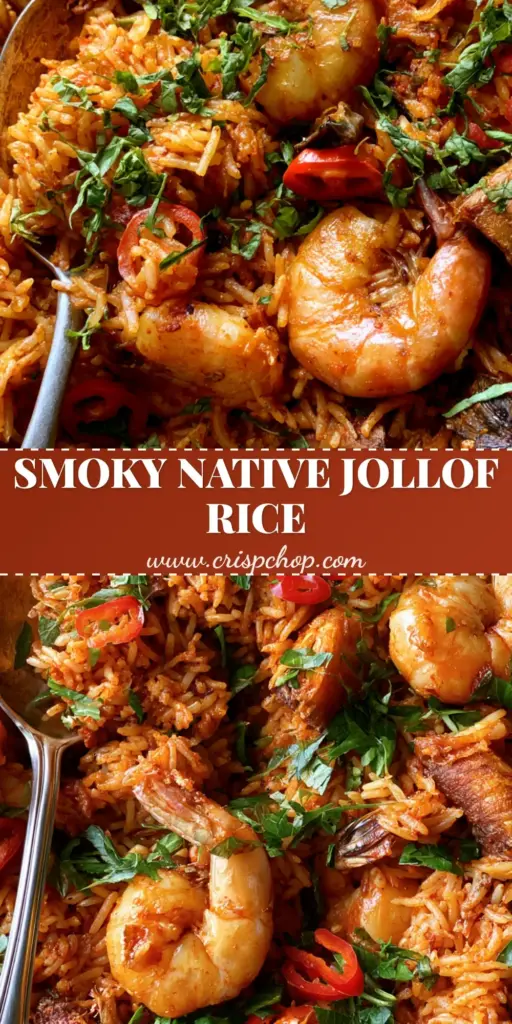
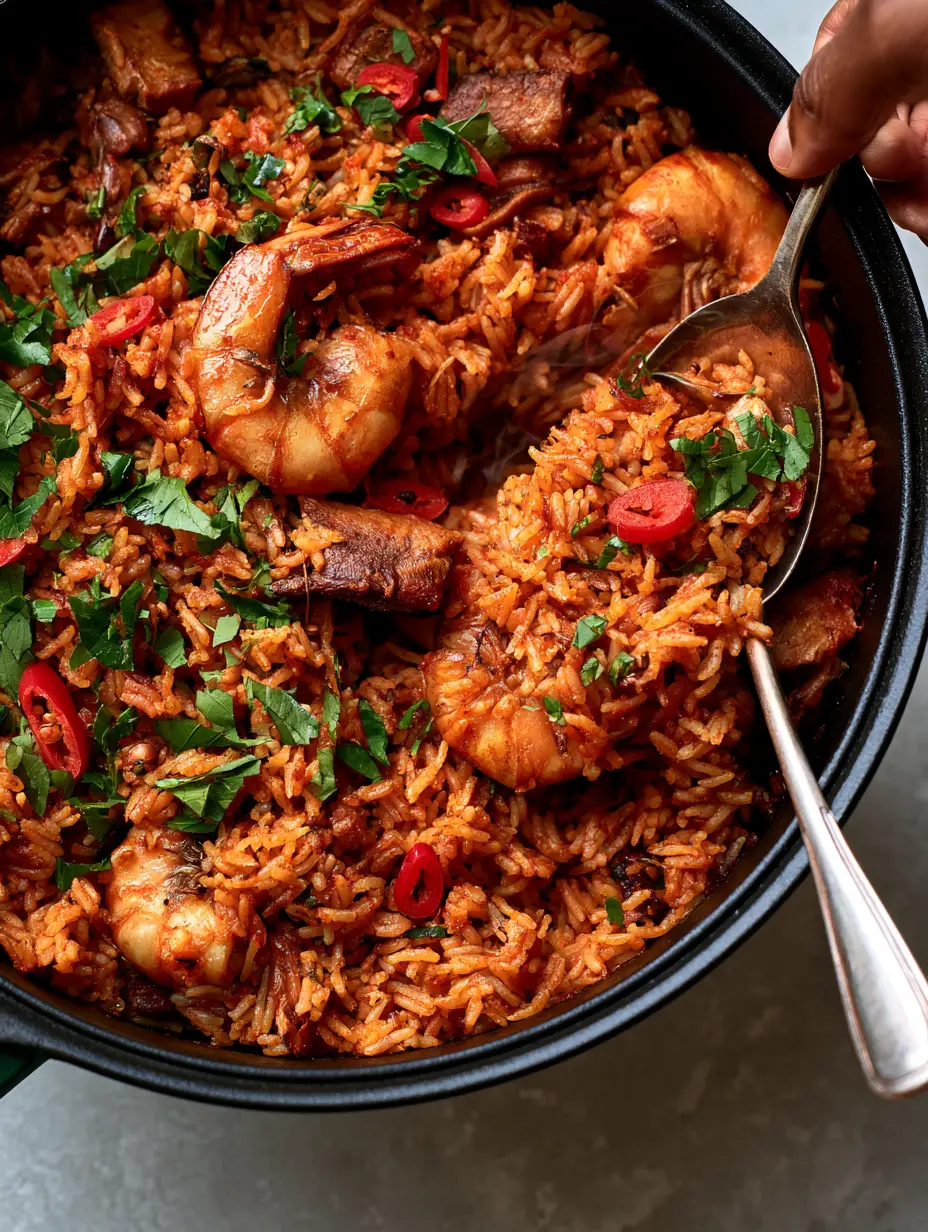
Native Jollof Rice: The Ultimate Smoky West African Village Feast
Ingredients
Equipment
Method
- Season prawns with salt. Heat 1 tbsp palm oil in a skillet and sear for 2 minutes per side until succulent and golden. Set aside.
- Soak smoked fish in hot water, debone, and break into large chunks.
- In a cast iron pot, heat remaining palm oil. Sauté onions, garlic, crayfish, and blended peppers until fragrant.
- Add washed rice to the pot. Stir for 3-4 minutes until every grain is glistening reddish-orange.
- Add stock and flaked fish. Cover with foil and a lid. Simmer on low heat for 20-25 minutes until steam vapors form and rice is tender.
- Gently fold in seared prawns, scent leaf chiffonade, and scotch bonnet rounds. Use a silver spoon to fluff and serve steaming hot.
Notes
Do not over-mix the rice to keep grains separate and distinct.
Closing & Call to Action
Native Jollof Rice is more than just a meal; it is a celebration of West African coastal flavors and rustic cooking traditions. The combination of smoky fish, succulent prawns, and aromatic scent leaves creates a dish that is as visually stunning as it is delicious. We hope this guide helps you master the distinct, glistening grains of the perfect Village Rice.
Did you try this recipe? We would love to see your results! Leave a comment below and share your photos with us. Don’t forget to pin this recipe to your favorite boards on Pinterest so you can find it whenever the craving for smoky, spicy rice hits!