There is no culinary icon quite as celebrated or debated as Nigerian party jollof rice. It is the undisputed king of West African celebrations, known for its deep orange-red hue and that signature smoky aroma that lingers in the air. This isn’t just a side dish; it is a masterpiece of technique, patience, and vibrant flavor.
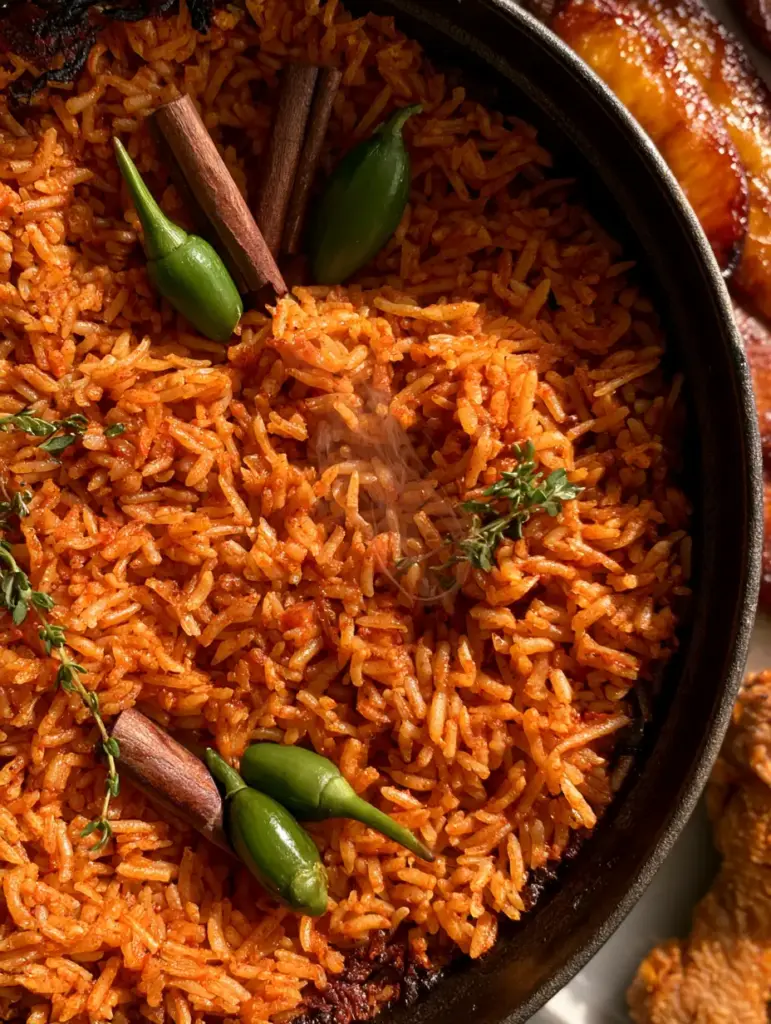
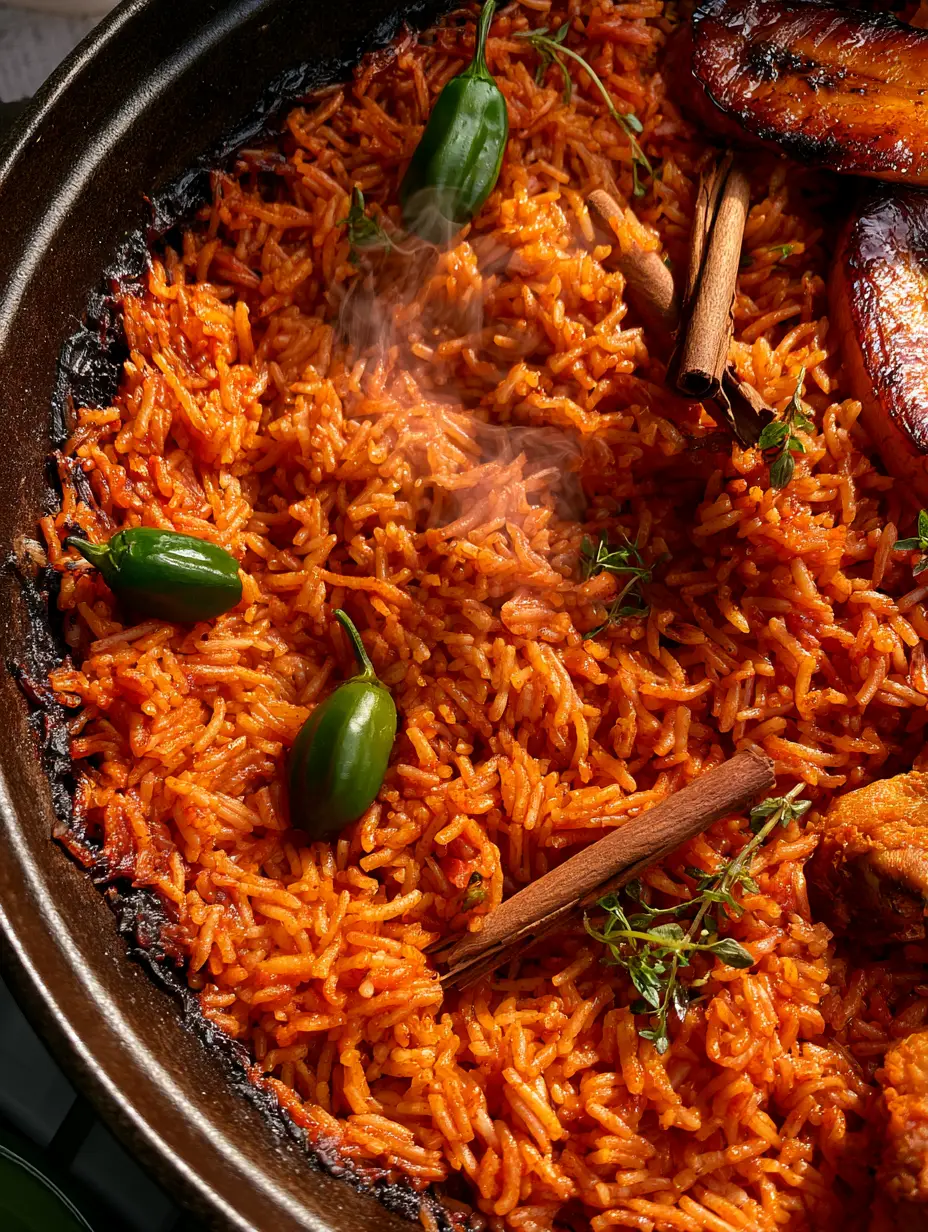
Achieving the perfect Nigerian party jollof rice requires more than just mixing rice and sauce. You are looking for perfectly separated, glistening grains coated in a thick, concentrated pepper reduction. Every bite should offer a hint of warmth from woody cinnamon and the bright, floral heat of whole green scotch bonnet peppers.
In this guide, we will walk you through the professional secrets used by Nigerian caterers to achieve that “bottom-pot” char. Whether you are serving this with golden-brown crispy chicken or caramel-edged fried plantains, this recipe ensures a result that looks exactly like a high-end food photography shoot.
The Visual Anatomy of a Perfect Party Jollof
- Separated, Long Grains: Using long-grain parboiled rice is the secret to avoiding a mushy texture. Each grain should be distinct and glistening.
- The Vibrant Red Base: A concentrated blend of red bell peppers, scotch bonnets, and tomato paste creates that iconic deep orange-red glow.
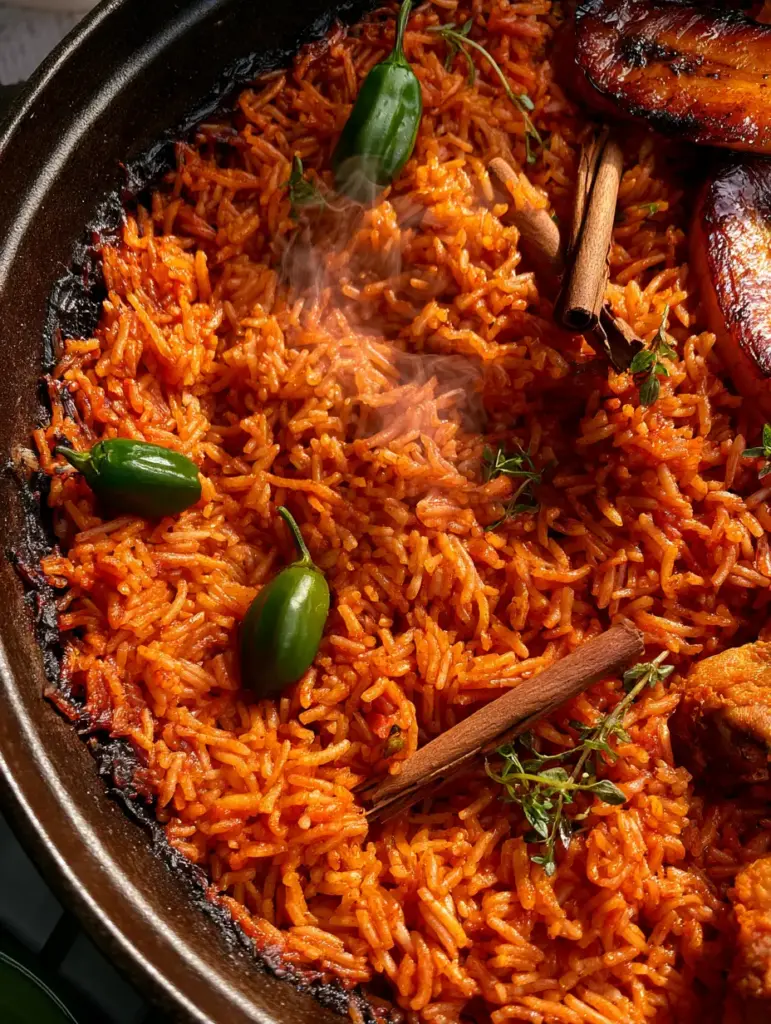
- The Smoky ‘Bottom-Pot’ Crust: This is achieved through controlled caramelization at the base of the pot, infusing the entire dish with a campfire-like scent.
- Aromatic Garnishes: Whole cinnamon sticks and fresh thyme sprigs aren’t just for show; they provide a deep, earthy complexity to the spice profile.
The Secret Flavor Base: Ingredients for Authentic Red Rice
4 cups (800g) Long-Grain Parboiled Rice: This specific rice variety has been partially cooked in its husk, making the grains sturdier and less likely to clump. It is essential for achieving the professional “separated grain” look seen in the classic West African Jollof.
3 Large Red Bell Peppers (Tatashe): These provide the bulk of the color and a sweet, earthy foundation for the sauce. Ensure they are ripe and deep red for the most vibrant result.
2 Medium Red Onions: One onion is blended into the base, while the other is sliced thin and fried to provide a sweet, savory undertone. This dual-use adds layers of flavor complexity.
3-4 Scotch Bonnet Peppers (Ata Rodo): We use a mix of blended peppers for heat and three whole green scotch bonnets for a floral, aromatic garnish. The whole peppers release scent without overwhelming the dish with spice.
6 oz (170g) Concentrated Tomato Paste: This is the “glue” that coats every grain. It must be fried in oil to remove its metallic tang and darken the color of the final dish.
1/2 cup (120ml) Vegetable Oil: Oil is the heat conductor that sears the tomato paste and creates the glistening sheen on the rice grains. Don’t skimp, as it prevents the rice from becoming sticky.
2 tsp (10g) Curry Powder & 1 tsp (5g) Dried Thyme: These are the “invisible” workhorses of Nigerian seasoning. They provide the nostalgic “party” scent that everyone recognizes immediately.
2 Whole Cinnamon Sticks & 5 Fresh Thyme Sprigs: These are added during the steaming phase. The cinnamon adds a subtle, woody sweetness that balances the heat of the peppers.
3 cups (720ml) Rich Chicken Stock: A high-quality, seasoned stock is the liquid soul of the dish. It provides more depth than water and helps the rice cook evenly.
Essential Tools for the Best Smoky Texture
To achieve the authentic “bottom-pot” char, a heavy-bottomed pot is mandatory. A seasoned black cast iron pot or a heavy Dutch oven is ideal because it retains heat evenly and allows the bottom layer of rice to caramelize without burning through too quickly.
You will also need heavy-duty aluminum foil. This is the secret weapon for steaming the rice. By trapping every bit of moisture inside, you ensure the rice cooks in the concentrated pepper steam rather than just boiling in liquid.
Mastering the Pepper Reduction: Step-by-Step
1. Prepare the ‘Obatambe’ Pepper Mix
In a high-speed blender, combine your red bell peppers, one onion, and two scotch bonnets with just enough water to move the blades. Blend until smooth. Pour this mixture into a pot and boil it over medium heat for 15-20 minutes until the water evaporates and you are left with a thick, concentrated paste.
2. Fry the Aromatics and Tomato Paste
In your cast iron pot, heat the vegetable oil over medium heat. Add the remaining sliced onions and sauté until they are translucent and golden around the edges. Stir in the tomato paste and fry it for 5-8 minutes, stirring constantly. You will know it is ready when the paste turns a deep maroon and the oil starts to separate and float on top.
3. Season the Base
Add your concentrated pepper reduction to the fried tomato paste. Stir in your curry powder, dried thyme, salt, and bouillon cubes. Let this “stew” fry for another 10 minutes. The mixture should look vibrant and smell intensely savory. This is the foundation of your Nigerian party jollof rice.
4. Parboil and Rinse the Rice
While the sauce is frying, parboil your rice in a separate pot of boiling water for about 8-10 minutes. It should be “al dente”—soft on the outside but still firm in the center. Drain the rice and rinse it thoroughly under cold water to remove excess starch. This is the most important step for getting separated grains.
5. The Steaming Phase
Pour your chicken stock into the pepper base and bring to a simmer. Add the parboiled rice and stir gently to ensure every grain is coated in the orange-red sauce. Tuck in your whole green scotch bonnets, cinnamon sticks, and fresh thyme sprigs. The liquid should just barely cover the rice; if there is too much, the rice will be mushy.
6. The ‘Foil Seal’ and The Burn
Cover the pot tightly with a double layer of aluminum foil, then place the lid on top. Turn the heat down to the lowest possible setting. Let the rice steam for 25-30 minutes. Do not open the lid! After 30 minutes, turn the heat up to medium-high for exactly 5 minutes. You should hear a faint crackling sound—this is the rice at the bottom caramelizing into a smoky crust.
Expert Tips for Perfect Glistening Grains
- The Steam Principle: Jollof rice is steamed, not boiled. If your rice is still hard after the timer goes off, add a tiny splash of stock around the edges, reseal the foil, and wait 10 more minutes.
- Color Correction: If your rice looks pale, your tomato paste to pepper ratio was off. Always fry the paste until it is dark to ensure a deep orange-red finish.
- The Butter Finish: For an extra glistening look, stir in 1 tbsp (15g) of salted butter right before serving. It adds a professional sheen and a creamy mouthfeel.
- Avoid Over-Stirring: Stirring too much breaks the grains and releases starch. Only stir once at the beginning and once at the very end with a long fork.
What to Serve with Nigerian Jollof Rice
No plate of Nigerian party jollof rice is complete without the classic “sides.” For the full experience, serve it with spicy fried plantains or simple glistening dodo. The sweetness of the plantain perfectly offsets the smoky heat of the rice.
For protein, golden-brown crispy fried chicken or beef suya are the traditional choices. If you are looking for a lighter pairing, a shrimp and avocado salad provides a fresh contrast to the rich, concentrated flavors of the rice.
Frequently Asked Questions
They are primarily for aroma and visual appeal. Tucking them in whole allows their floral scent to infuse the rice without adding extreme heat. You can eat them if you have a high heat tolerance!
While you can use Basmati, it is not traditional for the Nigerian party style. Basmati is more delicate and tends to break; for the classic look and feel, stick with long-grain parboiled rice.
The smoky flavor in ‘party’ jollof comes from burning the rice at the bottom of the pot. By using a tight foil seal and turning up the heat for the last 5 minutes of cooking, you create a controlled char that infuses the steam with smoke.
The color comes from a high ratio of red bell peppers (tatashe) and frying the tomato paste until it is dark maroon. If your rice is orange or pale, you likely need more concentrated pepper base.
Mushy rice usually happens because too much water was used or the rice wasn’t parboiled and rinsed. Long-grain parboiled rice is essential because it holds its structure better during the long steaming process.
The Ultimate Nigerian Party Jollof Rice Recipe
Nigerian Party Jollof Rice: The Ultimate Guide to Smoky, Vibrant Perfection
Ingredients
Equipment
Method
- Blend bell peppers, onions, and 2 scotch bonnets. Boil until reduced to a thick paste.
- Sauté sliced onions in oil, add tomato paste and fry for 8 minutes until oil separates. Stir in the pepper paste and seasonings.
- Add parboiled rice and stock to the base. Top with cinnamon, green peppers, and thyme. Seal with foil and a lid.
- Steam on low for 30 minutes. Turn heat to medium-high for the final 5 minutes to create the smoky bottom crust.
Notes
Use a long fork to fluff the rice to keep grains separate.
Bringing the Party Home: Final Thoughts
Cooking Nigerian party jollof rice is a labor of love that rewards you with incredible depth of flavor and a beautiful visual presentation. From the rising steam to the charred “bottom-pot” goodness, every element of this dish tells a story of West African heritage. We hope this guide helps you master the technique for your next gathering!
If you enjoyed this recipe, please leave a comment below and share your results with us! Don’t forget to pin this recipe to your favorite boards on Pinterest so you can find it whenever the craving for smoky rice hits.