There is something deeply satisfying about a Maple Glazed Baked Salmon that manages to achieve a glass-like finish while remaining buttery and tender on the inside. This recipe isn’t just a meal; it’s a masterclass in balancing sweet, umami, and acidic notes on a single sheet pan. If you have been searching for that restaurant-quality char and a glaze that actually sticks to the fish rather than sliding off into the pan, you have arrived at the right place.
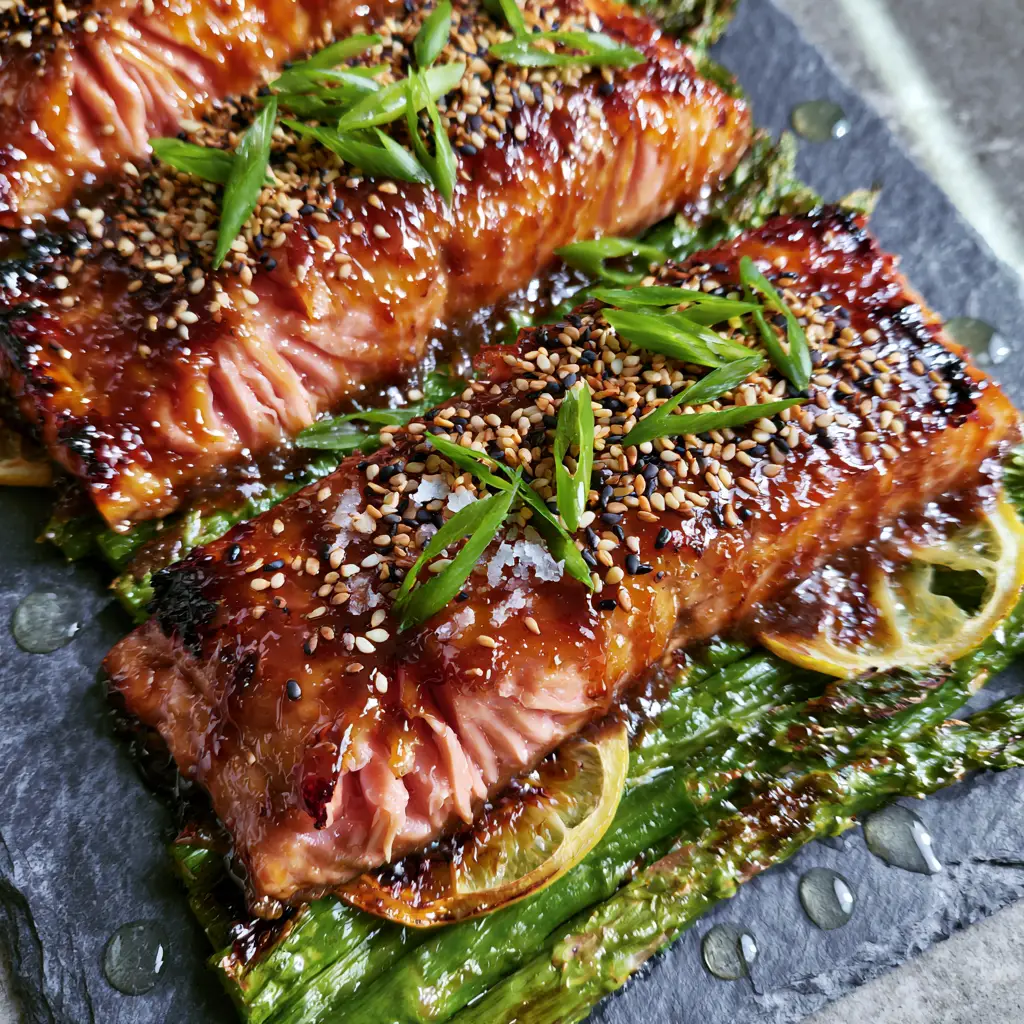
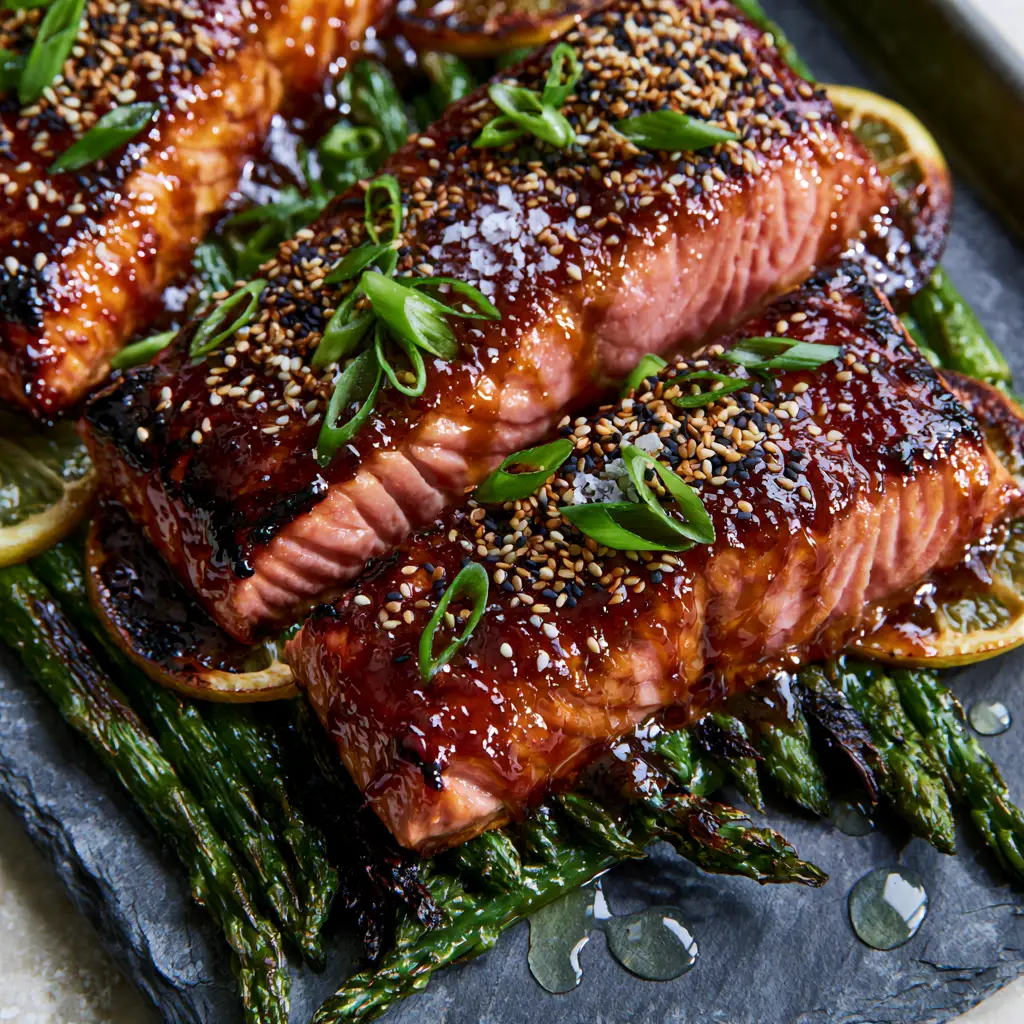
Visualizing the perfect bite is easy: a thick, Atlantic salmon fillet glistening under a viscous amber coating, topped with the crunch of toasted sesame seeds and the sharp bite of fresh scallions. We are pairing this with earthy, blistered asparagus and lemon wheels that have been roasted until their rims are dark and caramelized. This dish delivers high-impact flavor with the kind of effortless elegance that makes weeknight cooking feel like a celebration.
Every element in this recipe is designed to work in harmony, from the coarse flaky sea salt that cuts through the sugar to the specific broiler technique that creates those coveted charred edges. Whether you are a seasoned home cook or a beginner looking to impress, this guide will walk you through the culinary science of the perfect glaze and the timing required for moist, separated pink flakes.
What Makes This Sheet Pan Salmon Recipe Irresistible
- Viscous Glaze Texture: We use a specific reduction technique to ensure the maple soy glaze is thick, glistening, and perfectly adherent to the salmon.
- Textural Contrast: The combination of soft, medium-rare fish, crunchy toasted white and black sesame seeds, and snap-tender asparagus provides a multi-sensory experience.
- Caramelized Complexity: High-heat roasting and a final broil create charred edges on the salmon and browned rims on the lemon wheels, unlocking deep smoky flavors.
- Vibrant Aromatics: Freshly sliced scallions added at the very end provide a bright green pop and a mild onion bite that balances the richness of the maple.
Essential Pantry Staples for a Glossy Maple Soy Coating
Center-Cut Atlantic Salmon Fillets: You will need three thick fillets (ideally 6-8 oz each) to match our visual blueprint. Atlantic salmon is preferred for its high fat content, which ensures the fish remains moist and produces those beautiful, separated flakes after baking.
Pure Grade A Maple Syrup: Avoid “pancake syrup” at all costs; you need the real deal (60ml / 1/4 cup) for its high sugar content and complex woody notes. This is the primary agent for the thick amber glaze and the caramelization we are looking for.
Low-Sodium Soy Sauce: This provides the umami backbone (30ml / 2 tbsp) that prevents the dish from being cloyingly sweet. Using low-sodium allows us to control the final seasoning with our coarse flaky sea salt later.
Toasted Sesame Oil: A tiny amount (5ml / 1 tsp) goes a long way in adding a nutty depth. It also helps the glaze emulsify, ensuring a smooth, clear oil droplet appearance on the finished sheet pan.
Fresh Asparagus Spears: Choose medium-thick spears (approx. 450g / 1 lb) for this recipe. They need enough structure to withstand the high heat of the oven while becoming perfectly blistered on the outside.
Lemon Wheels: Slicing a whole lemon into thin rounds (about 5-6 wheels) is crucial. When roasted, the citrus oils concentrate, and the browned rims provide a beautiful visual and a concentrated sour punch.
Sesame Seed Duo: We use both toasted white and black sesame seeds (1 tbsp each). The white seeds provide a classic nuttiness, while the black seeds add a striking visual contrast against the amber glaze.
Foundational Additions: You will also need a neutral high-smoke point oil (like avocado oil) for the asparagus, fresh garlic for the glaze, and coarse flaky sea salt to finish. These “invisible” ingredients are what bridge the gap between a good dish and a professional one.
The Tool Kit: Achieving Professional Char at Home
To achieve the specific results shown in our dark grey slate presentation, you don’t need a professional kitchen, but you do need the right tools. A heavy-duty rimmed baking sheet is essential to prevent warping at high temperatures and to ensure even heat distribution.
I highly recommend using a small saucepan to pre-reduce your glaze. While some recipes suggest just mixing the ingredients, simmering them for a few minutes ensures that “thick viscous” texture that looks so stunning in photos. Additionally, a digital meat thermometer is your best friend to ensure the salmon hits that perfect 125°F (52°C) internal temperature for a medium-rare finish.
The Culinary Blueprint: Step-by-Step Instructions
Phase 1: Concentrating the Maple Soy Glaze
In a small saucepan over medium heat, combine the maple syrup, soy sauce, sesame oil, and one clove of finely minced garlic. Bring the mixture to a gentle simmer and let it reduce for 5-7 minutes until it coats the back of a spoon. This step is vital for achieving the glistening highlights seen in our visual prompt.
Once thickened, remove from the heat and set aside to cool slightly. The glaze will continue to thicken as it cools, reaching that perfect viscous consistency. If you enjoy experimentation with flavors, you might find this technique useful when preparing honey garlic glazed salmon as well.
Phase 2: Preparing the Sheet Pan Foundation
Preheat your oven to 400°F (205°C). On a dark grey slate sheet pan or a standard baking sheet lined with parchment, arrange the asparagus spears in a single layer. Drizzle with 1 tbsp (15ml) of oil and a pinch of salt, tossing to coat thoroughly.
Intersperse the thin lemon wheels among the asparagus. The direct contact with the pan is what creates those browned, charred rims. This vegetable base acts as a flavorful “rack” for the salmon fillets to sit upon, similar to the method used in salmon and asparagus sheet pan meals.
Phase 3: Searing and Baking the Salmon
Pat the three salmon fillets bone-dry with a paper towel. This is a culinary secret: moisture on the surface of the fish prevents the glaze from sticking. Place the fillets on top of the asparagus and lemon wheels.
Generously brush the salmon with 2/3 of your prepared maple soy glaze. Place the pan in the center of the oven and bake for 10-12 minutes. You are looking for the salmon to be opaque on the sides but still slightly translucent in the very center.
Phase 4: The Finishing Broil for Caramelized Edges
Turn your oven to the “Broil” setting (high). Brush the remaining glaze onto the salmon fillets. Position the oven rack so the pan is about 4-6 inches (10-15cm) from the heating element.
Watch closely for 2-3 minutes. You want to see the glaze bubbling and starting to darken into a deep amber. The edges of the salmon should show slight charred spots, and the lemon rims should turn a dark, caramelized brown. This is the exact moment the “blistered” texture on the asparagus is achieved.
Phase 5: The Final Flourish
Remove the pan from the oven. Immediately sprinkle the salmon with the heavy scatter of toasted white and black sesame seeds. The heat from the glaze will help the seeds adhere and release their oils.
Add the finely sliced fresh scallions across the top for that bright green contrast. Finish the entire pan with a generous pinch of coarse flaky sea salt. You should see small droplets of clear oil and glaze pooling slightly on the pan, just like in a professional food shoot.
Expert Secrets for Salmon Success
- The Snap Test: For the best asparagus, bend a spear until it snaps naturally; discard the woody bottom. This ensures every bite on your sheet pan is tender and edible.
- Don’t Overcook: Salmon continues to cook for a few minutes after being removed from the oven (carry-over cooking). Pull it out when it’s just under your desired doneness to maintain those moist flakes.
- Room Temperature: Take your salmon out of the fridge 15 minutes before cooking. This ensures the center cooks at the same rate as the exterior, preventing the “white protein” (albumen) from leaking out excessively.
- Glaze Twice: Applying the glaze in two stages (before baking and before broiling) builds up a “lacquered” look that is far superior to a single coating.
Smart Storage and Make-Ahead Advice
If you have leftovers, this Maple Glazed Baked Salmon stores beautifully in an airtight container for up to 3 days. To reheat, I recommend using a toaster oven at 300°F (150°C) rather than a microwave to preserve the texture of the glaze and prevent the fish from becoming rubbery.
While salmon is best enjoyed fresh, you can prep the glaze up to a week in advance. Having a jar of this maple soy reduction in the fridge makes it easy to whip up a miso-style glazed fish or even a quick stir-fry on short notice.
What to Serve with Your Glazed Salmon
While the blistered asparagus and charred lemons make this a complete meal, you can easily bulk it up. A side of fluffy jasmine rice or quinoa is excellent for soaking up any extra glaze that pools on the pan. If you’re looking for a low-carb option, a simple cauliflower rice or a side of lemon-garlic roasted broccoli works perfectly.
For a more global fusion dinner, consider starting the meal with some small appetizer koftas or serving the salmon alongside a light ginger-dressed side salad. The versatility of maple and soy allows this dish to fit into many different culinary contexts.
Frequently Asked Questions
Yes, but ensure it is completely thawed and patted dry with paper towels. Any excess moisture will prevent the glaze from sticking and result in steamed rather than charred fish.
The lemons benefit from being sliced thin and having direct contact with the hot sheet pan. If your lemons aren’t browning, move them to the edges of the pan where heat is more intense.
The internal temperature should reach 125°F (52°C). Visually, the flakes should begin to separate when pressed lightly with a fork, but the center should still look slightly translucent.
Honey is the best substitute as it has a similar viscosity. However, keep in mind that honey burns faster than maple syrup, so watch the broiler closely to avoid excessive charring.
That white substance is called albumen, a protein that is pushed out when salmon cooks too quickly. To minimize this, bring your fish to room temperature before baking and avoid overcooking.
The Ultimate Maple Glazed Baked Salmon Recipe
Maple Glazed Baked Salmon with Blistered Asparagus and Charred Lemon
Ingredients
Equipment
Method
- In a small saucepan, simmer maple syrup, soy sauce, sesame oil, and garlic over medium heat for 5-7 minutes until thick and viscous. Set aside.
- Preheat oven to 400°F (205°C). Toss asparagus and lemon wheels with oil and salt on a sheet pan.
- Place salmon on top of vegetables. Brush with 2/3 of the glaze. Bake for 10-12 minutes.
- Apply remaining glaze. Broil on high for 2-3 minutes until edges are charred and lemon rims are browned. Look for moist, pink flakes.
- Immediately top with white and black sesame seeds, sliced scallions, and flaky sea salt.
Notes
Use a digital thermometer to pull the salmon at 125°F for a perfect medium-rare.
Closing & Call to Action
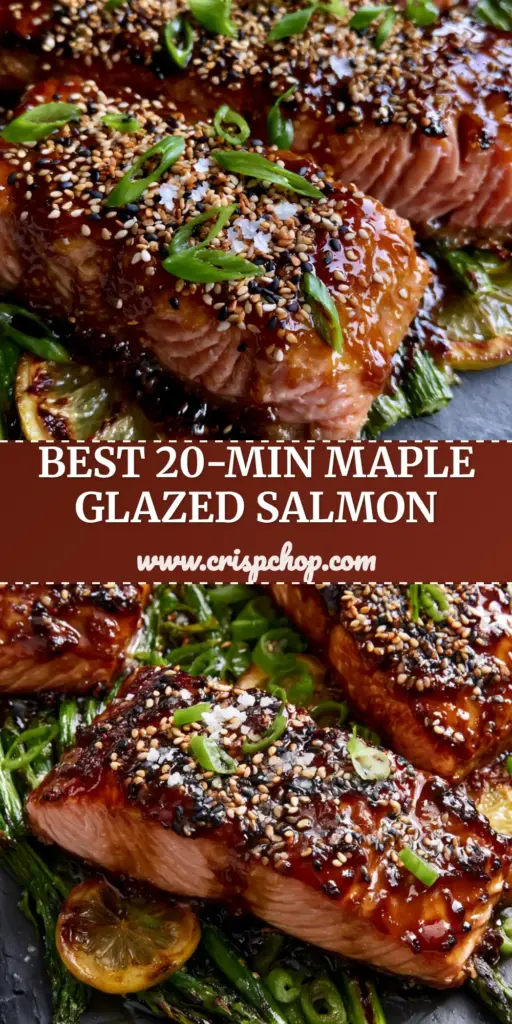
This Maple Glazed Baked Salmon is a testament to the power of simple ingredients treated with professional technique. By focusing on the reduction of the glaze and the high-heat finish, you create a dish that is as visually stunning as it is delicious. The combination of sweet maple, salty soy, and the bright acidity of charred lemons is a flavor profile that never goes out of style.
Did you try this recipe? I would love to see your results! Leave a comment below and let me know how your glaze turned out. Don’t forget to follow us on Pinterest for more culinary inspiration and share your photos with the community. Happy cooking!