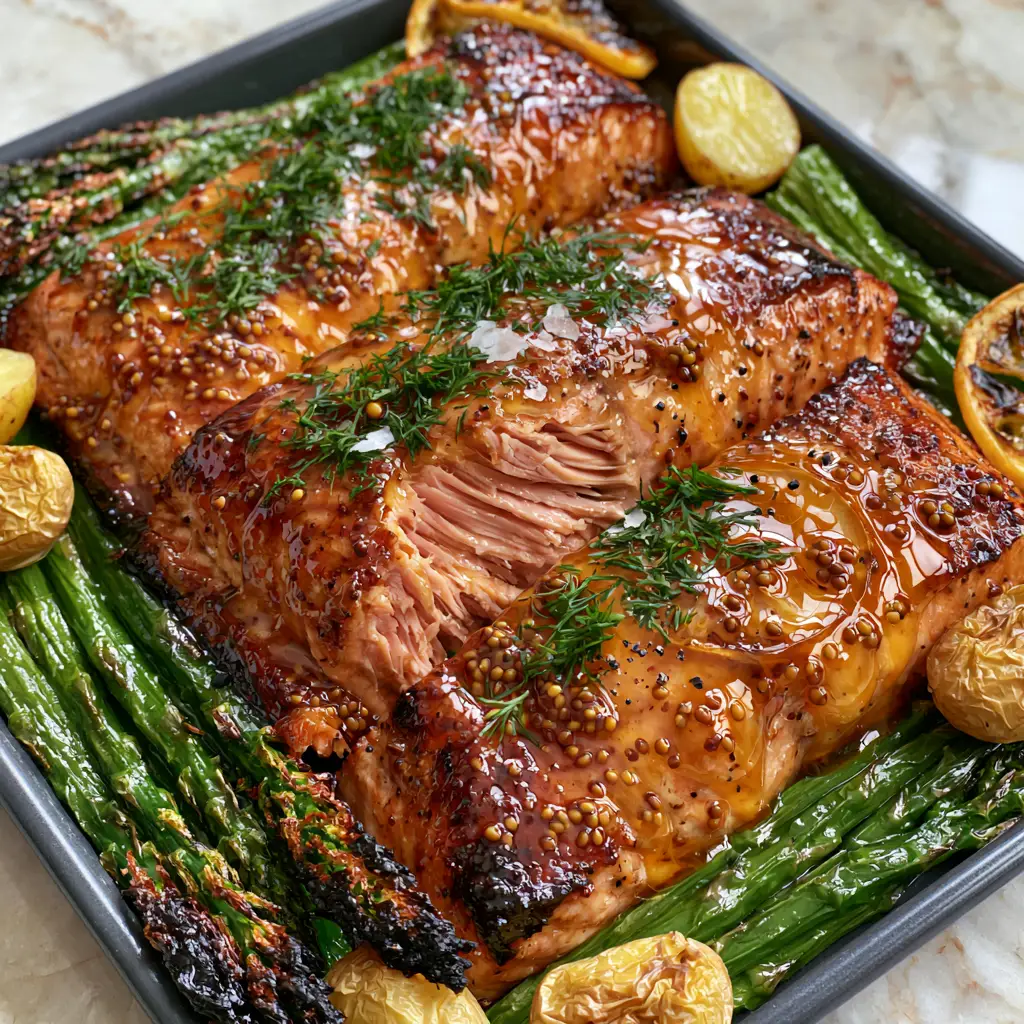
There is a specific kind of culinary magic that happens when high-heat roasting meets a thick, viscous glaze. This Honey Dijon Baked Salmon is the embodiment of that magic, delivering a restaurant-quality experience right onto a single dark grey rimmed sheet pan.
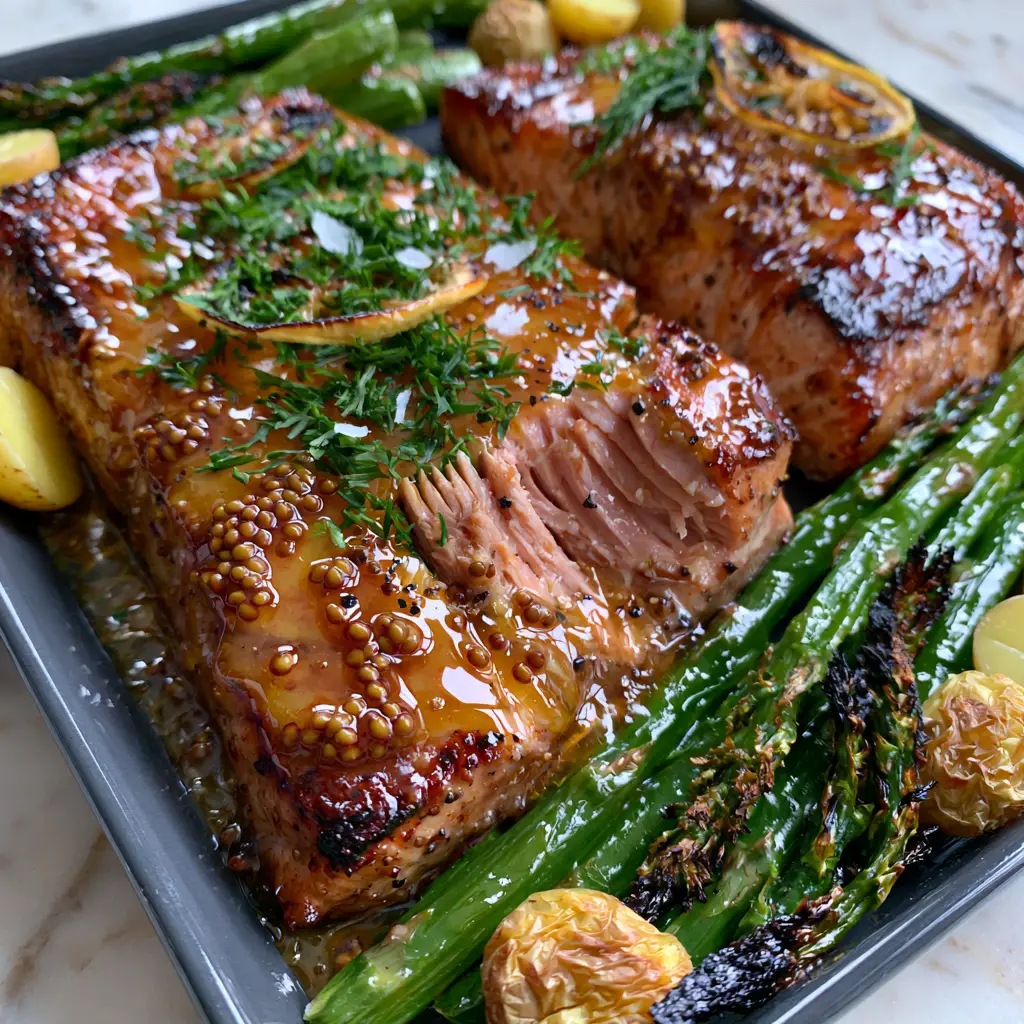
Imagine pulling a tray from the oven where the Atlantic salmon fillets are lacquered in a bubbling, translucent golden-amber syrup. The honey has reached its boiling point, creating a sticky, glossy coating that traps whole mustard seeds and cracked black pepper against the flaky pink flesh.
Beside the focal point of the fish, emerald green asparagus spears rest with perfectly blackened, crispy tips, while halved baby Yukon gold potatoes show off their signature wrinkled, golden-brown skins. This isn’t just dinner; it’s a high-definition sensory experience captured in a handheld smartphone photo, now ready for your kitchen.
Why This Sheet Pan Salmon Recipe Captivates the Senses
- The Textural Contrast: You get a fork-flaked center showing moist, pink interior layers contrasted against the charred, caramelized edges of the salmon.
- The Glaze Architecture: A hybrid of smooth Dijon and whole grain mustard seeds creates a rhythmic pop of flavor within the sticky honey-amber coating.
- Perfectly Timed Sides: We use a specific staging method to ensure the baby gold potatoes are crispy and wrinkled while the asparagus remains vibrant emerald.
- Vibrant Finishes: The heavy garnish of fresh chopped dill and charred lemon wheels adds a bright acidity that cuts through the rich Omega-3s of the fish.
The Anatomy of Flavor: Essential Ingredients and Substitutions
Center-Cut Atlantic Salmon Fillets: We recommend thick, center-cut portions because they maintain a moist, pink interior while the exterior undergoes intense caramelization. If you can’t find Atlantic, a high-fat King salmon also works beautifully for this high-heat application.
Honey & Dijon Duo: Use a high-quality floral honey to create that translucent golden-amber glow. The Dijon provides the emulsification needed to keep the glaze thick and bubbling rather than running off the fish.
Whole Grain Mustard: This is a non-negotiable for the visual “mustard seed” aesthetic. It adds a rustic texture and a deep, vinegary punch that balances the sweetness of the honey.
Baby Yukon Gold Potatoes: These are chosen for their thin skins which become delightfully wrinkled and crispy when roasted. You can substitute with red bliss potatoes, but you may lose some of that signature buttery interior.
Emerald Asparagus Spears: Look for medium-thickness spears. They hold up better to the heat required to blacken the tips without turning the stalks into mush.
Foundational Seasonings: We use high-smoke point extra virgin olive oil (60ml), coarse Maldon sea salt flakes for that crystalline finish, and heavy cracked black pepper (5g) for a pungent bite.
Kitchen Gear for Professional Results
To achieve the specific “45-degree POV” look of a professional food blog, you need a dark grey rimmed sheet pan. This dark surface absorbs heat more efficiently than light aluminum, ensuring those salmon edges get the necessary char.
A sharp chef’s knife is essential for finely chopping the fresh dill and slicing the lemon wheels into thin, translucent circles. You will also want a small whisk to properly emulsify the honey and mustard into a syrup that won’t separate in the oven.
Step-by-Step Mastery: Achieving the Perfect Char and Flake
Phase 1: The Potato Head-Start
Preheat your oven to 425°F (220°C). This high temperature is the secret to the “wrinkled” skin texture on the 1 lb (450g) of halved baby gold potatoes.
Toss the potatoes directly on the sheet pan with 2 tbsp (30ml) of olive oil and a heavy pinch of sea salt. Roast them for 15 minutes alone; they need this extra time to develop a golden-brown crust before the salmon joins the party.
Phase 2: Constructing the Honey Dijon Glaze
While the potatoes sizzle, whisk together 1/4 cup (60ml) honey, 2 tbsp (30g) Dijon mustard, and 1 tbsp (15g) whole grain mustard. Add 1 tsp (5g) of cracked black pepper and a pinch of salt to the syrup.
The glaze should be thick enough to coat the back of a spoon. This viscosity is what creates the “bubbling” effect once it hits the high heat of the oven.
Phase 3: The Main Assembly
Push the partially roasted potatoes to the edges of the pan. Place the three thick center-cut salmon fillets in the focal point of the tray and surround them with the asparagus spears.
Drizzle the remaining olive oil over the asparagus. Use a pastry brush to heavily coat the salmon in the honey dijon mixture, ensuring the glaze is thick and the mustard seeds are evenly distributed.
Phase 4: The High-Heat Roast
Slide the pan back into the oven for 10-12 minutes. Look for the visual cue of the glaze turning amber and starting to bubble vigorously around the edges of the fish.
For the final 2 minutes, you can toggle the broiler to “High.” This is how you achieve those blackened asparagus tips and the charred lemon wheels that look so striking in the lifestyle photography.
Expert Tips for Sheet Pan Excellence
- The Flake Test: Use a fork to gently press the center of the salmon. If the layers separate easily to reveal a moist, pink interior, it is done.
- Dry Your Salmon: Before glazing, pat the fillets dry with paper towels. Any surface moisture will steam the fish rather than allow the glaze to caramelize and stick.
- Asparagus Placement: Keep the tips of the asparagus toward the outer edges of the pan where the heat is most intense for maximum “blackened” crunch.
- Salt Timing: Save the Maldon sea salt flakes for the very end. This keeps the crystals intact for a beautiful visual and a burst of salinity.
Preserving the Perfection: Storage and Reheating
This Honey Dijon Baked Salmon is best enjoyed immediately to appreciate the contrast between the crispy potatoes and the moist fish. However, leftovers can be stored in an airtight container for up to 2 days in the refrigerator.
To reheat, avoid the microwave, which can turn salmon rubbery. Instead, place the salmon and sides back on a pan in a 300°F (150°C) oven for 8-10 minutes until warmed through. The glaze will loosen back up into its glossy state.
What to Serve with Honey Dijon Salmon
This all-in-one meal is quite filling, but if you are looking to expand the menu, a light grain salad or a creamy pasta dish makes an excellent companion. The acidity in the glaze pairs wonderfully with starchier sides.
If you love the profile of this dish, you might also enjoy our sheet pan salmon and asparagus for a simpler weeknight version. For those who prefer a different flavor profile, our maple glazed salmon offers a similar sweet-and-savory balance.
Looking for something with a bit more zing? Try the lemon garlic salmon or the vibrant honey lime garlic butter salmon to keep your weeknight dinners exciting and fresh.
Common Culinary Curiosities (FAQs)
Yes, but ensure it is completely thawed and, most importantly, patted extremely dry. Frozen salmon often releases more moisture, which can thin out your honey dijon glaze if not handled properly.
The key is the balance of honey and mustard. The sugar in the honey needs high heat (425°F) to bubble and caramelize, but the mustard acts as a buffer. Keep a close eye on it during the last 2 minutes under the broiler.
By adding the asparagus during the final 10-12 minutes of roasting, it stays vibrant emerald. High heat also ensures the tips blacken and crisp up before the stalks overcook.
While smooth Dijon provides the flavor base, whole grain mustard adds the essential visual ‘pop’ and rustic texture seen in professional food photography. It’s highly recommended for the full experience.
Potatoes require more time and direct contact with the pan. Ensure you give them a 15-minute head start and avoid overcrowding the pan, which creates steam instead of a roast.
The Ultimate Honey Dijon Baked Salmon Recipe
Honey Dijon Baked Salmon with Roasted Asparagus and Crispy Gold Potatoes
Ingredients
Equipment
Method
- Preheat oven to 425°F (220°C). Toss halved baby gold potatoes with 2 tbsp olive oil and salt on a dark grey sheet pan. Roast for 15 minutes.
- In a small bowl, whisk together honey, Dijon, whole grain mustard, and cracked black pepper until a thick syrup forms.
- Add salmon fillets to the center of the pan and surround with asparagus. Drizzle asparagus with remaining oil. Brush salmon heavily with the honey dijon glaze.
- Bake for 10-12 minutes until the glaze is bubbling and golden-amber. Optional: Broil for 2 minutes to char lemon slices and asparagus tips.
- Finish with a heavy garnish of fresh chopped dill and a sprinkle of coarse Maldon sea salt flakes.
Notes
The potatoes need a 15-minute head start to achieve the wrinkled, crispy skin seen in the photos.
Closing & Call to Action
This Honey Dijon Baked Salmon proves that gourmet cooking doesn’t require a sink full of dishes. By mastering the timing of the roast and the viscosity of the glaze, you can create a centerpiece that looks exactly like the high-angle lifestyle photography of your favorite food blogs.
Did the glaze bubble perfectly for you? Let us know in the comments below! If you found this guide helpful, please share it and follow us on Pinterest for more visually-driven recipe inspiration. Happy roasting!