Haitian Akra is the crown jewel of Caribbean street food, offering a sensory experience that defines the vibrant spirit of Haiti. If you have been searching for that perfect, ultra-crispy appetizer that features a jagged, golden-brown exterior and a steaming, fluffy interior, you have arrived at the right place. These malanga fritters are more than just a snack; they are a staple of Haitian food culture, often enjoyed as a morning pick-me-up or a festive party starter.
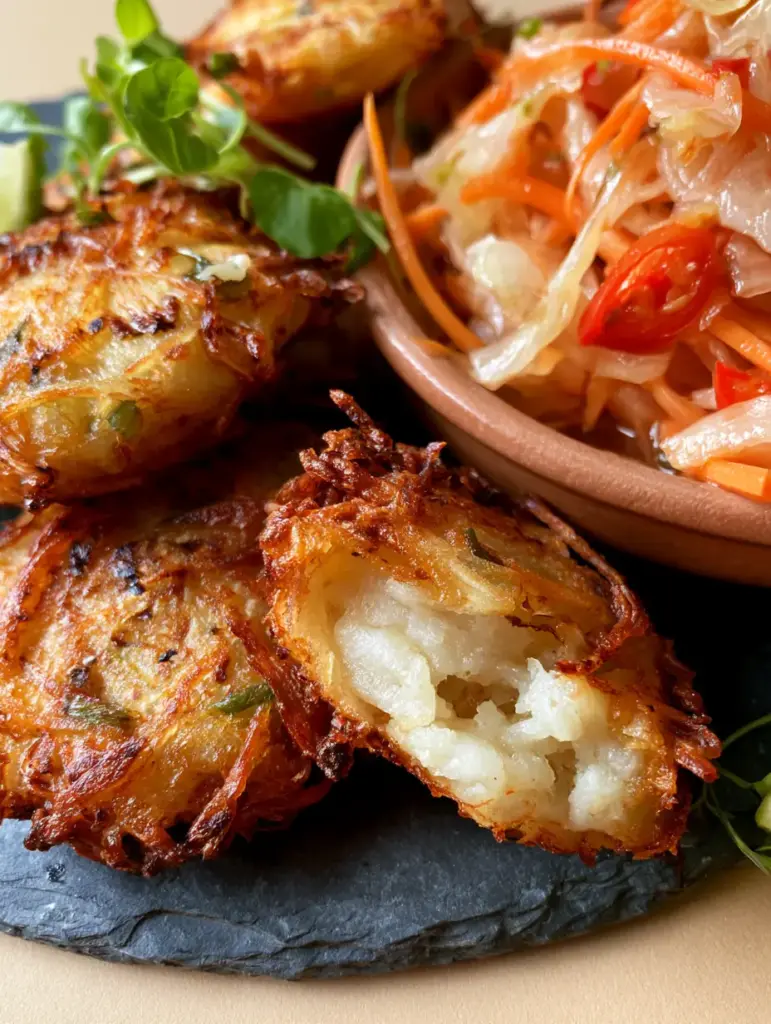
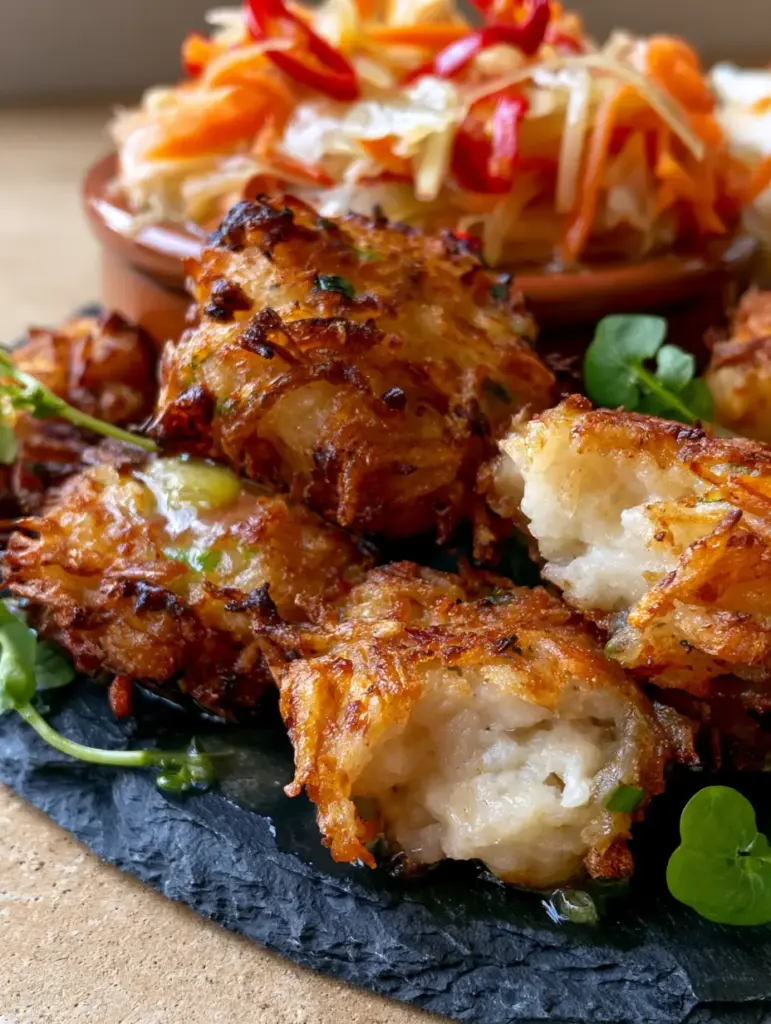
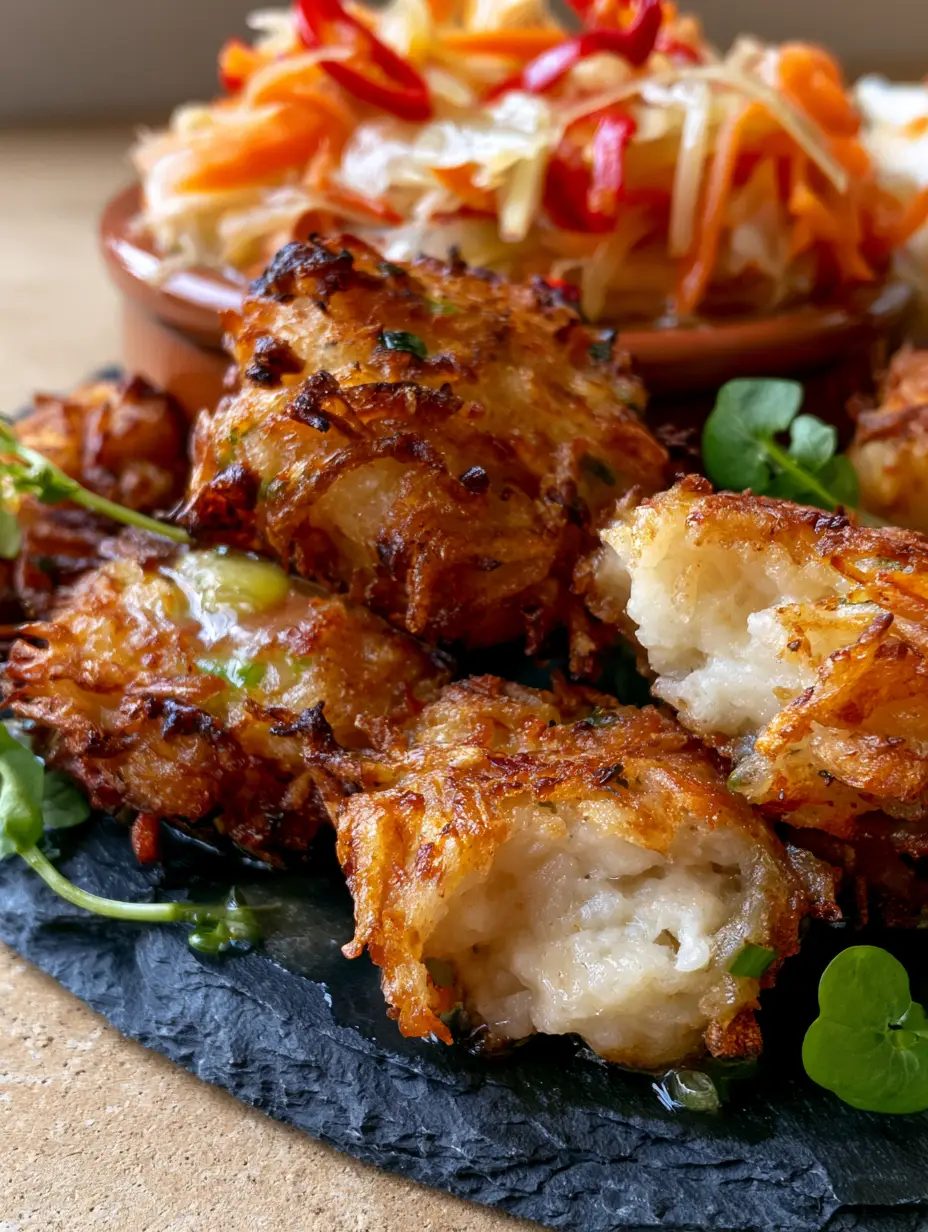
The secret to an authentic Haitian Akra lies in the malanga root itself. Unlike potatoes or flour-based batters, shredded malanga creates a unique structural integrity that results in those iconic crunchy “jagged” edges visible in professional food photography. When you bite through the crunch, you are met with a creamy, off-white center seasoned with scallions and scotch bonnet peppers. It is the ultimate balance of heat, salt, and texture.
Why This Haitian Akra Recipe Works Every Single Time
- The Perfect Texture Contrast: By using finely shredded malanga, we ensure a jagged, ultra-crispy exterior that holds up against the moisture of the spicy Pikliz.
- Visual Masterpiece: The inclusion of chopped green scallions and sliced red scotch bonnet peppers creates a vibrant, professional-grade aesthetic that stops the scroll on Pinterest.
- Authentic Pikliz Pairing: No Akra is complete without the acidic bite of shredded pickled cabbage and julienned carrots, which we detail in our step-by-step guide.
- Naturally Gluten-Free: Malanga root is the primary starch, making this a fantastic option for guests with dietary restrictions without sacrificing flavor.
If you love exploring the bold flavors of the Caribbean, you might also want to try our classic Haitian Spaghetti for a hearty breakfast or explore other Haitian food staples that define this rich culinary landscape. For those who prefer meat-based snacks, our crispy chicken fritters offer a similar satisfying crunch.
Essential Ingredients for Crispy Malanga Fritters
To achieve the Visual Recipe Blueprint we are aiming for, every ingredient serves a specific culinary and aesthetic purpose. Do not skip the fresh aromatics!
The Fritter Base
- 1.5 lbs (680g) Malanga Root: This is the star. When shredded, it releases just enough starch to bind the fritter while maintaining distinct strands for that jagged look.
- 2 large Green Scallions (finely chopped): These provide the “tiny flecks of green” that pop against the golden-brown batter.
- 1 Scotch Bonnet Pepper: Finely minced to distribute heat evenly. Use a red one to match the visual blueprint.
- 2 cloves Garlic (pressed): Essential for that foundational savory depth.
- 1 tsp (5g) Sea Salt: To enhance the earthy flavor of the malanga.
- 1/2 tsp (2.5g) Black Pepper: For a subtle back-of-the-throat warmth.
- Vegetable Oil for Frying: Use a high-smoke point oil to ensure a deep, even golden-brown finish.
The Pikliz & Garnish
- 2 cups (150g) Cabbage: Finely shredded to soak up the vinegar brine.
- 1/2 cup (60g) Carrots: Julienned into thin, bright orange slivers.
- 1/4 cup (60ml) White Vinegar: The acidic backbone that cuts through the fried richness.
- Fresh Watercress: Sprigs of watercress add a peppery freshness and a high-end garnish feel.
- Lime Wedges: A final squeeze of lime juice adds a glistening finish to the crispy surface.
How to Make Haitian Akra Step-by-Step
1. Prepare the Malanga Root
Start by peeling the malanga root. You will notice the flesh is a creamy off-white with small purple flecks. Use the fine side of a box grater to shred the root. This is critical: do not use a food processor for the main texture, as you want those visible strands of shredded malanga that create the crispy edges.
Once shredded, place the malanga in a bowl. You will notice it is naturally sticky—this is exactly what we want for a binding agent without needing eggs or flour.
2. Seasoning the Batter
Add your finely chopped scallions, minced scotch bonnet, pressed garlic, salt, and pepper. Use a wooden spoon to fold the aromatics into the malanga. The batter should be thick and hold its shape. If you are a fan of bold, herby flavors often found in side dishes, the freshness of the scallions here will remind you of classic Provençal techniques mixed with tropical heat.
3. The Pikliz Prep
While your oil heats up, toss the shredded cabbage, julienned carrots, and sliced peppers in a terracotta bowl with vinegar and a pinch of salt. Let this sit for at least 15 minutes. The cabbage should become translucent but remain crunchy. This is the vibrant accompaniment that balances the Haitian Akra perfectly.
4. Frying to Golden Perfection
Heat about 2 inches (5cm) of oil in a heavy-bottomed skillet to 360°F (182°C). Using a tablespoon, drop small portions of the batter into the hot oil. Do not overcrowd the pan.
Watch for the visual cue: the edges will turn a deep golden-brown and become jagged. Fry for about 3-4 minutes per side. When you snap one in half, the interior should be a steaming, creamy off-white, contrasting the crunch.
Expert Tips for Success
- Maintain Oil Temperature: If the oil is too cool, the Akra will soak up grease and lose its fluffiness. Use a kitchen thermometer to stay at 360°F.
- Grate Finely: The finer the grate, the better the fritter holds together. Large chunks will cause the Akra to fall apart in the oil.
- The Lime Finish: Always squeeze fresh lime juice over the fritters immediately after frying. The acidity reacts with the hot oil to brighten the entire flavor profile.
- Safety First: When handling scotch bonnet peppers, wear gloves or wash your hands immediately after to avoid “chili burn.”
Storage, Reheating & Freezing
Haitian Akra is best served fresh and piping hot. However, if you have leftovers, store them in an airtight container in the refrigerator for up to 3 days. To maintain that signature crunch, reheat them in an air fryer at 375°F (190°C) for 4-5 minutes.
You can also freeze the fried fritters. Place them in a single layer on a baking sheet to flash-freeze, then transfer to a freezer bag. Reheat directly from frozen in the oven or air fryer.
What to Serve With Haitian Akra
While Pikliz is the traditional choice, these fritters are versatile. They pair beautifully with a sumac onion salad for a Mediterranean twist or even a Turkish onion salad if you want to experiment with fusion flavors. If you are serving a full Haitian feast, these are the perfect precursors to a main course of French-inspired comfort food or traditional legume.
Frequently Asked Questions
While Taro is similar, Malanga is the traditional choice for Haitian Akra because it has a higher starch content and a lower moisture level, which results in a fluffier interior and a crunchier exterior.
Yes! Authentic Haitian Akra is naturally vegan as it relies on the natural starches of the malanga root for binding, rather than eggs or dairy. Just ensure you are frying in vegetable oil.
The secret lies in hand-shredding the malanga root using the fine side of a grater. This creates long, thin strands that fry into jagged, crispy edges, providing a texture that a food processor simply cannot replicate.
If your fritters fall apart, the oil may not be hot enough, or the malanga was grated too coarsely. Ensure your oil is at 360°F (182°C) and the batter is a thick, cohesive paste before frying.
The Authentic Haitian Akra Recipe Card
Haitian Akra: The Ultimate Crispy Malanga Fritter Recipe
Ingredients
Equipment
Method
- Peel the malanga root and grate it using the fine side of a box grater until you have a thick, fibrous paste.
- Fold in the scallions, scotch bonnet, garlic, salt, and pepper until well combined.
- Mix cabbage, carrots, vinegar, and peppers in a bowl. Let sit to brine.
- Heat oil to 360°F. Drop tablespoons of batter into the oil. Fry until jagged edges are golden-brown and crispy, about 4 minutes per side.
- Remove fritters and drain on paper towels. Serve immediately with a squeeze of lime and Pikliz.
Notes
Always use fresh malanga; frozen malanga may contain too much moisture for the perfect crunch.
Join the CrispChop Community!
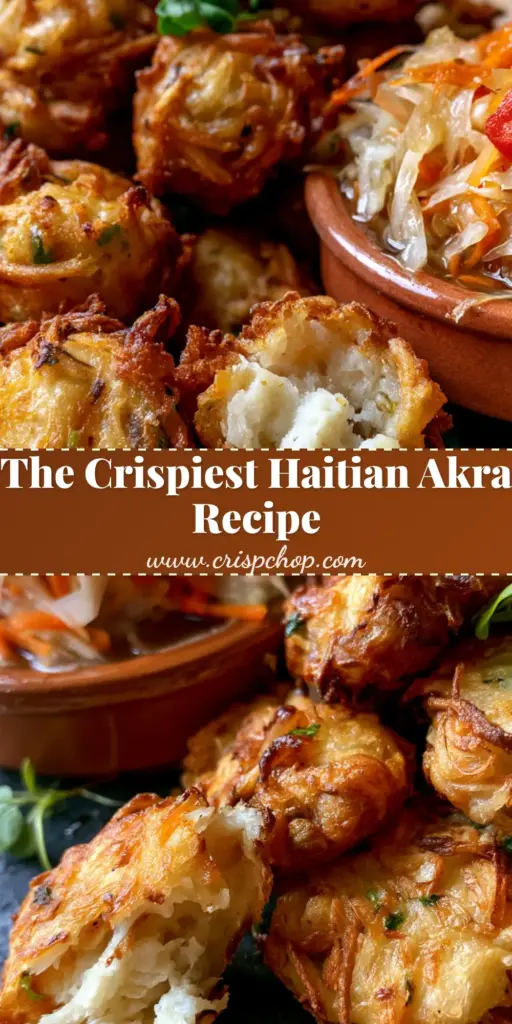
Did these Haitian Akra fritters bring the heat to your kitchen? We want to see your results! Save this recipe to your Haitian Food or Appetizer board on Pinterest so you never lose it. Follow @crispchop for more ultra-crispy recipes and Caribbean favorites.
Leave a 5-star rating in the comments below and upload a photo of your golden-brown fritters—we love seeing those jagged edges and vibrant Pikliz pairings!