This authentic Turkish onion salad, known traditionally as Soğan Piyazı, is the vibrant, tangy, and crunchy soul of every Mediterranean spread. If you have ever dined at a Turkish grill and wondered what that zesty, purple-hued garnish was, you have found it. This recipe transforms humble red onions into a gourmet condiment using the citrusy power of dark burgundy sumac and fresh herbs.
Whether you are serving this alongside a hearty bowl of Haitian Spaghetti for a fusion twist or pairing it with traditional grilled meats, the Turkish onion salad provides the necessary acid to cut through rich flavors. It is more than just a garnish; it is a sensory experience of crisp textures and bright, morning-light aesthetics.
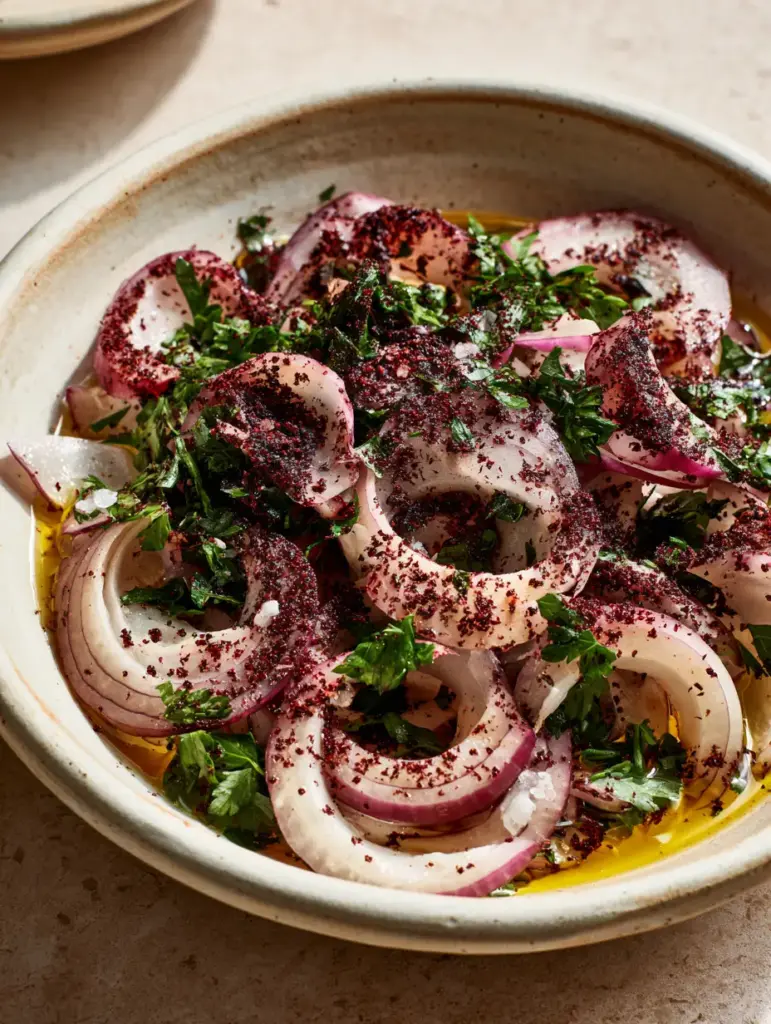
Why You Will Obsess Over These Sumac-Dusted Onions
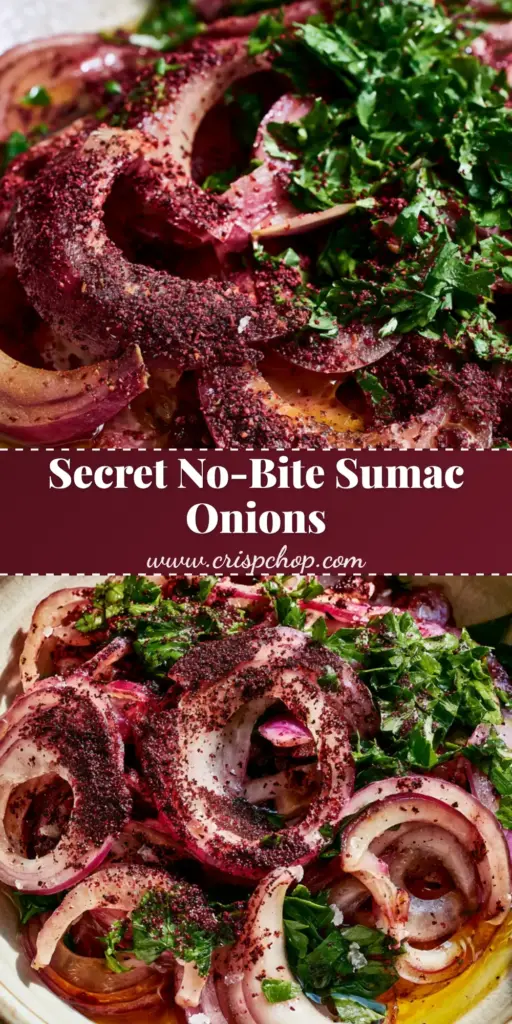
- Visual Texture: The paper-thin red onion crescents appear crisp and slightly translucent, offering a professional restaurant-quality look.
- The Sumac Punch: Coarse, dark burgundy sumac provides a unique astringent flavor that lemon alone cannot achieve.
- Vibrant Contrast: The combination of bright green flat-leaf parsley and deep red spice makes this dish pop on any social media feed.
- Ultra-Fast Prep: Unlike complex Provençal recipes, this salad takes less than 10 minutes from cutting board to table.
- Clean Ingredients: A simple drizzle of golden, viscous extra virgin olive oil and sea salt flakes are all you need for a healthy, raw side.
The Anatomy of an Authentic Turkish Onion Salad
To achieve the specific Turkish onion salad results seen in our Visual Recipe Blueprint, each ingredient must be selected and prepared with intention. This isn’t just a chopped onion; it is a studied balance of aromatics and acid.
Red Onions (1 large / approx. 200g): You must slice these into paper-thin crescents. Red onions provide the necessary bite and the beautiful purple hue that defines the dish.
Ground Sumac (1.5 tbsp / 9g): Look for coarse, dark burgundy sumac. This Mediterranean spice is made from dried berries and offers a tart, lemony profile that is essential for a true Turkish onion salad.
Fresh Flat-Leaf Parsley (1/2 cup / 15g): Roughly chopped parsley adds an earthy freshness. Do not use curly parsley, as the texture is too tough for this delicate salad.
Extra Virgin Olive Oil (2 tbsp / 30ml): Use a high-quality, viscous oil. It should coat the onions and catch the light, creating that “golden drizzle” effect.
Fresh Lemon Juice (1 tbsp / 15ml): Just a few droplets are needed to activate the sumac and add a top-note of brightness.
Sea Salt Flakes (1 tsp / 5g): Visible flakes of sea salt on the onion edges provide a satisfying crunch and flavor burst.
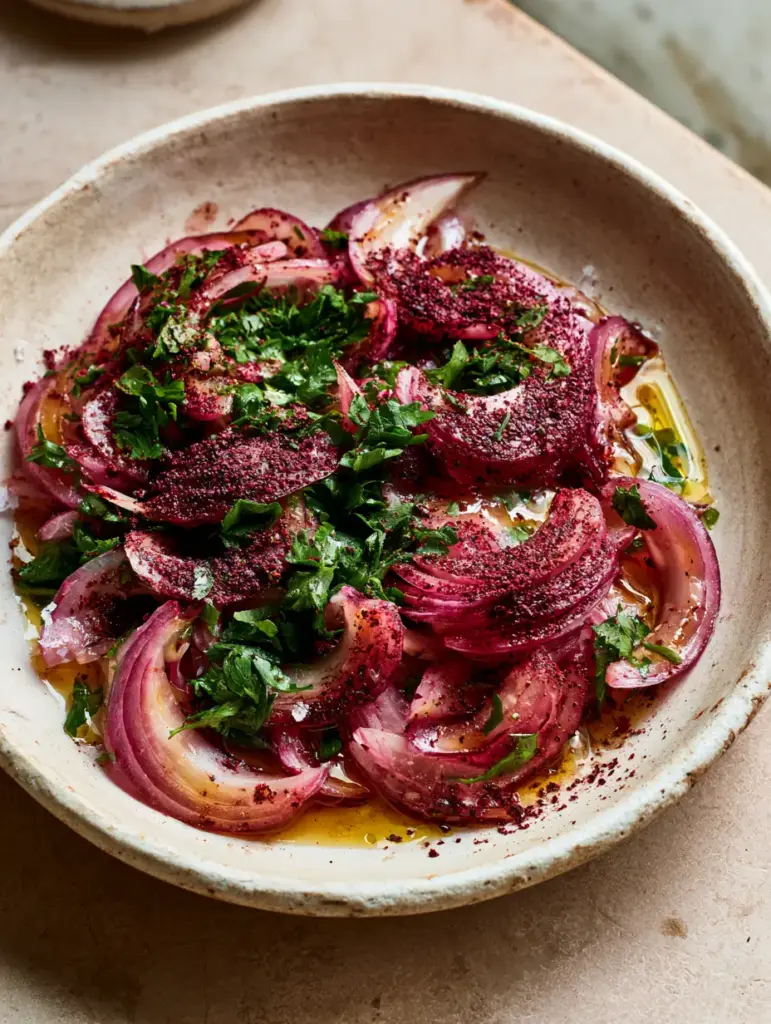
Mastering the “Salad Massage” Technique
The secret to a world-class Turkish onion salad isn’t just the ingredients; it is the preparation of the onions themselves. If you find raw onions too pungent, this technique is a game-changer.
Step 1: The Precision Crescent Cut
Peel your red onion and cut it in half from root to stem. Place the flat side down and use a very sharp chef’s knife to create paper-thin crescents. They should be thin enough to be slightly translucent when held up to the light.
Step 2: The Softening Rinse (Optional)
If you prefer a milder Turkish onion salad, place the sliced onions in a bowl of ice-cold water for 5 minutes. This removes the harsh sulfur compounds. Drain them thoroughly and pat dry with a kitchen towel before proceeding. This ensures your olive oil doesn’t get watered down.
Step 3: The Sumac Infusion
Place the onions in a rustic ceramic bowl. Sprinkle the coarse dark burgundy sumac and a pinch of salt over them. Use your hands to gently “massage” the spice into the onion fibers. You will notice the onions begin to soften slightly and take on a deep, stained red color.
Step 4: The Final Flourish
Add the roughly chopped parsley and toss gently. Just before serving, drizzle the extra virgin olive oil in a circular motion and add the fresh lemon juice droplets. The oil should look viscous and golden, clinging to the sumac-dusted edges.
Expert Tips for Pinterest-Perfect Results
- Knife Skills Matter: If you struggle with thin slicing, use a mandoline set to the thinnest gauge to get those perfect red onion crescents.
- Quality of Sumac: Avoid fine, powdery sumac which can make the salad look muddy. Aim for a coarse grind to maintain the visual “speckled” look.
- Temperature Control: Serve the salad at room temperature to allow the olive oil’s flavor to shine, but ensure the onions were chilled before slicing for maximum crispness.
- The Bowl Choice: To mimic our smartphone-style photo, use a neutral, off-white handmade ceramic bowl. The contrast makes the bright green parsley stand out.
Storage and Make-Ahead Advice
While the Turkish onion salad is best enjoyed fresh (within 30 minutes of tossing), you can prepare the components in advance. Slice the onions and chop the parsley up to 24 hours ahead, keeping them in separate airtight containers in the fridge.
We do not recommend freezing this salad, as the cellular structure of the onions will collapse, turning your crisp crescents into a soggy mess. If you have leftovers, they make an excellent topping for a Homemade Tuna Helper or a zesty addition to a breakfast wrap.
What to Serve with Turkish Onion Salad
This salad is the ultimate chameleon. It is traditionally served with Adana Kebab or Köfte, but its applications are endless. The acidity makes it a perfect partner for fried dishes, such as Southern Fried Shrimp.
For a lighter lunch, serve it alongside a Asian Chicken Salad for a multi-cultural crunch fest. The citrus notes of the sumac also pair beautifully with fish and roasted root vegetables.
Frequently Asked Questions
While you can use white onions, red onions are preferred for their color and slightly milder sweetness. If using white onions, the soaking step is highly recommended.
To reduce the ‘bite’ of the raw onions, soak the sliced crescents in ice-cold water for 5-10 minutes, then drain and dry them thoroughly before adding the sumac and oil.
Sumac has a tangy, acidic, and slightly fruity profile, similar to lemon juice but with a more complex, earthy finish that defines the authentic taste of Turkish onion salad.
A very sharp chef’s knife is standard, but for the most consistent, translucent results seen in professional Turkish onion salad, a mandoline slicer is the best tool.
The Authentic Turkish Onion Salad Recipe Card
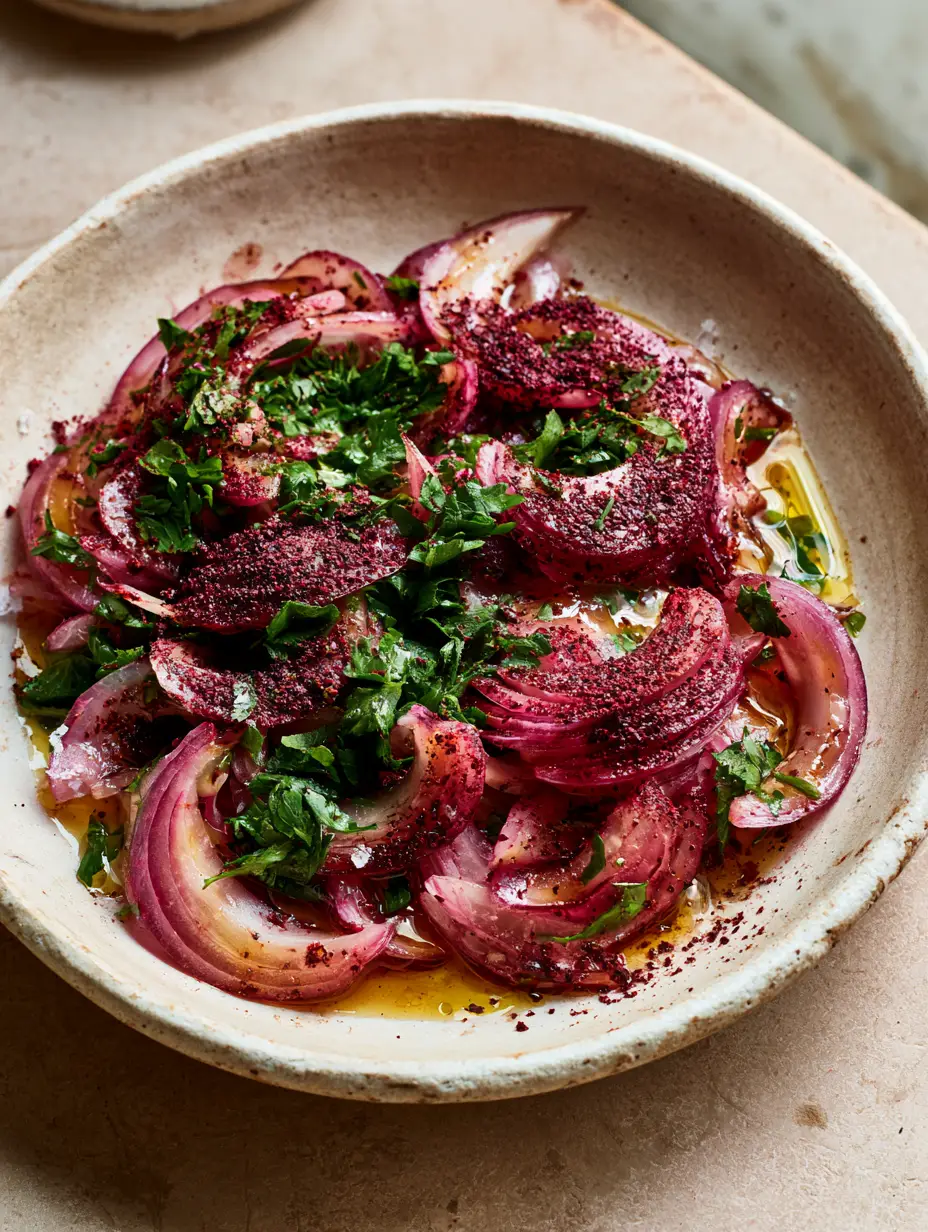
Turkish Onion Salad (Sumac Onions): The Ultimate Vibrant Side Dish
Ingredients
Equipment
Method
- Cut the red onion into paper-thin crescents. For a milder flavor, soak in ice water for 5 minutes and pat dry.
- Place onions in a bowl, sprinkle with sumac and sea salt. Massage by hand until the onions soften slightly and turn burgundy.
- Add chopped parsley, drizzle with extra virgin olive oil, and finish with lemon juice droplets. Serve in a rustic bowl.
Notes
Ensure the sumac is fresh for the best dark burgundy color and tart flavor.
Join the Crisp Chop Community!
Did your Turkish onion salad turn out as vibrant and crisp as ours? We want to see your recreations! Save this recipe to your “Mediterranean Sides” board on Pinterest so you never lose it.
If you enjoyed this recipe, please leave a 5-star rating in the recipe card above. Snap a handheld smartphone photo of your rustic bowl and share it in the comments below or tag @crispchop on social media. Happy tossing!