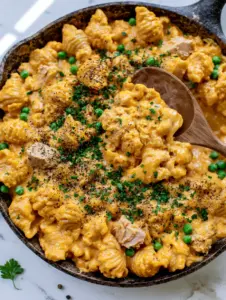
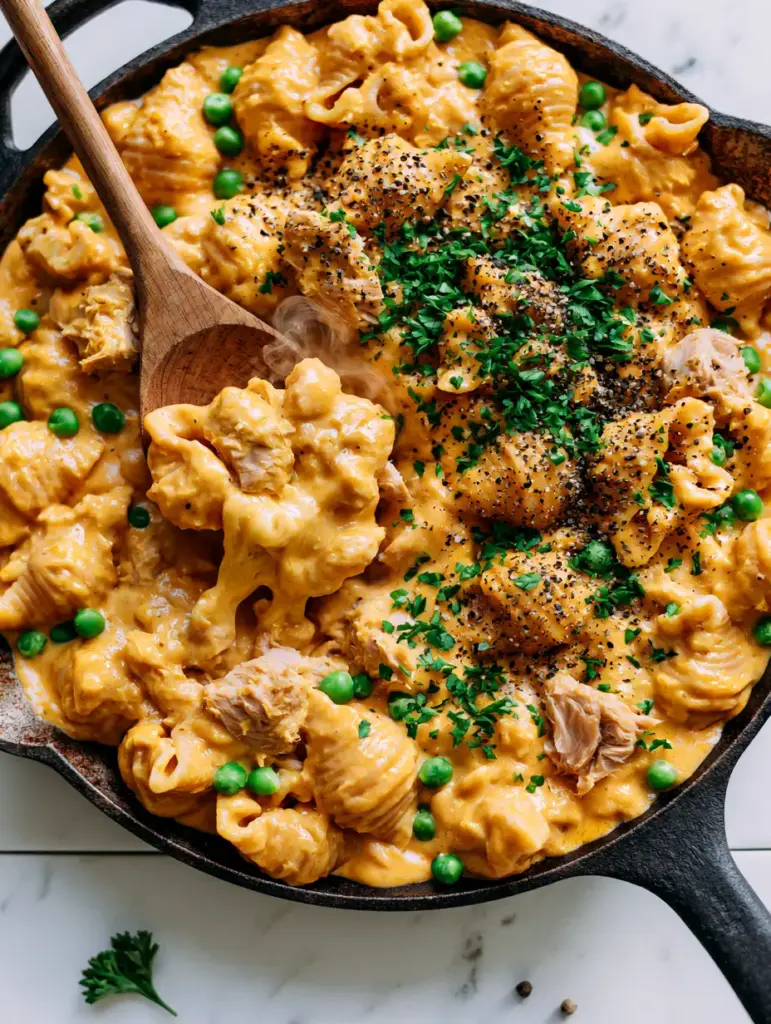
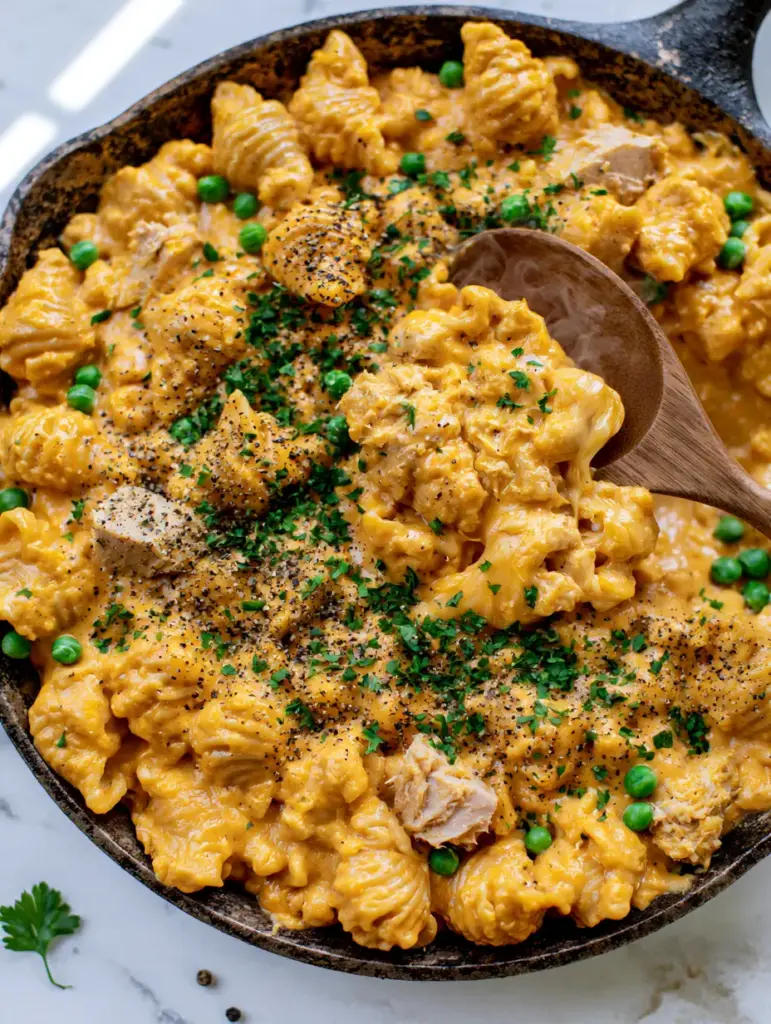
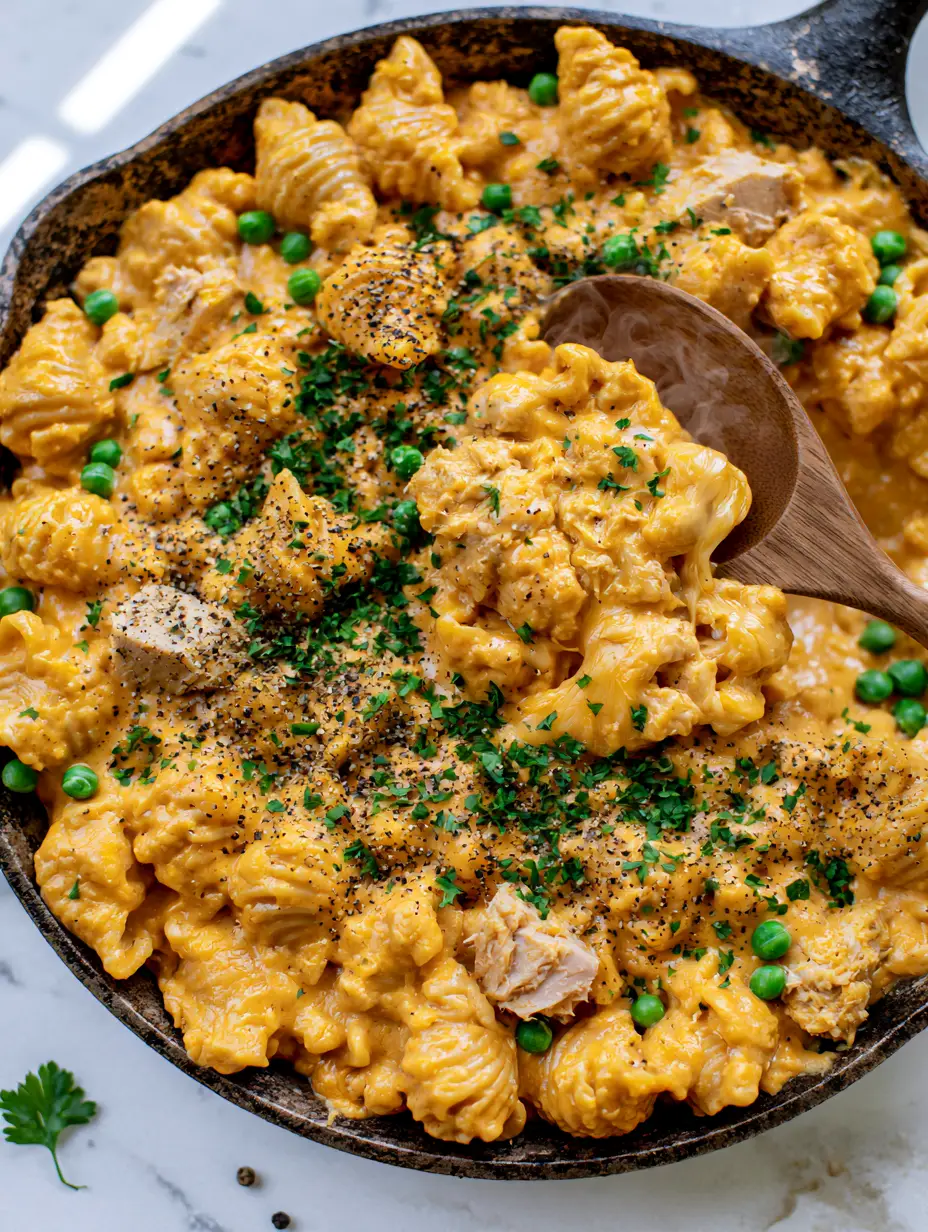
There is a specific kind of nostalgia that only a box of tuna helper can evoke, but we are moving far beyond the dehydrated powder of the past. Imagine a rustic, matte black cast iron skillet sitting on your counter, filled to the brim with large ridged macaroni shells bathed in a glowing orange-gold cheddar sauce. This isn’t just a quick pantry meal; it is a culinary experience designed to hit every sensory note—from the steam wisps rising off the pan to the vibrant pop of sweet green peas.
When you lift a wooden spoon from the skillet, you should see a perfectly gooey cheese pull that clings to every ridge of the pasta. The large, distinct flakes of light tuna provide a meaty, satisfying texture that balances the velvet-smooth sauce. Topped with a heavy cloud of freshly cracked black pepper and finely minced bright green parsley, this dish transforms humble ingredients into a centerpiece-worthy dinner.
Whether you are a busy parent looking for a 30-minute win or a home cook craving an elevated version of a childhood classic, this recipe delivers professional-grade results. We have engineered this version to ensure the pasta remains perfectly al dente while the sauce achieves a thickness that coats the back of a spoon with scientific precision.
Why This Elevated Skillet Macaroni Redefines Comfort Food
- Textural Contrast: By using large ridged macaroni shells (conchiglie), we create “sauce pockets” that ensure every bite is exploding with creamy cheddar.
- Visual Vibrancy: Unlike the muted tones of the boxed version, our recipe features bright, sweet peas and fresh herbs for a restaurant-quality aesthetic.
- Pure Ingredients: We swap out artificial preservatives for high-quality sharp cheddar and a classic butter-flour roux to achieve that signature glowing orange-gold hue.
- One-Pan Simplicity: By utilizing a cast iron skillet, we maximize heat retention and minimize cleanup, making this the ultimate weeknight savior.
Pantry Staples and Fresh Finds for the Perfect Cheesy Sauce
To achieve the specific visual blueprint of this recipe, every ingredient serves a dual purpose: flavor and structure. The foundation of any elite tuna helper is the emulsification of fats and liquids to create a sauce that won’t break or become grainy.
Large Ridged Macaroni Shells: 8 oz (225g). The ridges are essential for the sauce to cling to, providing the “perfectly coated” look described in our visual guide. Avoid smooth pasta shapes which allow the sauce to slide off.
Sharp Cheddar Cheese: 2 cups (226g), freshly grated. Pre-shredded cheese is coated in potato starch, which prevents that iconic gooey cheese pull. Grating your own ensures a velvety, glowing orange-gold finish.
Canned Light Tuna: Two 5 oz (142g) cans, drained. We look for “solid light” or “chunk light” to ensure we get those large, distinct flakes visible throughout the dish rather than a mushy paste.
Sweet Green Peas: 1 cup (150g). These provide the “pop-of-green” contrast against the orange sauce. If using frozen, do not thaw them beforehand to maintain their structural integrity.
Whole Milk: 2 cups (480ml). The fat content in whole milk is non-negotiable for achieving a thick, velvety texture that mimics the high-end food photography style.
Unsalted Butter: 3 tbsp (42g). This forms the base of our roux, providing the fat necessary to cook out the raw flour taste.
All-Purpose Flour: 3 tbsp (24g). The thickening agent that transforms milk into a luscious béchamel, which eventually becomes our Mornay (cheese) sauce.
Freshly Cracked Black Pepper: 1 tsp (2g). A heavy sprinkle is required not just for the bite, but for the visual “speckled” aesthetic on the matte black skillet.
Fresh Parsley: 2 tbsp (8g), finely minced. This adds the final layer of vibrancy and a fresh, herbaceous finish to the heavy cheese notes.
Invisible Foundations: 1/2 tsp (3g) fine sea salt and 1/4 tsp (1g) garlic powder. These enhance the natural flavors of the tuna and cheddar without distracting from the main profile.
Essential Tools for Skillet Mastery
To replicate the rustic look of our visual prompt, a 12-inch (30cm) matte black cast iron skillet is the preferred vessel. The dark background of the cast iron makes the glowing orange-gold cheese sauce pop visually, which is a secret used by professional food stylists.
You will also need a sturdy wooden spoon for stirring and creating that beautiful cheese pull for your own smartphone photos. A balloon whisk is essential during the sauce-making phase to ensure no lumps of flour remain in your roux. Lastly, a microplane or box grater is required for the cheese, as texture is everything in this recipe.
The Culinary Science of the Perfect One-Pan Roux
Step 1: Boiling the Pasta to Al Dente
In a large pot of salted water, cook the macaroni shells for 2 minutes less than the package instructions. This is crucial because the shells will continue to cook in the cheese sauce later. We want “al dente” shells that hold their shape and ridges. Drain and set aside, tossing with a teaspoon of olive oil to prevent sticking.
Step 2: Building the Golden Base
Place your cast iron skillet over medium heat. Add the 3 tbsp (42g) of butter. Once the butter is foaming and smells slightly nutty, whisk in the flour. Cook this roux for about 60-90 seconds. You are looking for a pale gold color and a scent like toasted pie crust. Do not let it turn brown, or it will distort the final color of the cheese sauce.
Step 3: Creating the Velvet Emulsion
Slowly stream in the 2 cups (480ml) of whole milk while whisking constantly. This “slow-drip” method prevents lumps. Continue to cook, stirring frequently, until the mixture thickens enough to coat the back of a spoon. You will see steam wisps beginning to rise—this is your cue that the temperature is perfect for the cheese.
Step 4: The Glowing Cheddar Transformation
Turn the heat to low. Add the shredded cheddar cheese one handful at a time, whisking until completely melted before adding the next. This prevents the sauce from breaking. Once all the cheese is in, you should have a glowing orange-gold, thick sauce that looks like liquid silk.
Folding, Flaking, and Finishing the Dish
Step 5: Incorporating the Main Components
Gently fold in the cooked macaroni shells and the drained tuna chunks. Use your wooden spoon to break the tuna into large flakes, but be careful not to over-mix. We want those “distinct flakes” mentioned in the visual blueprint. Add the frozen peas now; the residual heat of the sauce will cook them perfectly in about 2 minutes, keeping them bright green and plump.
Step 6: The Forensic Visual Garnish
Turn off the heat. The cast iron will retain enough warmth to keep the dish bubbling. Top with a heavy, aggressive sprinkle of freshly cracked black pepper. Mince your parsley finely and scatter it across the top, ensuring some lands on the wooden spoon for that perfect “action shot” look. If the sauce seems too thick, add 1-2 tbsp (15-30ml) of pasta water to loosen the consistency while maintaining the shine.
Expert Secrets for Success
- The Carry-Over Cook: Remember that cast iron holds heat. Remove the skillet from the burner slightly before you think it’s “done” to prevent the sauce from drying out.
- Tuna Quality: If you want an even more luxurious version, try using tuna packed in olive oil. If you prefer a lighter profile, check out this Mediterranean tuna bowl for inspiration.
- The “Pop” Factor: If your peas look dull, it’s because they were overcooked. Add them at the very last second to keep that vibrant green against the orange sauce.
- Cheese Temperatures: Never add cold cheese to a boiling sauce. Ensure your milk is warm and your cheese is at room temperature for the smoothest melt.
Storage, Reheating, and Freezing
This tuna helper is best enjoyed fresh from the skillet while the cheese pull is at its peak. However, leftovers can be stored in an airtight container in the refrigerator for up to 3 days. To reheat, add a splash of milk to a pan and heat over low, stirring gently to re-emulsify the sauce. Freezing is not recommended, as the dairy-based sauce tends to separate and the pasta can become mushy upon thawing.
What to Serve With Your Skillet Tuna Macaroni
Because this dish is rich and cheesy, it pairs beautifully with high-acid or crisp side dishes. A bright classic Greek salad provides the perfect crunch to cut through the velvet sauce. If you want to lean into the seafood theme for a dinner party, consider serving this alongside balsamic seared tuna steaks for a double-tuna delight.
For a refreshing beverage to cleanse the palate between bites of sharp cheddar, a tall glass of homemade lemonade is a timeless choice. If you’re looking for something more substantial, this dish also sits well next to a light Lebanese tabbouleh which mirrors the fresh parsley notes in the main dish.
Frequently Asked Questions
While ridged shells are best for holding the thick cheddar sauce, you can substitute with fusilli or rotini. Avoid thin or smooth pasta like spaghetti, as the heavy sauce will simply slide off the noodles.
To maintain that vibrant ‘pop’ of green, fold the peas in at the very end. The residual heat of the sauce is enough to warm them through without overcooking them into a dull, brownish color.
Solid light or chunk light tuna in water is best for this recipe. It allows you to maintain large, distinct flakes that won’t disappear into the sauce, providing a better meaty texture.
Graininess usually occurs if you use pre-shredded cheese (which contains anti-clumping starches) or if you add the cheese to a sauce that is boiling too vigorously. Always use freshly grated cheese and melt it over low heat.
The Ultimate One-Pan Homemade Tuna Helper Recipe
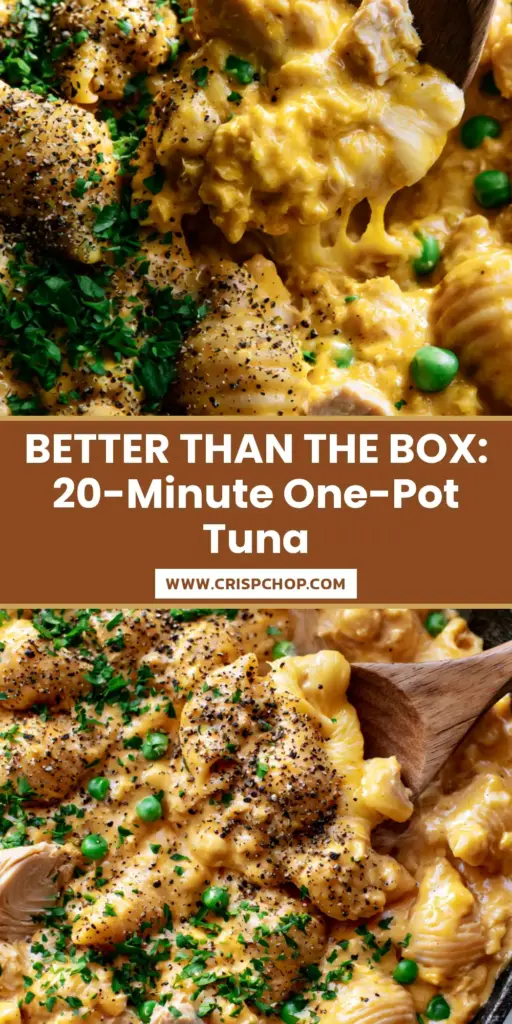
Tuna Helper: The Ultimate Homemade One-Pan Cheddar Macaroni
Ingredients
Equipment
Method
- Cook macaroni shells in salted water until just before al dente (about 2 minutes less than box instructions). Drain and set aside.
- In a cast iron skillet over medium heat, melt butter. Whisk in flour and cook for 90 seconds until pale gold and fragrant.
- Slowly whisk in milk until the sauce thickens and coats the back of a spoon. Look for steam wisps rising.
- Reduce heat to low. Whisk in grated cheddar one handful at a time until the sauce is a glowing orange-gold.
- Gently fold in cooked shells, tuna flakes, and green peas. Cook for 2 minutes until peas are bright green.
- Top with a heavy sprinkle of black pepper and fresh parsley. Serve directly from the skillet.
Notes
Add 1-2 tbsp of pasta water if the sauce becomes too thick while sitting.
Conclusion: The New Standard for Weeknight Dinners
Making a homemade tuna helper in a cast iron skillet isn’t just about saving money or time; it’s about reclaiming a classic and making it truly delicious. With its glowing orange-gold sauce, al dente shells, and vibrant green peas, this dish proves that pantry staples can be beautiful. We hope this becomes a staple in your kitchen rotation, bringing comfort and flavor to your table every time.
Did you achieve the perfect cheese pull? We want to see your skillet masterpieces! Leave a comment below, sign up for our newsletter for more elite recipes, and don’t forget to share your photos to Pinterest using the hashtag #CrispChopTuna.