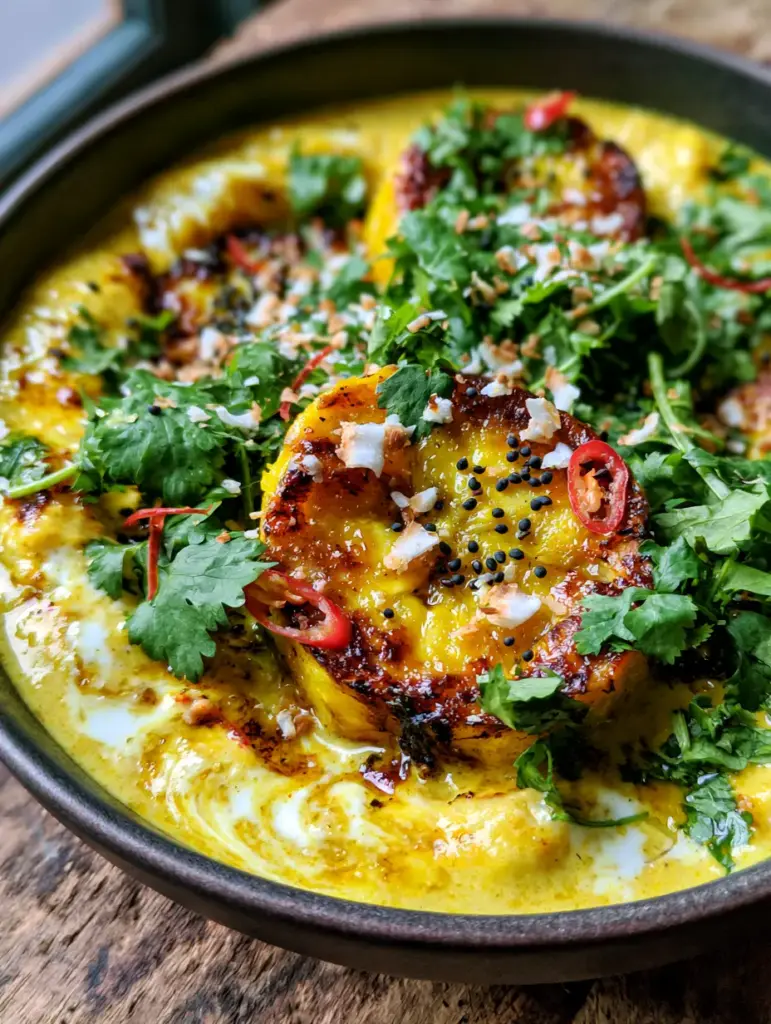
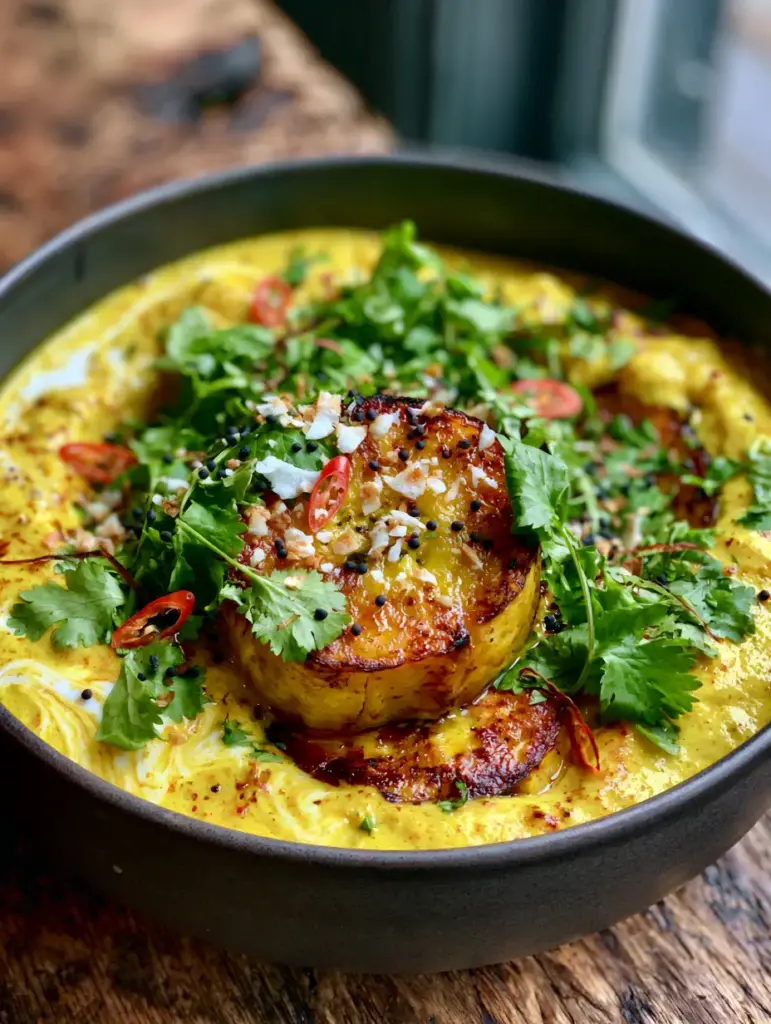
There is something deeply hypnotic about the way a vibrant plantain curry glows against a dark matte ceramic bowl. This dish isn’t just a meal; it’s a masterclass in texture, contrasting the firm yet tender bite of caramelized fruit with a rich, spice-infused liquid gold.
Inspired by the tropical flavors of the Caribbean and West Africa, this recipe focuses on the forensic details that make a dish “restaurant quality.” We are moving beyond the mushy stews of the past to embrace a sophisticated, multi-layered approach to plantain preparation.
By searing the plantain rounds first, we lock in their natural sugars, creating a deep golden-brown crust that stands up to the thick yellow coconut milk sauce. Every spoonful delivers the crunch of toasted coconut flakes, the pop of black mustard seeds, and the sharp heat of red bird’s eye chilies.
Why This Vibrant Tropical Stew Will Redefine Your Dinner Routine
- Textural Harmony: You get the caramelized, seared edges of the plantains paired with a velvety, thick coconut cream finish.
- Visual Brilliance: The striking contrast between the bright yellow turmeric base and the deep green cilantro makes this a centerpiece dish.
- Scientific Flavor Layering: We use the technique of tempering black mustard seeds to release essential oils that permeate the entire curry.
- Natural Sweet-Savory Balance: The inherent sweetness of ripe plantains is balanced by the saltiness of the sauce and the acidic brightness of fresh lime.
The Pantry Staples for a Gold-Standard Plantain Curry
Selecting the right plantains is the most critical step in this process. You need plantains that are yellow with significant black spotting; they should be soft to the touch but not mushy, ensuring they hold their round shape during the searing process.
Yellow Plantains: These provide the bulk of the dish, offering a starchy yet sweet foundation that caramelizes beautifully. You will need 3 large plantains, peeled and cut into 1-inch (2.5cm) thick rounds.
Full-Fat Coconut Milk & Cream: We use 1 can (400ml) of full-fat coconut milk for the base and reserve 1/4 cup (60ml) of heavy coconut cream for those signature visual swirls. This ensures the sauce is thick enough to coat the back of a spoon.
Black Mustard Seeds: These tiny seeds are foundational for the “bloomed” spice flavor profile. You will use 1 tsp (5g) of seeds, toasted until they begin to pop and release their nutty aroma.
Aromatic Base: A combination of 1 medium yellow onion, 3 cloves of garlic, and 1 tbsp (15g) of fresh grated ginger creates the savory backbone. These should be finely minced to melt into the thick yellow coconut milk sauce.
Turmeric and Curry Powder: 1 tsp (5g) of ground turmeric provides the iconic golden hue, while 1 tbsp (15g) of mild yellow curry powder adds depth without overpowering the plantains. If you enjoy fusion flavors, this profile pairs beautifully with a side of savory Jollof rice.
The Garnishing Trio: To match our visual blueprint, we use 1/4 cup (10g) fresh cilantro, 2 tbsp (15g) toasted coconut flakes, and 2 thinly slivered red bird’s eye chilies. These add the final layers of heat, crunch, and freshness.
Foundational Fats: 2 tbsp (30ml) of coconut oil is used for the high-heat sear, providing a clean flavor that complements the tropical theme of this plantain curry.
Essential Kitchen Tools for Professional Results
To achieve the “deep golden-brown caramelized edges” described in our visual prompt, a heavy-bottomed cast iron skillet is preferred. The even heat distribution is vital for searing the plantains without burning the delicate sugars.
You will also need a wide, shallow pot or a Dutch oven for simmering the curry sauce. This allows the liquid to reduce efficiently, resulting in that “thick, velvety” texture we are aiming for. A small dry pan is also useful for quickly toasting the coconut chips until they reach a pale gold color.
How to Achieve the Perfect Caramelized Plantain Sear
Phase 1: Prepping and Searing the Plantains
Heat 1.5 tbsp (22ml) of coconut oil in your skillet over medium-high heat until it shimmers. Arrange the plantain rounds in a single layer, ensuring they do not crowd the pan.
Sear the rounds for 2-3 minutes per side. You are looking for a deep golden-brown crust and caramelized edges; the centers should start to look translucent and tender.
Remove the seared plantains from the pan and set them aside on a plate. Do not stack them, as the residual steam will soften the crisp edges we just worked so hard to create.
Phase 2: Building the Golden Aromatic Base
In the same pan (or a clean pot), add the remaining oil and the black mustard seeds. Wait for the seeds to start dancing and popping—this is the sensory cue that the flavor is being released.
Add the minced onion, ginger, and garlic. Sauté for 5-7 minutes until the onions are soft and translucent, then stir in the turmeric and curry powder, toasting the spices for 60 seconds until fragrant.
Phase 3: Simmering the Thick Yellow Coconut Sauce
Pour in the full-fat coconut milk and use a wooden spoon to scrape up any browned bits (fond) from the bottom of the pan. Bring the mixture to a gentle simmer over medium-low heat.
Allow the sauce to reduce for 10 minutes until it thickens significantly. Season with a pinch of sea salt and a squeeze of lime juice to brighten the heavy fats of the coconut.
Phase 4: The Final Assembly and Garnish
Gently fold the seared plantain rounds back into the sauce. Be careful not to break them; you want them submerged but prominent in the final presentation.
Ladle the plantain curry into dark matte ceramic bowls. Drizzle the reserved coconut cream in circular motions to create visible swirls against the yellow sauce.
Finish the dish by scattering the fresh cilantro leaves, toasted coconut flakes, red chili slivers, and a final sprinkle of mustard seeds across the top. This layering creates the high-resolution, authentic handheld aesthetic we desire.
Expert Tips for a Five-Star Plantain Curry
- Control the Ripeness: If your plantains are too green, they will be starchy like a potato; if too black, they will dissolve into the sauce. Look for the “cheetah spot” stage for the best results.
- Don’t Skip the Tempering: Always add your mustard seeds to hot oil first. This “tadka” technique is the difference between a flat curry and one with professional depth.
- Cream Swirl Success: For the best swirls, ensure your coconut cream is at room temperature. Cold cream will clump, while room temp cream flows beautifully into the warm sauce.
- The Acid Balance: If the curry feels too heavy, add a teaspoon of lime juice or apple cider vinegar at the very end. This cuts through the coconut fat and makes the plantain flavor pop.
Creative Pairings and Serving Suggestions
This plantain curry is a powerhouse on its own, but it thrives when paired with textured grains. A side of fluffy basmati rice or even a coconut-infused rice base can soak up that velvety sauce perfectly.
For those looking for a fusion experience, the sweet-spicy notes of the curry complement the bold flavors of Hawaiian-style sides or even a light Lebanese tabbouleh for a refreshing herbal contrast.
Storing and Reheating Your Curry
This dish stores remarkably well as the spices continue to develop overnight. Keep it in an airtight container in the refrigerator for up to 4 days.
When reheating, add a splash of water or extra coconut milk to the pan to loosen the sauce, as it will thicken significantly when cold. Warm it over low heat to prevent the plantains from becoming mushy.
Freezing is possible for up to 2 months, though the texture of the plantains may soften slightly upon thawing. Always thaw in the fridge before reheating on the stovetop.
Frequently Asked Questions
Yes, they provide a specific nutty flavor and visual pop. If you cannot find them, you can substitute with yellow mustard seeds, though the flavor is slightly more pungent and less nutty.
While you can simmer the plantains directly in the sauce, you will miss out on the caramelized edges and deep flavor provided by searing them in coconut oil first. Searing is recommended for the best texture.
Use full-fat canned coconut milk and allow it to simmer and reduce for at least 10 minutes. The golden color comes from ground turmeric and a high-quality yellow curry powder.
The base sauce is mild, but the heat comes from the fresh red bird’s eye chili garnish. You can control the spice level by removing the seeds from the chilies or omitting them entirely.
Choose plantains that are yellow with plenty of black spots. They should be soft but still hold their shape when sliced. Green plantains will be too starchy, and completely black plantains may turn to mush in the sauce.
The Ultimate Golden Plantain Curry Recipe Card
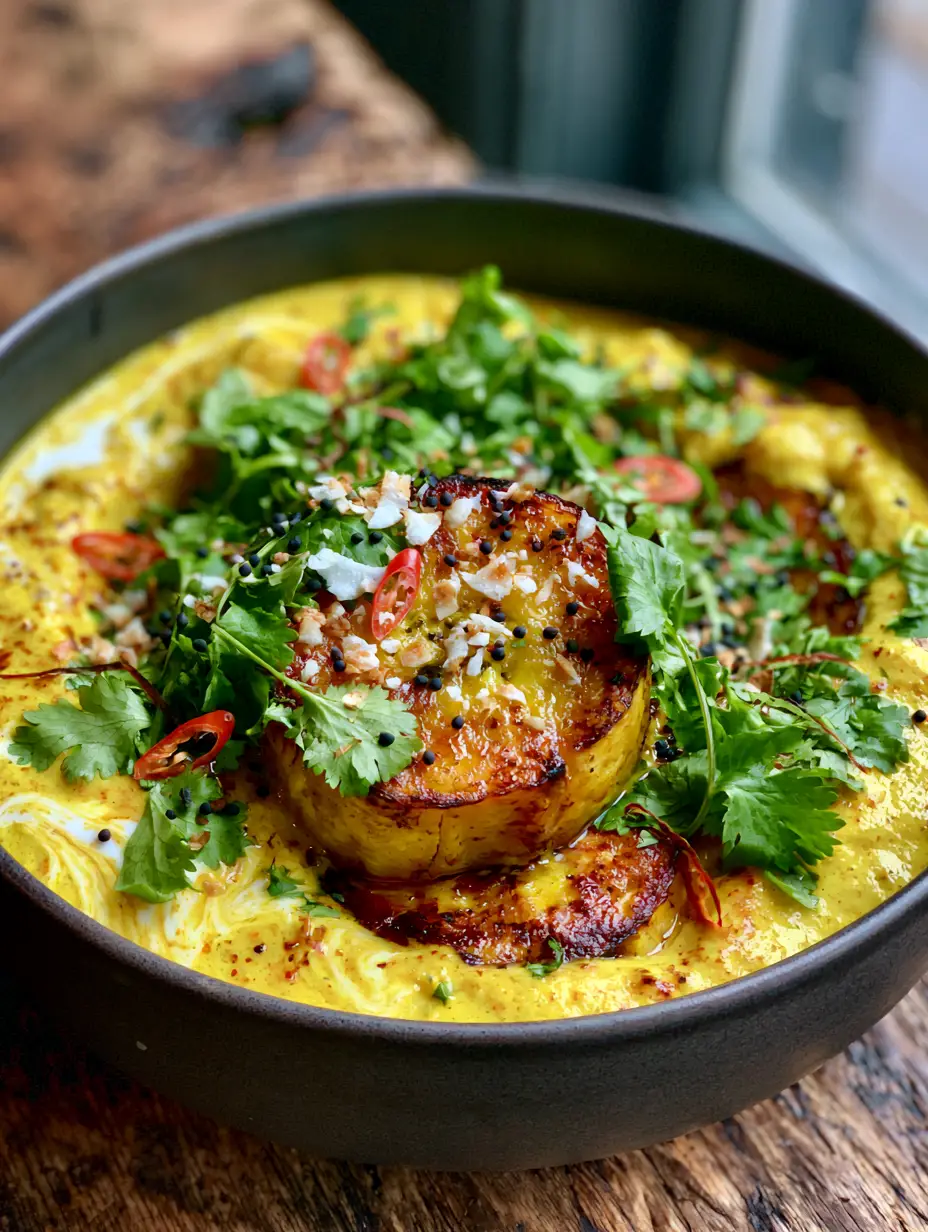
Plantain Curry with Seared Golden Rounds and Velvety Coconut Sauce
Ingredients
Equipment
Method
- Heat 1.5 tbsp (22ml) coconut oil in a skillet. Fry plantain rounds for 2-3 minutes per side until they show deep golden-brown caramelized edges. Set aside.
- In a pot, heat remaining oil and add black mustard seeds. Once they pop, add onion, garlic, and ginger. Sauté until soft.
- Stir in turmeric and curry powder. Add coconut milk. Simmer for 10 minutes until thick and velvety.
- Gently fold plantains into the sauce. Serve in bowls, swirling in coconut cream and topping with cilantro, coconut flakes, and chili slivers.
Notes
Tempering the mustard seeds in hot oil is essential for the authentic flavor profile.
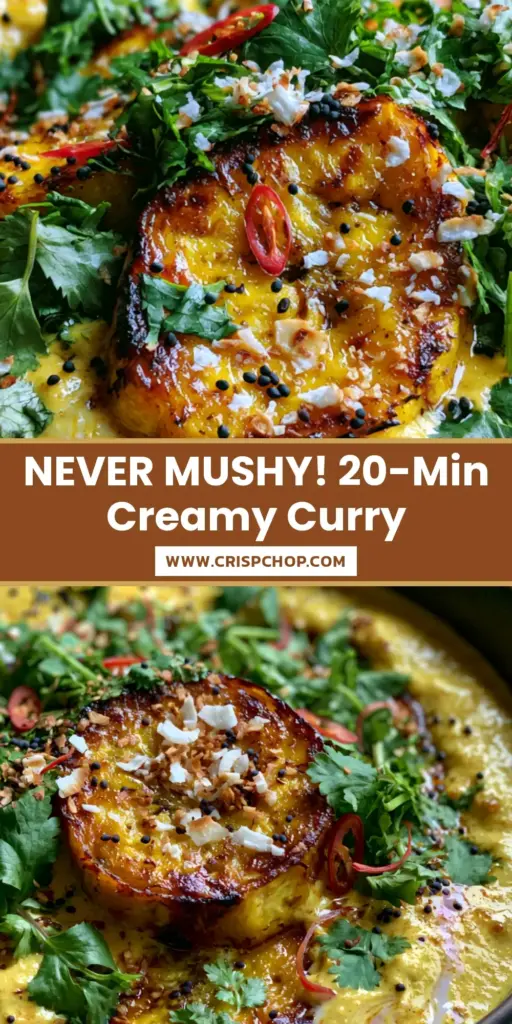
Experience the Gold Standard of Plantain Curry
By following this forensic approach to searing and spice layering, you have created a plantain curry that is as visually stunning as it is delicious. The contrast of the dark bowl against the golden sauce makes this a photographer’s dream and a palate’s delight.
If you enjoyed this tropical journey, please leave a comment below and let us know how your caramelization turned out! Don’t forget to share your creations with us on Pinterest and tag your photos.