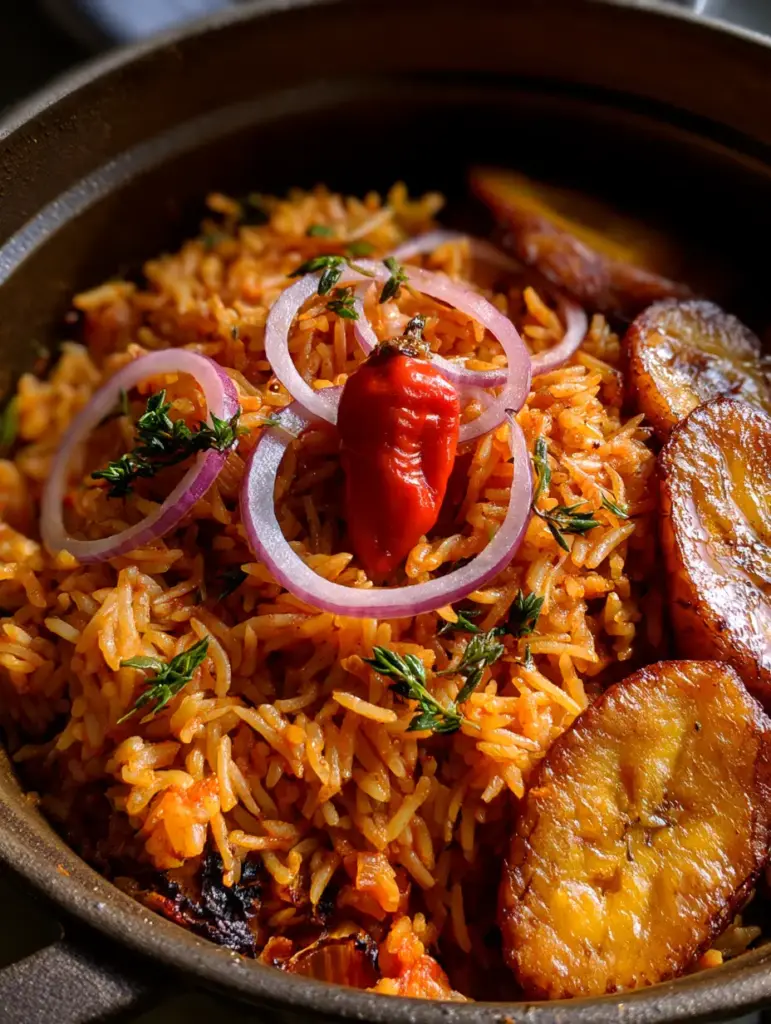
There is nothing quite like the aroma of a freshly uncovered pot of Riz Jollof Nigérian. The fragrant steam carries notes of roasted peppers, earthy thyme, and that signature wood-smoke essence that defines authentic West African cuisine. When you look at a perfectly executed pot, you see long, slender grains of rice that are distinct and vibrate with a deep, rich orange-red hue.
Achieving the legendary “party-style” Jollof isn’t just about the ingredients; it is about the technique of steaming rather than boiling. This recipe is designed to help you recreate the visual and sensory masterpiece of a traditional Nigerian celebration right in your own kitchen. Whether you are a seasoned pro or a curious beginner, the secret lies in the balance of the pepper reduction and the patience of the slow steam.
In this guide, we will explore the culinary science behind the perfect grain separation and that coveted charred bottom. We will also ensure every element from our visual blueprint—the thin red onion rings, the bright scotch bonnet, and the glistening caramelized plantains—is perfectly represented on your plate.
What Makes This Authentic Riz Jollof Nigérian Irresistible?
- Perfectly Separated Grains: By using long-grain parboiled rice and controlled steaming, we avoid the dreaded “mushy” texture often found in amateur recipes.
- The Iconic Smoky Aroma: We utilize the “bottom-burn” technique in a cast-iron pot to infuse the rice with a deep, charred flavor without ruining the dish.
- Visual Vibrancy: A concentrated reduction of red bell peppers and tomato paste creates a stunning deep-orange coating on every single grain.
- Textural Contrast: The addition of caramelized fried plantain slices provides a sweet, soft counterpoint to the spicy, savory rice.
Essential Components for Your Pepper Base and Rice
Long-Grain Parboiled Rice: 3 cups (600g). Parboiled rice is sturdier than standard white rice, allowing it to withstand long steaming times while remaining “grain-to-grain” and slender.
Red Bell Peppers (Tatashe): 3 large (approx. 450g). These provide the foundational sweetness and the intense red pigment that gives Riz Jollof Nigérian its characteristic glow.
Scotch Bonnet Peppers (Ata Rodo): 2 to 3 peppers. These provide the essential heat and fruity undertone; one is kept whole for garnish as seen in our visual guide, while others are blended into the base.
Concentrated Tomato Paste: 1/2 cup (140g). This is fried in oil to remove acidity and deepen the color of the stew base before the rice is added.
Red Onions: 2 medium. Half are blended into the base, while the other half are sliced into thin, delicate rings to garnish the top of the steaming pot.
Vegetable Oil: 1/2 cup (120ml). Essential for “frying” the sauce and ensuring the rice grains stay separated and glisten with a light sheen.
Chicken or Vegetable Stock: 3 cups (720ml). A high-quality stock provides the “invisible” depth of flavor that water simply cannot match.
Fresh Thyme and Bay Leaves: 4-5 sprigs of thyme and 3 dried bay leaves. These aromatic herbs infuse the steam with an earthy, floral scent that balances the spice.
Plantains: 2 large, very ripe (yellow with black spots). These are sliced thick and fried until caramelized and golden-brown to serve as the perfect side.
Professional Equipment for the Best Results
To achieve the result in our visual prompt, a rustic, dark matte cast iron pot or a heavy-bottomed Dutch oven is non-negotiable. The thick walls distribute heat evenly, which is crucial for creating the “bottom char” without burning the entire batch. You will also need a high-speed blender for the pepper base and aluminum foil to create an airtight seal for the steaming phase.
Step-by-Step Instructions to Perfect Your Riz Jollof Nigérian
1. Preparing the Vibrant Pepper Reduction
Begin by blending your red bell peppers, half of the red onions, and 1-2 scotch bonnets until smooth. Pour this mixture into a pot and simmer over medium heat until the water evaporates, leaving a thick, concentrated paste. This step is vital for ensuring the flavor of your Nigerian party Jollof rice is intense rather than watery.
2. Frying the Aromatics and Tomato Base
In your cast iron pot, heat the vegetable oil. Add the remaining sliced onions (save the rings for later!) and sauté until translucent. Stir in the tomato paste and fry for 5-8 minutes on low heat. You will know it is ready when the oil separates from the paste and the color deepens from bright red to a dark maroon.
3. Parboiling and Rinsing the Rice
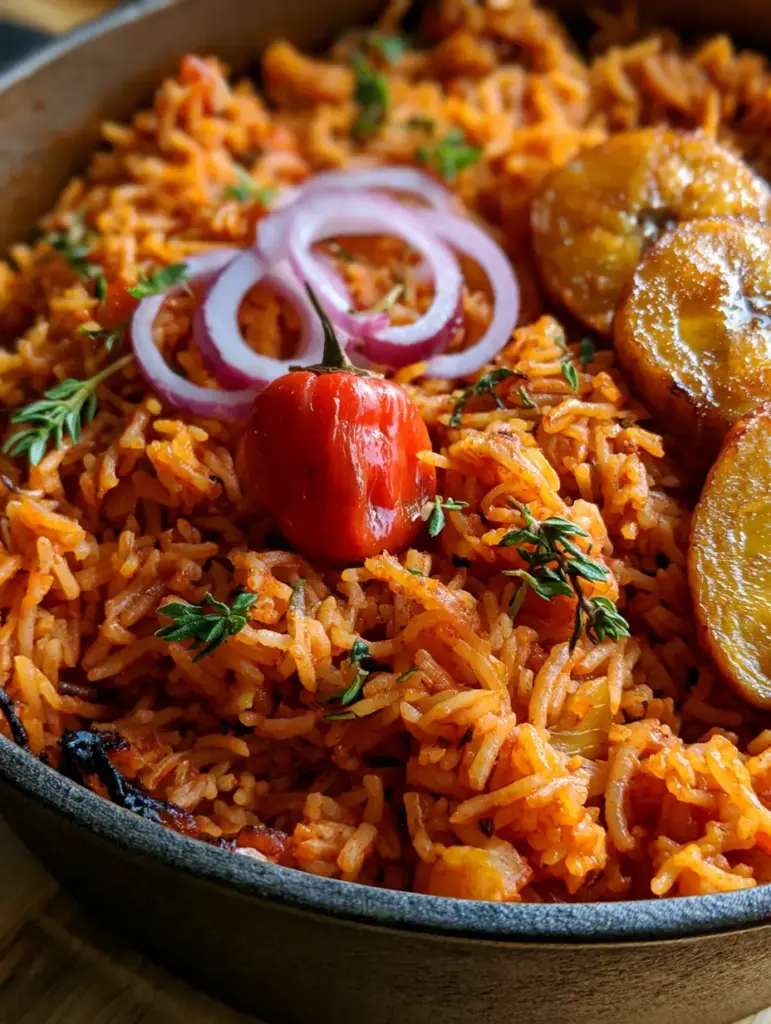
While the base fries, rinse your long-grain parboiled rice in cold water at least three times to remove excess starch. For the best Jollof rice texture, parboil the rice for 5 minutes in boiling water, then drain and rinse again. This “double-rinse” technique ensures those slender, perfectly separated grains seen in the professional photography.
4. The Infusion and Steaming Phase
Add the concentrated pepper reduction to the fried tomato paste. Pour in the stock, add bay leaves, fresh thyme sprigs, and salt. Bring to a boil, then fold in the parboiled rice. The liquid should just barely cover the rice. Cover the pot tightly with a layer of aluminum foil, then the lid. This traps the “steam vapors” mentioned in our blueprint, cooking the rice through heat and pressure rather than boiling.
5. Achieving the Smoky “Party” Finish
Turn the heat to the lowest setting and let the rice steam for 20-30 minutes. Do not peek! In the last 5 minutes, turn the heat up slightly. You should hear a faint crackling sound. This creates the slight charred edges at the bottom of the pot, providing that authentic smoky flavor. Once finished, fluff gently with a wooden spoon.
6. Preparing the Caramelized Plantains
While the rice rests, peel and slice your ripe plantains into thick diagonals. Fry them in a shallow pan with oil until they are golden-brown and glistening. These spicy fried plantains style sides add a wonderful sweetness to the meal.
Expert Tips for Visual and Flavor Success
- The Foil Trick: Never skip the aluminum foil. The foil ensures the steam stays inside, which is the only way to get the rice tender without it becoming soggy.
- Don’t Over-Stir: Once you’ve folded the rice into the sauce, leave it alone. Excessive stirring breaks the grains and releases starch.
- Visual Cues: Look for the “glisten.” If the rice looks dull, it needs a touch more oil or steam. The grains should look moist but remain individual.
- The Garnish: Always place the whole red scotch bonnet and the raw onion rings on top for the last 2 minutes of steaming. This softens them slightly while maintaining their vibrant color.
Storage, Reheating, and Freezing Advice
Riz Jollof Nigérian actually tastes better the next day as the flavors continue to marry. Store leftovers in an airtight container in the refrigerator for up to 4 days. When reheating, add a tablespoon of water and microwave with a loose lid, or steam on the stovetop to restore moisture to the grains.
This dish freezes exceptionally well. Place cooled rice in freezer-safe bags for up to 3 months. To serve, thaw overnight in the fridge and reheat thoroughly. If you enjoy plantain, it is best to fry fresh plantains rather than freezing them, or try this plantain balls recipe for a fun alternative.
Perfect Pairings for Your Nigerian Feast
While this rice is a star on its own, it is traditionally served with proteins and salads. Consider pairing it with a pan-seared rainbow trout for a lighter fusion twist, or keep it classic with grilled chicken. For a refreshing side, the acidity in shrimp and avocado bowls cuts through the richness of the Jollof beautifully. If you are looking for a plant-based version, check out our guide to vegan Jollof rice recipe.
Frequently Asked Questions
Absolutely! Simply swap the chicken stock for a rich vegetable broth. The core flavors of peppers, onions, and tomato paste are naturally plant-based.
You can achieve this by using a cast-iron pot and allowing the bottom layer of rice to slightly burn (char) at the end of cooking. This ‘bottom-burn’ infuses the entire pot with a smoky essence.
It has a kick, but it is manageable. The heat comes from the scotch bonnets. You can adjust the spice level by removing the seeds from the peppers or using fewer peppers in the base.
Long-grain parboiled rice is the gold standard for Nigerian Jollof. It has a lower starch content than jasmine or basmati, which helps the grains remain separate and slender during the long steaming process.
Mushy rice is usually caused by using too much water or stirring too frequently. Jollof should be cooked primarily by steam. Use the aluminum foil seal to trap moisture so you don’t need to add excess liquid.
Authentic Riz Jollof Nigérian Recipe Card
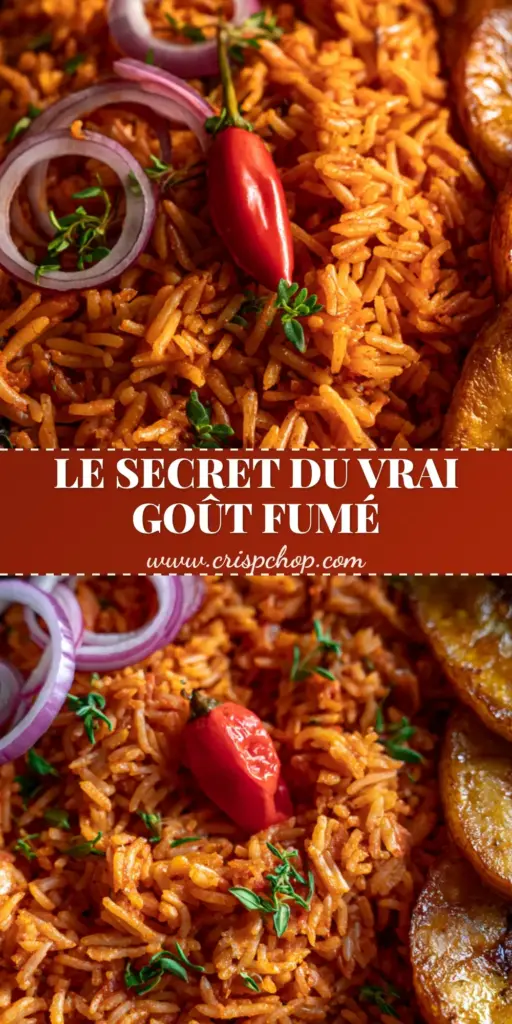
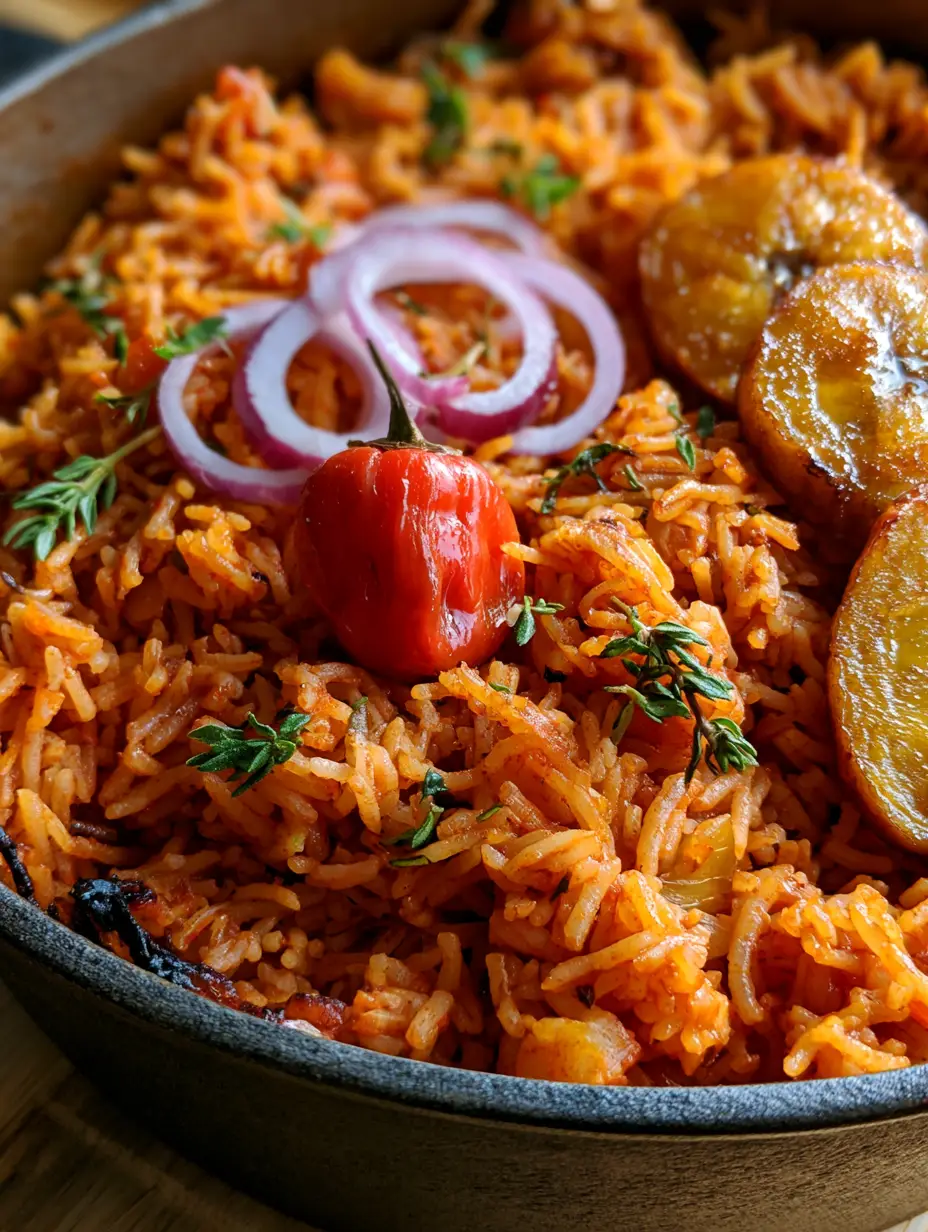
Riz Jollof Nigérian: The Ultimate Smoky Party-Style Rice Recipe
Ingredients
Equipment
Method
- Blend red bell peppers, one onion, and two scotch bonnets until smooth. Simmer in a pot until the liquid reduces by half and thickens.
- In a cast iron pot, heat oil and sauté remaining sliced onions. Add tomato paste and fry for 8 minutes until it loses its tartness and turns dark red.
- Add the pepper reduction, stock, thyme, and bay leaves to the pot. Stir in the parboiled rice. Cover with foil and a lid.
- Cook on low for 25 minutes. Increase heat for the final 5 minutes to create the smoky charred bottom. Garnish with onion rings and a whole scotch bonnet.
- Slice plantains and fry in oil until golden brown and caramelized. Serve alongside the fluffed rice.
Notes
The 'bottom burn' is intentional and provides the authentic smoky flavor.
Bring the Taste of Lagos to Your Kitchen
Mastering the Riz Jollof Nigérian is a rite of passage for any home cook interested in global flavors. The combination of the smoky charred bottom, the spicy pepper base, and the sweet caramelized plantains creates a balanced flavor profile that is truly world-class. We hope this guide helps you achieve that perfect top-down, steaming pot look that tastes even better than it looks.
Did you manage to get that perfect smoky “bottom-burn”? We would love to hear about your Jollof journey! Leave a comment below, sign up for our newsletter for more West African delicacies, and don’t forget to share your creations and pin this recipe to Pinterest.