When the morning light hits a fresh catch, there is a specific, iridescent magic to the scales of a rainbow trout. Capturing that shimmering beauty on a plate is usually reserved for a perfectly baked rainbow trout dinner, but today, we are translating that aquatic elegance into the world of confectionery. These Rainbow Trout Cookies are not just your average sugar cookies; they are a masterclass in wet-on-wet royal icing techniques and edible artistry.
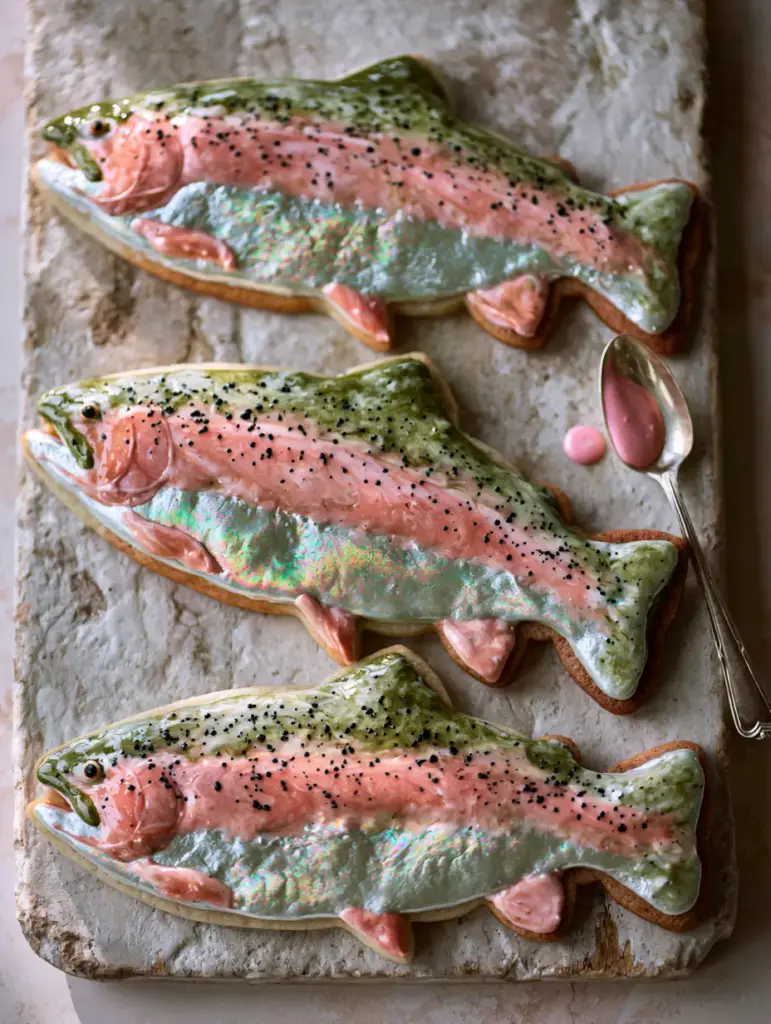
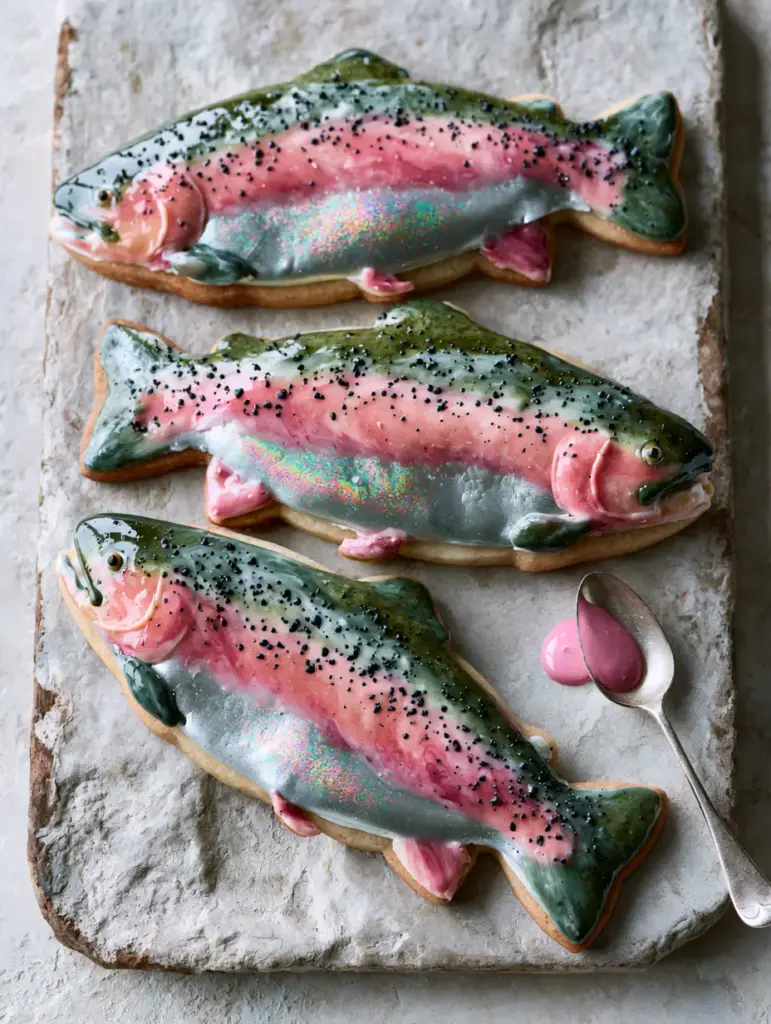
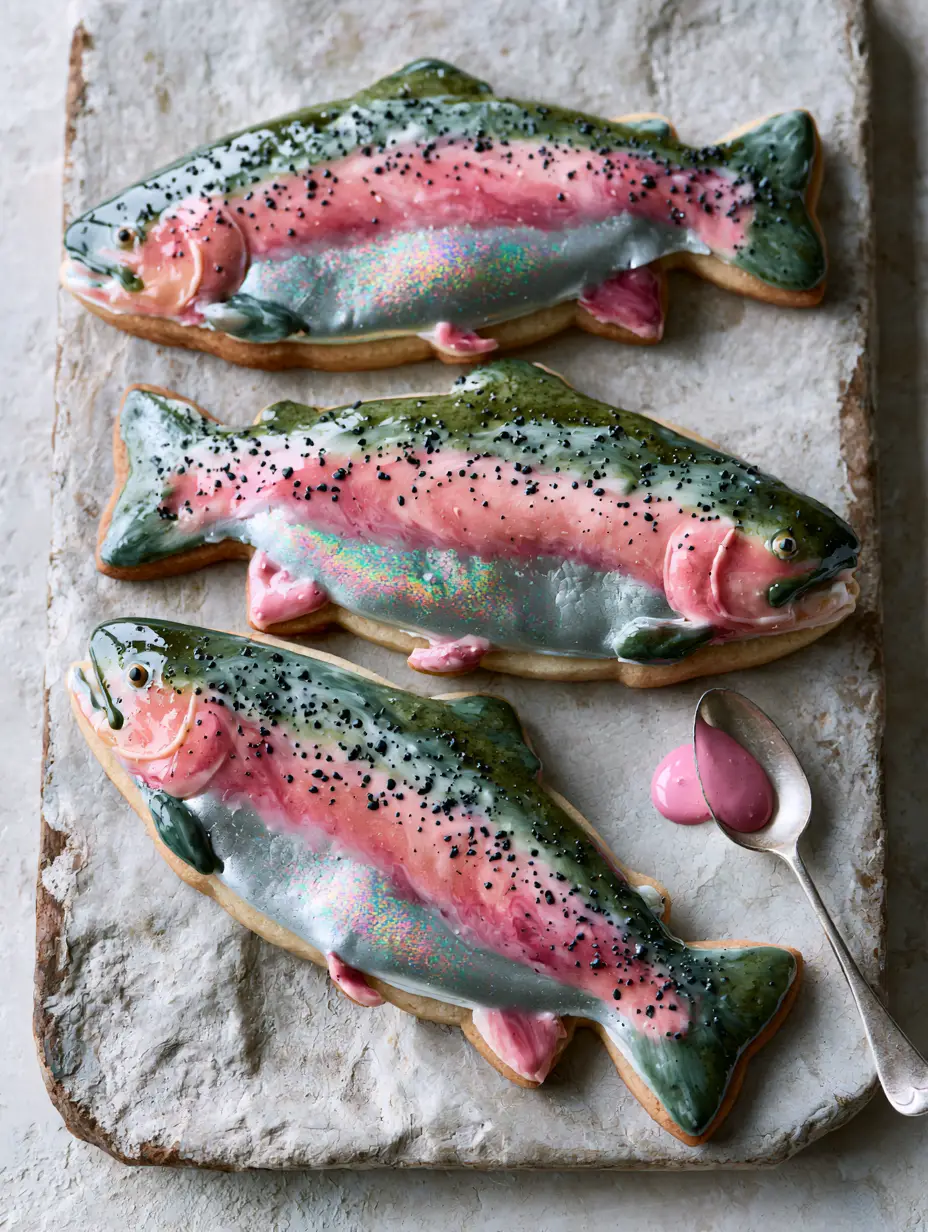
Imagine a buttery, crisp sugar cookie base that holds its shape perfectly, topped with a glossy, marbled finish that looks like it was plucked straight from a mountain stream. With a moss-green back, a dusty rose lateral stripe, and a pearlescent silver belly, these treats are the ultimate showstopper for a mini-wedding menu (coming soon) or a sophisticated outdoor-themed gathering. We are going to use professional-grade techniques like luster dust shimmering and hand-painted ink speckling to achieve a forensic level of visual accuracy.
Whether you are a seasoned baker or a curious beginner looking to level up your decorating game, this guide provides the culinary science and artistic cues needed to succeed. From the snap of the royal icing to the buttery crumb of the cookie, every element is designed to impress. Grab your fish-shaped cutters and a rainbow trout mug of coffee, and let’s dive into the details.
Why These Aquatic Sugar Cookies Are a Total Catch
- No-Spread Cookie Base: We use a high-fat, chilled-dough method to ensure your fish shapes stay sharp and defined during the bake.
- Realistic Marbled Finish: The wet-on-wet royal icing technique creates a seamless, glossy transition between the sage green and dusty rose pink colors.
- Hand-Painted Detail: Tiny black ink speckles and silver luster dust provide a professional, artisanal look that mimics the natural shimmer of trout scales.
- Perfect Texture Balance: A soft, buttery bite paired with the satisfying “snap” of dried, smooth royal icing.
The Essential Pantry Staples for Realistic Fish Cookies
Unsalted Butter (226g / 2 sticks): This provides the foundational flavor and the necessary fat for a tender crumb. Ensure it is slightly cool but pliable to prevent the dough from becoming too greasy.
Granulated Sugar (200g / 1 cup): Beyond sweetness, sugar aids in the browning process, giving our trout a golden, “baked-from-the-stream” base. Use a fine-grain sugar for the smoothest dough texture.
Large Egg (50g): The egg acts as the primary emulsifier, binding the fats and flours together for structural integrity. Always use a room-temperature egg for better incorporation into the creamed butter.
All-Purpose Flour (375g / 3 cups): This provides the gluten structure needed to support the intricate fish shapes. Measure by weight if possible to avoid a dry, crumbly cookie.
Meringue Powder (30g / 3 tbsp): This is the secret to a stable, glossy royal icing that dries hard. It allows us to achieve that professional “wet” look without the food safety concerns of raw egg whites.
Gel Food Coloring: You will specifically need moss green (sage), dusty rose, and pearl white. Gel is superior to liquid coloring as it doesn’t thin out the icing consistency.
Edible Black Ink or Gel: For those signature trout speckles. We will use a “flicking” technique with a stiff brush to create the organic, tiny dots seen in the visual blueprint.
Silver Luster Dust: This provides the “pearlescent silver belly” shimmer. It is applied once the icing has set to catch the light beautifully.
Must-Have Equipment for Decorating Success
To achieve the macro-level detail of our Rainbow Trout Cookies, you will need a few specific tools. A set of fish-shaped cookie cutters is essential; look for one with a curved body to mimic the movement of a swimming trout. You will also need several 12-inch (30cm) piping bags to handle the different icing colors simultaneously.
A scribe tool or a simple toothpick is the most important instrument for the marbling process. This allows you to blend the sage green icing into the rose-pink stripe while the icing is still fluid. Finally, a small, food-safe fan brush is perfect for applying the silver luster dust and flicking the black ink speckles across the top of the cookies.
Crafting the Perfect No-Spread Cookie Base
Creaming the Butter and Sugar
In a large bowl, cream together the 1 cup (226g) of butter and 1 cup (200g) of sugar. You are looking for a pale, fluffy texture, which usually takes about 3 minutes of high-speed mixing. This aeration is what creates the “buttery sugar cookie” mouthfeel without needing chemical leaveners that cause spreading.
Incorporating the Dry Ingredients
Slowly add the egg and a teaspoon of vanilla extract. Once combined, fold in the 3 cups (375g) of flour and a pinch of salt. Mix until a cohesive dough forms; it should be soft but not sticky to the touch. Wrap the dough in plastic and chill for at least 1 hour to stabilize the fats.
Cutting and Baking the Fish Shapes
Roll the dough out to a 1/4 inch (6mm) thickness on a lightly floured surface. Use your fish cutters to stamp out shapes and place them on a parchment-lined baking sheet. Bake at 350°F (175°C) for 10-12 minutes. Look for the visual cue: the edges should be just barely golden, while the center remains pale and set.
The Art of the Wet-on-Wet Royal Icing Technique
Achieving the 15-Second Consistency
Mix your 4 cups (500g) of powdered sugar, 3 tbsp (30g) meringue powder, and 1/3 cup (80ml) of warm water. Divide the icing into three bowls. Tint one moss green, one dusty rose pink, and leave one pearl white. Each color must be “15-second consistency”—meaning a line drawn in the icing disappears in exactly 15 seconds.
The Marbling and Swirling Process
Pipe the moss green icing along the “back” of the fish and the pearl white along the “belly.” Immediately pipe a thick line of dusty rose pink through the center. While all three are still wet, use your scribe tool to swirl the edges where the colors meet. This creates the realistic marbled transition seen in the trout’s natural coloring.
Adding the Forensic Details
Allow the cookies to dry for at least 4 hours. Once the surface is matte and firm, mix a tiny drop of silver luster dust with a drop of vodka or lemon extract. Brush this over the white belly area for an iridescent shimmer. Dip a stiff brush into black food coloring and “flick” the bristles over the green back to create the tiny black ink speckles.
Expert Tips for Professional Results
- The Humidity Factor: Royal icing is sensitive to moisture. If you are baking on a rainy day, use slightly less water in your icing to ensure it dries with a “glossy, wet finish” rather than becoming pitted.
- Avoid Over-Mixing: When adding flour to your cookie dough, stop as soon as the white streaks disappear. Over-mixing develops gluten, which can make your fish cookies tough rather than tender.
- The Scribe Secret: Always keep a damp paper towel nearby to wipe your scribe tool between swirls. A clean tool ensures the colors stay vibrant and don’t become “muddy.”
- Natural Lighting: To check your work, look at the cookies under a side light (like a window). This will help you see if the luster dust is evenly distributed across the pearlescent belly.
Storage and Preservation of Your Edible Art
Once the royal icing has fully cured (usually 12-24 hours), these cookies are surprisingly hardy. Store them in a single layer in an airtight container at room temperature. They will remain fresh and delicious for up to one week.
Avoid refrigerating decorated cookies, as the condensation can cause the royal icing to “bleed” or the silver luster dust to lose its shimmer. If you need to prep in advance, you can bake the plain cookie bases and freeze them for up to 3 months, thawing them completely before you begin the decorating process.
What to Pair with These Artistic Treats
These cookies are the star of the show, but they pair beautifully with a variety of beverages. For a refreshing afternoon snack, serve them alongside a tall glass of classic lemonade. The tartness of the lemon cuts through the sweet royal icing perfectly.
If you are hosting an evening event, consider serving these alongside strawberry rum cocktails. The pink hues of the cocktail mirror the dusty rose stripe on the trout cookies, creating a cohesive visual theme for your party. For a more tropical vibe, a side of mango ice cream provides a creamy contrast to the crisp sugar cookie base.
Frequently Asked Questions
It is not recommended. Liquid coloring adds too much moisture, which can ruin the ’15-second consistency’ of your royal icing. Gel food coloring is much more concentrated and won’t thin out the icing.
Mix silver luster dust with a high-percentage alcohol like vodka or a clear lemon extract. Brush it onto the white icing area once it is matte and dry to the touch for a shimmering, iridescent finish.
The key is chilling the dough twice: once after mixing and again for 15 minutes after you have cut out the fish shapes. Using a recipe without leaveners like baking powder also prevents the cookies from puffing and spreading.
For the surface to be firm enough for luster dust, wait 4-6 hours. For the cookies to be hard enough to stack or package, allow them to dry at room temperature for a full 24 hours.
Use a stiff food-safe brush or a clean toothbrush. Dip it into black food gel diluted with a drop of water, then pull your thumb across the bristles to flick the ink onto the cookies. Practice on a piece of paper first!
The Ultimate Rainbow Trout Cookies Recipe
Rainbow Trout Cookies: How to Bake Artistic Fish-Shaped Sugar Cookies
Ingredients
Equipment
Method
- Cream butter and sugar until fluffy. Add egg and vanilla, then slowly incorporate flour and salt.
- Wrap dough in plastic and chill for at least 1 hour to prevent spreading during the bake.
- Roll dough to 1/4 inch thickness and use fish cutters to stamp out shapes.
- Bake at 350°F (175°C) for 10-12 minutes until edges are barely golden.
- Pipe green on the back, white on the belly, and a rose stripe in the middle while all colors are wet.
- Use a scribe tool to swirl the colors together where they meet for a realistic trout pattern.
- Once dry, apply silver luster dust to the belly and flick black ink speckles over the back.
Notes
If icing is too thick, add water one drop at a time.
Join Our Community of Creative Bakers!
Creating these Rainbow Trout Cookies is a rewarding journey into the world of edible art. We would love to see your “fresh catch!” Tag us in your photos and share your marbling success stories in the comments below. If you enjoyed this forensic deep-dive into cookie decorating, be sure to sign up for our newsletter for more visual recipe blueprints.
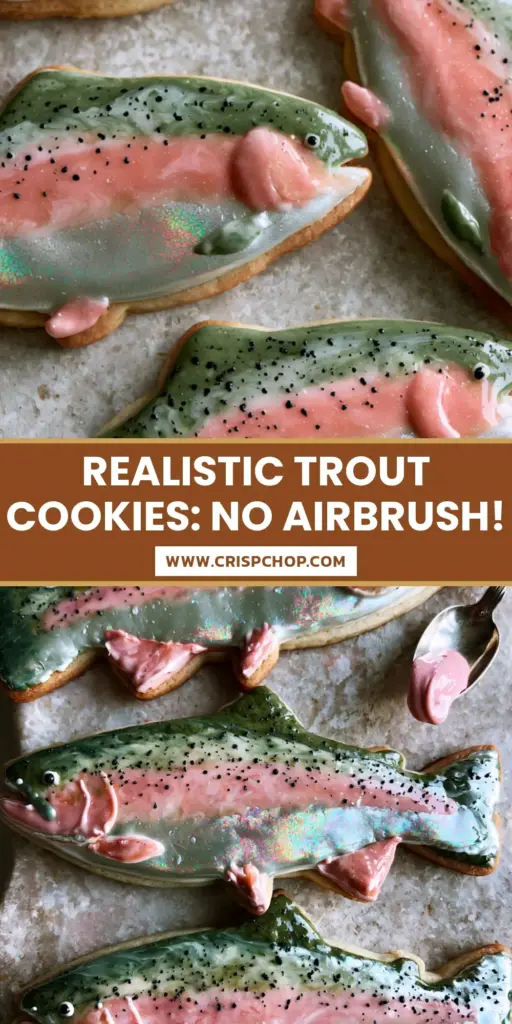
Don’t forget to save this recipe to your “Baking Inspiration” board on Pinterest so you can find it the next time you need a stunning, nature-inspired dessert!