There is a specific, primal magic that happens when high heat meets a rustic iron pan, and nowhere is this more evident than in the realm of Pakistani foods. The Authentic Chicken Karahi is the crown jewel of this culinary tradition, defined by its lack of water, its reliance on fresh ginger, and that unmistakable shimmering oil that clings to every succulent piece of meat.
This isn’t just a curry; it is a high-velocity stir-fry technique known as bhuna. By using the searing heat of a traditional black iron karahi, we transform simple vine-ripened tomatoes and fresh aromatics into a thick, vibrant red-orange masala that boasts a rich, glossy sheen.
In this guide, we are recreating the exact visual and sensory experience of a roadside dhaba, from the dense garnish of paper-thin ginger to the sharp bite of green bird’s eye chilies. Prepare your kitchen for the intoxicating aroma of cracked black pepper and toasted cumin as we master this staple of Pakistani foods.
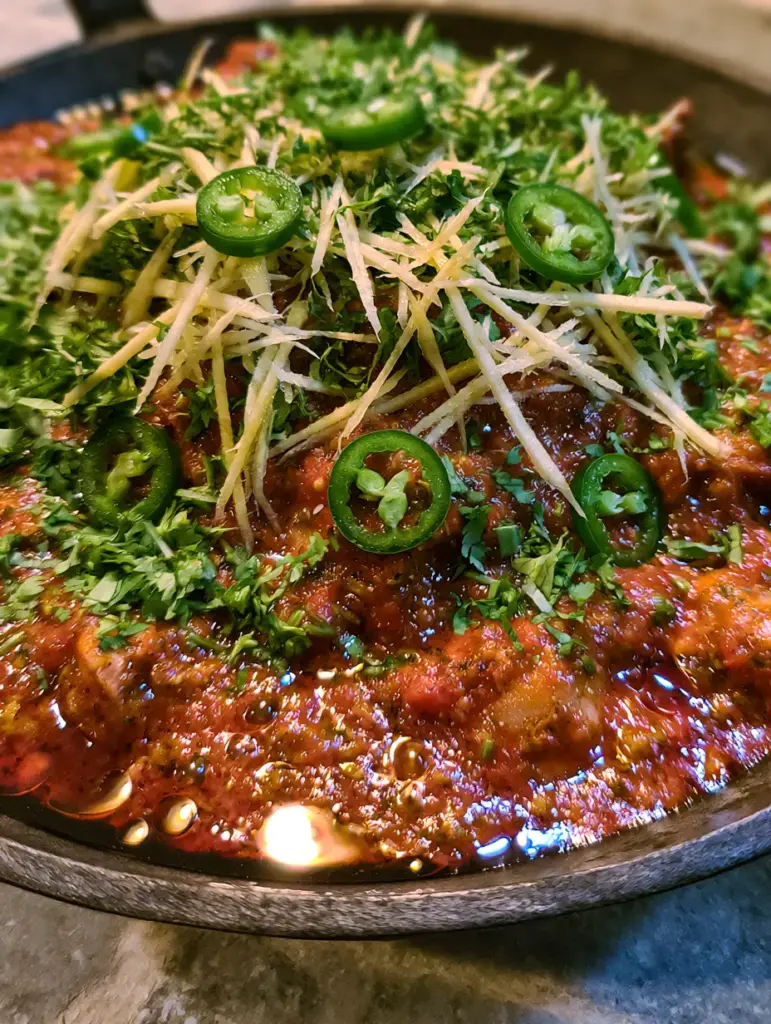
Why This Authentic Pakistani Chicken Karahi Works
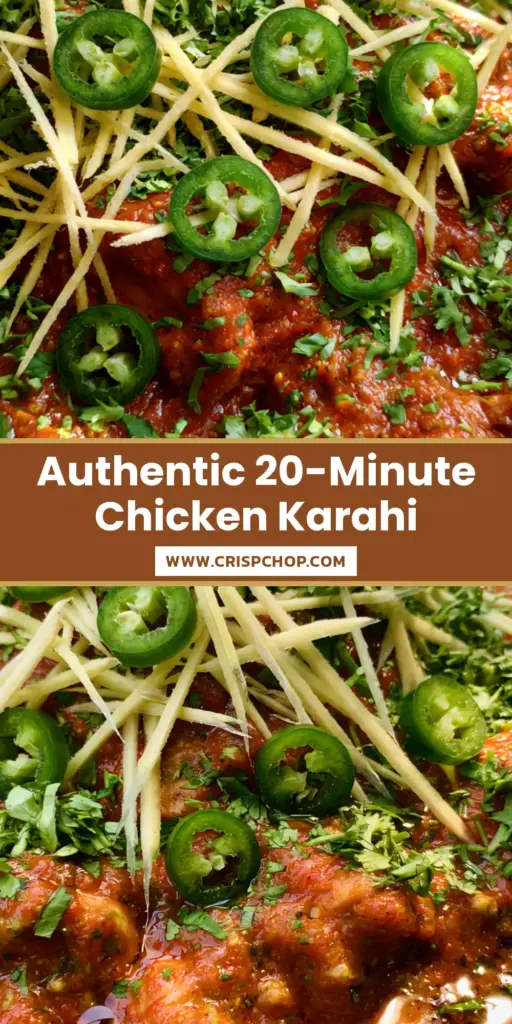
- Visual Texture: The dish features a thick, ginger-forward gravy with visible droplets of oil, exactly as seen in professional Pakistani food photography.
- Searing Technique: Using bone-in chicken thighs ensures the meat remains succulent even under the intense heat required for a proper sear.
- Aromatic Depth: The layering of ginger—both as a cooked paste and a raw julienned garnish—provides a multi-dimensional heat that defines the Karahi profile.
- Cast Iron Science: The use of a dark iron pan facilitates the Maillard reaction, giving the tomato base its deep, concentrated red-orange hue.
The Anatomy of Pakistani foods: Key Ingredients
To achieve the “Forensic Visual Accuracy” of this dish, each ingredient serves a structural and aesthetic purpose. We are building a sauce from the ground up without the use of onions, which is the hallmark of a true Peshawari-style Karahi.
The Protein: Seared Chicken Thighs
2 lbs (900g) of chicken thighs, skinless but bone-in, cut into small, uniform pieces. The bone marrow leeches into the sauce during the high-heat cook, providing a body and richness that boneless meat simply cannot replicate.
The Base: Vine-Ripened Tomatoes
6 large (approx. 700g) tomatoes, halved. These provide the entire liquid base for the recipe; as they break down against the iron, their sugars caramelize into that vibrant red-orange masala sauce described in our visual blueprint.
The Fat: Ghee or Neutral Oil
1/2 cup (120ml) of high-smoke point oil or ghee. To achieve the “shimmering oil” and “glossy sheen” required for authentic Pakistani foods, a generous amount of fat is necessary to emulsify the spices and prevent the ginger from burning.
The Aromatics: Ginger and Chilies
4 inches (10cm) of fresh ginger, divided. Half is pounded into a coarse paste with garlic, while the other half is sliced into “long, paper-thin julienned” strips for that signature dense garnish.
8-10 green bird’s eye chilies. These are sliced into rounds to provide both a vibrant green visual contrast and a sharp, clean heat that cuts through the richness of the tomato gravy.
The Spice Blend
1 tbsp (6g) cracked black pepper, 1 tsp (2g) red chili flakes, 1 tsp (2g) turmeric, and 1 tbsp (6g) toasted cumin powder. The cracked black pepper is added at the very end to maintain its volatile oils and pungent aroma.
Essential Equipment for the Perfect Karahi
To match the “rustic black iron karahi pan” in our blueprint, a carbon steel or cast iron wok is your best substitute if you don’t own a traditional Karahi. The thin walls and heavy bottom allow for rapid temperature changes and “Wok Hei” (breath of the pan).
You will also need a heavy-duty metal spatula. In Pakistani foods, the spatula isn’t just for stirring; it’s used to mash the tomatoes directly against the sides of the pan to create a smooth, thick emulsion.
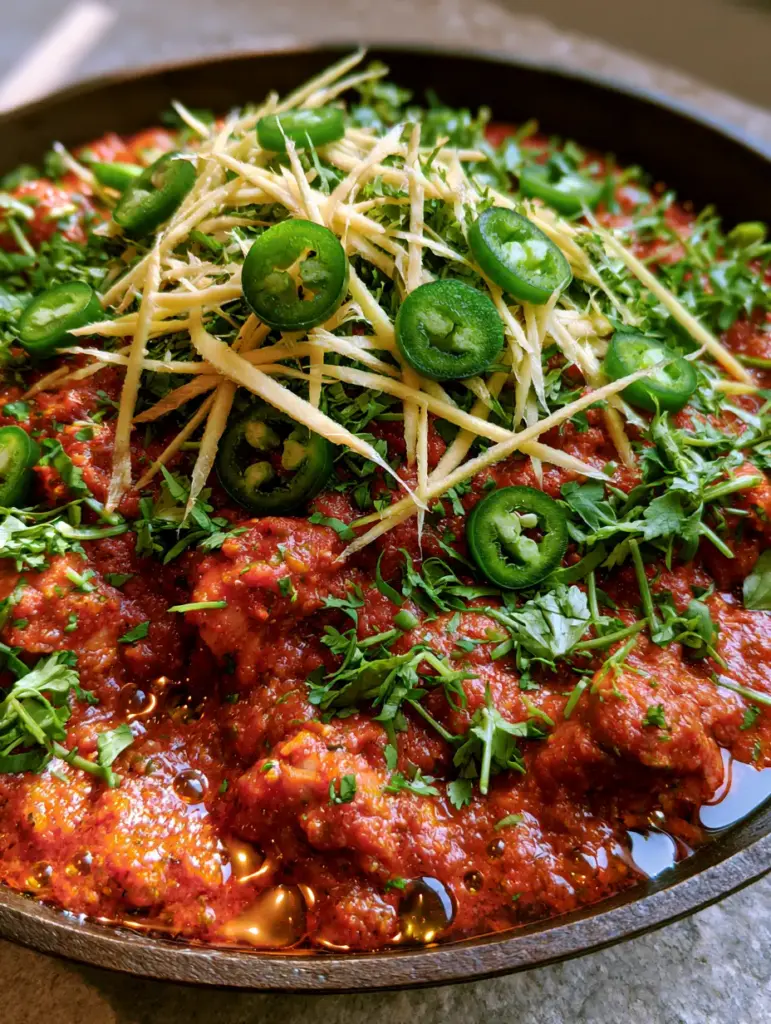
Step-by-Step Instructions: Mastering the Bhuna
Phase 1: Searing for Success
Place your black iron karahi over high heat until it begins to wisps with smoke. Add the 1/2 cup (120ml) of oil, swirling to coat the sides. Carefully drop in the chicken pieces.
Visual Cue: Do not crowd the pan. Let the chicken sit undisturbed for 2-3 minutes until a deep golden-brown crust forms on the edges. This sear is essential for the “succulent and fully coated” appearance later on.
Phase 2: The Tomato Breakdown
Add the ginger-garlic paste and sauté for 60 seconds until fragrant. Place the halved tomatoes skin-side up directly on top of the chicken. Cover the pan for 5 minutes.
The steam will loosen the tomato skins. Use tongs to peel away the skins and discard them. This ensures your Pakistani foods have a “thick, vibrant” consistency without any tough, papery bits.
Phase 3: The Intense Reduction (Bhuna)
Turn the heat to its maximum setting. Use your spatula to break the tomatoes down into the oil. Add the turmeric, chili flakes, and salt. Stir constantly as the moisture evaporates.
Sensory Cue: Watch for the “oil separation.” You will know the gravy is ready when the thick masala begins to clump together and “droplets of oil” start shimmering at the edges of the pan, creating that glossy sheen.
Phase 4: Finishing Touches
Lower the heat slightly and stir in the toasted cumin and the 1 tbsp (6g) of cracked black pepper. Toss in half of your sliced green bird’s eye chilies to infuse their flavor into the sauce for the final 2 minutes of cooking.
Artful Layering: The Final Garnish
Authentic Pakistani foods are defined by their garnishes. Turn off the heat. The residual heat of the iron pan will gently soften the raw toppings without losing their vibrant colors.
Layer the “long, paper-thin julienned fresh ginger” in a dense pile in the center. Scatter the remaining “vibrant rounds of sliced green chilies” and a “generous scatter of bright green cilantro leaves” over the top. The contrast of the orange sauce, white ginger, and green herbs is the visual hallmark of this dish.
Expert Tips for Success
- Never Add Water: The moisture must come entirely from the tomatoes. Adding water will dilute the flavor and prevent the oil from reaching that shimmering, glossy state.
- The Ginger Ratio: If you think you have enough ginger, add more. Authentic Karahi relies on ginger for its primary heat profile rather than just chilies.
- Pan Selection: If you use a non-stick pan, you will never achieve the concentrated tomato sugars found in traditional Pakistani foods. Stick to iron or stainless steel.
- Pepper Freshness: Always use freshly cracked black pepper. Pre-ground pepper lacks the floral notes required to balance the heavy tomato base.
Storage, Reheating & Freezing
Chicken Karahi is even better the next day as the spices continue to meld. Store in an airtight container in the refrigerator for up to 3 days. When reheating, add a splash of water to the pan to loosen the gravy, but cook it down until the oil separates again to restore the original texture.
While you can freeze this dish for up to 2 months, the texture of the “long julienned fresh ginger” will suffer. It is best to freeze the base and add fresh garnishes upon reheating.
What to Serve With Authentic Karahi
This dish is traditionally wiped up with hot, bubbly Garlic Naan or Tandoori Roti. The thick gravy is designed to be scooped, not poured. If you are looking for a lighter accompaniment, consider a side of fresh herb salad to provide a zesty acid hit.
For a complete feast of Pakistani foods, pair this with a cooling yogurt raita or a glass of homemade lemonade to balance the heat of the bird’s eye chilies. If you enjoy spicy poultry, you might also find inspiration in our spicy Korean chicken guide for your next dinner party.
Frequently Asked Questions
While a dark iron karahi is traditional for heat distribution, a heavy stainless steel wok or a cast iron skillet are the best home alternatives to achieve the same sear.
The heat primarily comes from fresh ginger and green bird’s eye chilies. You can control the spice level by deseding the chilies, but the ginger remains essential for the authentic flavor profile.
A true Karahi is defined by its cooking vessel (the iron pan), a base made purely of tomatoes and ginger without onions, and the ‘bhuna’ process where the oil separates from the masala.
Authentic Peshawari or Northern-style Karahis do not use onions. This allows the bright, acidic flavor of the tomatoes and the pungent heat of the ginger to be the stars of the dish.
This is a sign of a perfectly cooked Pakistani dish. The oil separation indicates that the water has evaporated from the tomatoes, leaving behind a concentrated, shelf-stable, and flavor-rich masala.
Authentic Pakistani Chicken Karahi Recipe
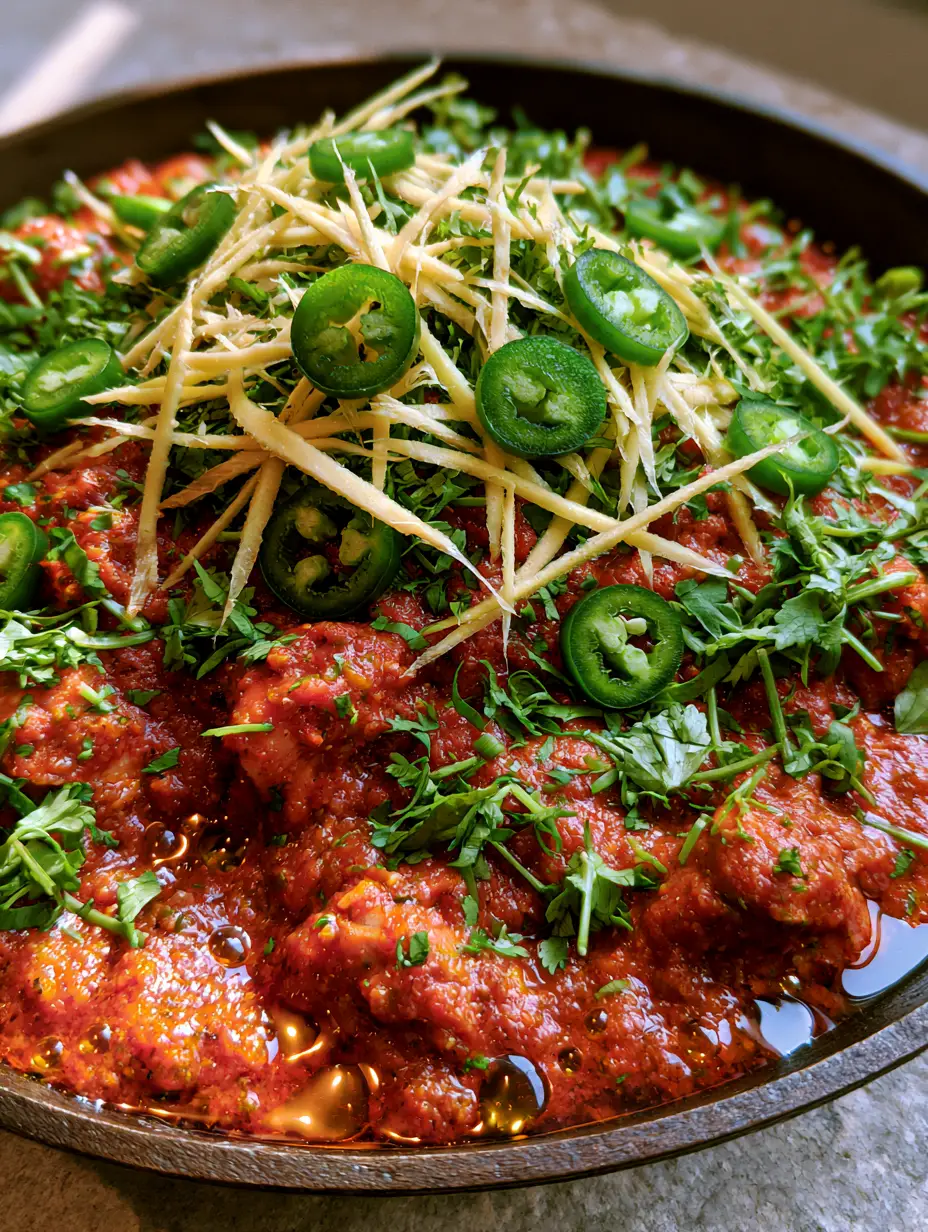
Pakistani foods: Authentic Chicken Karahi in a Cast Iron Pan
Ingredients
Equipment
Method
- Heat oil in the iron karahi over high heat. Add chicken pieces and sear for 5 minutes until a deep golden-brown crust forms.
- Add ginger-garlic paste and halved tomatoes (skin side up). Cover and steam for 5 minutes until skins loosen. Remove and discard skins.
- Uncover and mash tomatoes into the oil. Add spices and stir constantly on high heat until the oil separates and shimmers (the bhuna stage).
- Stir in cracked black pepper and half the chilies. Turn off heat and top with a dense layer of julienned ginger, remaining chilies, and cilantro leaves.
Notes
Ensure the oil visibly separates from the tomato masala before finishing.
Share Your Culinary Journey!
Mastering the art of Pakistani foods is a rewarding journey into the heart of spice and heat. If you recreated this Chicken Karahi, we want to see your shimmering oil and julienned ginger! Leave a comment below or share your photos on Pinterest. Don’t forget to subscribe to our newsletter for more deep dives into global culinary techniques.