Mastering the Nobu Tuna Tartare at home is the ultimate flex for any home cook looking to impress. This iconic dish, popularized by the legendary chef Nobu Matsuhisa, is a masterclass in balance, combining the buttery richness of Ahi tuna with the creamy depth of mashed avocado and a sharp, zingy ginger soy glaze. Whether you are hosting a high-end dinner party or simply craving a restaurant-quality appetizer, this recipe delivers that signature ruby-red aesthetic and melt-in-your-mouth texture.
The beauty of a Nobu Tuna Tartare lies in its architectural elegance. By stacking perfectly diced sushi-grade fish atop a structured base of seasoned avocado, you create a visual centerpiece that belongs on a gallery wall—or at least a very high-engagement Pinterest board. This isn’t just a tuna tartare; it is a sensory experience defined by umami, acidity, and crunch.
Why This Restaurant-Style Tuna Tartare Works
- Textural Contrast: The “snap” of thinly sliced red radishes and toasted sesame seeds perfectly offsets the soft, hand-diced Ahi tuna cubes.
- Umami Depth: A signature ginger soy glaze provides a glossy, dark-amber finish that ties the oceanic flavors of the tuna to the earthy avocado.
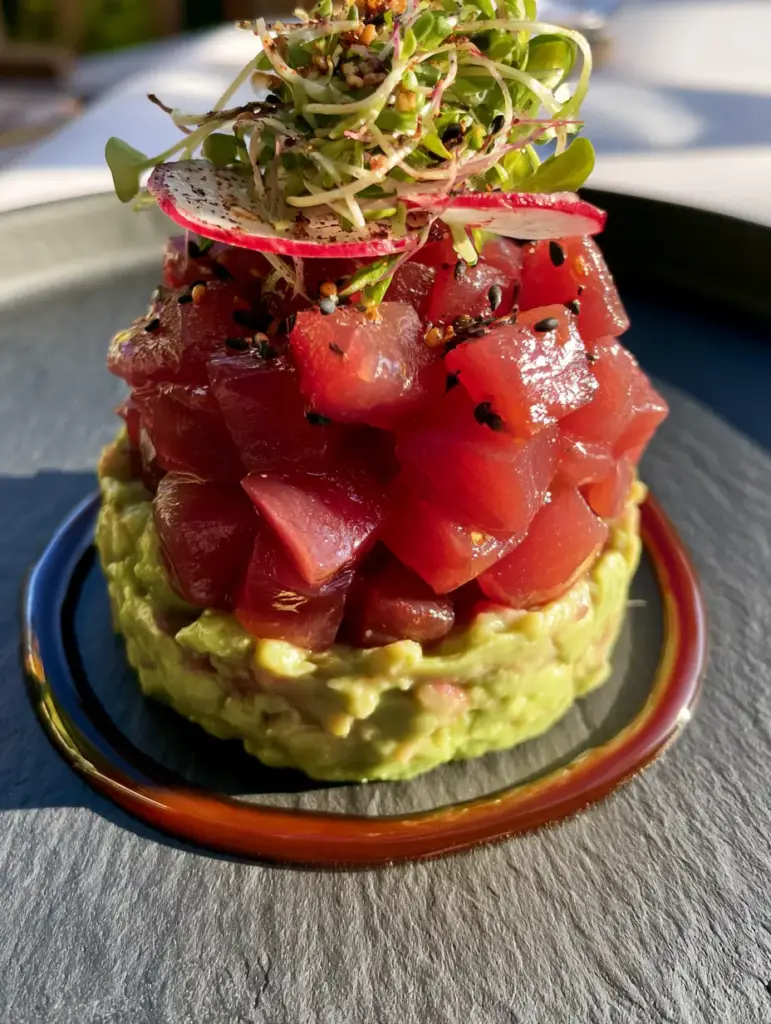
- Vibrant Visuals: The pale-green avocado base creates a stunning color block against the ruby-red tuna, crowned with fresh micro-greens for a professional plating look.
- Simple Sophistication: While it looks like it came from a Michelin-starred kitchen, the actual preparation requires zero cooking—just precision cutting and assembly.
The Anatomy of a Perfect Nobu-Inspired Plate
To recreate the Nobu Tuna Tartare, you must focus on the quality of your raw materials. Unlike a homemade tuna helper which relies on pantry staples, this dish demands the freshest sushi-grade Ahi (Yellowfin or Bigeye) tuna you can find. Look for tuna that has a deep, consistent color without any dark spots or “sinewy” white lines.
The secondary star is the mashed ripe avocado. You want avocados that are soft enough to mash into a smooth paste but firm enough to hold their shape when molded. This layer acts as the foundation for the entire stack. Much like the precision required for famous foods in France, Japanese-Peruvian fusion (Nikkei) cuisine thrives on the delicate balance of fats and acids.
Essential Ingredients for Success
1 lb (450g) Sushi-Grade Ahi Tuna: The centerpiece. Hand-diced into 1/4-inch cubes to maintain a distinct “bite” rather than a mushy texture.
2 Large Ripe Avocados: Mashed with a hint of lime and salt to create a sturdy, pale-green base layer.
2 tbsp (30ml) Ginger Soy Glaze: A reduction of soy sauce, fresh grated ginger, and a touch of mirin for that glossy, dark-amber sheen.
1 tsp (5ml) Toasted Sesame Oil: Used to lightly coat the tuna, adding a nutty aroma and a glistening finish.
Garnish Components: Micro-greens, paper-thin red radishes, toasted black and white sesame seeds, fresh chives, and lime zest for a bright, citrusy aromatic finish.
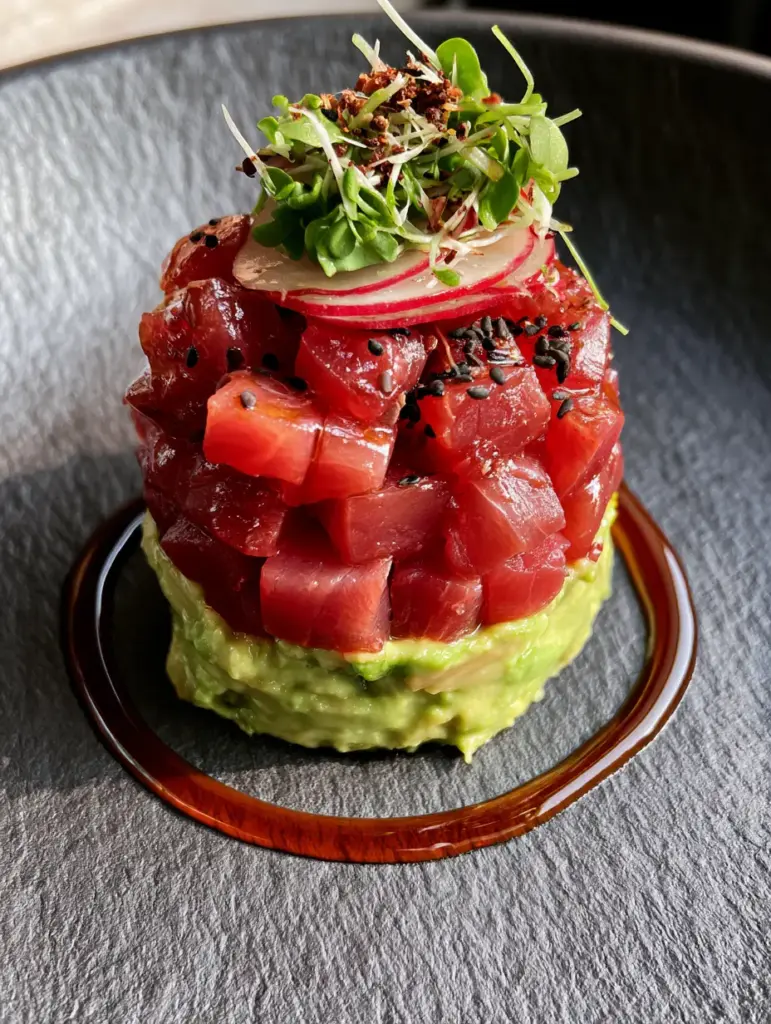
Step-by-Step Assembly: The Professional Way
Preparing the Tuna and Avocado Layers
Begin by using a very sharp knife to dice your cold Ahi tuna. Precision is key here; aim for uniform cubes. Place the tuna in a chilled bowl and toss gently with the toasted sesame oil. This prevents the fish from oxidizing and gives it that signature “glistening” look mentioned in our visual blueprint.
Next, mash the avocados in a separate bowl. Add a pinch of sea salt and a squeeze of lime juice. The lime is critical—it prevents browning and adds a necessary high-note to the rich fats. You are looking for a “perfectly circular, structured layer” of avocado, so keep the mash thick.
Building the Signature Stack
To achieve the professional Nobu Tuna Tartare look, use a 3-inch (7.5cm) ring mold. Place the mold in the center of a dark, textured slate-gray plate. Pack the mashed avocado into the bottom third of the mold, smoothing the top with the back of a spoon. Layer the diced tuna directly on top, pressing down very lightly so the cubes adhere to each other without losing their shape.
Carefully lift the ring mold straight up. You should be left with a clean, two-toned cylinder of avocado and ruby-red tuna. This structured plating is what separates a home cook from a chef specializing in famous gourmet dishes.
The Finishing Touches
Now, we focus on the garnishes. Place a delicate pile of micro-greens and paper-thin radish slices on the very top. Sprinkle the toasted black and white sesame seeds generously over the tuna. The contrast of the black seeds against the red fish is visually striking.
Finish by drizzling the dark-amber ginger soy reduction in a clean, purposeful circle around the base of the stack. Finally, grate fresh lime zest and chopped chives over the entire plate to add a pop of green and a burst of fragrance.
Expert Tips for the Perfect Tartare
- Keep it Cold: Chill your plate and your mixing bowls before starting. Raw fish is best served at a crisp, cool temperature to preserve the delicate fats.
- The Knife Matters: Use a non-serrated, ultra-sharp chef’s knife. A dull knife will “tear” the tuna fibers instead of slicing them, leading to a watery texture.
- Avoid Over-Mixing: When tossing the tuna with oil or glaze, be gentle. You want the cubes to remain distinct, not mashed together.
- Serve Immediately: Much like a fresh crispy southern fried shrimp dish, the textures of tartare begin to degrade the moment they are plated. The salt in the glaze will eventually “cook” the fish if left too long.
Storage, Reheating & Safety
Storage: Because this recipe uses raw, sushi-grade fish, it cannot be stored for long periods. It is best consumed within 1-2 hours of preparation. If you must prep ahead, store the diced tuna and mashed avocado in separate airtight containers in the coldest part of your fridge for no more than 4 hours.
Freezing: Do not freeze the assembled tartare. While you can buy frozen sushi-grade tuna, once it is thawed and prepared, refreezing will ruin the cellular structure of the fish and the avocado.
What to Pair With Nobu Tuna Tartare
To turn this into a full meal, consider serving it alongside a light, acidic salad like a sumac onion salad or even a traditional Turkish onion salad for a unique fusion twist. The brightness of the onions cuts through the richness of the tuna and avocado beautifully.
If you are looking for a drink pairing, a bone-dry Riesling or a crisp Japanese lager works wonders. The carbonation cleanses the palate between bites of the buttery Ahi.
Frequently Asked Questions
Yes! The ginger soy glaze can be made up to a week in advance and stored in the refrigerator. In fact, letting it sit helps the ginger flavor deepen.
The acid from the lime juice is the key. Ensure you mix the lime juice thoroughly into the mashed avocado and assemble the dish as close to serving time as possible.
Yes, ‘Ahi’ is the Hawaiian name for both Yellowfin tuna and Bigeye tuna. Both are excellent choices for this tartare recipe.
Sushi-grade is a marketing term indicating the fish was flash-frozen at extremely low temperatures to kill parasites, making it safe for raw consumption. Always buy from a reputable fishmonger.
You can create a DIY mold by cutting the top and bottom off a clean tuna can or a plastic sour cream container. Just be careful of sharp edges!
The Ultimate Nobu-Style Tuna Tartare Recipe
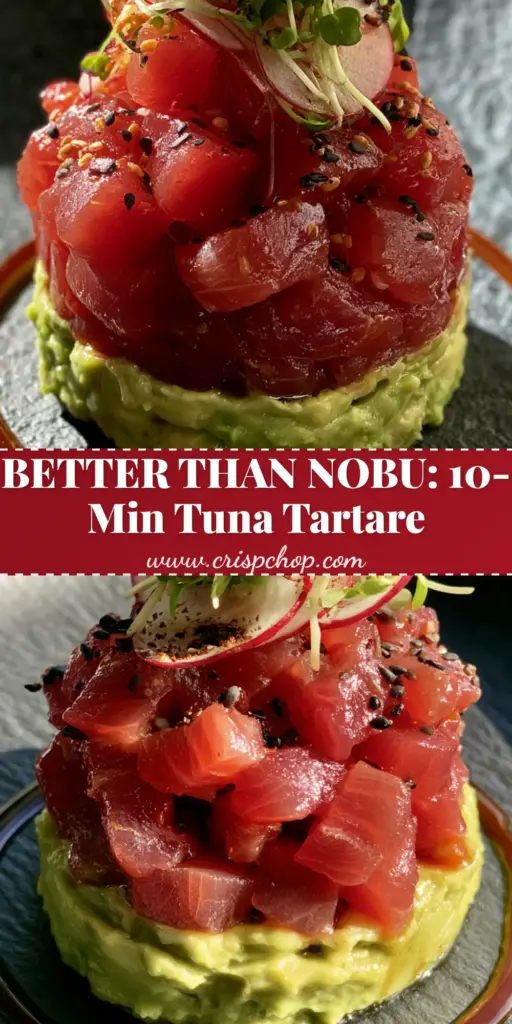
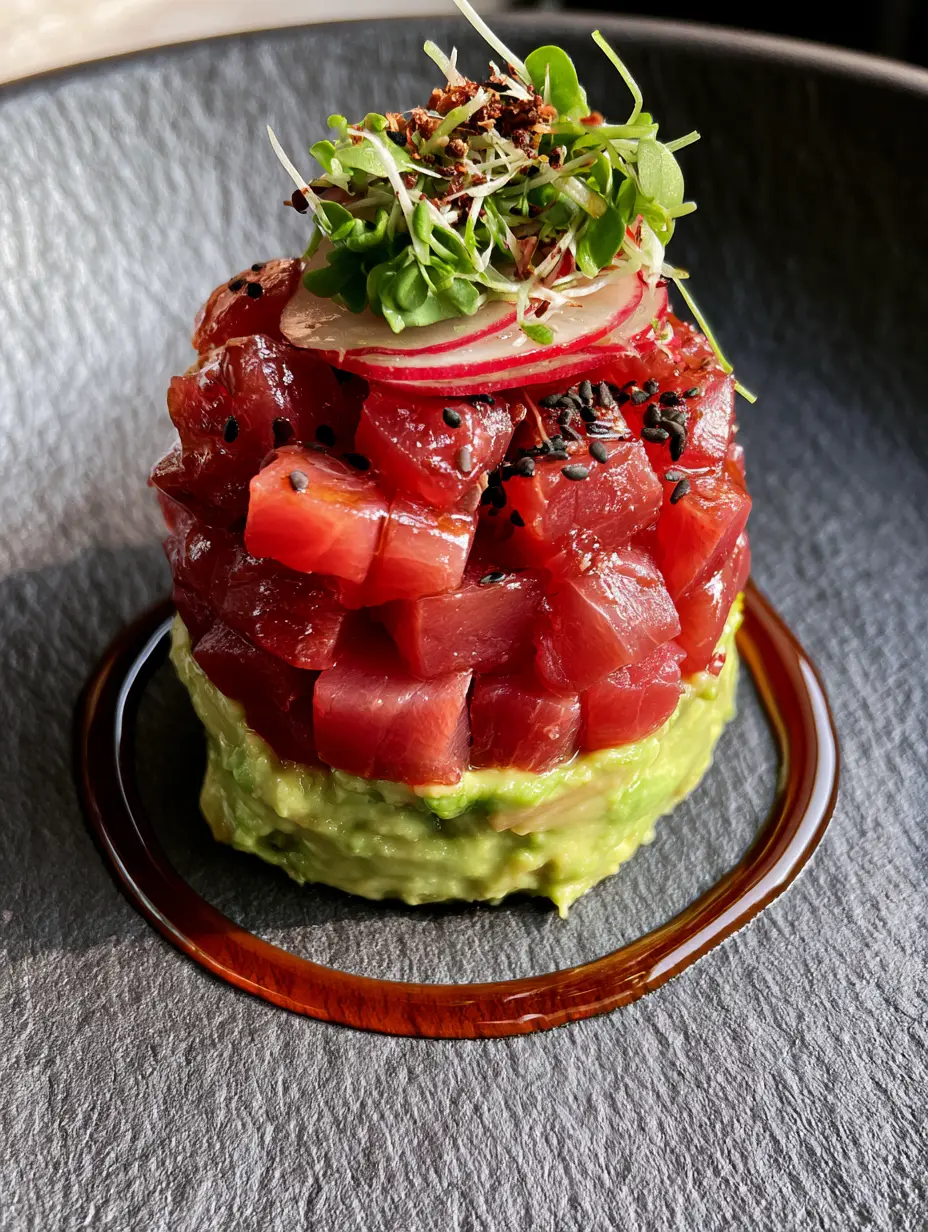
Nobu Tuna Tartare Recipe: The Ultimate Avocado Stack Tutorial
Ingredients
Equipment
Method
- Hand-dice the cold Ahi tuna into uniform 1/4-inch cubes. Toss gently with toasted sesame oil in a chilled bowl.
- Mash the ripe avocados with lime juice and a pinch of salt until creamy but still thick enough to hold shape.
- In a small saucepan, simmer soy sauce, grated ginger, and mirin for 3-5 minutes until it reduces to a glossy, dark-amber syrup. Let cool.
- Place a ring mold on a slate plate. Pack the bottom with a layer of mashed avocado.
- Fill the rest of the mold with the diced tuna cubes, pressing down very lightly. Carefully remove the mold.
- Top with micro-greens and radish slices. Sprinkle with sesame seeds, chives, and lime zest. Drizzle the ginger soy glaze around the base.
Notes
Chill the ring mold in the freezer for 10 minutes before plating to help the stack hold its shape.
Share Your Culinary Masterpiece!
Did you manage to get that perfect ring-mold stack? We want to see it! Save this recipe to your “Fancy Dinner Ideas” board on Pinterest so you never lose it. If you made this Nobu Tuna Tartare, drop a photo in the comments below or tag @crispchop in your stories. Don’t forget to leave a 5-star rating if you loved this restaurant-style experience at home!