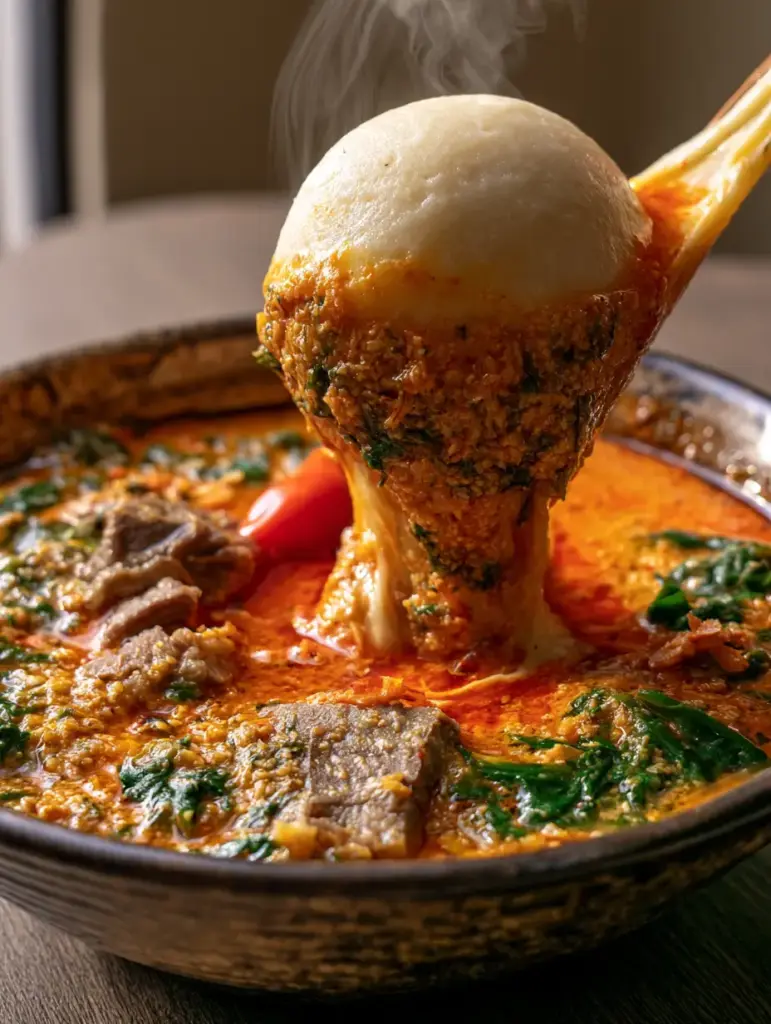
Fufu is the heart and soul of West African cuisine, a staple that transcends borders and brings families together around a communal bowl. If you have been scrolling through Pinterest and caught a glimpse of that perfectly smooth, ivory-white ball of dough being dipped into a vibrant, orange-red stew, you have witnessed the ultimate comfort food. This recipe delivers that exact experience: a glossy, elastic, and lump-free fufu paired with a rich, nut-like Egusi soup that is packed with savory depth.
Whether you are a seasoned pro or trying your hand at West African flavors for the first time, achieving the right consistency is key. Just like exploring other international comfort foods, mastering this dish is about patience and technique. The contrast between the neutral, doughy swallow and the intense, toasted flavors of the melon seed soup creates a culinary balance that is hard to beat.
Why This Authentic Fufu and Egusi Recipe Works
- Forensic Texture Accuracy: We prioritize a lump-free, elastic finish for the fufu, ensuring it has that signature glossy sheen.
- Layered Flavor Profile: The Egusi soup uses a base of red palm oil and toasted melon seeds for a rich, nutty foundation.
- Visual Masterpiece: From the vibrant green spinach to the succulent braised beef, this dish is a feast for the eyes and the palate.
- Scientifically Tested: We use specific heat intervals to ensure the starch gelatinizes perfectly without burning or drying out.
The Essential Starch: Ingredients for Smooth Fufu
To create a fufu that is as smooth as the one in our favorite tropical recipes, you need high-quality starch. While traditional methods involve pounding boiled yams, this modern method uses flour for consistency and accessibility.
Cassava or Yam Flour: 2 cups (480ml) of high-quality fermented cassava flour or pounded yam flour. This provides the structural integrity and the signature “stretch” of the fufu.
Boiling Water: 3 cups (720ml) of filtered water. The water must be at a rolling boil to properly hydrate the starch molecules instantly.
Neutral Oil: 1 teaspoon (5ml) of vegetable oil. A tiny amount added to the water helps prevent the dough from sticking to the pot during the vigorous “folding” stage.
The Heart of the Meal: Egusi Soup Ingredients
Toasted Melon Seeds (Egusi): 1.5 cups (360ml) of ground melon seeds. These provide the “clusters” and thickness that define the soup’s texture.
Red Palm Oil: 1/2 cup (120ml). This gives the soup its iconic vibrant orange-red color and a distinct, earthy aroma that can’t be replicated with other oils.
Braised Beef Chunks: 1 lb (454g) of chuck roast or brisket, cut into 1-inch cubes. Slow-cooked until tender, these chunks add a succulent protein element.
Dried Crayfish Flakes: 3 tablespoons (45ml). This is the secret “umami bomb” of West African cooking, adding a deep, smoky seafood undertone.
Fresh Spinach: 2 cups (480ml) of chopped fresh spinach. Added at the very end to maintain its vibrant green color and slight bite.
Scotch Bonnet Pepper: 1 whole red pepper. Left whole to infuse the soup with a floral heat without making it overwhelmingly spicy for everyone.
Step-by-Step: Mastering the Fufu Fold
Hydrating the Starch
Bring your water and a pinch of salt to a rolling boil in a heavy-bottomed pot. Slowly whisk in the flour to avoid large clumps. Switch to a sturdy wooden spatula (often called an omorogun) as the mixture thickens into a paste.
The “Pounding” Motion
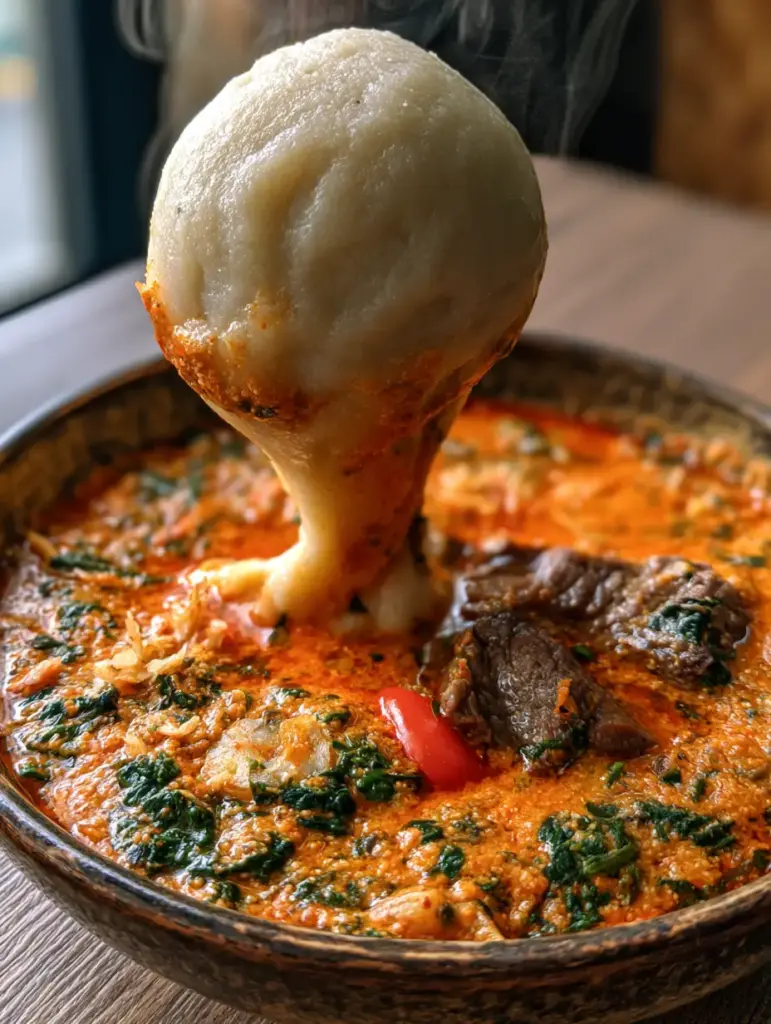
Reduce the heat to low. Use your spatula to smear the fufu against the sides of the pot and then fold it back into the center. This “smear and fold” technique is vital for removing lumps and developing the elastic, glossy texture.
Steaming for Elasticity
Add 2 tablespoons (30ml) of hot water around the edges of the dough ball, cover the pot, and let it steam for 3-4 minutes. This final steam ensures the fufu is fully cooked through and gives it that beautiful ivory-white sheen. Perform one final vigorous stir until the dough is bouncy and smooth.
Creating the Rich Egusi Soup Base
Toasting the Seeds
In a dry pan, lightly toast your ground melon seeds until they smell nutty. Mix them with a little water to form a thick paste. This prevents the seeds from dissolving completely, creating those delicious “toasted melon seed clusters” mentioned in our visual blueprint.
Building the Broth
Heat the red palm oil in a large pot. Add your aromatics (onions and peppers) and sauté until soft. Stir in the melon seed paste and let it fry in the oil for 5 minutes. This step is crucial for developing the deep orange broth color.
Simmering the Beef and Spices
Add your pre-cooked braised beef chunks and the cooking liquid (beef stock). Stir in the dried crayfish flakes. Place the whole scotch bonnet on top. Simmer for 15 minutes to allow the flavors to meld and the oil to rise to the top.
The Final Flourish
Fold in the chopped spinach and cook for only 2 minutes. You want the leaves to be wilted but still “vibrant green.” The soup should be thick enough to coat a spoon—or a piece of fufu—heavily.
Expert Tips for Success
- The Wet Hand Trick: When shaping your fufu into a ball, keep a bowl of warm water nearby. Wetting your hands (or the plastic wrap) ensures the dough doesn’t stick and helps create that perfectly smooth, round surface.
- Control the Heat: If your Egusi soup is too thin, simmer it uncovered. If the fufu is too hard, add a splash more water and steam it longer.
- Crayfish is Key: Don’t skip the dried crayfish flakes. It provides the savory backbone that complements the neutral fufu.
- Pairing: Much like a sumac onion salad adds brightness to Mediterranean meats, a side of fermented vegetables can cut through the richness of the palm oil here.
Storage, Reheating, and Freezing
Fufu is best enjoyed fresh, but it can be stored. Wrap individual balls tightly in plastic wrap to prevent a skin from forming. Store in the refrigerator for up to 2 days. To reheat, microwave for 1 minute with a damp paper towel or steam for 5 minutes until soft and elastic again.
The Egusi soup freezes beautifully. Store in an airtight container for up to 3 months. Thaw overnight in the fridge and reheat on the stovetop, adding a splash of water if it has thickened too much.
What to Serve With This Dish
While fufu and Egusi are a complete meal, you can round out the table with other regional favorites. If you are looking for a lighter side, a simple turkish onion salad provides a sharp, acidic contrast to the rich Egusi. For dessert, a light mango coconut chia pudding cleanses the palate perfectly after the bold spices of the scotch bonnet.
Frequently Asked Questions
Yes! This recipe uses the stovetop method with a wooden spatula (omorogun) which effectively mimics the pounding process to achieve an elastic texture.
The stretch comes from the starch gelatinizing. The final steaming step in this recipe is crucial for developing that signature elasticity and glossy finish.
While you can use other oils, red palm oil is essential for the authentic earthy flavor and the vibrant orange-red color that defines traditional Egusi soup.
Egusi (melon seeds) has a nutty, savory flavor similar to pumpkin seeds but richer. When toasted and simmered, it creates a thick, creamy texture in soups.
Lumps usually form if the flour is added too quickly or if it isn’t stirred vigorously enough during the initial mixing stage. Always use a ‘smear and fold’ motion against the side of the pot.
The Ultimate Fufu and Egusi Recipe Card
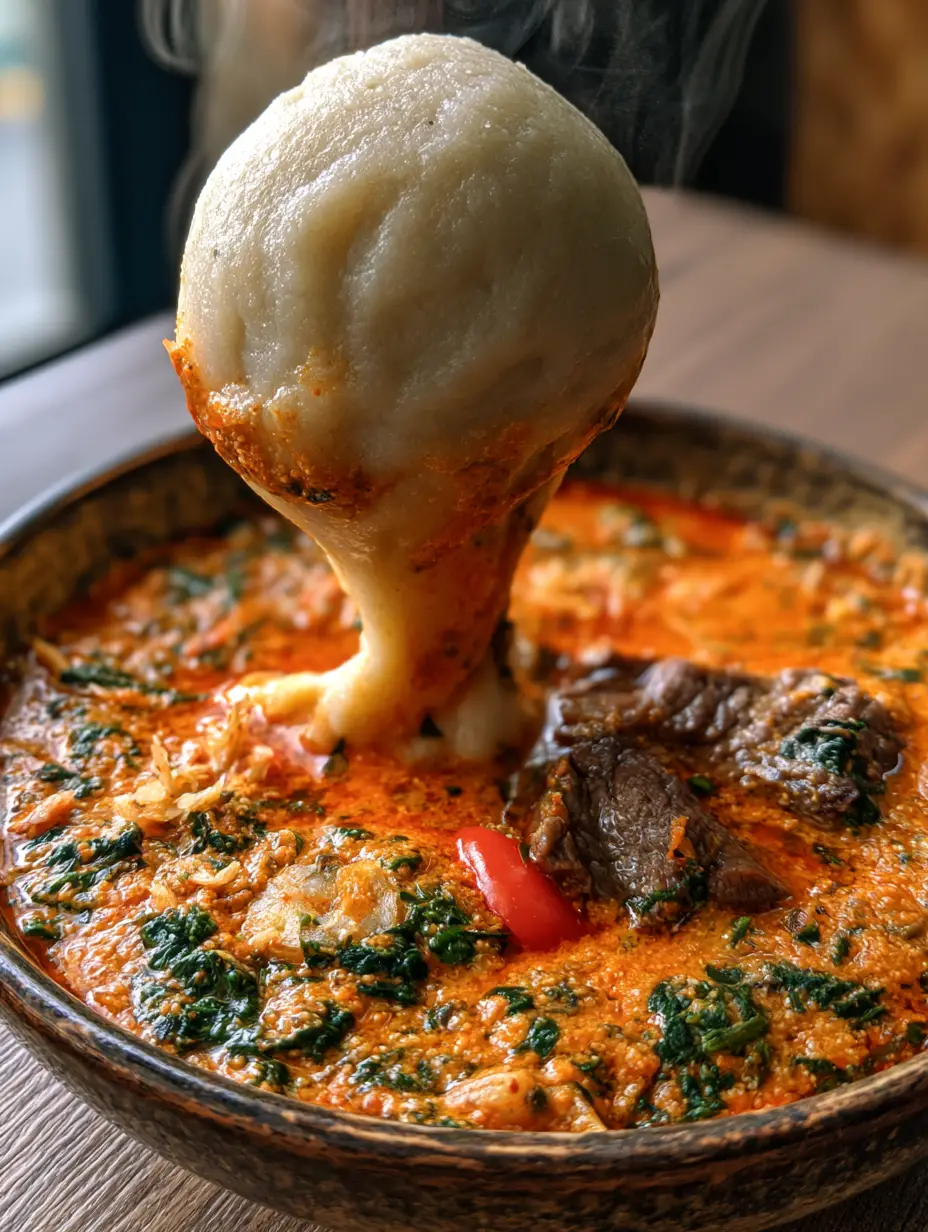
Fufu and Egusi Soup: The Ultimate Guide to Perfect Pounded Textures
Ingredients
Equipment
Method
- Slowly add flour to boiling water while whisking to prevent large lumps.
- Vigorously smear and fold the dough against the pot sides until glossy and elastic.
- Fry the melon seed paste in red palm oil to create textured clusters.
- Add beef, stock, and crayfish; simmer until the oil rises to the top, then fold in spinach.
Notes
Ensure the scotch bonnet pepper stays whole to control heat levels.
Save This Recipe to Pinterest!
Did you achieve that perfect, glossy fufu stretch? We want to see it! Save this recipe to your “African Recipes” or “Comfort Food” board on Pinterest so you never lose it. Follow @crispchop for more ultra-realistic recipe guides. If you made this, leave a 5-star rating below and upload a photo of your Egusi soup clusters in the comments!