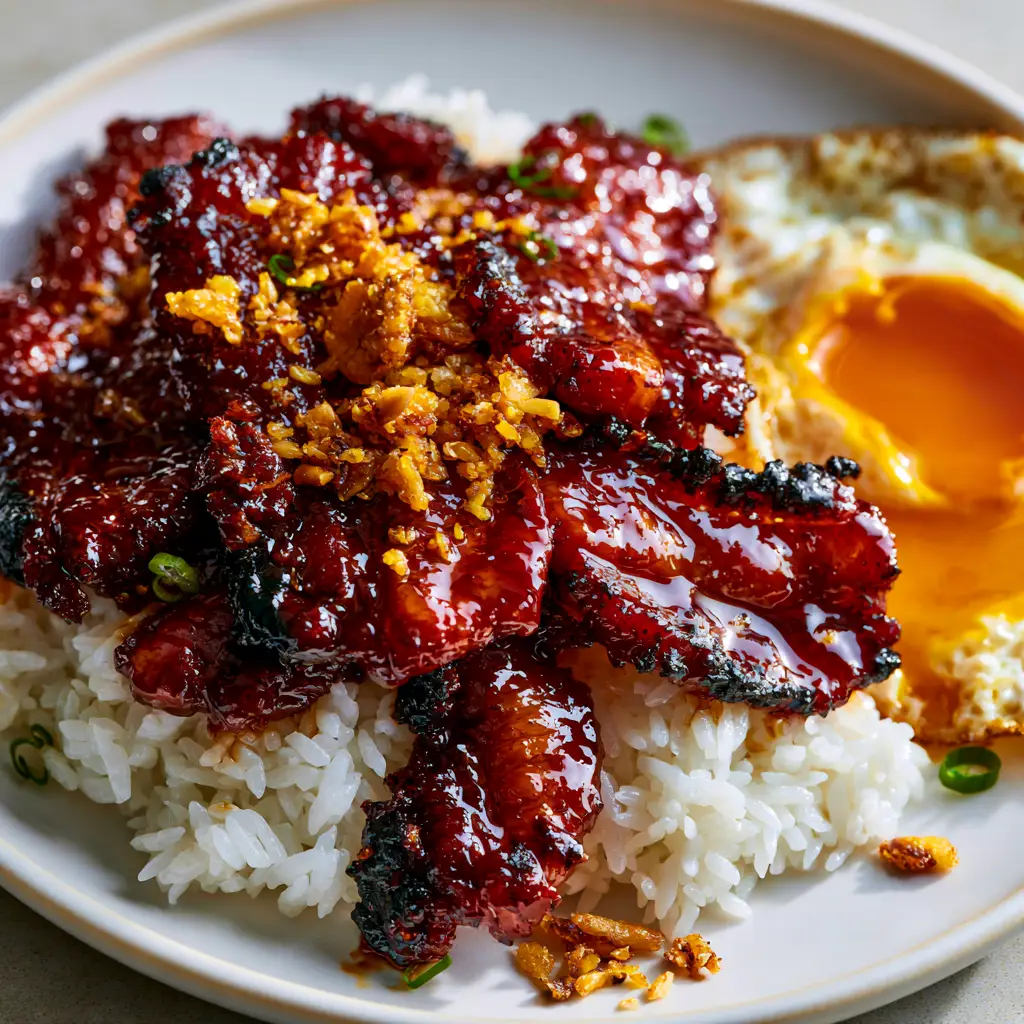
Experience the vibrant heart of a Manila morning with this authentic Filipino Pork Tocino recipe. This isn’t just a meal; it is a sensory journey defined by thin slices of pork shoulder caramelized to perfection in a thick, mahogany-red glaze.
Every bite delivers a masterclass in flavor contrast, offering a syrupy sweetness that gives way to savory depth and those signature crispy charred edges. When you see the glistening texture against the backdrop of fluffy white jasmine rice, you’ll understand why this is the king of Filipino breakfasts.
Our version captures the “handheld smartphone” realism of a high-end brunch, featuring crunchy golden fried garlic bits and a perfectly fried sunny-side-up egg with a vibrant orange runny yolk. Let’s dive into the science of curing and the art of the perfect sear.
The Irresistible Allure of Homemade Mahogany Cured Pork
- Visual Masterpiece: A stunning mahogany-red glaze that clings to every pork strip for a professional, syrupy finish.
- Textural Contrast: Tender, juicy pork shoulder juxtaposed with crispy, blackened “char” points for maximum flavor.
- The Ultimate Tocilog: A complete meal profile featuring the richness of a runny egg yolk and the aromatic punch of fried garlic.
- Scientifically Balanced: A precise ratio of sugar and salt to ensure the meat is cured, tenderized, and ready for high-heat caramelization.
The Anatomy of Authentic Filipino Pork Tocino Ingredients
Pork Shoulder (Butt) (2 lbs / 900g): This cut is essential for its fat-to-lean ratio. The intramuscular fat renders down, ensuring the strips remain succulent even after the glaze has reduced into a thick syrup.
Brown Sugar (1 cup / 200g): Sugar is the primary curing agent here. It provides the deep sweetness and is responsible for the intense caramelization and charred edges seen in the visual blueprint.
Soy Sauce (3 tbsp / 45ml): This adds the necessary salt and umami base. It works in tandem with the sugar to create that complex, dark mahogany hue without over-salting the meat.
Pineapple Juice (1/4 cup / 60ml): The bromelain enzymes in pineapple juice act as a natural tenderizer. It also adds a subtle bright acidity that cuts through the richness of the pork fat.
Annatto Powder or Beet Powder (1 tbsp / 10g): This is the secret to the iconic red-tinted mahogany glaze. It provides an earthy undertone and that vibrant, high-end food styling color.
Garlic (5 cloves, minced / 25g): We use fresh garlic in the marinade to infuse the meat. This complements the crunchy fried garlic bits used as a final garnish.
Neutral Oil (2 tbsp / 30ml): Needed for the frying stage. High-smoke point oils like canola or grapeseed allow you to achieve those crispy edges without the oil breaking down.
Kosher Salt (1 tsp / 5g) & Black Pepper: Essential foundational seasonings. The salt aids the curing process, drawing moisture out to concentrate the pork’s natural flavors.
Jasmine Rice & Eggs: To complete the visual prompt, we serve this over fluffy rice with a sunny-side-up egg. If you enjoy diverse breakfast textures, you might also love our Mediterranean Baked Feta Eggs.
Essential Culinary Tools for a Professional Sear
Large Cast Iron Skillet: The heavy bottom provides even heat distribution. This is critical for achieving the syrupy, glistening texture without burning the sugar too quickly.
Sharp Chef’s Knife: You must be able to slice the pork shoulder into thin, uniform strips. This ensures every piece cures and cooks at the same rate.
Non-Reactive Mixing Bowl: Glass or stainless steel is required for the curing process. The acidity in the pineapple juice can react with aluminum, affecting the flavor.
The Masterclass: How to Create the Perfect Filipino Pork Tocino
Step 1: Precision Slicing and Marination
Slice your pork shoulder against the grain into thin strips, approximately 1/4 inch thick. This ensures the meat remains tender and easy to bite through after it has been caramelized.
In your non-reactive bowl, whisk together the sugar, soy sauce, pineapple juice, annatto powder, minced garlic, salt, and pepper. Massage this mixture into the pork strips for at least 5 minutes to ensure every fiber is coated.
Cover and refrigerate for at least 24 hours. This curing time is non-negotiable if you want the deep mahogany color and the traditional firm yet tender texture.
Step 2: The Initial Braise-Reduction
Place the pork and all its marinade into a wide skillet over medium heat. Add 1/2 cup (120ml) of water to the pan to help the meat cook through before the sugar burns.
Simmer the pork, turning occasionally, until the water has completely evaporated. At this stage, you will notice the liquid transforming into a thick, syrupy glaze that clings to the meat.
Step 3: Achieving the Glistening Char
Once the water is gone, add 2 tablespoons of oil to the skillet. Increase the heat to medium-high. This is where the magic happens and the Filipino Pork Tocino gains its characteristic “blistered” look.
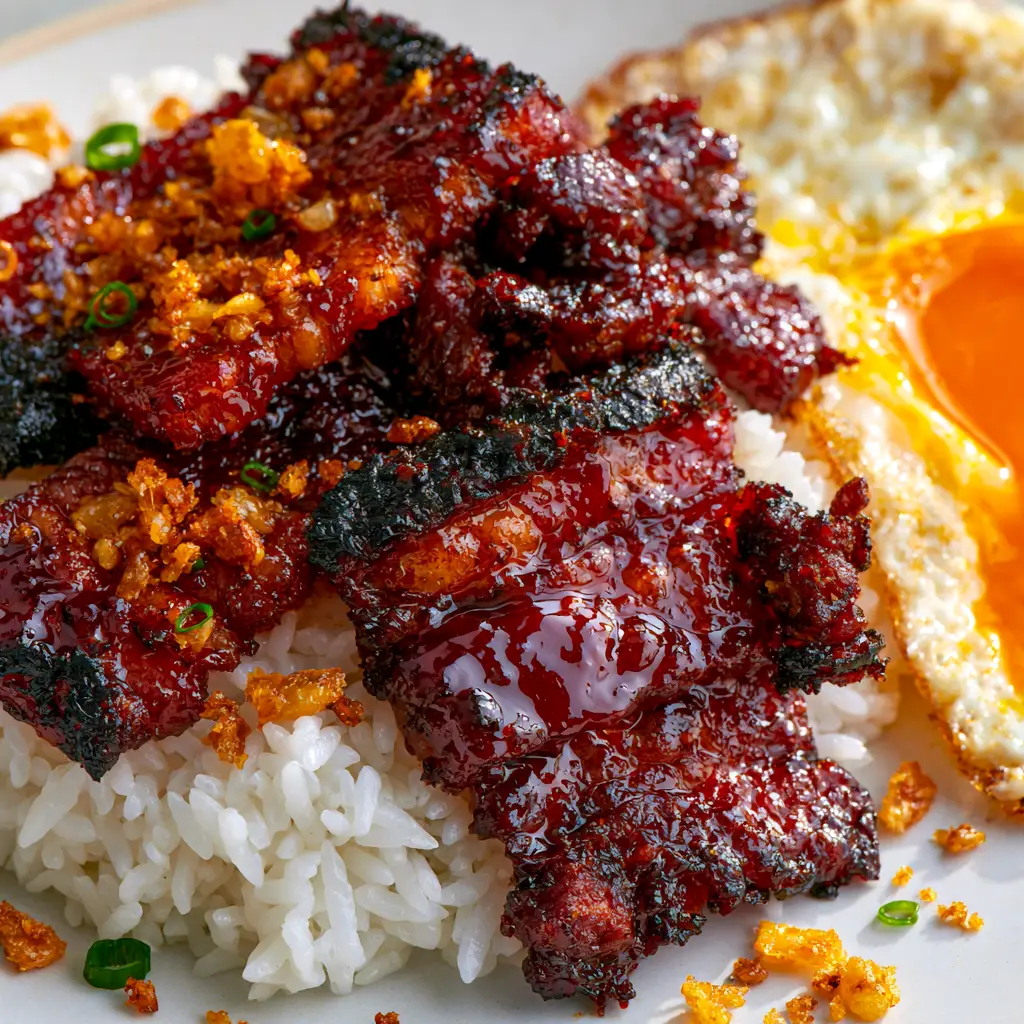
Fry the strips for 2-3 minutes per side. Watch for visual cues: the glaze should be bubbling and darkening into a mahogany red, and the edges of the pork should begin to turn black and crispy.
Step 4: Preparing the “Tocilog” Components
While the pork rests, fry your garlic bits in a little oil until they are golden and crunchy. Drain them on a paper towel to maintain their texture.
In the same pan, fry your eggs sunny-side-up. Aim for a fully set white but a vibrant orange, runny yolk. If you’re looking for more breakfast inspiration, check out our Mango Pancake recipe.
Pro Tips for Culinary Perfection
- Temperature Control: If the glaze darkens too quickly before the pork is tender, lower the heat and add a tablespoon of water. The goal is a slow reduction.
- The Fat is Flavor: Do not trim all the fat off the shoulder. Those fatty edges turn into crispy “candy” during the final frying stage.
- Rice Prep: Use day-old jasmine rice for the best texture, or freshly steamed rice that has been fluffed and allowed to vent steam for 5 minutes.
- Balanced Flavor: If the marinade feels too sweet, a splash of apple cider vinegar can provide a subtle tang that complements the pork beautifully.
Storage, Reheating, and Freezing Advice
In the Fridge: Cooked Filipino Pork Tocino stays fresh in an airtight container for up to 4 days. Reheat in a pan with a splash of water to loosen the glaze.
In the Freezer: You can freeze the marinated (uncooked) pork for up to 3 months. This is a fantastic meal prep hack for busy mornings. Thaw completely in the fridge before cooking.
Reheating: Avoid the microwave if possible, as it can make the sugar glaze sticky and tough. A quick toss in a hot skillet restores the “glistening” texture perfectly.
What to Serve with This Filipino Classic
Traditionally, this dish is served as “Tocilog”—a combination of Tocino, Sinangag (garlic fried rice), and Itlog (egg). The runny yolk acts as a rich sauce for the sweet pork.
For a refreshing side, a mango salad is common. You can follow the tropical theme for dessert with our Mango Tres Leches Cake or perhaps a light Mango Bingsu.
If you’re planning a larger spread, Filipino Pork Tocino pairs excellently with other savory grains like our Shrimp Fried Rice or even a bold Thai Basil Chicken Fried Rice.
Frequently Asked Questions
While you can cook it sooner, the 24-hour cure is necessary for the flavors to penetrate the meat and for the texture to become traditionally firm and ‘cured’.
Pork shoulder (butt) is recommended because the fat content keeps the meat tender during the caramelization process. You can use pork tenderloin for a leaner version, but it may be drier.
The secret is to simmer the pork in a little water first. This cooks the meat through and allows the sugar to reduce into a syrup gradually before you add oil for the final sear.
This recipe uses soy sauce, which contains wheat. To make it gluten-free, substitute the soy sauce with liquid aminos or tamari.
Traditionally, saltpeter (Prague powder) was used, but modern home recipes use annatto powder or beet powder to achieve that iconic mahogany-red glaze safely.
The Ultimate Filipino Pork Tocino Recipe Card

Filipino Pork Tocino: The Ultimate Mahogany Glazed Sweet Cured Pork
Ingredients
Equipment
Method
- Slice pork shoulder into thin 1/4-inch strips. In a non-reactive bowl, combine sugar, soy sauce, pineapple juice, annatto, garlic, salt, and pepper.
- Massage the marinade into the pork. Cover and refrigerate for 24 hours to allow the color and flavors to penetrate.
- Place pork and marinade in a skillet with 1/2 cup water. Simmer over medium heat until the water evaporates and a thick syrup forms.
- Add oil and increase heat to medium-high. Fry until the pork is glistening with a mahogany glaze and the edges are charred and crispy.
- Serve the hot pork over jasmine rice. Top with fried garlic bits and a sunny-side-up egg with a runny yolk.
Notes
Use a cast iron skillet to achieve the best charred edges.
Closing & Call to Action
Mastering Filipino Pork Tocino at home brings a piece of Philippine culture straight to your kitchen. The combination of the mahogany glaze, the runny egg, and the crunch of fried garlic creates a breakfast experience that is truly world-class. If you enjoyed this recipe, please leave a comment below and share your results!
Don’t forget to follow us and save this recipe to your favorite boards on Pinterest for your next weekend brunch. Happy cooking!