There is something inherently primal and deeply satisfying about a perfect chicken shawarma recipe. The aroma of warm spices hitting a hot pan, the sight of glistening, juice-slicked chicken, and the vibrant pop of pickled aromatics create a sensory experience that defines Middle Eastern street food. This version brings that professional rotisserie quality directly to your home kitchen using a high-heat roasting method.
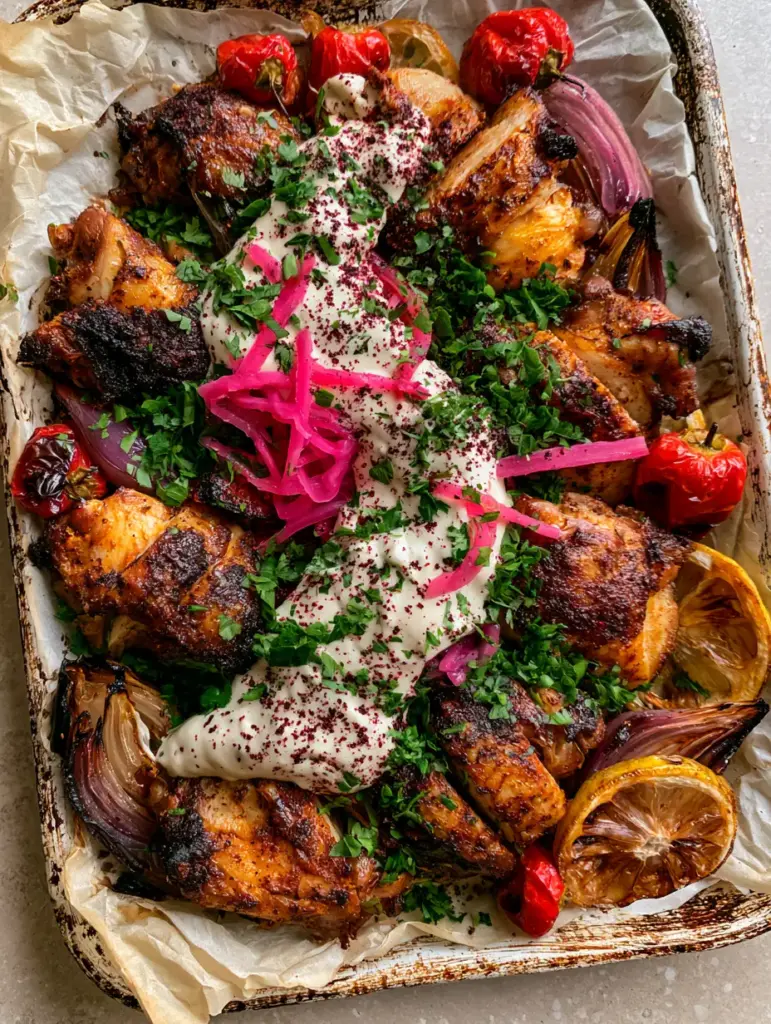
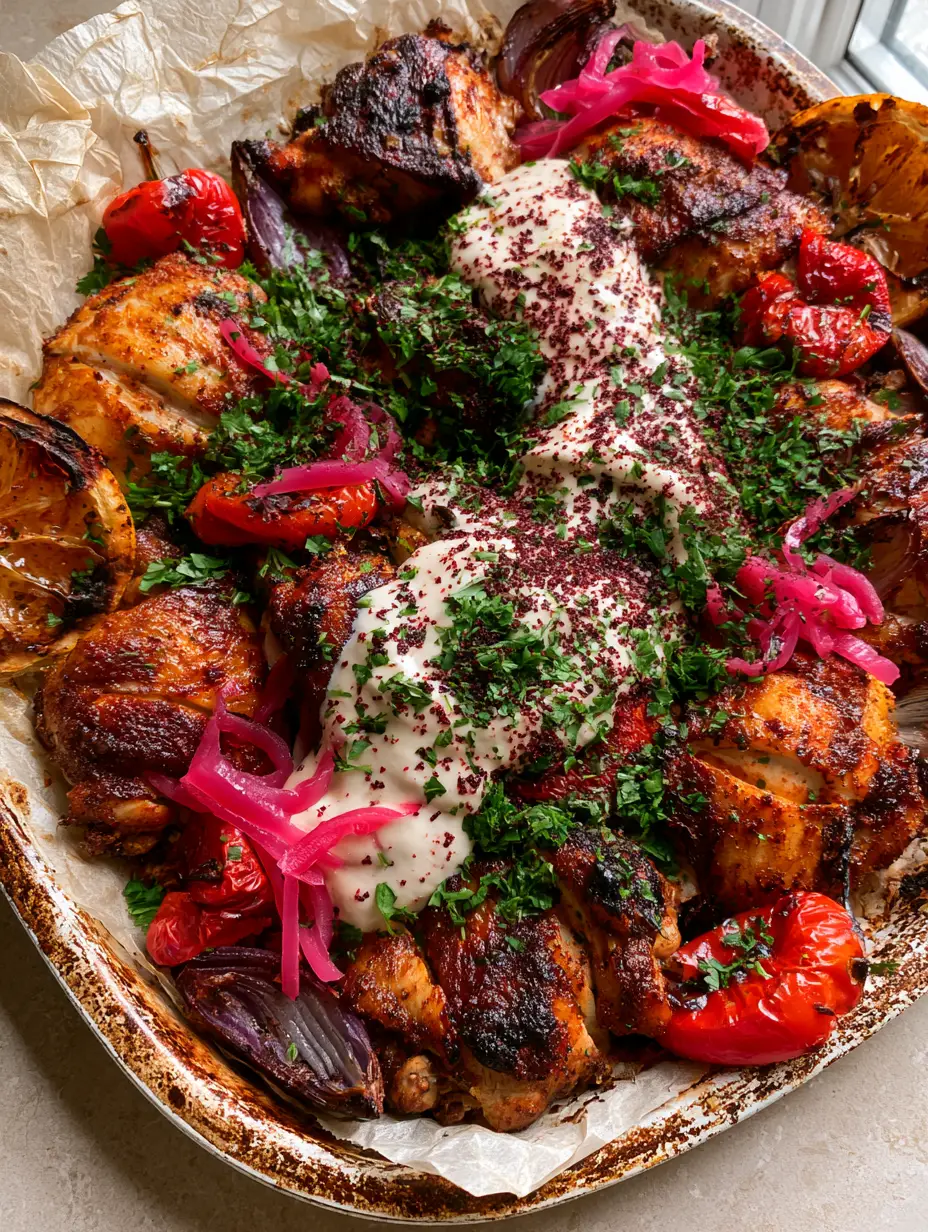
Our goal today is to replicate the iconic “vertical spit” texture using a standard home oven. By utilizing a rustic, distressed baking sheet and a strategic arrangement of ingredients, we achieve those coveted deep golden-brown charred edges while keeping the meat incredibly tender. This is a meal that looks as vibrant as it tastes, finished with a bold, thick white tahini drizzle and emerald-green herbs.
Whether you are a seasoned cook or a kitchen newcomer, this chicken shawarma recipe delivers a restaurant-level result with minimal cleanup. We are moving beyond dry, flavorless poultry and embracing a technique that celebrates fat, fire, and acidity. Let’s dive into the mechanics of why this recipe works and how to execute it flawlessly.
Why This Chicken Shawarma Recipe Outshines the Rest
- The Perfect Char: We utilize high-temperature roasting to create deep golden-brown edges that mimic the texture of a traditional rotisserie.
- Texture Contrast: The combination of thick, creamy garlic tahini against the crunch of blistered red onions and roasted peppers creates a complex mouthfeel.
- Visual Vibrancy: From the bright pink pickled onion slivers to the dark crimson sumac dusting, this dish is a feast for the eyes.
- Juiciness Guaranteed: By using boneless chicken thighs instead of breasts, we ensure the meat stays succulent under high heat.
- One-Pan Simplicity: All the components, including the caramelized lemon wheels and blistered vegetables, cook together on a single sheet of parchment paper.
Essential Components for Authentic Shawarma Flavor
To achieve the visual and flavor profile described in our blueprint, every ingredient must serve a specific culinary purpose. We aren’t just seasoning meat; we are building layers of umami and acidity.
Boneless, Skinless Chicken Thighs: 2 lbs (907g). Thighs contain more intramuscular fat than breasts, which allows them to withstand the high heat necessary for charring without drying out.
Extra Virgin Olive Oil: 1/4 cup (60ml). This acts as the heat conductor, ensuring the spices bloom and the chicken surfaces fry slightly against the parchment paper.
Fresh Lemon Juice and Slices: 2 tbsp (30ml) juice plus 1 whole lemon, sliced into thin wheels. The juice tenderizes the meat, while the roasted wheels provide a concentrated, caramelized citrus punch.
The Spice Blend: A combination of cumin, coriander, turmeric, cinnamon, and smoked paprika. These spices create that “glistening spice-rubbed surface” and deep aromatic profile traditional to the dish.
Red Mini Bell Peppers: 6-8 peppers. These are roasted whole or halved until the skins are blistered and the sugars have intensified.
Red Onion: 1 large onion, cut into wedges. Roasting these at high heat turns them from pungent to sweet and slightly charred.
Garlic Tahini Sauce: 1/2 cup (120ml) tahini paste blended with garlic and lemon. This must be thick enough to hold a “zig-zag” shape across the finished tray.
Garnish Trio: Fresh flat-leaf parsley, pickled red onion slivers, and dried sumac powder. These provide the final emerald-green, bright pink, and crimson visual cues that complete the dish.
The Culinary Gear You Will Need
Achieving the aesthetic of a rustic, distressed vintage baking sheet requires a few specific tools. While the pan itself can be modern, the technique remains the same.
A heavy-duty rimmed baking sheet is essential. It prevents the “golden chicken juices” from spilling over and allows for even heat distribution across the meat.
High-quality parchment paper is your best friend here. It prevents sticking and helps catch those delicious rendered fats, making the final presentation on the tray look professional and rustic.
A sharp chef’s knife is required for slicing the chicken into thin, uniform strips after roasting. This mimics the “shaved” look of traditional shawarma meat.
Step-by-Step Instructions for the Perfect Sheet Pan Roast
Marinating for Maximum Flavor Infusion
Begin by whisking together your olive oil, lemon juice, and the dry spice blend in a large bowl. Add your 2 lbs (907g) of chicken thighs, ensuring every inch is coated in the spice rub.
For the best results, let the chicken marinate for at least 30 minutes, or up to 4 hours in the refrigerator. The acids in the lemon juice will begin to break down the proteins, ensuring a tender bite.
Preparing the Rustic Tray
Preheat your oven to 425°F (220°C). Line your baking sheet with a piece of crumpled parchment paper; the wrinkles help catch the juices and add to the “distressed” visual appeal.
Spread the marinated chicken thighs across the tray. Intersperse the red mini bell peppers, red onion wedges, and the lemon wheels among the meat. Do not overcrowd the pan, or the ingredients will steam instead of char.
The High-Heat Roast and Visual Cues
Slide the tray into the center of the oven and roast for 20-25 minutes. You are looking for specific sensory cues: the sound of sizzling fat and the smell of toasted cumin and coriander.
Halfway through, you may want to flip the lemon wheels. You’ll know it’s done when the chicken shows deep golden-brown charred edges and the onion wedges have softened and blistered at the tips.
Slicing and Final Assembly
Remove the tray from the oven and let the meat rest for 5 minutes. This allows the internal juices to redistribute, ensuring the chicken stays “piping hot and juicy” when sliced.
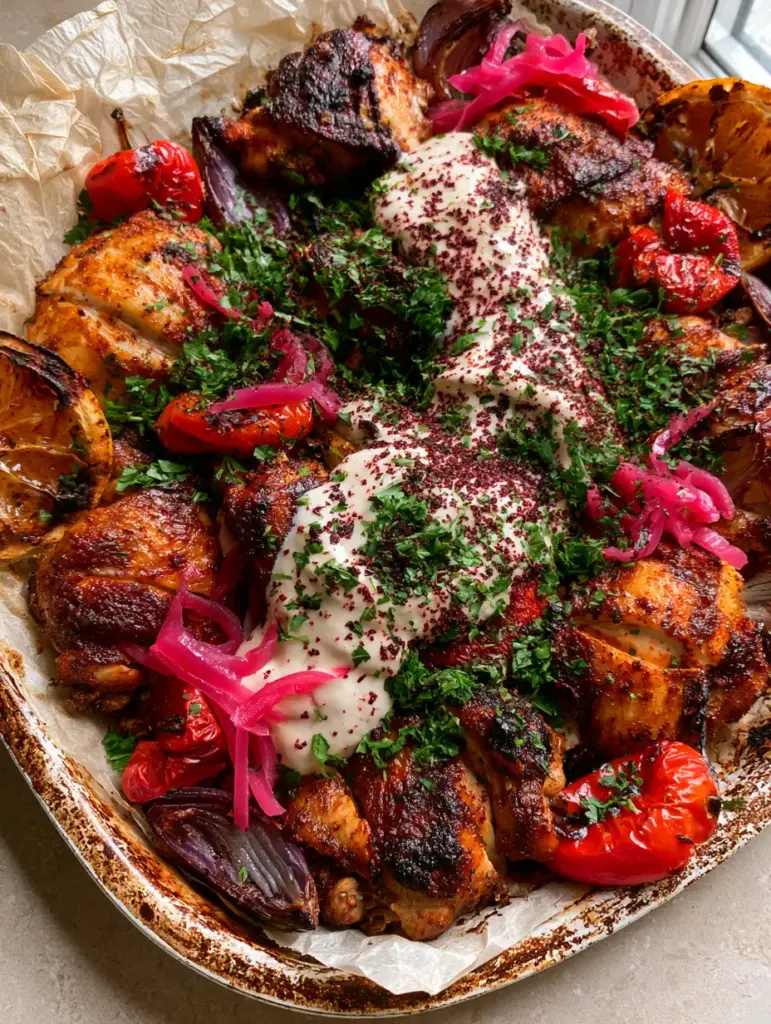
Move the chicken to a cutting board and slice into thin strips. Return the sliced chicken to the parchment paper, tossing it slightly in the golden juices that have accumulated on the tray.
The Art of the Drizzle and Garnish
Prepare your thick white tahini sauce by whisking 1/2 cup (120ml) tahini with 1 clove of minced garlic, lemon juice, and a splash of ice water until it reaches a heavy, pourable consistency.
Create a bold zig-zag drizzle across the center of the tray. Finish with a dense scattering of chopped parsley, the bright pink pickled onion slivers, and a heavy dusting of dark crimson sumac.
Expert Tips for Success in Your Kitchen
- The Ice Water Secret: When making the tahini sauce, use ice-cold water. It helps the tahini emulsify into a pale, thick, and incredibly smooth cream.
- Crumple the Paper: As mentioned, crumpling the parchment paper isn’t just for photos. It creates little pockets for the chicken fat and lemon juice to pool, which bastes the meat as it roasts.
- Don’t Trim Too Much: Leave some of the fat on the chicken thighs. That fat renders down and creates the “glistening” surface described in our visual blueprint.
- Sumac is Non-Negotiable: This dark crimson spice provides a unique tartness that cuts through the richness of the tahini and the roasted meat.
Storage, Reheating, and Freezing Advice
This chicken shawarma recipe is excellent for meal prep. Store leftovers in an airtight container in the refrigerator for up to 4 days.
To reheat, I recommend using a skillet over medium-high heat rather than a microwave. This allows you to re-crisp those charred edges and maintain the integrity of the texture.
You can freeze the marinated (raw) chicken for up to 3 months. Simply thaw in the fridge overnight before roasting as directed. Do not freeze the finished dish with the tahini sauce, as the sauce will break upon thawing.
What to Serve With This Vibrant Feast
While this tray is a meal in itself, it pairs beautifully with other Mediterranean and Middle Eastern staples. For a complete spread, consider serving it alongside a Greek chicken grain bowl base or stuffed into warm pita bread.
If you enjoy the flavors of roasted poultry and citrus, you might also like my lemon garlic roast chicken. For those who love the crunch of peppers, these Turkish stuffed peppers are a fantastic side dish.
If you’re looking for more handheld options, try adapting these flavors into chicken shawarma skewers for your next outdoor gathering. The charred peppers and onions work perfectly on the grill!
Frequently Asked Questions
Yes! When sliced thin and roasted, the rind softens and the sugars caramelize, making them sweet, tart, and completely edible garnishes.
You can, but breasts dry out quickly at high heat. If using breasts, reduce the cooking time by 5-7 minutes and ensure they are thinly sliced to maximize char before the center dries out.
No, a standard rimmed baking sheet works perfectly. The key is preheating the oven to a high temperature (425°F) and not overcrowding the pan so the air can circulate.
The secret is using ice-cold water. When you whisk tahini with cold water, it undergoes a physical change that turns it pale and fluffy rather than oily and dark.
Sumac is a dark crimson spice made from dried berries, offering a tart, lemony flavor. It is essential for the authentic ‘bright’ finish and the visual contrast described in the recipe.
The Ultimate Sheet Pan Chicken Shawarma Recipe
Chicken Shawarma Recipe: The Ultimate Sheet Pan Guide to Charred, Juicy Perfection
Ingredients
Equipment
Method
- Whisk olive oil and spices, then coat the chicken thighs thoroughly.
- Place chicken, peppers, onions, and lemon wheels on a parchment-lined baking sheet.
- Bake at 425°F (220°C) for 25 minutes until edges are charred and golden-brown.
- Drizzle with tahini and top with parsley, pickled onions, and sumac.
Notes
Crumple your parchment paper to catch more golden juices.
Closing and Call to Action
Mastering this chicken shawarma recipe brings a world of flavor into your weekly rotation. The combination of high-heat charring and bright, acidic garnishes creates a professional-grade meal with the comfort of home cooking. The visual appeal of the rustic parchment paper and the colorful toppings makes it a perfect center-piece for family style dining.
If you loved the textures and flavors of this dish, please leave a comment below and let me know how yours turned out! Don’t forget to sign up for our newsletter for more elite culinary guides. If you want to save this for later, be sure to share this recipe to Pinterest and follow us for more inspiration!