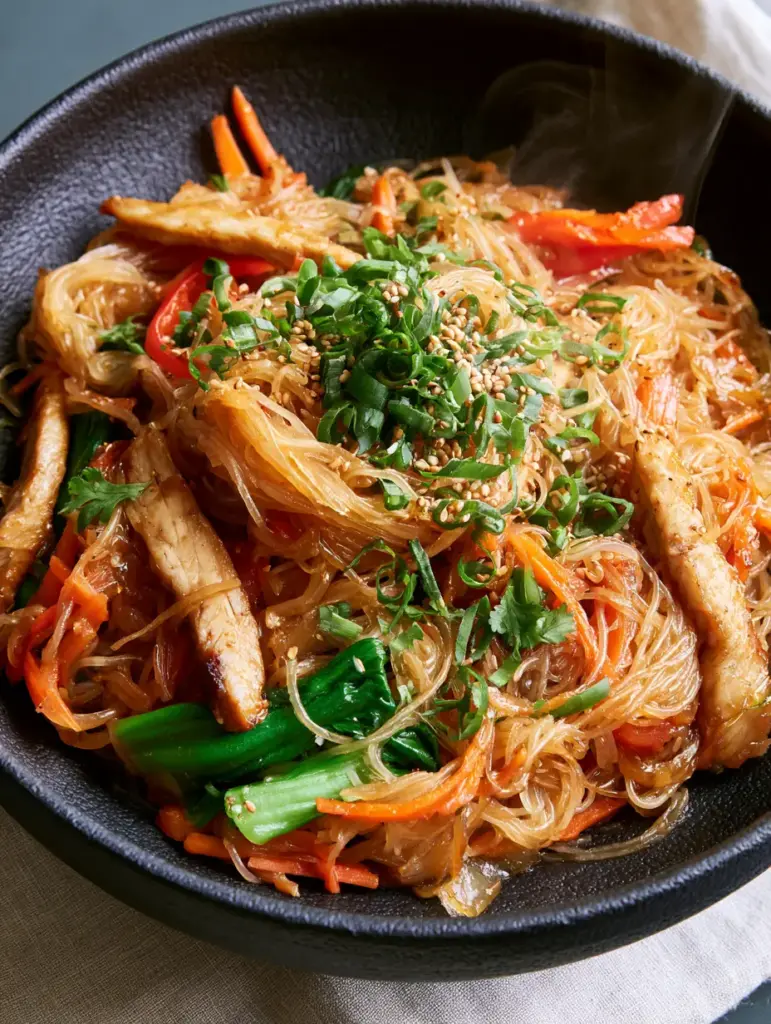
Chicken Mei Fun is the quintessential comfort food of Cantonese-inspired takeout, celebrated for its delicate, tangled rice noodles and vibrant, stir-fried vegetables. When executed correctly, this dish is a masterclass in texture, balancing the snap of julienned carrots with the tender bite of seared golden-brown chicken breast.
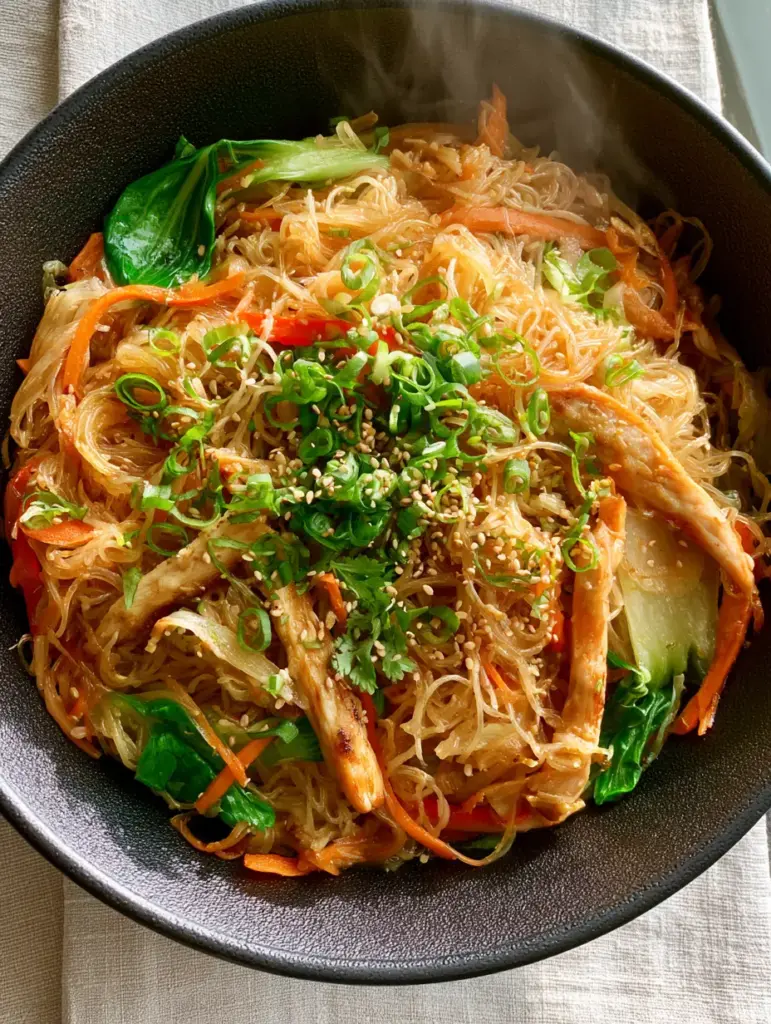
The visual appeal of Chicken Mei Fun lies in its glistening, amber-hued sauce that coats every translucent strand of vermicelli without leaving a puddle at the bottom of the bowl. It is a steaming, aromatic experience that brings the “wok hei” or “breath of the wok” directly to your kitchen table.
In this guide, we will break down the professional techniques required to prevent noodle clumping and ensure your chicken achieves that perfect mahogany sear. Whether you are a seasoned stir-fry enthusiast or a beginner looking for a reliable weeknight meal, this recipe delivers a high-protein, veggie-packed result every time.
Why This Chicken Mei Fun Recipe Works
- Perfect Noodle Texture: By using a specific soaking method rather than boiling, we ensure the rice vermicelli remains “al dente” and avoids the common pitfall of becoming mushy or broken.
- Maillard-Driven Flavor: We utilize a high-heat searing technique for the chicken breast strips, creating a savory crust that adds depth to the entire dish.
- Vibrant Color Palette: The combination of bright orange carrots, crisp green bok choy, and thin-sliced red bell peppers provides a visual and nutritional punch.
- Balanced Umami Sauce: Our amber-colored soy-based sauce hits all the right notes—salty, slightly sweet, and deeply savory—clinging perfectly to the thin noodles.
The Anatomy of Authentic Chicken Mei Fun Ingredients
Thin Rice Vermicelli: These translucent noodles are the backbone of the dish; look for “Bifun” or “Hsin Chu” varieties for the most authentic texture. They absorb the savory sauce while maintaining a distinct, tangled structure that shouldn’t clump.
Golden-Brown Chicken Breast: We use 1 lb (450g) of lean chicken breast, sliced into thin strips against the grain to ensure maximum tenderness. Searing them until a deep golden crust forms is essential for both flavor and visual contrast.
Julienned Carrots and Red Bell Peppers: These vegetables provide the crunch and sweetness that balance the savory elements. Cutting them into thin, uniform strips (julienne) ensures they cook quickly and integrate seamlessly with the noodles.
Sautéed Green Bok Choy: The leaves provide a soft, buttery texture while the stems offer a satisfying watery crunch. This leafy green is a staple in Chinese cooking and acts as a beautiful bright-green focal point.
The Amber Soy Sauce Base: A blend of light soy sauce for salt, dark soy sauce for that iconic amber color, and a touch of sesame oil for aroma. This sauce should glisten on the noodles without being greasy.
Fresh Garnishes: A heavy shower of chopped green scallions, toasted white sesame seeds, and fresh cilantro sprigs provides the final layer of freshness and aromatic complexity. These are not just decorations; they are vital flavor components.
Essential Equipment for Stir-Fry Success
To achieve the results seen in our high-angle close-up photography, you need the right tools to manage high-heat cooking. A well-seasoned carbon steel wok is the gold standard, as its shape allows for constant movement and rapid evaporation of moisture.
If you don’t own a wok, a large, heavy-bottomed stainless steel or cast-iron skillet is a great alternative. You will also need a sharp chef’s knife for those precise julienne cuts and a pair of long kitchen tongs to expertly twirl the noodles, preventing them from snapping during the tossing phase.
How to Make Chicken Mei Fun Step-by-Step
1. Hydrating the Rice Vermicelli
Place 8 oz (225g) of dried rice vermicelli in a large heat-proof bowl and cover with boiling water. Let them soak for exactly 3 to 5 minutes until they are flexible but still have a slight “snap” in the center.
Immediately drain the noodles and rinse them under cold running water to stop the cooking process. Shake off all excess moisture; dry noodles are the key to a glistening stir-fry rather than a soggy one.
2. Searing the Golden-Brown Chicken
Heat 2 tbsp (30ml) of high-smoke point oil, such as grapeseed or vegetable oil, in your wok over medium-high heat. Add the chicken breast strips in a single layer, seasoning with a pinch of salt and white pepper.
Let the chicken sit undisturbed for 2 minutes until a deep golden-brown crust forms on the bottom. Flip and sear for another 1-2 minutes until cooked through, then remove the chicken from the wok and set aside to keep it juicy.
3. Wok-Frying the Rainbow of Vegetables
In the same wok, add another 1 tbsp (15ml) of oil if needed. Toss in the julienned carrots and sliced red bell peppers, stir-frying for 2 minutes until they are slightly softened but still vibrant and crisp.
Add the chopped bok choy and a teaspoon of minced garlic and ginger. Sauté for another 60 seconds until the bok choy leaves begin to wilt and turn a brilliant bright green, filling your kitchen with a classic aromatic fragrance.
4. The Final Toss and Sauce Integration
Return the seared chicken and the hydrated vermicelli to the wok. Pour over the amber sauce mixture (soy sauce, oyster sauce, and a splash of sesame oil) and use tongs to lift and toss the ingredients together.
Continue tossing over high heat for 2-3 minutes. You are looking for the “Visual Cue” of the noodles turning a uniform light amber color and the sauce thickening slightly to create a glistening sheen on every strand.
Expert Tips for the Perfect Noodle Twirl
- Avoid Over-Soaking: If the noodles sit in water too long, they will release too much starch and clump together in the wok. Error on the side of slightly underdone when soaking.
- High Heat is Non-Negotiable: Stir-frying is a fast process. Ensure your pan is hot enough that the vegetables sizzle immediately upon contact; this prevents them from steaming in their own juices.
- The “Dry” Stir-Fry: If you see too much liquid in the bottom of the pan, turn the heat to maximum. Chicken Mei Fun should be moist and glistening, never “soupy.”
- Mise en Place: Because the cooking happens in under 10 minutes, have your carrots, peppers, and scallions chopped and ready before the first drop of oil hits the pan.
What to Serve with Your Chicken Mei Fun
This dish is a complete meal on its own, but it pairs beautifully with other Chinese-inspired classics. For a multi-course dinner, start with some crispy Steamed Dumplings or a side of String Bean Chicken for extra protein.
If you want to lean into a more refined seafood pairing, a delicate Chilean Sea Bass provides a wonderful buttery contrast to the savory, slightly chewy rice noodles. For those who enjoy a variety of textures, serving this alongside a Thai Chicken Lettuce Wrap creates a refreshing, crunchy balance.
Storage, Reheating, and Freezing
Storage: Store any leftover Chicken Mei Fun in an airtight container in the refrigerator for up to 3 days. The noodles will continue to absorb the sauce, making them even more flavorful the next day.
Reheating: For the best results, reheat in a skillet over medium heat with a splash of water or chicken broth to loosen the noodles. Microwaving is possible, but do it in 30-second intervals to avoid drying out the chicken.
Freezing: While possible, rice vermicelli can become brittle after freezing and thawing. If you must freeze it, do so for no more than 1 month and thaw completely in the fridge before reheating.
Frequently Asked Questions
Absolutely! Chicken thighs have a higher fat content and will remain even juicier. Just ensure you sear them long enough to develop that signature golden-brown crust.
Rinsing the noodles in cold water after soaking removes excess surface starch. Additionally, using plenty of oil in the wok and tossing the noodles constantly prevents them from sticking.
Rice vermicelli is naturally gluten-free. To make the entire dish gluten-free, simply ensure you use Tamari instead of soy sauce and a certified gluten-free oyster sauce.
While both use rice vermicelli, Singapore Noodles are typically seasoned with curry powder, giving them a yellow hue and spicy kick. Chicken Mei Fun uses a savory, soy-based sauce for a milder, amber-colored finish.
This usually happens from over-boiling. For Mei Fun, it is best to soak the noodles in hot water until just pliable, then finish cooking them in the wok where they absorb the sauce without losing structural integrity.
The Ultimate Chicken Mei Fun Recipe
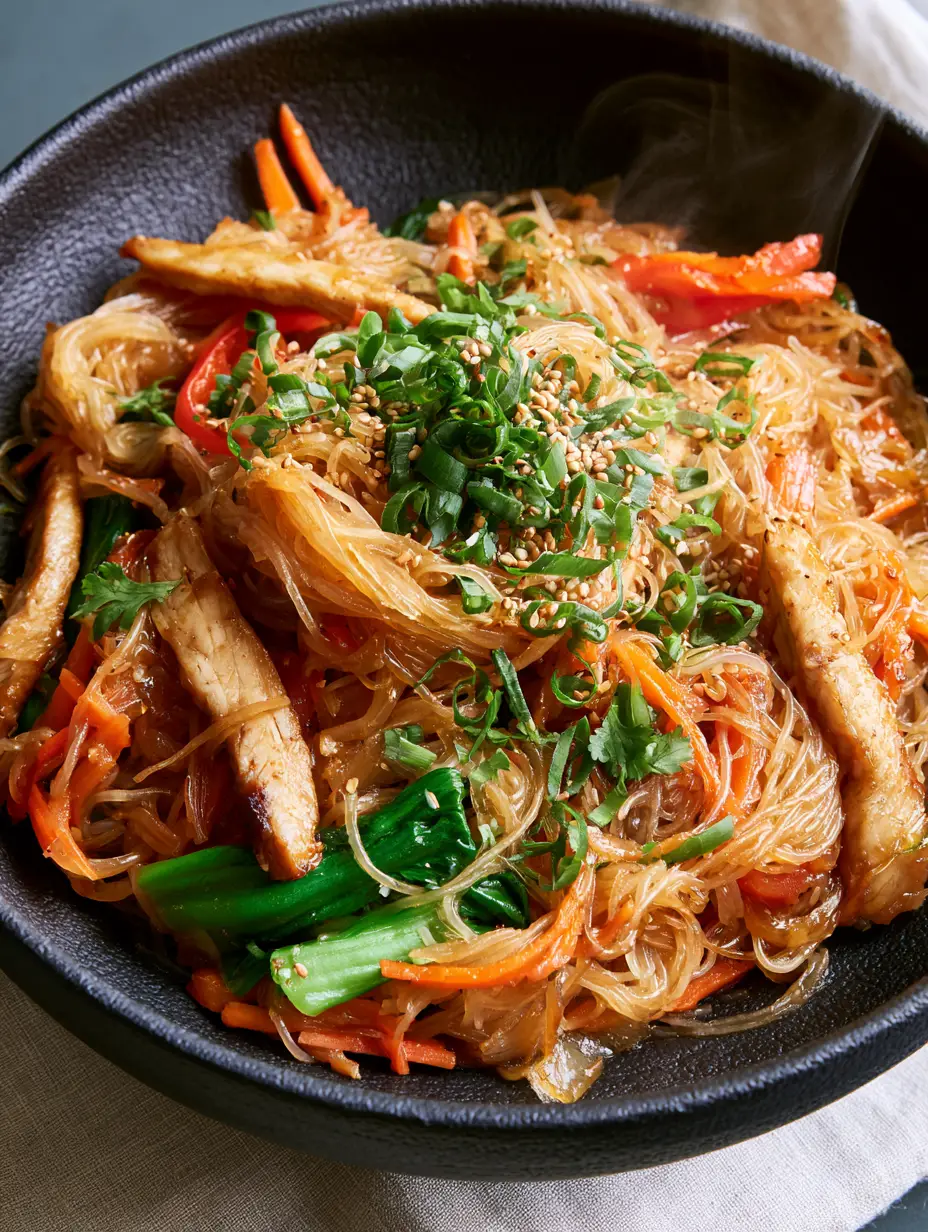
Chicken Mei Fun: The Secret to Restaurant-Quality Rice Vermicelli at Home
Ingredients
Equipment
Method
- Soak the rice vermicelli in boiling water for 3-5 minutes until tender. Drain, rinse with cold water, and set aside.
- Julienne the carrots and peppers, chop the bok choy, and slice the chicken into thin strips.
- Heat oil in a wok and sear chicken strips until golden-brown and fully cooked (about 4-5 minutes). Remove from wok.
- Add remaining oil and stir-fry carrots, peppers, and bok choy for 3 minutes until crisp-tender.
- Add noodles and chicken back to the wok. Pour in the soy sauce, oyster sauce, and sesame oil. Toss vigorously for 2 minutes over high heat.
- Top with sliced scallions, toasted sesame seeds, and cilantro sprigs before serving.
Notes
Use high heat to achieve the signature 'wok hei' flavor and golden chicken crust.
Master Your Weeknight Stir-Fry
Chicken Mei Fun is a testament to how simple ingredients like rice noodles, chicken, and fresh vegetables can be transformed into a high-end dining experience with the right technique. By focusing on the sear of the chicken and the texture of the vermicelli, you create a dish that is as visually stunning as it is delicious.
We would love to see your culinary creations! If you made this recipe, please leave a comment below and tell us how your “noodle twirl” turned out. Don’t forget to follow us and share your photos to Pinterest for more inspiration!