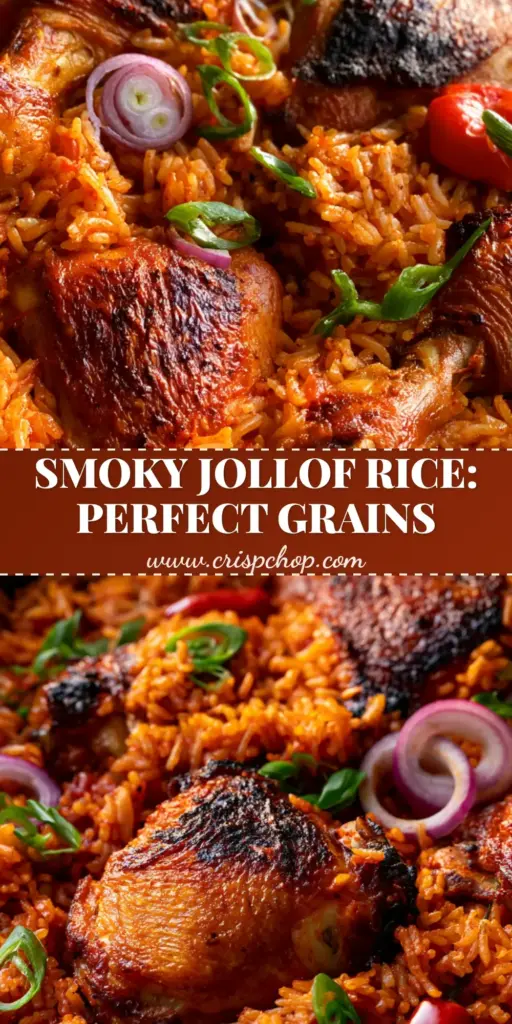
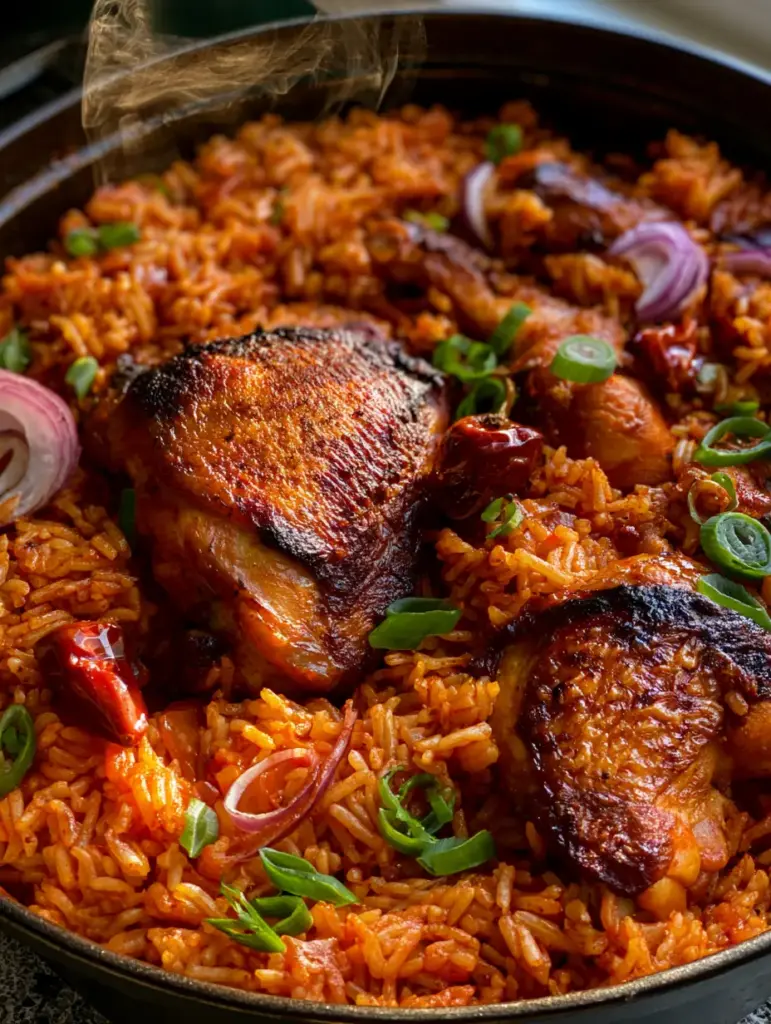
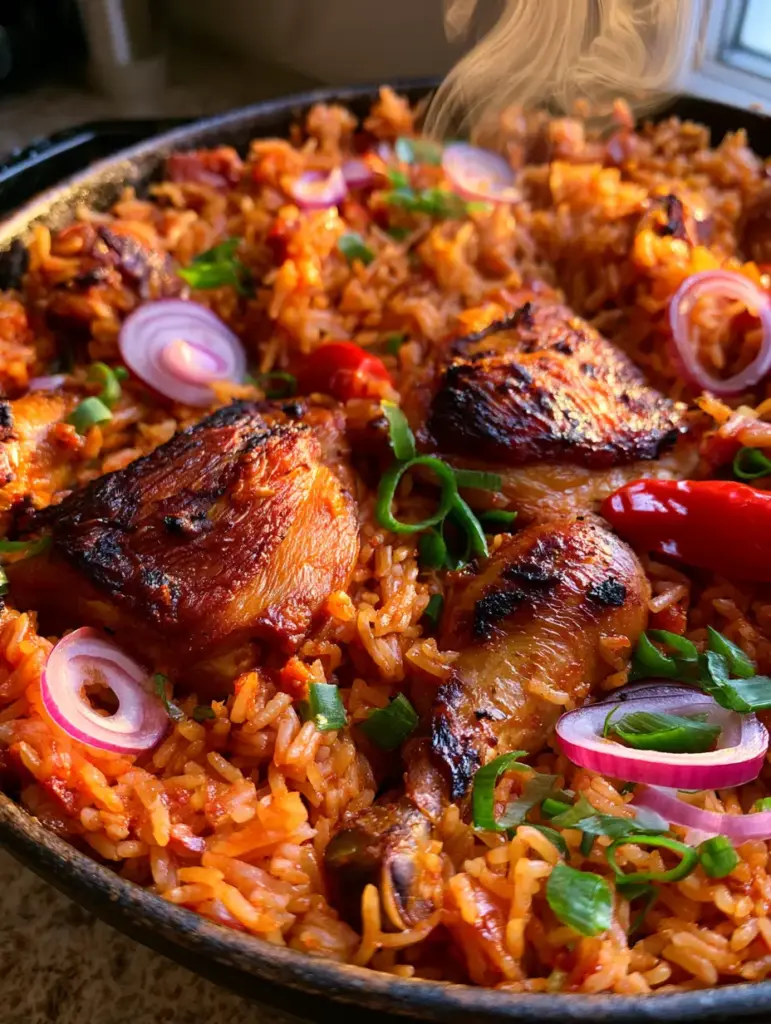
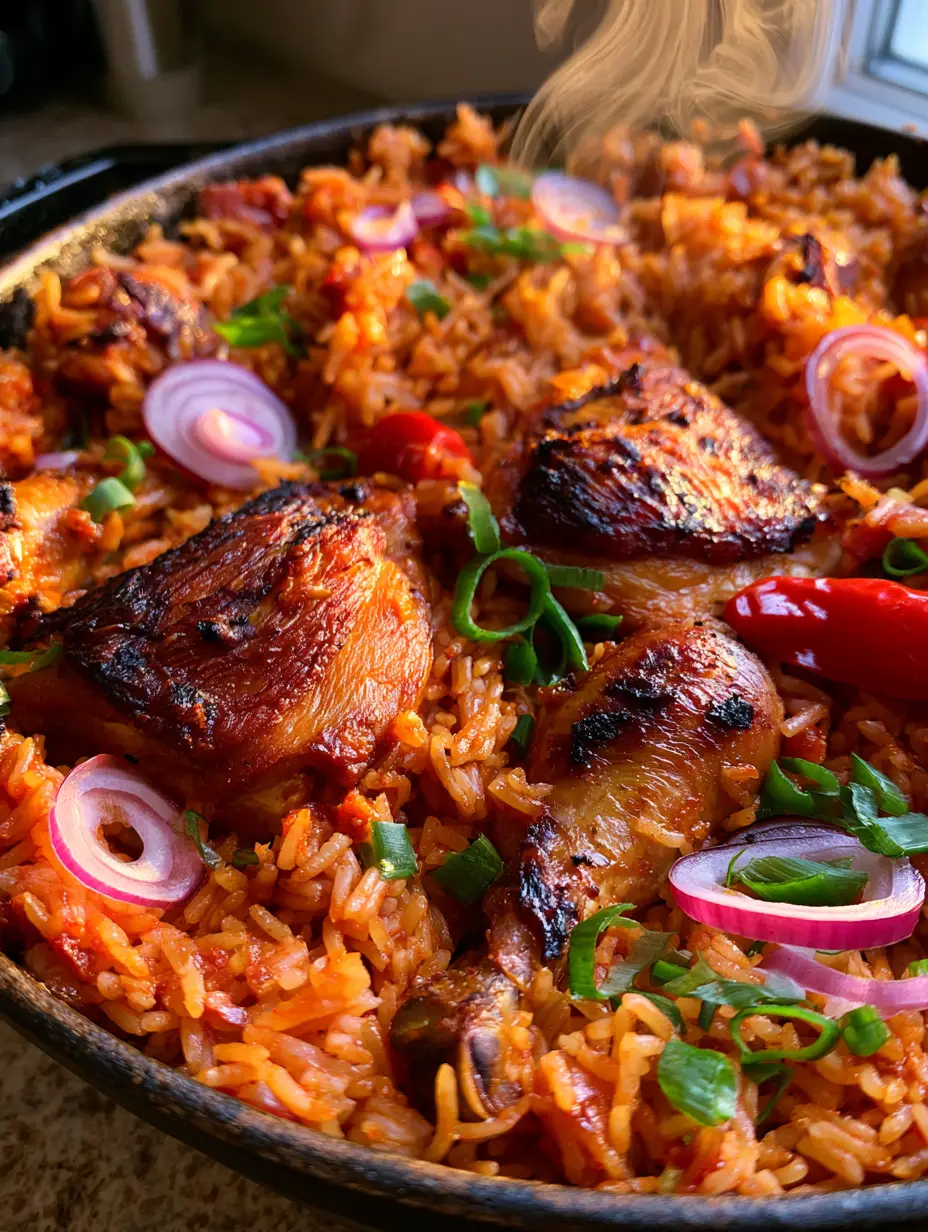
There is nothing quite like the sight of a rustic black cast iron pot overflowing with vibrant, orange-red Chicken Jollof Rice. The way the light catches those perfectly separated long-grain parboiled rice grains, each one coated in a glossy, concentrated pepper base, is enough to make anyone’s mouth water. It is a dish that carries the heart of West African soul, and today, we are perfecting it with succulent, crispy-skinned chicken thighs.
The secret to a world-class Chicken Jollof Rice lies in the “bridge” between the searing of the meat and the steaming of the rice. By using the same pot for every step, we build layers of umami that a simple boiling method could never achieve. As the ethereal wisp of steam rises from the pot, you’ll know you’ve captured that authentic, celebratory essence that defines the best Jollof on the planet.
In this guide, we aren’t just making a meal; we are engineering a sensory experience. From the snap of the thin-sliced red onions to the aromatic heat of whole red scotch bonnet peppers, every detail in this recipe is designed to match the professional culinary standards of the world’s best kitchens.
The Anatomy of Flavor: Why This Recipe Works
- Perfectly Separated Grains: By using long-grain parboiled rice and a precise steaming technique, we avoid the mushiness that often plagues home-cooked rice dishes.
- The “Maillard” Chicken: Bone-in, skin-on thighs are seared until deep golden-brown, ensuring the skin stays crispy while the meat remains succulent under the rice.
- Concentrated Pepper Base: A high ratio of red bell peppers to tomatoes creates that iconic vibrant orange-red hue without thinning out the flavor.
- Cast Iron Magic: The heavy lid and heat retention of a cast iron pot create a convection-like environment for the rice to swell evenly.
The Master Ingredient List for Vibrant Jollof
Long-Grain Parboiled Rice: 3 cups (600g). Parboiled rice is essential because it has been partially boiled in the husk, making the grains sturdier and less likely to stick together than standard white rice.
Bone-In, Skin-On Chicken Thighs: 6 large pieces (approx. 2 lbs / 900g). The bone provides deep flavor to the rice, while the skin provides the essential fats needed to fry the tomato base later.
The “Obasanjos” Pepper Base: 3 large red bell peppers (450g), 1 can (6 oz / 170g) tomato paste, and 2 medium red onions (300g). This trio creates the concentrated, sweet, and tangy foundation of the entire dish.
Aromatic Fat: 1/2 cup (120ml) vegetable oil. This isn’t just for cooking; it carries the fat-soluble flavors of the curry powder and thyme throughout the rice.
Liquid Gold (Chicken Stock): 2.5 cups (600ml). Always use high-quality, salted stock to ensure the rice is seasoned from the inside out, rather than just on the surface.
The Visual Garnishes: 1 small red onion (sliced into thin rings), 3-4 whole red scotch bonnet peppers, and 3 scallions (finely chopped). These provide the final aesthetic pop and fresh contrast to the rich, cooked rice.
Invisible Essentials: 2 tsp (10g) curry powder, 1 tsp (5g) dried thyme, 3 bay leaves, and 2 tsp (12g) kosher salt. These spices provide the “warmth” that characterizes a classic West African profile.
Essential Tools for the Professional Home Cook
To achieve the visual result seen in our photos, a 5-quart (4.7L) rustic black cast iron pot (Dutch Oven) is non-negotiable. Its ability to maintain a steady, low heat is what allows the rice at the bottom to slightly “burn” or caramelize—a feature known as “bottom pot” that Jollof lovers crave.
You will also need a high-speed blender to emulsify the pepper base into a smooth, glossy puree. A sharp mandoline or chef’s knife is required for those ultra-thin red onion rings that garnish the final dish, adding a professional touch to your presentation.
Engineering the Perfect Chicken Jollof Rice: Step-by-Step
Step 1: The High-Heat Chicken Sear
Pat the chicken thighs completely dry with paper towels; moisture is the enemy of a crispy sear. Season generously with salt and pepper. Heat the oil in your cast iron pot over medium-high heat until it begins to shimmer and a light wisp of smoke appears.
Place the chicken skin-side down in the oil. Listen for a loud, aggressive sizzle—this indicates the Maillard reaction is taking place. Sear for 6-8 minutes without moving them until the skin is a deep, charred golden-brown. Flip and cook for 3 minutes, then remove and set aside on a plate.
Step 2: Reducing the Concentrated Pepper Base
In the same oil (now flavored with chicken fat), add your blended bell peppers, onions, and scotch bonnets (if blending them). Stir in the tomato paste. This is the most critical stage of Chicken Jollof Rice: the “fry.”
Cook the mixture over medium heat for 15-20 minutes, stirring frequently. You are looking for a visual change: the color will shift from a bright red to a deep, dark maroon, and the oil will begin to separate and float on top. This concentration of sugars is what gives the rice its glossy coating.
Step 3: Toasting the Parboiled Grains
Add your rinsed rice to the fried pepper base. Stir constantly for 3-5 minutes, ensuring every single grain is translucent and coated in the orange-red oil. This “toasting” phase creates a barrier around the starch, preventing the grains from clumping together during the steaming process.
Pour in the chicken stock, curry powder, thyme, and bay leaves. Taste the liquid; it should taste slightly “over-salted,” as the rice will absorb a significant amount of seasoning as it expands.
Step 4: The Low-and-Slow Steam Phase
Nestle the seared chicken thighs back into the rice, skin-side up. Place the whole red scotch bonnet peppers on the surface—these will perfume the dish without releasing all their heat unless they burst. Cover the pot with a piece of aluminum foil, then press the heavy cast iron lid on top to create an airtight seal.
Turn the heat down to the lowest possible setting. Steam for 25-30 minutes. Resist the urge to open the lid! The steam trapped by the foil is what cooks the rice grains to a perfectly tender, separate consistency.
Expert Tips for Visual and Flavor Success
- The Foil Trick: If you find your rice is still hard after 30 minutes, do not add more water. Instead, sprinkle a tablespoon of water over the foil and reseal; the extra steam will finish the job.
- The “Burn” is a Bonus: In Nigerian culture, the slightly scorched rice at the bottom of the pot (known as “party rice” flavor) is highly prized for its smoky aroma.
- Rinse Until Clear: Wash your parboiled rice 5-6 times until the water runs completely clear of starch. This is the only way to ensure those “separated grains” seen in the blueprint.
- Don’t Stir Mid-Cook: Stirring releases starch and breaks the grains. Let the pot do the work!
Storage, Reheating, and Make-Ahead Advice
Chicken Jollof Rice actually tastes better the next day as the spices have more time to meld. Store leftovers in an airtight container in the refrigerator for up to 4 days. When reheating, avoid the microwave if possible; instead, place the rice back in a pot with a splash of water, cover tightly, and steam on low heat to restore the glossy texture.
This dish also freezes exceptionally well. You can freeze the cooked rice and chicken for up to 3 months. Thaw overnight in the fridge before reheating using the steam method mentioned above.
What to Serve with Your One-Pot Masterpiece
While this is a complete meal on its own, traditional sides can elevate the experience. A side of fried sweet plantains (Dodo) provides a sugary contrast to the spicy rice. For a lighter touch, a crisp fresh garden salad or a refreshing cucumber-based rice salad works beautifully.
If you are exploring other West African variations, you might also be interested in the differences found in Ghanaian Jollof rice or the unique smokiness of Nigerian party Jollof rice. For those looking for a plant-based alternative, our vegan Jollof rice recipe uses mushrooms to replicate that savory depth.
Frequently Asked Questions
Yes, but ensure you use a heavy-bottomed pot with a very tight-fitting lid to mimic the heat retention and steam-trapping properties of cast iron.
The key is a high ratio of red bell peppers and frying your tomato paste in oil until it darkens. This creates a concentrated, oil-based dye that coats every grain.
It has a warm heat from the pepper base, but the whole scotch bonnets added at the end are mainly for aroma. For less heat, remove the seeds from the peppers in the blended base.
Long-grain parboiled rice is the gold standard for Jollof because it is sturdy and maintains its shape, ensuring the grains stay separate and fluffy rather than mushy.
Bone-in thighs provide more fat and collagen, which flavors the rice during the steaming process, and they are much harder to overcook, staying succulent.
The Final Recipe: Chicken Jollof Rice
Chicken Jollof Rice: The Ultimate Guide to Smoky, One-Pot Perfection
Ingredients
Equipment
Method
- Blend the bell peppers, 2 onions, and 1 scotch bonnet until smooth.
- Heat oil in the cast iron pot; sear chicken skin-side down until crispy and charred (8 minutes). Set aside.
- Sauté tomato paste and blended mix in the same oil for 15-20 mins until oil separates.
- Add rice and stock. Top with chicken and whole peppers. Cover with foil and lid; steam on low for 30 mins.
Notes
Use a heavy lid for the best steam retention.
Share Your Culinary Creation!
This Chicken Jollof Rice is more than just a recipe; it’s a centerpiece for community and celebration. If you’ve followed this guide and achieved that perfect orange-red glow and crispy chicken skin, we want to see it! Share your photos and tag us, or leave a comment below with your favorite Jollof memory.
Don’t forget to save this recipe to your “Dinner Inspiration” board on Pinterest so you can come back to it whenever you need a guaranteed crowd-pleaser! For more vibrant West African flavors, check out our guide to Cameroonian Jollof techniques.