Bluegill recipes are the gold standard for fresh-water anglers and home cooks seeking a delicate, flaky, and buttery meal. This specific preparation focuses on a high-heat sear in a seasoned cast iron skillet, ensuring a jagged, golden-brown cornmeal crust that shatters upon the first bite. If you have been searching for the perfect way to transform a fresh catch into a gourmet dinner, this lemon-butter-drenched bluegill is the definitive answer for your kitchen table.
Why These Crispy Bluegill Fillets Are a Game Changer
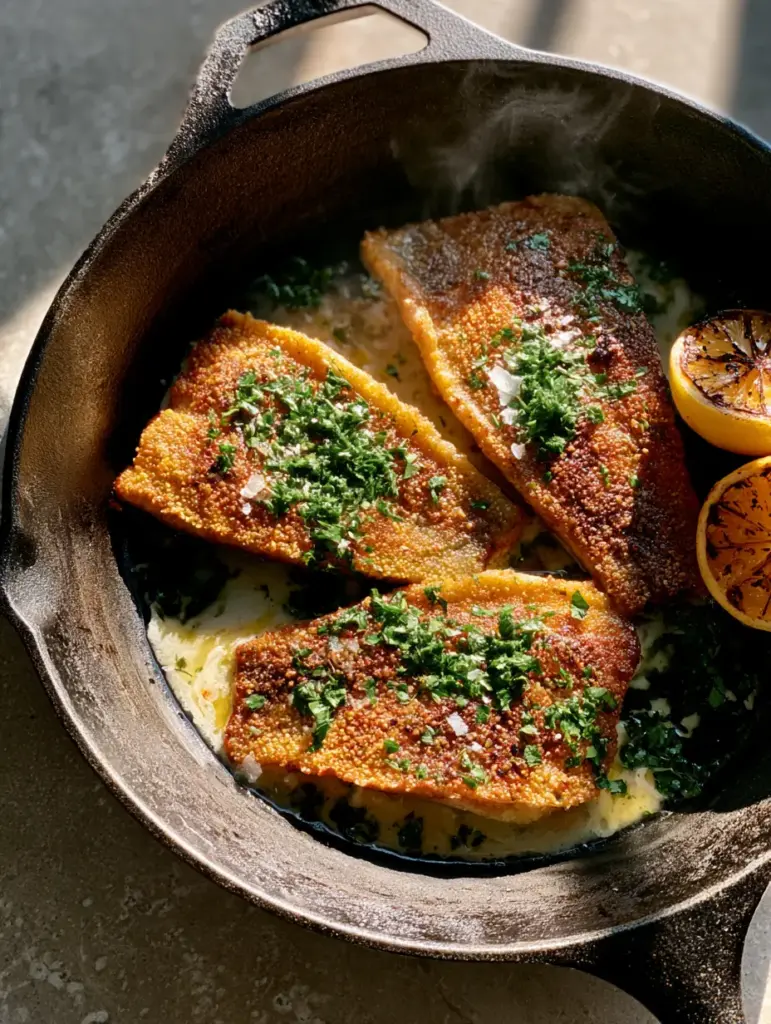
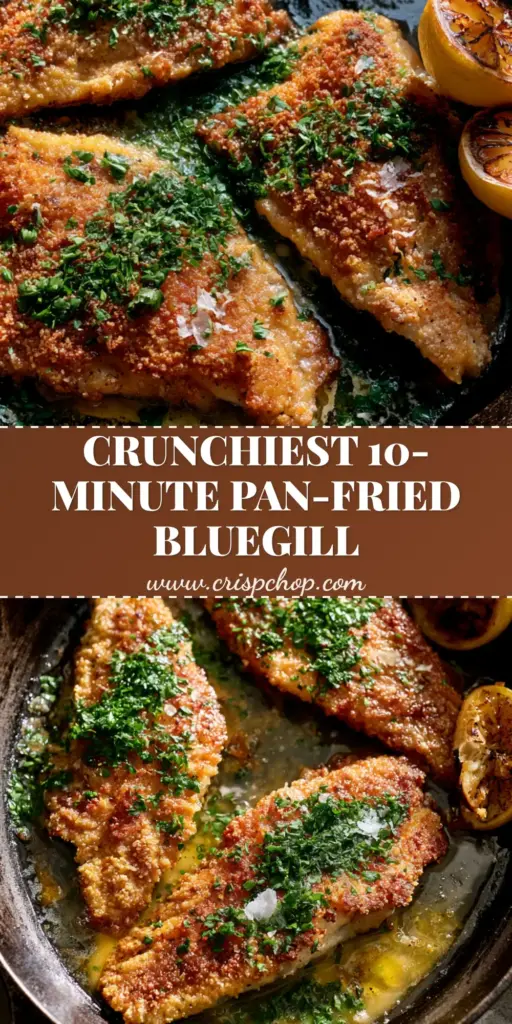
- Unmatched Texture: The combination of fine cornmeal and high-smoke-point oil creates crispy bubbles and crags that hold onto the shimmering lemon butter.
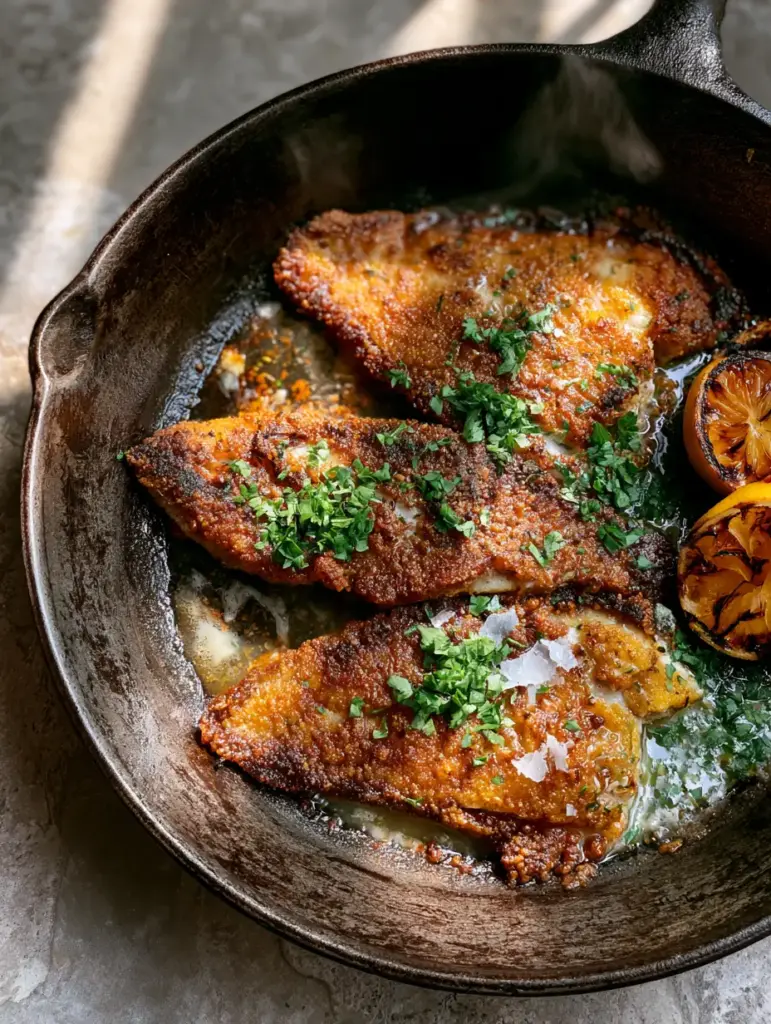
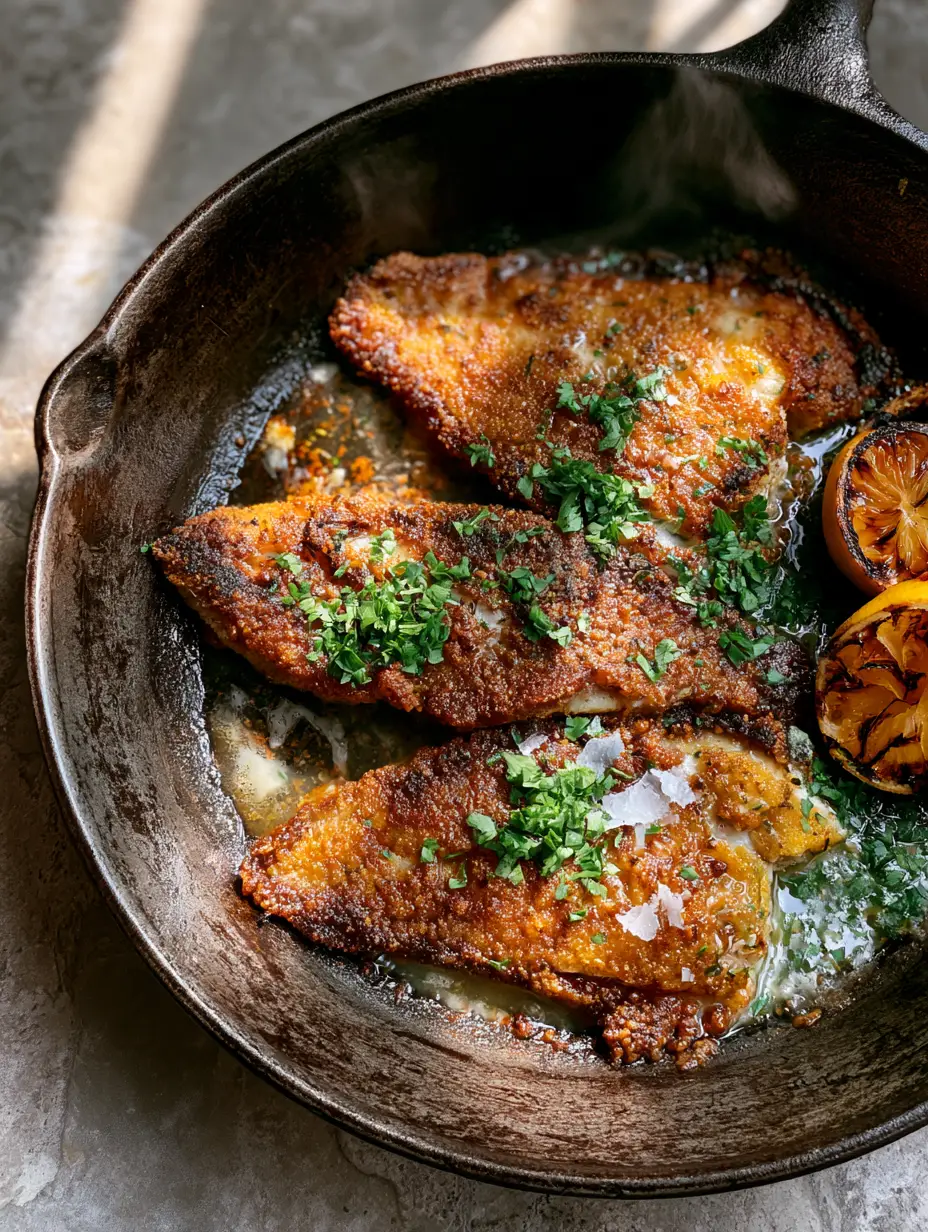
- Visual Masterpiece: From the bright green minced parsley to the deeply charred lemon halves, this dish looks like it belongs in a five-star bistro.
- Culinary Logic: Using a cast iron skillet provides superior heat retention, which is essential for achieving a flaky, moist interior without overcooking the delicate panfish.
- Balanced Flavor: The richness of the butter is perfectly cut by the acidity of the charred citrus and the mineral pop of flaky sea salt.
Essential Ingredients for the Perfect Pan-Fry
To master these bluegill recipes, you need ingredients that enhance the natural sweetness of the fish rather than masking it. Each component serves a technical purpose in building the final flavor profile.
The Breading Essentials
Fine Yellow Cornmeal: 1 cup (120g). This is the secret to that jagged, golden-brown crust. Cornmeal provides a structural crunch that standard flour cannot replicate alone. It creates the “crags” mentioned in our visual blueprint.
All-Purpose Flour: 1/2 cup (60g). Mixing flour with cornmeal helps the breading adhere to the bluegill fillets and creates a smoother, more cohesive coating.
Smoked Paprika & Garlic Powder: 1 tsp (2g) each. These add depth and a hint of color, ensuring the crust looks as good as it tastes. For a different flavor profile, you might enjoy the spices used in southern fried shrimp.
The Searing & Finishing Elements
Bluegill Fillets: 1 lb (450g), skin-on or off. Ensure they are patted extremely dry to allow the breading to stick. Freshness is key for these bluegill recipes.
Unsalted Butter: 4 tbsp (56g). We use unsalted to control the sodium levels, adding it at the end to create a decadent drizzle of shimmering lemon butter sauce.
Fresh Lemons: 2 large lemons. One is juiced for the sauce; the other is halved and charred in the skillet for a smoky, acidic punch. This technique is common in Provençal recipes to brighten up heavier proteins.
Fresh Parsley: 1/4 cup (15g), finely minced. This provides a “heavy dusting” of color and a fresh, herbaceous finish that cuts through the fried richness.
Step-by-Step Instructions for Gold-Standard Bluegill
Follow these steps closely to ensure your bluegill recipes result in the ultra-detailed appearance of a professional kitchen photograph. The secret lies in the temperature control and the final butter basting.
Step 1: Prep the Panfish
Rinse the bluegill fillets under cold water and pat them completely dry with paper towels. Moisture is the enemy of a crispy crust. If the fish is wet, the breading will become gummy instead of creating those crispy bubbles we want.
Step 2: The Double-Dredge Method
In a shallow bowl, whisk together your cornmeal, flour, paprika, garlic powder, 1 tsp (6g) kosher salt, and 1/2 tsp (1g) black pepper. Dredge each fillet, pressing firmly so the cornmeal crags form on the surface. Shake off the excess—you want a thin, even coat.
Step 3: The Cast Iron Sear
Place your seasoned black cast iron skillet over medium-high heat. Add 3 tbsp (45ml) of high-heat oil (like grapeseed or vegetable oil). Once the oil is shimmering and just beginning to smoke, lay the fillets in the pan. Do not overcrowd the skillet. You should hear a vigorous sizzle immediately.
Step 4: Achieving the Visual Blueprint
Fry the fillets for 2-3 minutes per side. You are looking for a golden-brown cornmeal breading. While the fish fries, place the lemon halves cut-side down in the empty spaces of the skillet. They will soften and develop a deeply charred surface, caramelizing the natural sugars.
Step 5: The Lemon Butter Finish
Reduce the heat to medium-low. Add the 4 tbsp (56g) of butter to the skillet. As it melts and begins to foam, tilt the pan and spoon the shimmering lemon butter over the fillets. This process, known as arroser in French food techniques, adds incredible moisture and flavor.
Expert Tips for Success
- Cold Fish, Hot Pan: Keep your fillets in the fridge until the moment you are ready to dredge. The temperature contrast helps create a crisper exterior.
- Skillet Maintenance: A well-seasoned cast iron skillet is non-stick by nature. If you find the fish sticking, the pan likely wasn’t hot enough when the fish was added.
- Don’t Flip Too Early: Let the crust form fully before attempting to flip. The fish will “release” from the pan naturally when the jagged crust is set.
- Flaky Salt Finish: Always finish with a pinch of flaky sea salt immediately after removing the fish from the heat so it sticks to the residual butter.
How to Store and Reheat Bluegill
While bluegill recipes are best enjoyed fresh from the stove, you can store leftovers in an airtight container for up to 2 days. To maintain the crispy cornmeal bubbles, do not use a microwave. Instead, reheat in a 350°F (175°C) oven or air fryer for 4-5 minutes until the butter sizzles again.
What to Serve With Pan-Fried Bluegill
This dish is incredibly versatile. For a lighter pairing, a sumac onion salad provides a sharp contrast to the fried fish. If you want a more traditional European presentation, consider serving it alongside classic French side dishes like roasted potatoes or steamed green beans.
Frequently Asked Questions
Bluegill is very thin and cooks quickly, usually in 2-3 minutes per side. It is done when the crust is golden-brown and the flesh flakes easily with a fork.
The secret is patting the fish extremely dry and using a combination of cornmeal and a high-heat cast iron skillet. The cornmeal creates the ‘crags’ that hold the crunch.
You can do both! Leaving the skin on adds extra flavor and helps hold the delicate fillet together, but skin-off is often preferred for a more uniform cornmeal crunch.
Use an oil with a high smoke point like vegetable, canola, or grapeseed oil. Avoid olive oil for the initial sear as it may burn before the fish is crispy.
The Ultimate Pan-Fried Bluegill Recipe
Bluegill Recipes: The Ultimate Crispy Pan-Fried Lemon Butter Fillets
Ingredients
Equipment
Method
- Pat the bluegill fillets extremely dry with paper towels to ensure breading sticks.
- Combine cornmeal, flour, and spices in a shallow dish.
- Coat fillets in the cornmeal mixture, pressing to create crags.
- Heat oil in cast iron skillet and fry fillets for 2-3 minutes per side until golden-brown and crispy.
- Place lemon halves cut-side down in the pan while fish cooks until charred.
- Add butter and lemon juice to the pan, basting the fish for 1 minute before serving.
Notes
Tip 2. Finish with flaky sea salt immediately for the best flavor pop.
Join the CrispChop Community!
Did you catch a limit of bluegill and try this recipe? We want to see your results! Save this recipe to your Seafood or Fresh Catch board on Pinterest so you never lose it. If you made these bluegill recipes, please leave a 5-star rating in the recipe card above and upload a photo of your skillet in the comments below! For more daily culinary inspiration, follow @crispchop for the best in crispy, buttery goodness.