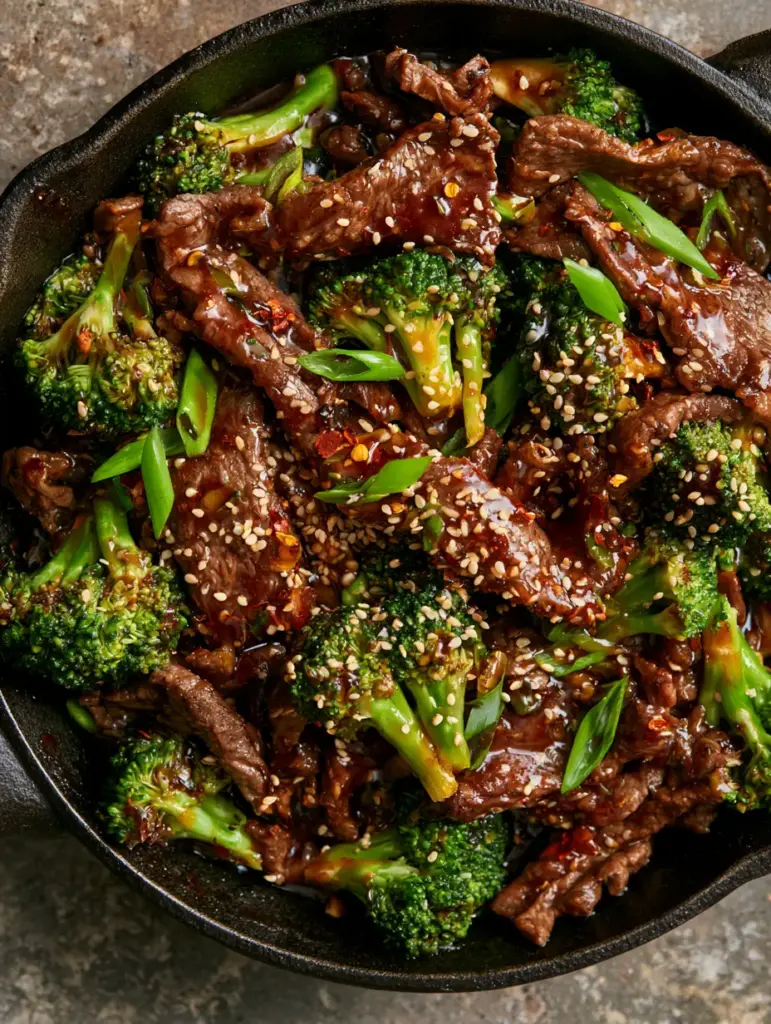
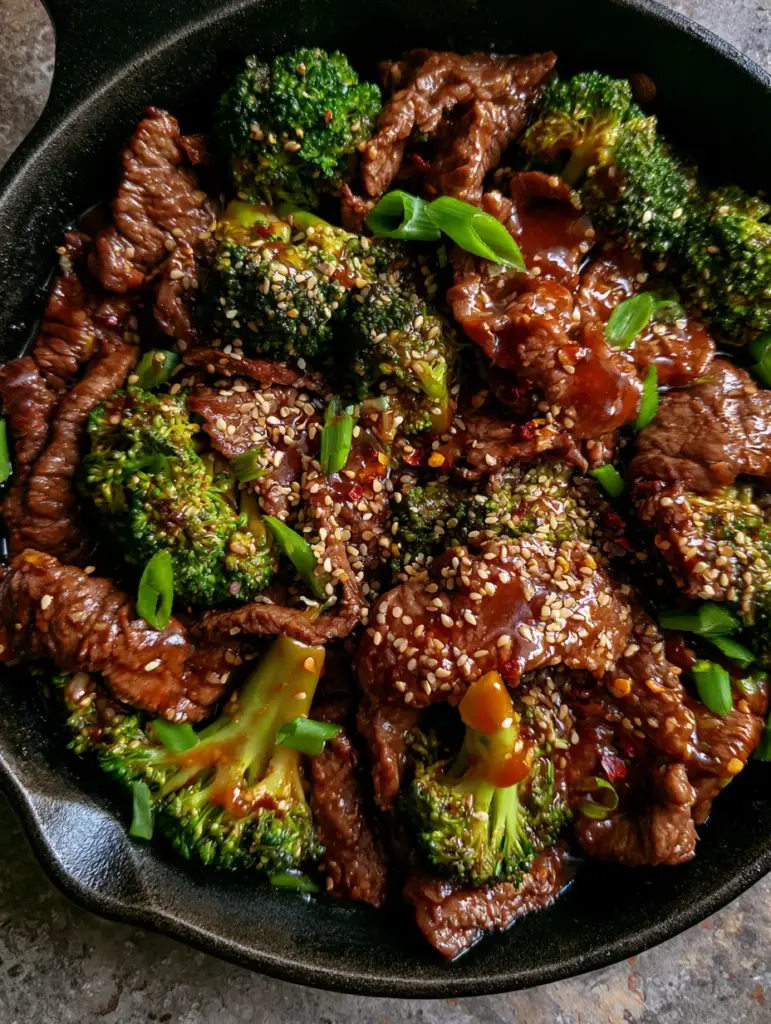
When you crave a restaurant-quality beef and broccoli, you aren’t just looking for meat and vegetables in a pan; you are seeking a specific sensory experience. You want that deep mahogany, semi-translucent sauce that clings to every crevice of the vegetables and that signature “velvet” texture on the beef that makes it melt in your mouth. This recipe delivers exactly that, resulting in a dish that looks like a macro-shot masterpiece with vibrant electric green broccoli and glistening ribbons of steak.
Making this classic dish at home often leads to tough meat or mushy, dull-colored broccoli. By using professional culinary techniques like velveting and precision blanching, we will transform humble ingredients into a high-end stir-fry. Whether you are serving this over steamed rice or enjoying it straight from the cast iron skillet, the contrast of the toasted white sesame seeds and the sharp bite of fresh scallions creates a symphony of flavor and texture.
Why This Is the Only Beef and Broccoli Recipe You’ll Ever Need
- The Velveting Technique: We use a cornstarch-based marinade to create a protective barrier, ensuring the beef remains tender and succulent even under high heat.
- Vibrant Color Contrast: By blanching the broccoli first, we lock in an electric green hue that perfectly offsets the dark, rich ginger-garlic sauce.
- The Cast Iron Advantage: Cooking in a seasoned black cast iron skillet provides superior heat retention, allowing for that essential restaurant-style sear.
- Layered Heat: The addition of clear chili oil and crushed red pepper flakes adds a sophisticated glow and a gentle warmth to the finish.
Essential Components for a High-End Stir-Fry
Flank Steak: This lean cut is the gold standard for stir-fry because its long fibers are perfect for creating thin, wide ribbons. When sliced against the grain, it becomes incredibly tender during the quick searing process.
Broccoli Florets: You want fresh, firm heads of broccoli that can be cut into uniform bite-sized pieces. These will be blanched to a tender-crisp state so they maintain their structural integrity against the heavy sauce.
The Mahogany Glaze: A combination of soy sauce, oyster sauce, and beef broth creates the base. The oyster sauce is the “secret” to that thick, glossy dark brown finish that catches the light in your skillet.
Aromatics (Ginger and Garlic): Freshly grated ginger and minced garlic provide the pungent, spicy backbone of the dish. Avoid the jarred stuff; fresh aromatics are non-negotiable for the proper flavor profile.
Invisible Essentials: You will need a high-smoke-point oil (like grapeseed or vegetable oil) for searing and a touch of toasted sesame oil for that nutty aroma. Baking soda is a professional secret used in the marinade to further break down tough meat fibers.
Must-Have Tools for the Perfect Sear
To achieve the visual result of a glistening, high-contrast stir-fry, the equipment matters as much as the ingredients. A 12-inch (30cm) cast iron skillet is the preferred vessel here because it mimics the heat of a commercial wok better than a standard non-stick pan.
You will also need a sharp chef’s knife for cutting the beef into those thin, translucent ribbons and a large pot of salted water for blanching the broccoli. A spider strainer or slotted spoon is helpful for transferring the broccoli quickly to an ice bath to stop the cooking process immediately.
The Art of Velveting: Preparing the Beef
Slicing for Success
Place your 1 lb (450g) flank steak in the freezer for 15-20 minutes before slicing. This firms up the meat, allowing you to cut extremely thin ribbons against the grain, which is essential for that restaurant-style mouthfeel.
The Velveting Marinade
In a medium bowl, whisk together 1 tbsp (15g) cornstarch, 1 tbsp (15ml) soy sauce, 1 tbsp (15ml) vegetable oil, and 1/4 tsp (1.5g) baking soda. Toss the beef ribbons in this mixture until every piece is coated; the cornstarch creates a silky “velvet” coating when it hits the hot oil.
Mastering the Electric Green Blanching Technique
To get that vibrant, electric green broccoli seen in high-end photography, you must blanch. Bring a pot of water to a rolling boil and add a generous pinch of salt. Drop in 4 cups (approx. 300g) of broccoli florets and cook for exactly 60-90 seconds.
Immediately remove the broccoli and plunge it into a bowl of ice water. This “shocks” the vegetables, setting the chlorophyll and ensuring they remain tender-crisp. Drain them thoroughly; any excess water will steam the beef later, which we want to avoid to maintain the sear.
Building the Glossy Ginger-Garlic Sauce
In a small jar, combine 1/2 cup (120ml) beef broth, 1/4 cup (60ml) soy sauce, 2 tbsp (30ml) oyster sauce, 1 tbsp (12g) brown sugar, and 1 tsp (5ml) toasted sesame oil. Whisk in 1 tbsp (9g) of cornstarch until smooth.
This sauce will look light at first, but as the cornstarch hydrates and the sugars caramelize in the skillet, it will transform into a deep mahogany glaze. The oyster sauce provides the viscosity needed to make the sauce cling to the florets like a dark, semi-translucent silk.
Execution: The High-Heat Skillet Dance
Searing the Beef Ribbons
Heat your cast iron skillet over high heat until a drop of water flicked onto the surface dances and evaporates instantly. Add 2 tbsp (30ml) of high-heat oil. Spread the beef in a single layer; let it sit undisturbed for 60 seconds to develop a deep brown crust.
Infusing the Aromatics
Toss the beef and push it to the sides of the skillet. Add 1 tbsp (15g) of minced garlic and 1 tbsp (15g) of grated ginger to the center. Sauté for 30 seconds until the aroma fills the kitchen, then incorporate the meat back into the center.
The Final Glaze
Pour the sauce mixture into the skillet. As it bubbles and thickens (about 1-2 minutes), add the blanched broccoli back in. Toss everything together until the sauce is thick, glossy, and mahogany-dark, coating the beef and broccoli perfectly.
Expert Tips for Success
- Don’t Crowd the Pan: If your skillet isn’t large enough, sear the beef in two batches. Overcrowding drops the temperature, causing the meat to boil in its juices rather than sear.
- Dry the Broccoli: After the ice bath, use a clean kitchen towel to pat the broccoli dry. Water is the enemy of a glossy sauce; it will dilute the glaze and make it look thin.
- Balance the Heat: The crushed red pepper flakes should be added at the very end as a garnish. This keeps their color bright and prevents the spice from becoming overwhelmingly bitter in the high heat.
- The Glistening Finish: For that smartphone-photography shine, drizzle a teaspoon of clear chili oil over the dish just before serving. It catches the light and adds depth.
Storage, Reheating & Freezing
Beef and broccoli is best enjoyed immediately while the broccoli is crisp, but leftovers can be stored in an airtight container in the refrigerator for up to 3 days. To reheat, use a skillet over medium heat with a splash of water to loosen the sauce; avoid the microwave if possible to prevent the beef from turning rubbery.
We do not recommend freezing this dish, as the broccoli florets will lose their signature tender-crisp texture and become mushy upon thawing. The sauce may also break and lose its glossy finish.
What to Serve With This Dish
This stir-fry is traditionally served over a bed of fluffy jasmine rice or brown rice to soak up the extra mahogany sauce. If you’re looking to expand your Asian-inspired menu, consider starting the meal with a side of dumpling sauce and steamed potstickers.
For those who enjoy a variety of textures, pairing this with a one-pot chicken and rice dish can provide a hearty spread for a family dinner. If you want more bold steak flavors, our pepper steak is a fantastic companion recipe to master next. For a lighter poultry alternative, you can’t go wrong with a classic chicken and broccoli recipe.
Frequently Asked Questions
While flank steak is traditional, you can also use skirt steak or top sirloin. The key is to slice it very thinly against the grain to break up the tough muscle fibers.
A seasoned cast iron skillet is highly recommended because it retains heat better than stainless steel or non-stick, allowing you to get a deep mahogany sear on the beef without overcooking the center.
Blanch the broccoli florets in boiling salted water for 60-90 seconds, then immediately plunge them into an ice bath. This stops the cooking and locks in the ‘electric green’ color and tender-crisp texture.
The secret is a technique called ‘velveting.’ By marinating thin slices of flank steak in a mixture of cornstarch, soy sauce, and a pinch of baking soda, you create a protective barrier that keeps the meat succulent and tender during high-heat searing.
A glossy sauce requires the right ratio of cornstarch to liquid and the addition of oyster sauce. Ensure the sauce reaches a full boil in the skillet; the cornstarch must be heated to its thickening point to become clear and glossy.
The Perfect Beef and Broccoli Recipe
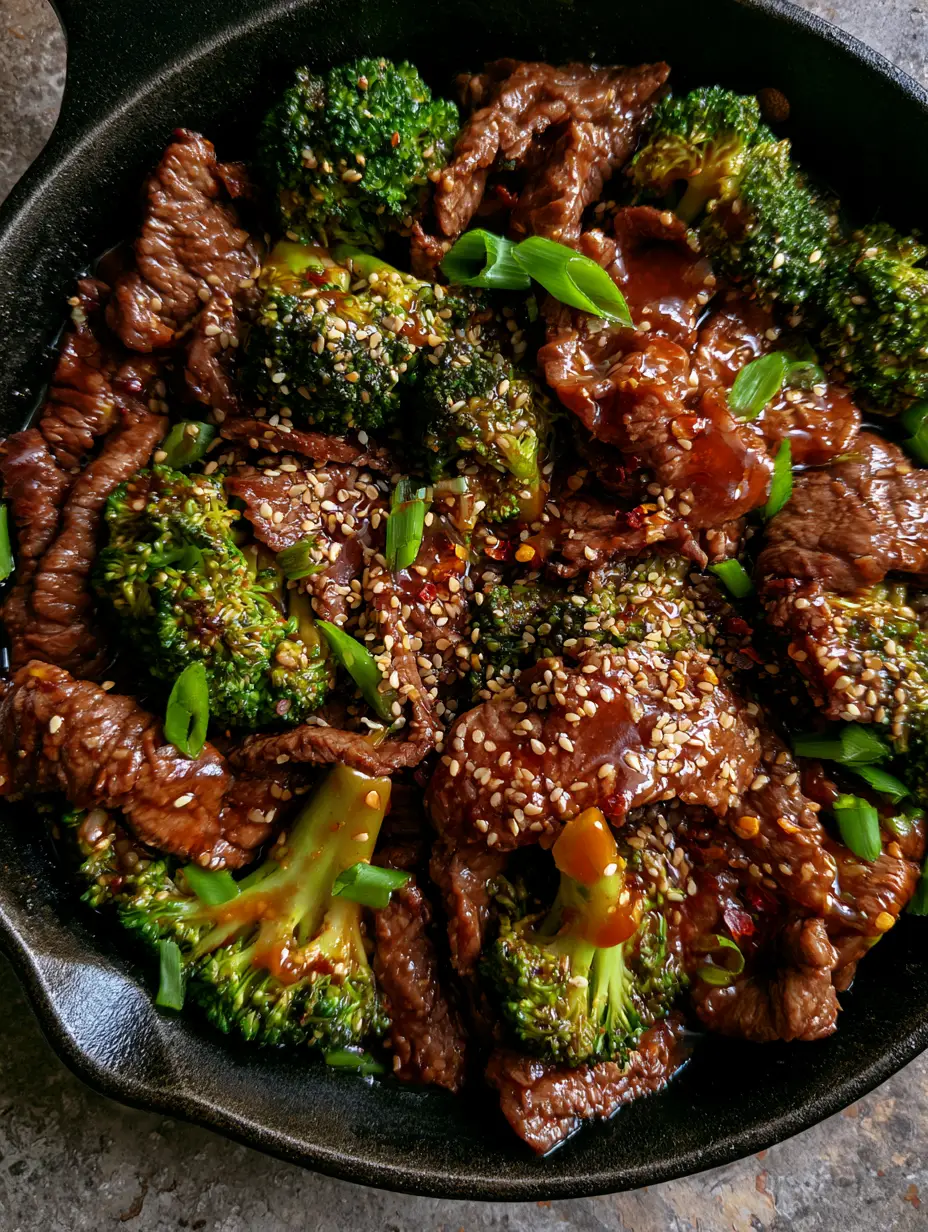
Beef and Broccoli: The Ultimate Guide to Silky Flank Steak and Electric Green Florets
Ingredients
Equipment
Method
- Combine sliced flank steak ribbons with cornstarch, soy sauce, oil, and baking soda. Let marinate for 20 minutes.
- Boil broccoli florets for 90 seconds, then immediately shock in an ice bath. Drain and pat dry to ensure an electric green color.
- Heat oil in a cast iron skillet over high heat. Sear beef ribbons in a single layer until a deep mahogany crust forms.
- Add ginger and garlic to the center of the skillet, stirring for 30 seconds until fragrant.
- Pour in the sauce mixture and stir until it becomes a thick, glossy dark brown glaze. Return broccoli to the pan and toss to coat.
- Top with toasted white sesame seeds, bias-cut scallions, a drizzle of chili oil, and red pepper flakes.
Notes
Ensure the broccoli is completely dry after the ice bath to maintain sauce viscosity.
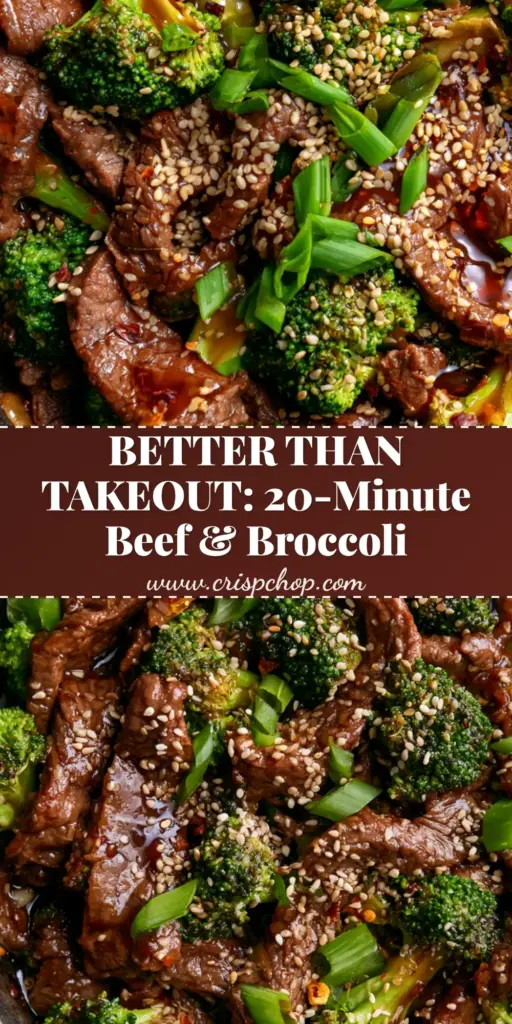
Closing & Call to Action
Mastering this beef and broccoli recipe brings the vibrant colors and deep, umami-rich flavors of a professional kitchen into your home. The combination of the velvety steak and the electric green broccoli creates a visual and culinary experience that is hard to beat. If you enjoyed this recipe, please leave a comment below and let us know how your cast iron sear turned out!
Don’t forget to follow us and share your creations on Pinterest using the hashtag #CrispChop. Happy cooking!