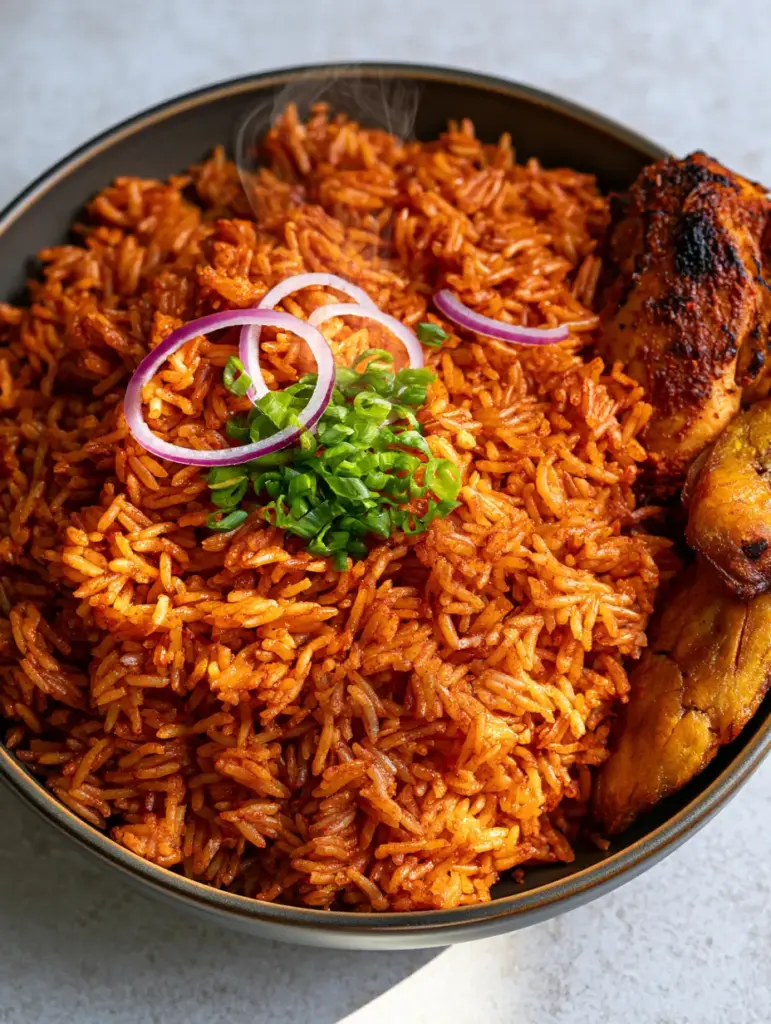
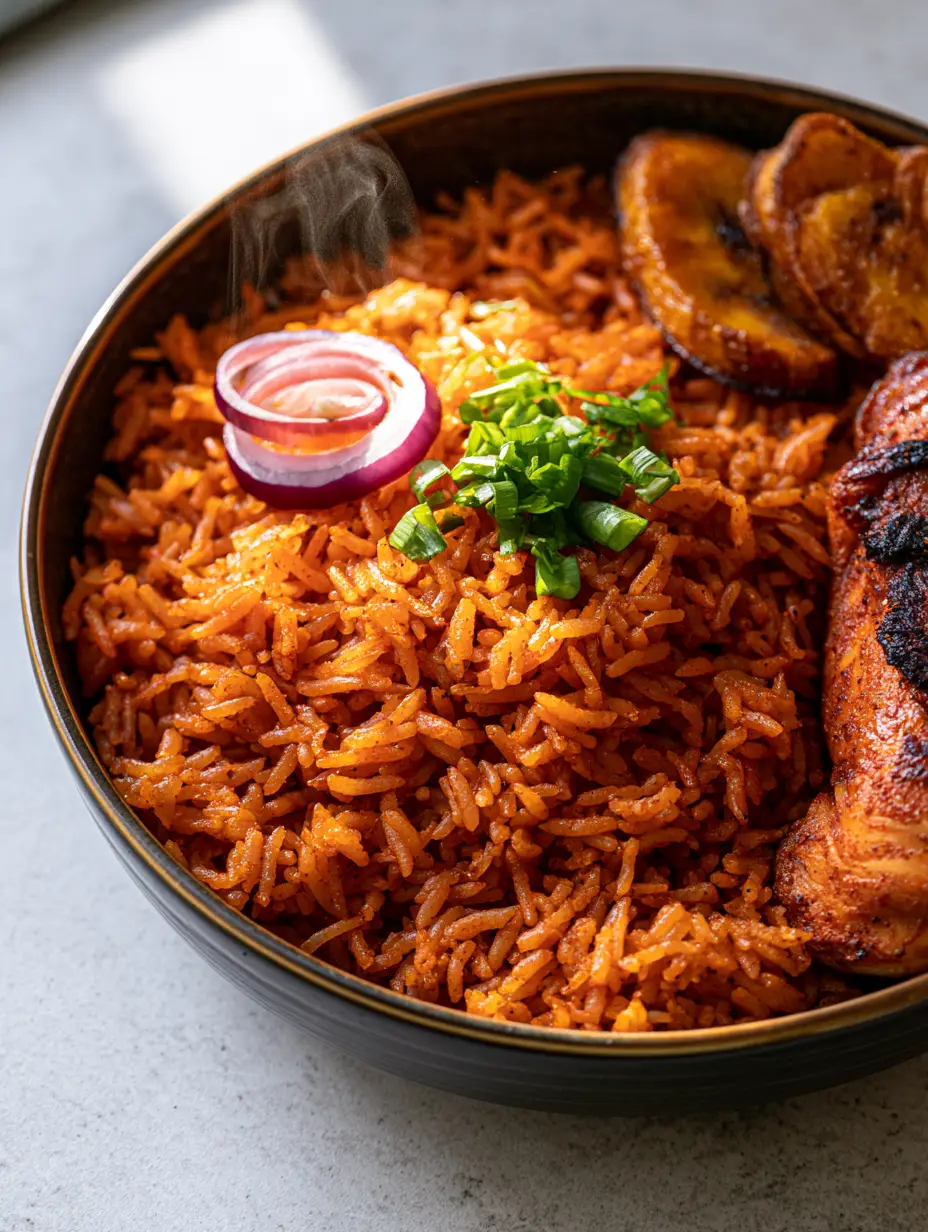
Ghanaian jollof rice is more than just a meal; it is a cultural icon, a source of national pride, and a masterclass in building complex layers of flavor. When you look at a bowl of authentic Ghanaian jollof, you should see vibrant, deep reddish-orange grains that are perfectly separated, plump, and glistening with a light sheen of oil. There is a specific visual language to this dish—the thin wisps of steam rising from the center, the contrast of raw red onion rings, and the bright pop of green scallions.
Achieving the legendary “single-grain” texture while maintaining a rich, spice-infused moisture is the hallmark of a skilled cook. In this guide, we are going to replicate the exact visual and sensory experience of a high-quality home-cooked meal: succulent, spice-rubbed grilled chicken with visible char marks and caramelized golden-brown fried plantains. Whether you are a seasoned pro or a curious newcomer, this technique ensures your rice never turns into a mushy “concoction” rice, but stays true to the prestigious standards of the Gold Coast.
Why This Authentic Ghanaian Jollof Rice Stands Apart
- Perfect Grain Anatomy: Unlike other variations, this recipe focuses on long-grain parboiled rice that remains individual and firm, never clumping together.
- The “Obonu” Depth: A concentrated base of tomatoes, ginger, and scotch bonnets creates a deep red hue that permeates every single grain.
- The Signature Sheen: A precise ratio of vegetable oil ensures the rice looks succulent and professional, mirroring the natural highlights of daylight on a fresh plate.
- Textural Contrast: We pair the soft, steaming rice with the crunch of raw onions and the snap of perfectly charred chicken thighs.
The Anatomy of Flavor: Essential Ingredients and Their Roles
The Aromatic Stew Foundation
Long-Grain Parboiled Rice: 4 cups (800g). Parboiled rice is non-negotiable for the Ghanaian style; its pre-gelatinized starch ensures the grains stay separated even after absorbing the rich tomato stew.
Vegetable Oil: 3/4 cup (180ml). This provides the necessary fat to fry the tomato paste, removing its acidity and creating that glistening visual sheen seen in our blueprint.
Tomato Paste: 6 oz (170g). This is the secret to the deep reddish-orange color; frying it until it darkens is the first step to a successful jollof.
Fresh Tomatoes and Red Bell Peppers: 3 large tomatoes and 2 peppers. Blended together, these provide the bulk of the liquid and the natural sweetness that balances the heat.
The Heat and Spice Profile
Scotch Bonnet Peppers: 2 to 3 peppers (depending on heat tolerance). These provide the characteristic West African floral heat that lingers on the palate.
Red Onions: 3 medium onions. Two are blended into the base for sweetness, while one is sliced into raw rings for the final garnish to provide a sharp, crisp bite.
Fresh Ginger and Garlic: 2-inch (5cm) knob and 4 cloves. These aromatics are the “soul” of the dish, providing a zingy backnote that cuts through the richness of the oil.
Spices (Curry Powder, Thyme, Bay Leaves): 1 tbsp (6g) each. These foundational “invisible” ingredients build the savory complexity required for an award-winning flavor profile.
Professional Culinary Tools for Grain Success
To achieve the result in our visual blueprint, you need a heavy-bottomed pot, ideally a Dutch oven or a traditional cast aluminum “dadabee” pot. These distribute heat evenly, preventing the bottom from burning too quickly while the top remains raw. You will also need high-quality aluminum foil or parchment paper to create a tight seal, which allows the rice to steam in its own vapors rather than boiling in excess water.
Mastering the Obonu: Preparing the Deep Red Tomato Base
Step 1: Blending the Aromatics
Begin by blending your fresh tomatoes, red bell peppers, two of the onions, ginger, garlic, and scotch bonnets until completely smooth. This vibrant orange liquid is the lifeblood of your rice. If you prefer a more rustic texture, you can pulse the blender, but a smooth puree ensures an even color distribution across the long-grain rice.
Step 2: Frying the Tomato Paste
Heat the vegetable oil in your heavy pot over medium-high heat. Add the tomato paste and fry it for 5-8 minutes, stirring constantly. You are looking for a sensory cue: the paste will shift from a bright red to a dark, brick-red color, and the oil will begin to separate and turn orange. This removes the “tinny” taste and develops deep umami.
Step 3: The Long Simmer
Pour in your blended puree and add the curry powder, dried thyme, bay leaves, and bouillon cubes. Reduce the heat to medium and simmer for 20-25 minutes. The goal is to reduce the water content until you have a thick, bubbling, deep red concentrated stew. This is the most critical phase for flavor development.
The Steaming Method: How to Get Perfectly Separated Grains
Step 4: Rinsing and Incorporating the Rice
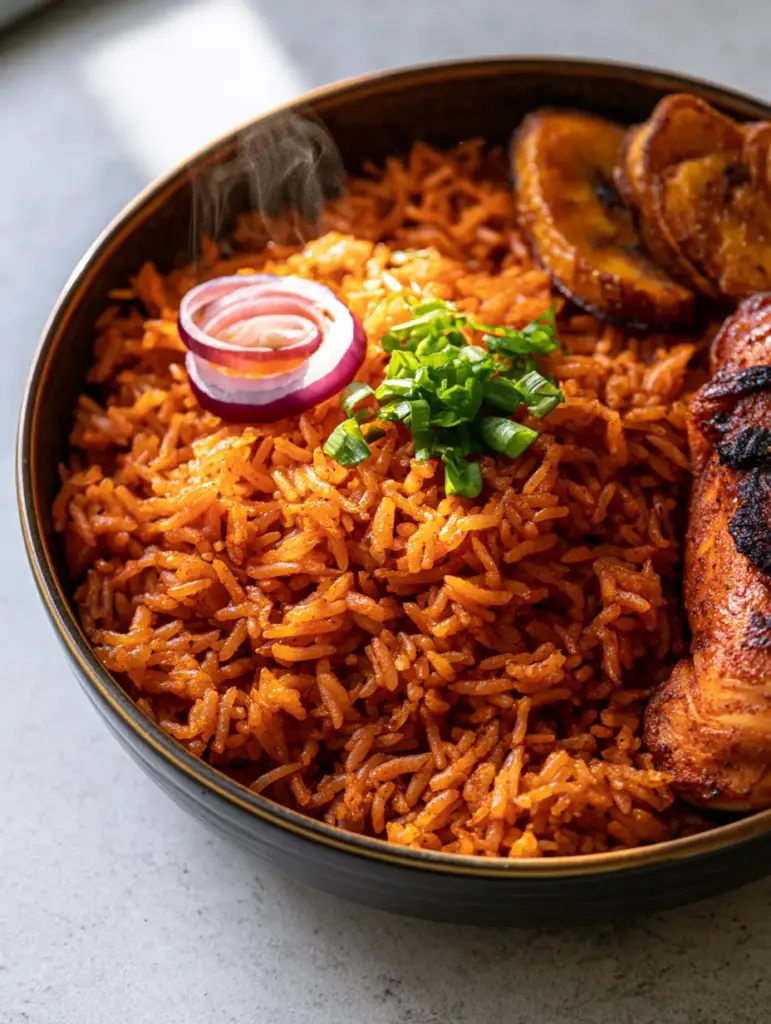
Wash your parboiled rice thoroughly under cold water until the water runs clear. This removes excess surface starch, which is the primary cause of sticky rice. Add the washed rice to the stew and stir until every grain is coated in the orange oil and red base. The rice should look saturated and vibrant.
Step 5: The Seal of Perfection
Add just enough chicken stock or water to barely cover the rice—usually about 1 cup (240ml) less than you think you need. Cover the pot tightly with a sheet of aluminum foil, then place the lid on top. Turn the heat down to the lowest possible setting. The rice must steam, not boil. Check it after 20 minutes, gently fluffing with a fork from the bottom up to ensure even cooking.
Crafting the Visual Accoutrements: Chicken and Plantains
The Spice-Rubbed Charred Chicken
While the rice steams, season your chicken thighs with salt, black pepper, and a touch of paprika. Sear them in a hot cast-iron skillet until you see visible char marks and a succulent, crispy skin. The contrast between the smoky chicken and the spicy rice is a hallmark of this dish, much like the chicken jollof rice variations found across the region.
Caramelizing the Sweet Plantains
Select ripe plantains with yellow skin and black spots. Slice them diagonally and fry in hot oil until they reach a deep, golden-brown caramelization. These provide the essential sweetness needed to balance the scotch bonnet heat. For a different take on spicy plantains, you might also enjoy spiced kelewele.
Expert Tips for Success
- The “Burn” is Flavor: In Ghana, the slightly burnt rice at the bottom of the pot (known as “kanzo”) is a delicacy. Don’t be afraid if the bottom catches slightly; it adds a smoky aroma to the entire pot.
- Don’t Over-Water: It is better to start with less liquid and add a splash more later if the rice is still too firm. Over-watering is the fastest way to ruin the texture.
- Use Fresh Ginger: Never substitute dried ginger powder. The moisture and bite of fresh ginger are essential for that authentic Ghanaian “zing.”
- Rest the Rice: Once the rice is cooked, turn off the heat and let it sit, covered, for 10 minutes. This allows the moisture to redistribute, ensuring every grain is plump.
What to Serve With Ghanaian Jollof Rice
While this dish is a powerhouse on its own, it is traditionally served with a side of cool coleslaw or a hard-boiled egg. If you are looking to explore other regional variations, compare this to the Nigerian jollof rice style, or perhaps try a vegan jollof rice for a plant-based alternative. For those who love festive rice dishes, the Persian jeweled rice offers a different but equally stunning visual experience.
Frequently Asked Questions
While you can use Basmati, it is not traditional for Ghanaian Jollof and tends to be softer. Parboiled rice is sturdier and better suited for the long simmering process required for this dish.
Fry your tomato paste in oil first until it turns brick-red. This concentrates the pigment and flavor before you add the fresh blended tomatoes and peppers.
The secret is using long-grain parboiled rice and the steaming method. Rinsing the rice to remove starch and using a tight foil seal ensures the rice cooks in steam rather than boiling in liquid.
Mushy rice usually happens due to adding too much water or chicken stock. In Jollof, the tomato stew provides most of the moisture. Always start with less liquid than you think you need.
Authentic Ghanaian Jollof Rice Recipe
Ghanaian Jollof Rice: The Ultimate Guide to Smoky, Single-Grain Perfection
Ingredients
Equipment
Method
- Blend tomatoes, bell peppers, 2 onions, scotch bonnets, ginger, and garlic into a smooth puree.
- Heat oil in a Dutch oven. Fry tomato paste for 8 minutes until it turns dark red and oil separates.
- Add blended puree and spices. Simmer for 25 minutes until thickened.
- Stir in washed rice. Add 2 cups of stock. Seal tightly with foil and a lid. Cook on low for 30 minutes.
Notes
Ensure the seal is airtight to avoid hard grains.
Closing & Call to Action
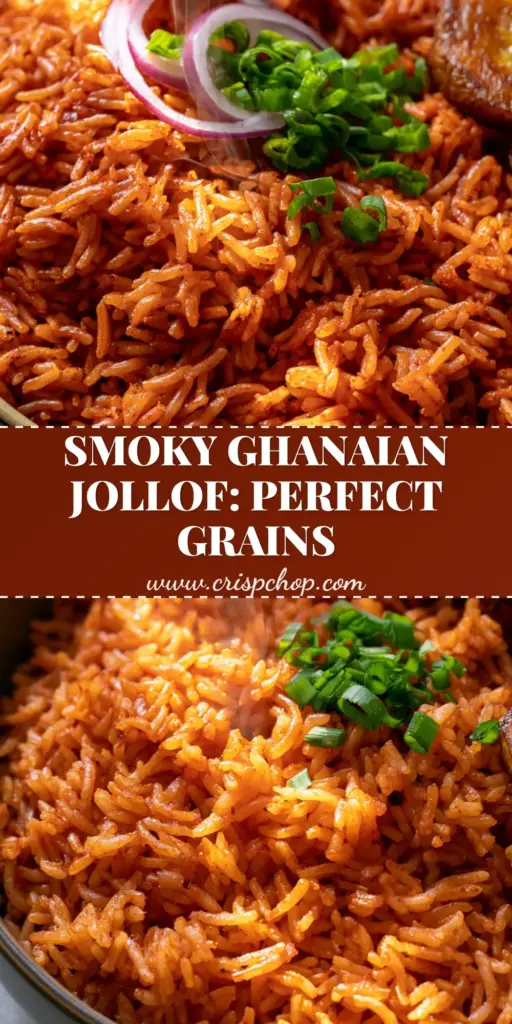
Mastering Ghanaian jollof rice is a journey of patience and sensory awareness. From the sizzling sound of frying tomato paste to the vibrant visual of green scallions against deep red grains, this dish is a feast for all senses. If you enjoyed this recipe, please leave a comment below and share your results! Don’t forget to follow us on Pinterest for more culinary inspirations and professional kitchen secrets.