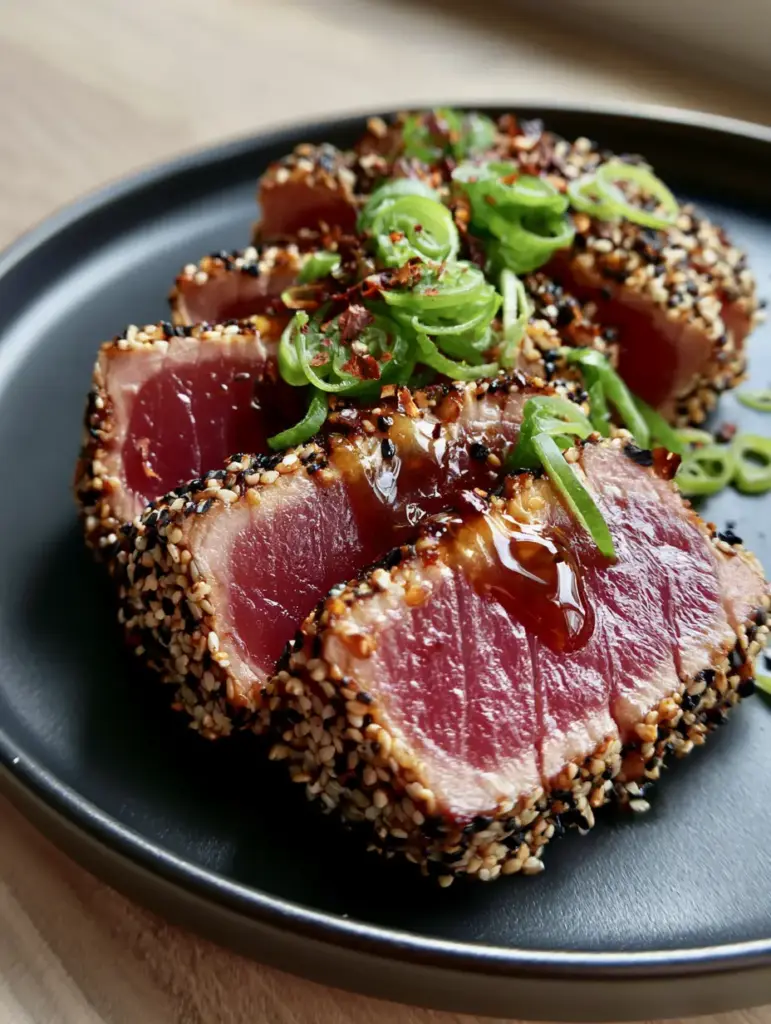
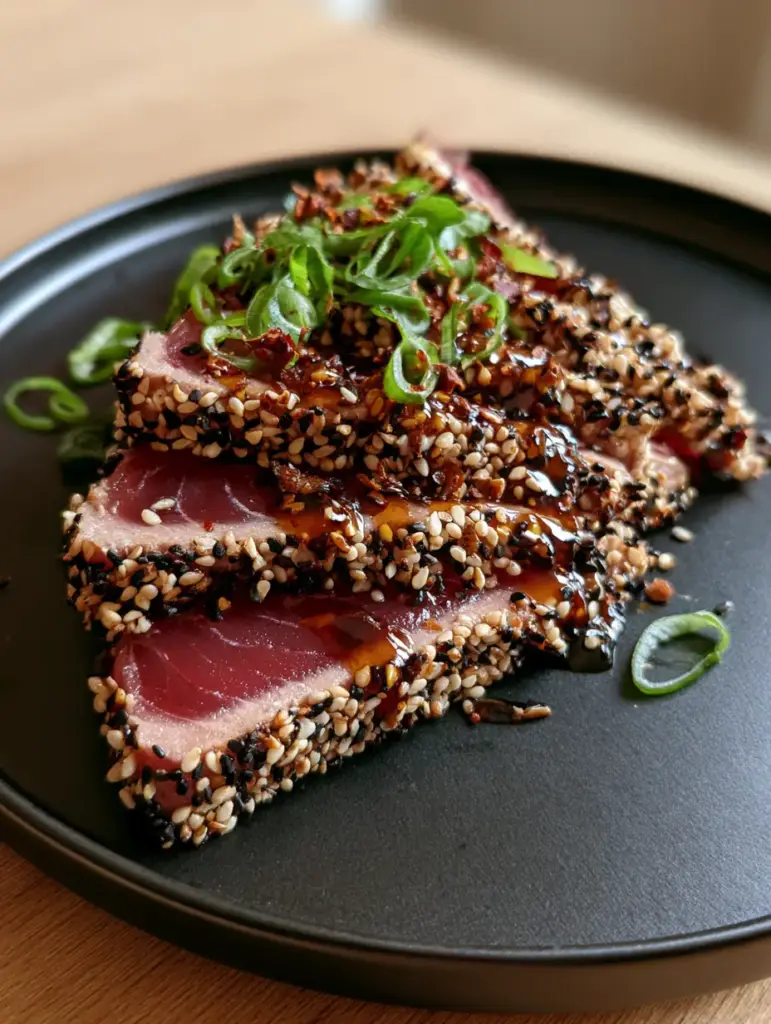
There is a specific, heart-stopping moment in the kitchen when a perfectly executed dish transcends home cooking and enters the realm of high-end culinary art. These pan-seared tuna steaks represent that exact transition. Imagine a thick-cut Ahi steak, its exterior armored in a dense, crunchy mosaic of toasted black and white sesame seeds, hiding a center so vibrantly ruby-red it looks like a gemstone.
Achieving this level of visual and textural contrast—a precise 2mm seared crust protecting a buttery, rare interior—is not a matter of luck; it is a matter of thermal physics. By mastering the high-heat sear, you can replicate the $50 restaurant experience in your own kitchen in under 20 minutes. This recipe focuses on the harmony between the nutty crunch of the seeds and the glossy, dark amber ginger-soy glaze that ties the dish together.
Whether you are looking to expand your repertoire of easy seafood recipes or you want a sophisticated centerpiece for a weekend dinner, this method is foolproof. We aren’t just cooking fish; we are engineering a sensory experience that starts with the sizzle of the pan and ends with the sharp, clean bite of fresh scallions and a subtle heat from dried red chili flakes.
Why These Sesame-Encrusted Tuna Steaks Outshine the Rest
- The Perfect 2mm Crust: A specific high-heat technique ensures the sesame seeds toast to a nutty golden-brown without overcooking the delicate tuna proteins.
- Vibrant Ruby-Red Center: By utilizing sushi-grade Ahi, we maintain a sashimi-like interior that melts on the tongue, providing a stark contrast to the crunchy exterior.
- Glossy Umami Glaze: Our dark soy and ginger reduction is balanced with enough viscosity to cling artfully to the fish, catching the light for a professional presentation.
- Visual Texture: The combination of black and white sesame seeds against the matte black plate creates a minimalist, modern aesthetic that is as beautiful as it is delicious.
The Anatomy of Ingredients for Professional Results
Thick-Cut Ahi Tuna Steaks: Look for “Sushi-Grade” or “Sashimi-Grade” steaks that are at least 1.5 inches (3.8cm) thick. The thickness is vital to achieving that rare center while allowing enough time for the 2mm crust to develop.
White and Black Sesame Seeds: A 50/50 blend provides the iconic “salt and pepper” visual look. The white seeds will signal doneness by turning golden, while the black seeds add an earthy depth.
Low-Sodium Soy Sauce: This forms the base of our glossy glaze. We use low-sodium to control the salt levels as the sauce reduces into a thick, dark amber concentrate.
Fresh Grated Ginger: Essential for the aromatic profile. Fresh ginger provides a sharp, clean heat that cuts through the richness of the tuna’s natural fats.
Honey or Agave: These sugars are the “invisible” ingredients that create the glossy sheen on the glaze. They also facilitate the caramelization needed for a deep, complex flavor.
Avocado Oil: You need an oil with a high smoke point (above 500°F/260°C). Since we are searing at intense heat to toast the seeds quickly, butter or olive oil would smoke and turn bitter.
Fresh Scallions and Dried Chili Flakes: The scallions provide a bright green “pop” and a mild onion bite, while the chili flakes add tiny specks of red and a finishing tingle of heat.
Essential Gear for the Ultimate Sear
To achieve the precise 2mm crust described in our visual blueprint, a heavy-bottomed skillet is non-negotiable. A cast-iron pan or a high-quality stainless steel skillet is ideal because they retain heat efficiently, preventing the pan temperature from dropping when the cold fish hits the surface. You will also need a microplane for the ginger and a sharp chef’s knife to achieve those paper-thin scallion rounds. If you’re curious about other ways to prepare this fish, you might also enjoy our guide on air fryer tuna steaks.
The Science of the Perfect Crust: A Step-by-Step Guide
Prepping the Tuna for Adhesion
Remove your tuna steaks from the refrigerator 15 minutes before cooking. Pat them bone-dry with paper towels; any surface moisture will create steam, which prevents the sesame seeds from sticking and prevents the crust from becoming crunchy. Season the fish lightly with salt and pepper before pressing it firmly into the sesame seed mixture, ensuring all sides—including the edges—are densely coated.
Reducing the Glossy Ginger-Soy Glaze
In a small saucepan over medium heat, whisk together 1/4 cup (60ml) soy sauce, 1 tbsp (15g) grated ginger, 1 tbsp (15ml) honey, and a splash of rice vinegar. Simmer this mixture until it reduces by half. You are looking for a syrupy consistency that coats the back of a spoon—this ensures it will “catch the light” as described in our photography prompt.
The 60-Second Flash Sear
Heat your avocado oil in the skillet until it is just beginning to shimmer and wisps of smoke appear. Place the tuna steaks in the pan. Listen for a loud, aggressive sizzle—this is the sound of the 2mm crust forming. Sear for exactly 45 to 60 seconds per side. Use tongs to sear the narrow edges as well, ensuring the sesame armor is uniform across the entire steak.
Resting and Slicing for the Ruby Center
Transfer the tuna to a cutting board and let it rest for 2-3 minutes. This allows the heat to equalize without cooking the center. Using a very sharp knife, slice the tuna against the grain into 1/2-inch (1.25cm) thick pieces. This will reveal the vibrant ruby-red rare center that contrasts so beautifully with the dark, crunchy exterior.
Expert Tips for Culinary Precision
- The Temperature Rule: Never sear tuna straight from the fridge if you want a rare center; let it take the chill off for 15 minutes to ensure the very middle isn’t ice-cold when served.
- Seed Density: Press the tuna into the seeds with significant force. You want a “dense, crunchy layer” as specified in the blueprint, not just a light dusting.
- Knife Maintenance: If your knife is dull, it will tear the delicate tuna fibers and smear the seeds. Hone your blade before slicing for those clean, professional edges.
- Glaze Timing: Drizzle the glaze at the very last second before serving. If it sits too long, the sesame seeds will absorb the liquid and lose their crunch.
The Art of Plating: Achieving the Minimalist Look
To match the visual prompt, use a matte black ceramic plate. The dark background makes the vibrant red of the tuna and the bright green of the scallions “pop” with high-contrast energy. Place the sliced tuna in a shingled arrangement to show off both the crust and the rare center. Drizzle the glaze artfully—aiming for thin, deliberate lines—and finish with a heavy sprinkle of scallions and a light dusting of red chili flakes.
What to Serve with Pan-Seared Tuna
Because these pan-seared tuna steaks are rich and savory, they pair best with clean, acidic sides. A simple tuna avocado bowl inspired salad with citrus dressing works beautifully. Alternatively, you can serve these over persian jeweled rice for a more substantial meal that matches the visual complexity of the fish. If you prefer a more casual vibe, the tuna can be the star of a spicy tuna bowl or even served alongside shrimp and avocado bowls for a seafood feast.
Storage and Reheating Guidelines
Freshly seared tuna is best enjoyed immediately to preserve the “rare” texture. However, leftovers can be stored in an airtight container in the refrigerator for up to 2 days. To reheat, do not use a microwave; it will turn the tuna grey and rubbery. Instead, lightly sear the slices for 15 seconds per side in a hot pan, or enjoy the tuna cold on top of a fresh salad.
Common Questions About Searing Ahi Tuna
While possible, non-stick pans aren’t designed for the extreme high heat needed for a 2mm crust. Cast iron or stainless steel is preferred for the best textural results.
Look for labels specifically stating ‘Sushi-Grade’ or ‘Sashimi-Grade’. This indicates the fish was flash-frozen at extremely low temperatures to kill parasites, making it safe for rare consumption.
The key is using a high-smoke point oil like avocado oil and keeping the sear time under 60 seconds per side. If the seeds turn black and smell bitter, the pan is too hot or the sear was too long.
For a rare center, aim for an internal temperature of 115°F (46°C). The carry-over heat while resting will bring it to the perfect serving temperature.
This usually happens if the tuna surface is too wet or if you didn’t press the seeds firmly enough. Always pat the fish bone-dry and use significant pressure to embed the seeds into the flesh.
The Ultimate Pan-Seared Sesame Tuna Recipe
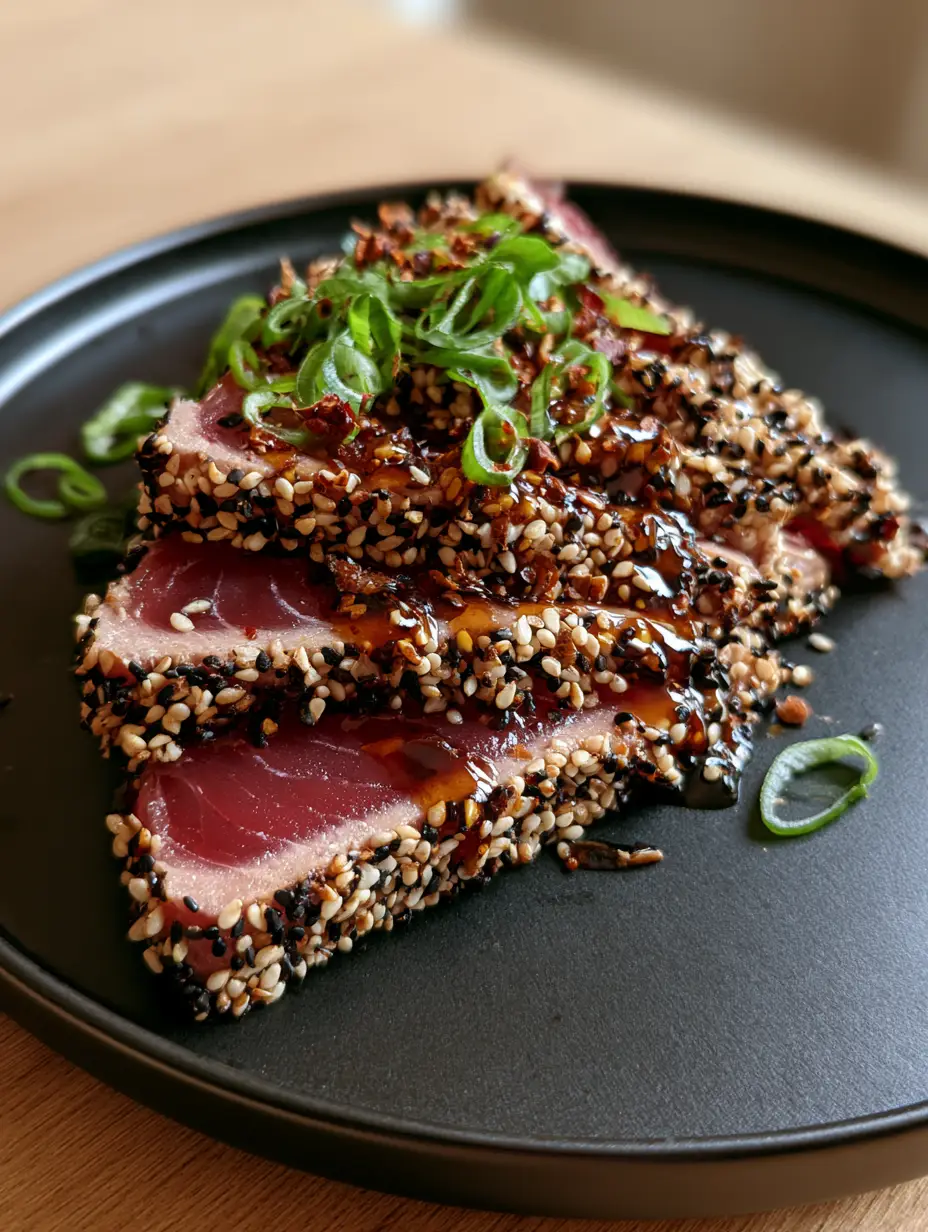
pan-seared tuna steaks with a Toasted Sesame Crust and Ginger-Soy Glaze
Ingredients
Equipment
Method
- Pat the tuna steaks dry with paper towels. Mix white and black sesame seeds on a flat plate. Press each side of the tuna firmly into the seeds until fully coated.
- Whisk soy sauce, ginger, and honey in a small pan. Simmer over medium heat for 5 minutes until reduced by half and glossy.
- Heat oil in a skillet until shimmering. Sear tuna for 45-60 seconds per side until a 2mm crust forms but the center remains ruby-red.
- Let rest for 2 minutes. Slice against the grain, drizzle with ginger-soy glaze, and garnish with scallions and chili flakes.
Notes
Use only sushi-grade tuna for a safe and delicious rare center.
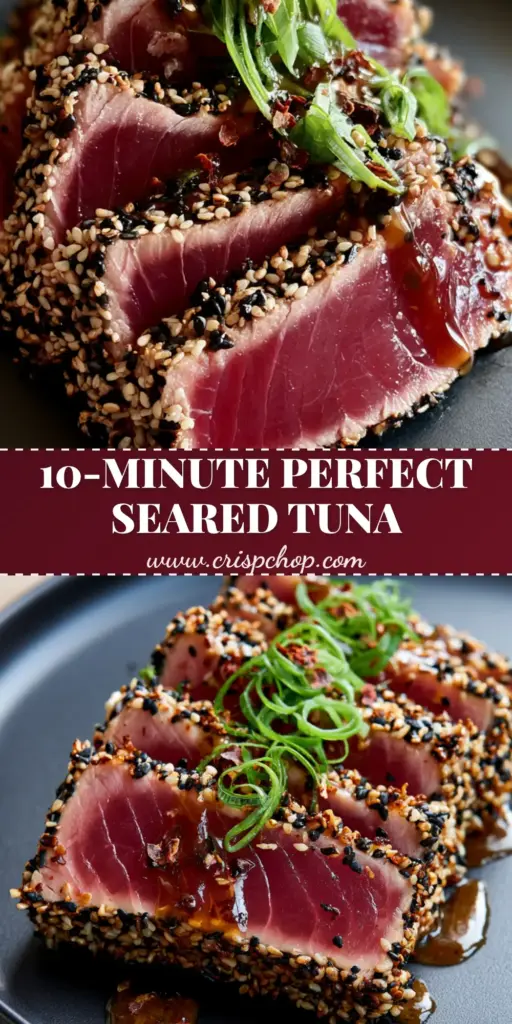
Mastering pan-seared tuna steaks is a rite of passage for any home cook looking to elevate their seafood game. The combination of the 2mm toasted crust and the ginger-soy glaze creates a profile that is balanced, sophisticated, and undeniably delicious. If you enjoyed this recipe, please leave a comment below and share your results on Pinterest. For more kitchen inspiration, sign up for our newsletter!