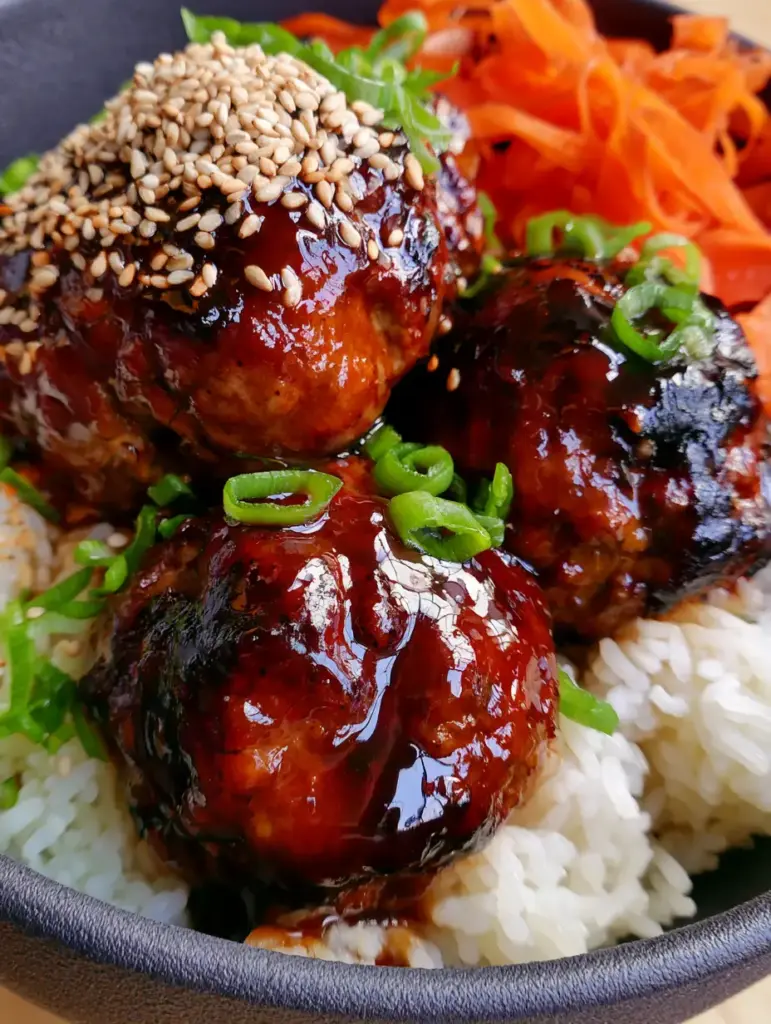
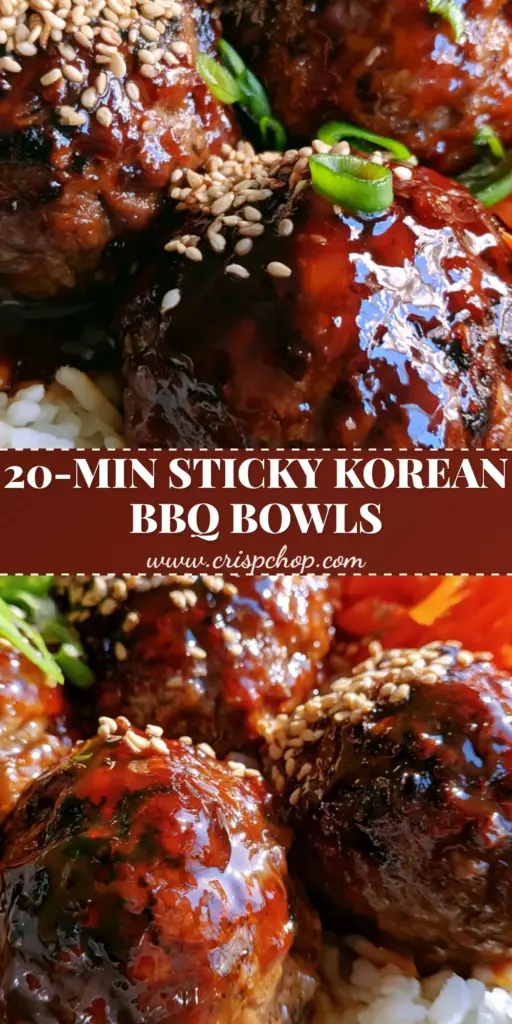
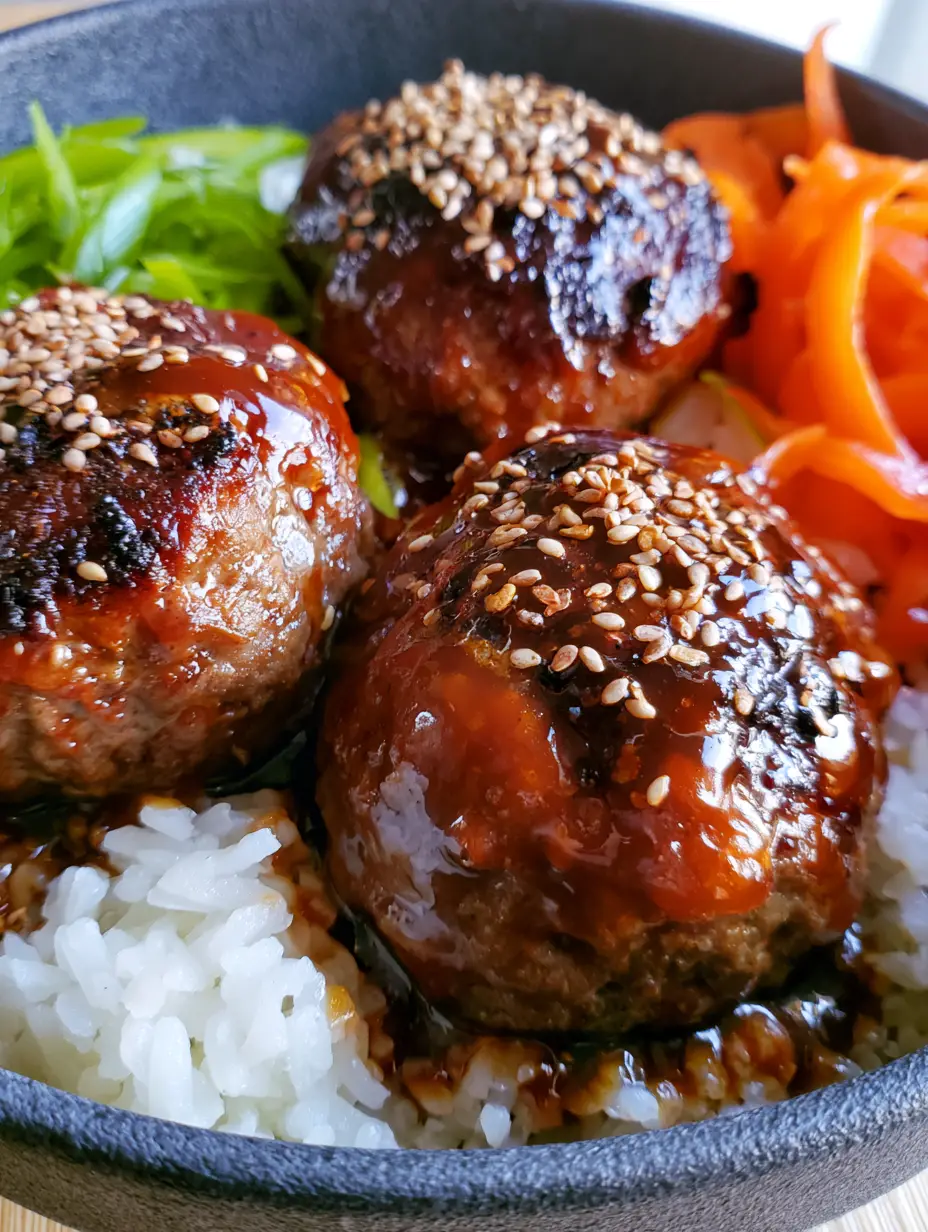
There is something inherently captivating about the contrast between a deep, high-gloss sauce and the pristine white of fluffy jasmine rice. These Korean BBQ Meatball Rice Bowls are a masterclass in visual and culinary harmony, featuring succulent, pan-seared beef meatballs drenched in a thick, mahogany-colored glaze that catches the light like polished gemstone. This isn’t just another weeknight dinner; it is a sensory experience designed to bring the vibrant, umami-forward flavors of a Seoul charcoal grill into your home kitchen.
Every element of this bowl serves a specific purpose, from the heavy dusting of toasted white sesame seeds to the vibrant orange of the quick-pickled carrot ribbons. When you look at the macro details—the caramelized, craggy edges of the beef and the way the sauce clings to every curve—you realize that these Korean BBQ Meatball Rice Bowls are built on a foundation of professional technique and thoughtful ingredient selection. Whether you are a seasoned home cook or just starting your journey, this recipe will yield results that look exactly like a professional food blog photo.
The Visual Allure and Texture Profile of the Ultimate Rice Bowl
- High-Gloss Mahogany Glaze: A thick, viscous reduction that provides a dark, mirror-like finish to the meatballs, offering deep umami and sweetness.
- Succulent Seared Beef: Meatballs that are pan-seared to achieve a dark brown crust, ensuring a juicy interior and a smoky, caramelized exterior.
- Vibrant Acidic Balancers: Crisp cucumber slices and quick-pickled carrot ribbons provide a bright orange and green contrast while cutting through the richness of the beef.
- Aromatic Garnishes: A heavy dusting of toasted white sesame seeds and a shower of thinly sliced bright green scallions add textural crunch and fresh, oniony heat.
Essential Ingredients for the Most Flavorful Meatballs
Ground Beef (80/20 Blend): To achieve the “succulent” texture described in our visual blueprint, you need a fat content of at least 20%. This fat renders out during the searing process, basting the meat and creating those sought-after caramelized edges. 1 lb (454g) of ground beef is the standard base for this recipe.
Toasted Sesame Oil: Just 1 tsp (5ml) of high-quality toasted sesame oil added directly to the meat mixture provides an unmistakable nutty aroma. It acts as a bridge between the savory beef and the sweet-salty glaze we will apply later.
Fresh Ginger and Garlic: Grating 1 tbsp (6g) of fresh ginger and 3 cloves (9g) of garlic directly into the meat ensures that the aromatics are evenly distributed. These ingredients are foundational to the Korean flavor profile, providing a zesty, sharp bite that balances the heavy glaze.
Panko Breadcrumbs: Using 1/2 cup (30g) of panko helps bind the meatballs while keeping them light. Unlike traditional breadcrumbs, panko creates tiny air pockets that trap juices, ensuring the meatballs don’t become dense or rubbery.
The Mahogany Glaze Components: The secret to that “dark mahogany” color lies in the combination of 1/2 cup (120ml) soy sauce, 1/4 cup (50g) dark brown sugar, and 2 tbsp (30ml) honey. The honey provides the “high-gloss” reflective quality, while the dark brown sugar adds the deep, molasses-driven color.
Advanced Tools for Professional Culinary Results
To achieve the specific textures in our visual prompt, you will need a 12-inch (30cm) cast-iron or heavy-bottomed stainless steel skillet. These materials hold heat better than non-stick pans, which is crucial for getting that deep, dark sear on the meatballs without overcooking the centers. A vegetable peeler is also essential for creating the thin, elegant carrot ribbons that give the bowl its professional, “handheld smartphone photo” aesthetic.
Furthermore, a microplane or fine grater is highly recommended for the ginger and garlic. This ensures they turn into a paste, melting into the meat and sauce rather than leaving behind large, unappealing chunks. For the rice, a dedicated rice cooker is preferred, but a heavy-lidded pot will work if you follow the steaming instructions precisely to ensure “fluffy, steaming” jasmine rice.
Developing the Deep Caramelization on the Meatballs
Step 1: Preparing the Meatball Base
In a large mixing bowl, combine your ground beef with the panko, one large egg, grated ginger, minced garlic, sesame oil, and a pinch of salt and black pepper. Use your hands to gently fold the ingredients together until just combined; overworking the meat will lead to tough meatballs. Roll the mixture into 1.5-inch (4cm) balls, aiming for about 12-14 meatballs total.
Step 2: The High-Heat Sear
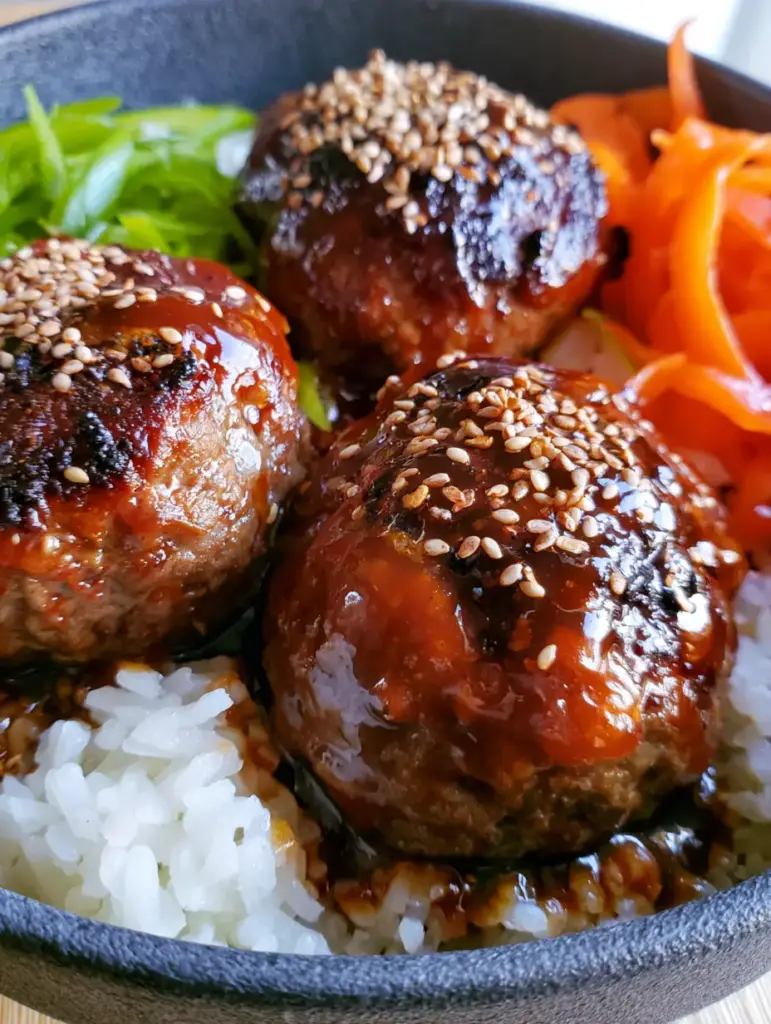
Heat 2 tbsp (30ml) of neutral oil (like avocado or vegetable oil) in your skillet over medium-high heat until it begins to shimmer. Carefully place the meatballs in the pan, leaving space between each one to ensure they sear rather than steam. Leave them undisturbed for 2-3 minutes until a deep golden-brown crust forms on the bottom, then gently rotate them to brown all sides. This step is vital for the “visible seared, caramelized edges” mentioned in the visual blueprint.
Step 3: Creating the High-Gloss Mahogany Glaze
Once the meatballs are browned, remove them from the pan and set them aside on a plate. Drain any excess fat, then pour in your soy sauce, brown sugar, honey, rice vinegar, and a splash of mirin. Bring the liquid to a simmer over medium heat, whisking to dissolve the sugar. To achieve the “thick” consistency, mix 1 tsp (5g) of cornstarch with 1 tbsp (15ml) of cold water and whisk this slurry into the simmering sauce. It will transform into a glossy, dark glaze within seconds.
Step 4: The Final Glazing Process
Return the meatballs to the skillet and toss them gently in the mahogany glaze. Use a spoon to baste the sauce over the meatballs repeatedly. As the sauce reduces, it will become increasingly sticky and reflective. Continue this process for 3-4 minutes until the meatballs are cooked through and coated in a thick, mirror-like finish. This is where the dish truly takes on its “hyper-realistic” visual appeal.
Mastering the Quick-Pickled Carrot Ribbons and Garnishes
While the meatballs rest, focus on the bright elements of the bowl. Use a vegetable peeler to shave one large carrot into long, thin ribbons. Submerge these in a mixture of 1/4 cup (60ml) rice vinegar, 1 tbsp (12g) sugar, and a pinch of salt for at least 10 minutes. This “quick-pickle” method softens the carrots just enough while maintaining their “vibrant orange” color and crisp texture.
The scallions should be sliced as thinly as possible on a bias (an angle) to create elegant, bright green slivers. When assembling, place a generous bed of jasmine rice in a textured matte charcoal ceramic bowl. Arrange three large meatballs on top, drizzle with extra glaze from the pan, and finish with a “heavy dusting” of toasted white sesame seeds. Add the pickled carrots and fresh cucumber slices to the side for the perfect balance of flavors.
Expert Tips for Success
- Don’t Crowd the Pan: If your skillet isn’t large enough to hold all the meatballs with at least an inch of space between them, cook them in two batches. Crowding causes the temperature of the pan to drop, resulting in grey, steamed meat instead of caramelized edges.
- Cold Meat is Best: Keep your ground beef in the refrigerator until the very moment you are ready to mix and form the meatballs. Cold fat stays solid longer, which helps the meatballs maintain their shape and prevents them from becoming greasy.
- The Honey Secret: If your glaze isn’t looking “glossy” enough, add a final teaspoon of honey right at the end of cooking. Honey has a higher refractive index than sugar, which creates that sparkling highlight under natural window light.
- Rice Rinsing: Always rinse your jasmine rice under cold water until the water runs clear. This removes excess surface starch, ensuring the grains remain individual and “fluffy” rather than clumping together.
Storage, Reheating, and Freezing Advice
These Korean BBQ Meatball Rice Bowls are excellent for meal prep. Store the glazed meatballs and rice in airtight containers for up to 4 days in the refrigerator. To keep the meatballs “succulent,” reheat them in a pan with a splash of water or beef broth over low heat; this loosens the glaze and prevents the meat from drying out.
You can also freeze the cooked meatballs (without the glaze) for up to 3 months. When ready to serve, thaw them in the fridge overnight, then proceed with the glazing step in a fresh pan. We do not recommend freezing the pickled carrots or cucumbers, as their cellular structure will break down and they will lose their signature crispness.
What to Serve with Your Korean BBQ Meatballs
While these bowls are a complete meal on their own, they pair beautifully with other Asian-inspired sides. If you want to lean into a more diverse rice spread, consider serving this alongside our fragrant coconut curry rice for a fusion twist. For those who love a spicy kick, a side of the sauce used in our spicy tuna rice can be drizzled over the cucumbers.
If you find yourself with extra meatballs, they make a fantastic appetizer when served with a side of classic dumpling sauce for dipping. For a larger family gathering, these meatballs can be served as a secondary protein alongside a main dish like traditional beef and broccoli or even our sweet and savory huli huli chicken.
Frequently Asked Questions
As written, this recipe is savory and sweet. If you prefer heat, you can add 1 tablespoon of Gochujang (Korean chili paste) to the glaze or top the final bowl with sliced bird’s eye chilies.
Yes, you can substitute ground turkey or chicken. However, because these meats are leaner, you may want to add a teaspoon of olive oil to the mix to ensure they stay succulent and don’t dry out during searing.
The secret to a high-gloss finish is the combination of honey and a cornstarch slurry. Honey provides a reflective quality that regular sugar doesn’t, while the slurry thickens the sauce so it clings to the meat.
A standard Y-shaped or swivel vegetable peeler is the best tool for this. Simply apply firm pressure as you pull the peeler down the length of the carrot to create thin, flexible ribbons.
The dark mahogany hue comes from using dark brown sugar and high-quality soy sauce. As the sugars caramelize in the pan, the color deepens into that rich, dark brownish-red tone.
The Ultimate Recipe for Korean BBQ Meatball Rice Bowls
Korean BBQ Meatball Rice Bowls with Sticky Mahogany Glaze
Ingredients
Equipment
Method
- Combine carrot ribbons with vinegar and sugar; set aside to quick-pickle.
- Mix ground beef, panko, egg, ginger, garlic, and sesame oil. Form into 1.5-inch balls.
- Heat oil in a skillet over medium-high heat. Sear meatballs for 2-3 minutes per side until caramelized.
- Remove meatballs. Add soy sauce, sugar, and honey to the pan. Whisk in cornstarch slurry until thick and mahogany-colored.
- Return meatballs to the pan and toss until succulent and high-gloss. Serve over rice with garnishes.
Notes
Use a vegetable peeler for professional-looking carrot ribbons.
Closing and Call to Action
Making these Korean BBQ Meatball Rice Bowls is about more than just satisfying hunger; it’s about the joy of creating something visually stunning and deeply flavorful. The combination of the sticky mahogany glaze and the fresh, crunchy garnishes creates a restaurant-quality meal in the comfort of your own home. If you enjoyed this recipe, please leave a comment below and let us know how your meatballs turned out! Don’t forget to snap a photo of your creation and share it with us on Pinterest so we can see your beautiful bowls.