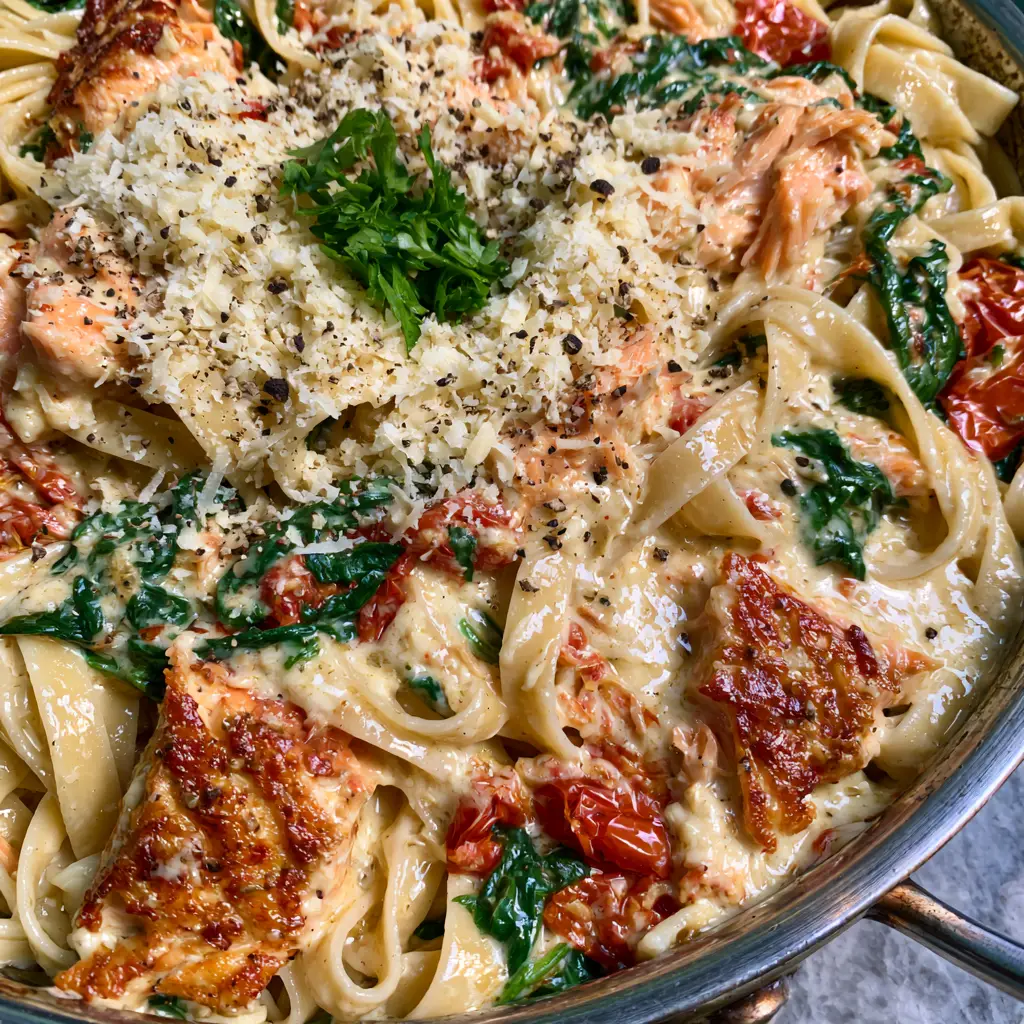
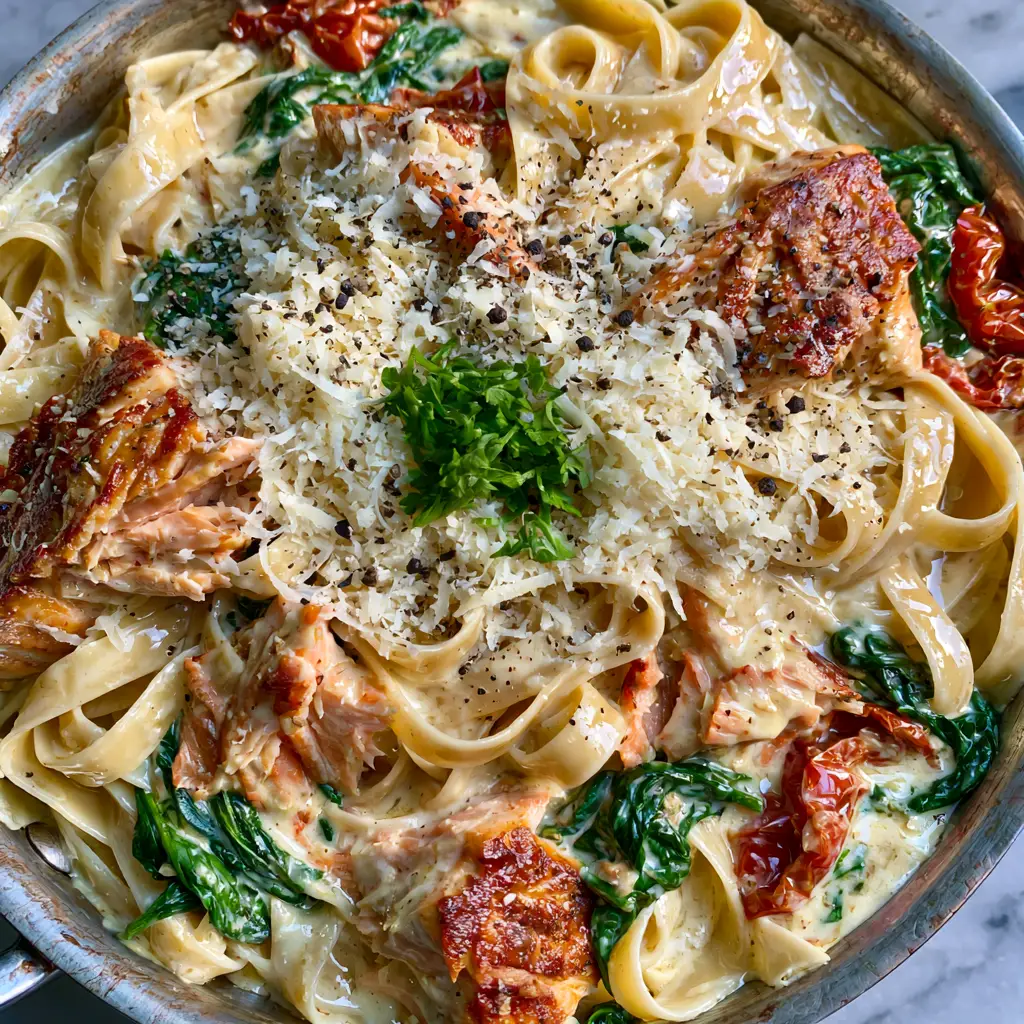
There is nothing quite like the sight of a rustic stainless steel skillet overflowing with a perfectly executed creamy salmon pasta. The way the wide ribbons of al dente fettuccine catch the light, heavily coated in a thick, glossy, pale-golden cream sauce, promises a meal that is both comforting and sophisticated. This dish isn’t just about mixing fish and noodles; it is a masterclass in texture, combining the crunch of pan-seared salmon chunks with the soft burst of blistered red cherry tomatoes.
The culinary magic happens when the high heat of the skillet creates caramelized edges on the Atlantic salmon while keeping the centers moist and tender. When you fold in vibrant green wilted baby spinach and top it with a heavy snowfall of microplaned parmesan cheese, you create a visual and flavor profile that rivals any high-end bistro. Whether you are hosting a dinner party or seeking a weeknight indulgence, this creamy salmon pasta delivers a sensory experience that starts with the first sizzle in the pan.
Every element of this recipe has been calibrated to ensure success for the home cook. From the cracked black peppercorns that cut through the richness of the butter to the bright green chopped parsley that adds a final herbaceous note, no detail is overlooked. Get ready to elevate your seafood game with a dish that looks exactly like a professional food photograph and tastes even better.
Why This Glossy Salmon Fettuccine Is a Weeknight Game Changer
- Textural Contrast: You get the crunch of the pan-seared salmon skin and edges paired with the silky, velvet-like consistency of the garlic butter cream sauce.
- Visual Brilliance: The contrast between the bright red blistered tomatoes and the deep green of the wilted spinach makes this dish a centerpiece-worthy meal.
- Balanced Flavor Profile: The richness of the heavy cream and parmesan is perfectly balanced by the acidity of the bursting tomatoes and the earthy notes of fresh parsley.
- Professional Technique: This recipe teaches you the “emulsion” method, ensuring your sauce never breaks and stays glossy until the last bite.
The Essential Pantry Items for Restaurant-Quality Creamy Salmon Pasta
Fresh Atlantic Salmon Fillets: 1.5 lbs (680g). Look for thick-cut fillets to ensure you can achieve those deep golden-brown caramelized edges without overcooking the moist, pink centers.
Fettuccine Pasta: 12 oz (340g). These wide ribbons are the ideal vehicle for a heavy cream sauce, providing ample surface area for the glossy garlic butter to cling to.
Heavy Cream: 1.5 cups (360ml). This is the foundation of our pale-golden sauce; use full-fat cream to ensure the sauce achieves the thick, luxurious consistency seen in our visual blueprint.
Unsalted Butter: 4 tbsp (60g). Butter provides the fat needed for searing the salmon and forms the base of the aromatic garlic roux that flavors the entire dish.
Fresh Baby Spinach: 3 cups (90g). We fold this in at the very end to achieve that vibrant green wilted look without losing the structural integrity of the leaves.
Red Cherry Tomatoes: 1 cup (150g). These are high-heat blistered in the skillet until they are just about to burst, releasing a natural acidity that cuts through the cream.
Parmesan Cheese: 1/2 cup (50g), finely microplaned. Using a microplane creates a “snowfall” effect, allowing the cheese to melt instantly into the sauce for a gritty-free finish.
Fresh Garlic: 4 cloves (20g). Minced finely, these cloves infuse the butter with a pungent, savory base that defines the “garlic butter” profile of the recipe.
Extra Virgin Olive Oil: 2 tbsp (30ml). This “invisible” ingredient is vital for the initial high-heat sear of the salmon, preventing the butter from burning too quickly.
Fresh Parsley & Black Pepper: For the final touch. Chopped parsley adds freshness, while freshly cracked black peppercorns provide a necessary bite to the finish.
Culinary Tools for the Perfect Pan-Sear
To achieve the results shown in our stainless steel skillet visual, you will need a heavy-bottomed 12-inch stainless steel or cast-iron skillet. These materials retain heat exceptionally well, which is the secret to getting those caramelized edges on your salmon chunks. A standard non-stick pan often fails to produce the same level of browning and “fond” (the tasty brown bits left in the pan) that build our sauce.
Additionally, a microplane grater is essential for the parmesan cheese. Unlike a box grater, a microplane creates light, airy wisps of cheese that integrate seamlessly into the sauce. You will also want a sturdy pair of tongs for flipping the salmon chunks and a large pot to boil your fettuccine to a perfect al dente state.
Master the Art of the Perfect Sear and Emulsion
Step 1: Prepping the Protein and Pasta
Begin by bringing a large pot of salted water to a rolling boil. Add your 12 oz (340g) of fettuccine and cook until it is about 2 minutes shy of the package instructions for al dente. While the pasta cooks, pat your salmon fillets extremely dry with paper towels; moisture is the enemy of a good sear.
Dice the salmon into large 1.5-inch (4cm) chunks. Season them generously with kosher salt and some of that cracked black pepper. Achieving the “moist, tender pink centers” requires starting with room-temperature fish, so let them sit for 10 minutes before hitting the pan.
Step 2: Searing for Caramelized Edges
Heat 1 tbsp (15ml) of olive oil and 1 tbsp (15g) of butter in your skillet over medium-high heat. Once the butter is foaming and just beginning to brown, add the salmon chunks in a single layer. Do not crowd the pan; work in batches if necessary.
Sear the salmon for 2-3 minutes without moving them until a deep golden-brown crust forms on the bottom. Flip carefully and sear for another 1-2 minutes. The goal is to see a distinct color gradient: dark gold on the outside and a soft, translucent pink in the middle. Remove the salmon from the skillet and set aside.
Step 3: Blistering the Aromatics
In the same skillet, add the remaining butter and the whole cherry tomatoes. Turn the heat up slightly and toss the tomatoes until the skins begin to shrivel and “blister,” showing small charred spots. This should take about 3 minutes.
Reduce the heat to medium and add the minced garlic. Stir constantly for 60 seconds until fragrant but not brown. The smell of garlic toasted in salmon-infused butter is the first sensory cue that your creamy salmon pasta is coming together perfectly.
Step 4: Building the Pale-Golden Cream Sauce
Pour in the 1.5 cups (360ml) of heavy cream. Use a wooden spoon to scrape the bottom of the pan, releasing all those caramelized salmon bits into the liquid. This process, known as deglazing, is what gives the sauce its incredible depth and pale-golden hue.
Bring the cream to a gentle simmer. Do not let it reach a hard boil, as this can cause the fat to separate. Let it reduce for 3-4 minutes until it slightly thickens and can coat the back of a spoon.
Step 5: The Final Assembly and Emulsion
Add the al dente fettuccine directly from the water into the skillet. Throw in the 3 cups (90g) of baby spinach. Toss everything together using tongs. The heat from the pasta and sauce will wilt the spinach into vibrant green ribbons within seconds.
Add half of the microplaned parmesan and a splash of starchy pasta water (about 1/4 cup or 60ml). Toss vigorously; this creates the emulsion that makes the sauce “glossy” and “thick” as described in our blueprint. Finally, gently fold the salmon chunks back in, taking care not to break the flakes.
Pro Secrets for Silky-Smooth Garlic Butter Sauce
- The Pasta Water Miracle: Never drain your pasta water completely. The starch in that cloudy water acts as a bridge between the fat (butter/cream) and the pasta, ensuring the sauce sticks to the noodles rather than pooling at the bottom of the plate.
- Dry the Fish: If your salmon is even slightly damp, it will steam instead of sear. You want that “deep golden-brown” crust, which only happens on a bone-dry surface.
- Temperature Control: If your cream starts to look grainy, your heat is too high. Remove the pan from the burner and whisk in a tablespoon of cold cream to stabilize the emulsion.
- Microplane Magic: Pre-shredded cheese is coated in cellulose to prevent clumping, which prevents it from melting smoothly. Always grate your parmesan fresh for that “snowfall” texture.
Keeping Your Leftovers Luscious
Seafood pasta is best enjoyed immediately to maintain the “moist, tender pink centers” of the salmon. However, if you have leftovers, they can be stored in an airtight container in the refrigerator for up to 2 days. We do not recommend freezing this dish, as the cream sauce will likely break and become grainy upon thawing.
To reheat, do not use the microwave, which will turn your salmon into rubber. Instead, place the pasta in a skillet over low heat with a splash of milk or additional heavy cream. Stir gently until the sauce thins out and becomes glossy again, ensuring the salmon is just warmed through.
What to Serve Alongside Your Seafood Masterpiece
Because this creamy salmon pasta is quite rich, it pairs beautifully with crisp, acidic sides. A simple arugula salad with a lemon vinaigrette or roasted asparagus works wonders. If you are looking for more ways to prepare this versatile fish, consider our baked lemon garlic butter salmon for a lighter alternative.
For those who love the combination of greens and seafood, you might also enjoy our baked salmon with spinach which mirrors the flavor profile of this pasta. If you have extra salmon on hand, our honey garlic baked salmon offers a sweet and savory twist that uses many of the same pantry staples.
Frequently Asked Questions
While fettuccine is traditional for thick cream sauces, pappardelle or tagliatelle also work beautifully. The key is using a wide noodle to capture the glossy sauce.
Yes, but ensure it is completely thawed and patted extremely dry with paper towels. Any excess moisture will prevent the salmon from achieving those golden-brown edges.
No, the spinach should be folded into the hot pasta and sauce at the very end. The residual heat is enough to wilt it perfectly while maintaining its vibrant green color.
Keep the heat at a gentle simmer. Never let heavy cream reach a rolling boil, and ensure you use full-fat cream, as lower-fat dairy is more prone to splitting.
Skinless Atlantic salmon fillets are best. Their higher fat content ensures the chunks stay moist and tender in the center while the outside gets a crisp, caramelized sear.
The Ultimate Creamy Salmon Pasta Recipe Card
Creamy Salmon Pasta with Garlic Butter and Blistered Tomatoes
Ingredients
Equipment
Method
- Pat salmon chunks bone-dry and season with salt and cracked black pepper.
- Heat oil and 1 tbsp butter in a stainless steel skillet. Sear salmon chunks until deep golden-brown caramelized edges form, about 3 minutes per side. Remove and keep warm.
- In the same skillet, add remaining butter and cherry tomatoes. Cook until skins blister and burst.
- Add minced garlic for 60 seconds, then pour in heavy cream. Simmer and deglaze the pan until sauce is pale-golden and thick.
- Add al dente fettuccine and baby spinach to the skillet. Toss until spinach is wilted and pasta is coated in glossy sauce.
- Fold salmon back in. Top with microplaned parmesan, chopped parsley, and extra black pepper.
Notes
Use a stainless steel skillet for the best Maillard reaction on the salmon chunks.
Join the Culinary Conversation
This creamy salmon pasta is a testament to the fact that simple ingredients, when treated with professional technique, can create something truly extraordinary. We hope this dish brings a touch of restaurant-quality elegance to your dining table. If you enjoyed the sear on that salmon or the gloss of the garlic butter sauce, please let us know in the comments below!
Don’t forget to sign up for our newsletter for more deep-dive recipes and culinary forensics. If you made this dish, snap a photo and share it with us on Pinterest. Your feedback helps us continue to develop recipes that are as visually stunning as they are delicious.