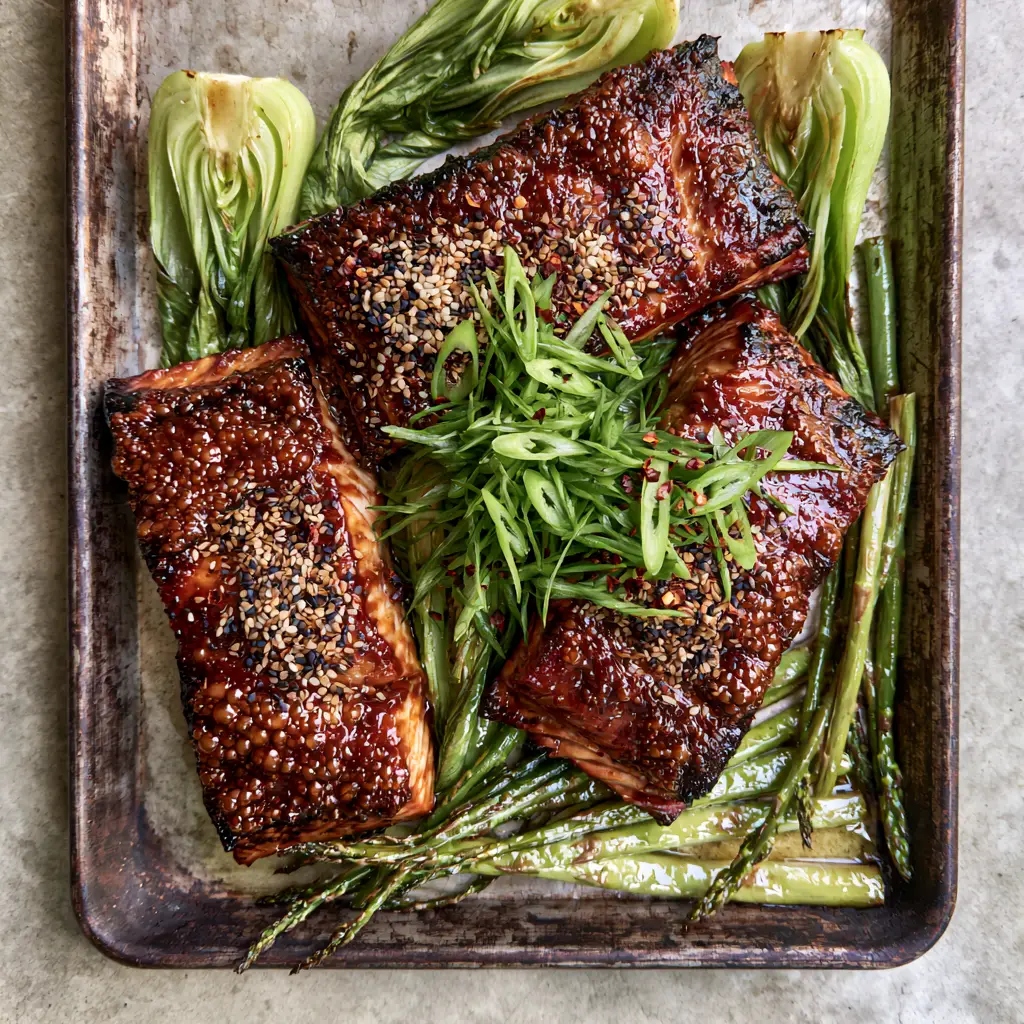
There is a specific kind of culinary magic that happens when fermented soy paste meets high-heat roasting. This baked miso salmon isn’t just a meal; it’s a masterclass in the Maillard reaction, delivering a mahogany-colored, bubbling crust that gives way to buttery, flaking Atlantic salmon.
Inspired by the deep umami profiles of Japanese coastal cuisine, this sheet pan dinner balances the richness of fatty fish with the bright, charred crunch of baby bok choy and slender asparagus. The visual appeal is undeniable—a high-gloss sheen reflecting soft daylight, accented by a confetti of toasted seeds and vibrant scallions.
Whether you are looking for a quick weeknight upgrade or a dinner party showstopper, this recipe delivers restaurant-quality results with minimal cleanup. If you’ve enjoyed our baked salmon and asparagus, this miso-infused version takes those foundational flavors to a whole new level of sophistication.
The Secrets to Achieving a Perfect Umami Glaze Sheen
- Caramelization Power: The combination of white miso and brown sugar creates those iconic bubbly, charred edges that define a professional-grade glaze.
- Dual-Texture Greens: By roasting the baby bok choy and asparagus on the same pan, they soak up the salmon’s drippings while developing a glistening oil sheen and smoky char marks.
- Aromatic Garnish: A heavy hand with toasted white and black sesame seeds provides a nutty crunch that contrasts the moist, tender salmon flesh.
- Heat Balance: Tiny red chili flakes provide a subtle back-of-the-throat warmth that cuts through the fatty richness of the fish.
The Ultimate Umami Pantry List for Baked Miso Salmon
Atlantic Salmon Fillets: You will need 3 thick, center-cut fillets (approx. 6oz (170g) each). Center-cut pieces ensure even cooking and provide that impressive “thick” visual profile seen in the best food photography.
White Miso Paste (Shiro Miso): This is the soul of the dish. 3 tbsp (45g) of fermented paste provides a mellow, salty, and slightly sweet base that doesn’t overwhelm the delicate fish.
Mirin and Soy Sauce: Use 2 tbsp (30ml) of mirin for acidity and gloss, combined with 1 tbsp (15ml) of low-sodium soy sauce to deepen the mahogany color of the final glaze.
Neutral High-Smoke Point Oil: 2 tbsp (30ml) of avocado or grapeseed oil is essential for coating the vegetables. This ensures the bok choy chars rather than steams in the oven.
Toasted Sesame Oil: 1 tsp (5ml) added to the glaze provides an “invisible” layer of aromatic depth that ties the toasted sesame seed garnish to the heart of the salmon.
Baby Bok Choy and Asparagus: 3-4 halves of baby bok choy and 1 bunch (approx. 225g) of slender asparagus spears provide the vibrant green frame for our focal point.
The Finishing Touches: You will need 1 tsp (5g) each of toasted white and black sesame seeds, 2 finely sliced scallions (30g), and 1/2 tsp (1g) of dried red chili flakes for that signature visual pop.
Essential Tools for Sheet Pan Perfection
To achieve the “rustic dark metal sheet pan” look and the necessary heat distribution, a heavy-duty rimmed baking sheet is non-negotiable. This retains heat effectively, which is what gives the vegetables those distinct char marks.
You will also need a small whisk to emulsify the miso glaze into a thick, syrup-like consistency. A high-quality pastry brush is vital for coating the salmon fillets heavily, ensuring the glaze doesn’t just run off but “sticks” to create that thick, glossy coating.
Step-by-Step to the Perfect Mahogany Char
Emulsifying the Signature Miso Glaze
In a small glass bowl, whisk together the white miso, mirin, soy sauce, toasted sesame oil, and brown sugar. The texture should be thick and glossy, resembling a heavy syrup.
Taste the glaze; it should be a balance of salt, sweet, and pure umami. If it feels too thick, add a teaspoon of water to reach a spreadable consistency that will create that bubbly, caramelized edge in the oven.
Preparing the Canvas of Greens
Trim the ends of your asparagus and slice the baby bok choy into vertical halves. Toss them directly on the sheet pan with the neutral oil and a pinch of kosher salt.
Spread them to the edges of the pan, leaving a dedicated space in the center for the salmon. This “tucked around” arrangement ensures the vegetables get direct contact with the hot metal for maximum charring.
Sealing and Roasting for Maximum Flakiness
Pat the salmon fillets dry with a paper towel—this is a professional secret for ensuring the glaze adheres. Place them in the center of the pan and spoon the glaze generously over each fillet.
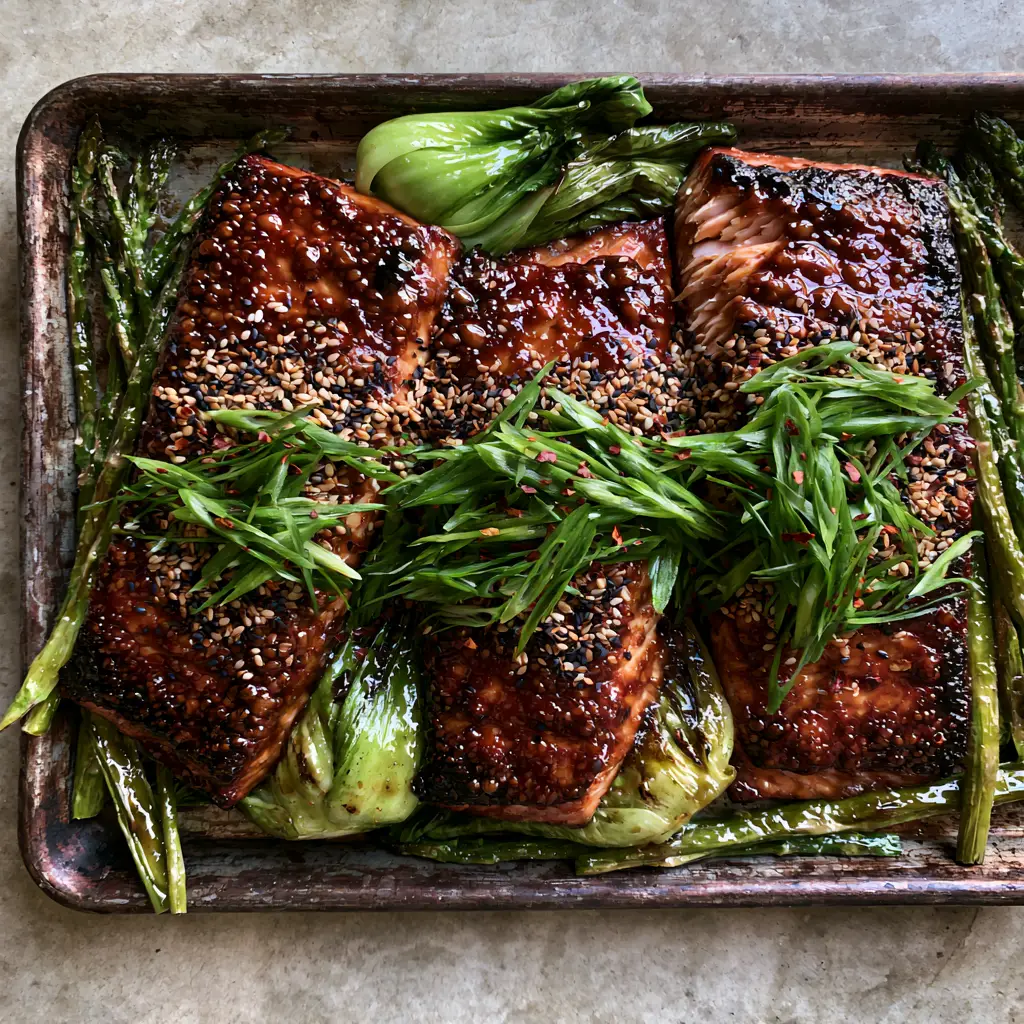
Slide the pan into a preheated oven at 400°F (200°C). Bake for 12-14 minutes, then switch to the broiler for the final 2 minutes. Watch for the visual cue: the glaze should be bubbling and showing dark charred spots at the edges while the flesh remains moist.
The Final Garnish Flourish
Immediately upon removing the pan from the oven, the glaze will have a high-gloss reflection. While the glaze is still “tacky,” shower the fillets with the mixed sesame seeds and chili flakes.
Finish with a generous sprinkle of the bright green sliced scallions. The residual heat from the salmon will slightly soften the scallions, releasing their aromatic oils without losing their vibrant color.
Expert Culinary Tips for Flawless Results
- Room Temperature Salmon: Take your fish out of the fridge 15 minutes before cooking. This ensures the center-cut fillets cook through evenly without the exterior becoming overdone.
- The “Broiler Watch”: Miso contains sugar and burns quickly. When you switch to the broiler for that mahogany color, do not walk away—it takes only seconds to go from caramelized to burnt.
- Vegetable Spacing: Do not overcrowd the greens. If they are piled on top of each other, they will steam. We want glistening spears with “slight char marks” as described in our visual blueprint.
- Internal Temperature: For the most “moist and flaking” result, pull the salmon when it reaches an internal temperature of 135°F (57°C). Carry-over cooking will bring it to the perfect 145°F (63°C).
Effective Storage and Make-Ahead Advice
While this dish is best served fresh from the oven to maintain the glaze’s sheen, leftovers can be stored in an airtight container for up to 2 days. To reheat, avoid the microwave as it can turn the salmon rubbery.
Instead, place the salmon and greens back on a sheet pan and warm in a 300°F (150°C) oven until just heated through. The glaze will lose some of its original gloss, but the flavor will remain intense.
What to Serve with Your Miso Masterpiece
This sheet pan meal is designed to be a complete dinner, but it pairs beautifully with a side of steamed jasmine rice to soak up any extra umami glaze. If you are looking for more seafood inspiration, consider our honey garlic baked salmon or the zestier baked lemon garlic butter salmon.
For those who love a broader spread, a simple cucumber sunomono salad or even a side of creamy salmon pasta can turn this into a multi-course feast. The earthy tones of the miso also pair surprisingly well with Middle Eastern flavors, much like our tahini kofta.
Frequently Asked Questions
Yes, but ensure it is completely thawed and patted extremely dry with paper towels. Any excess moisture will prevent the miso glaze from adhering and will cause the vegetables to steam.
The mahogany sheen comes from the combination of brown sugar and mirin. Finishing the salmon under the broiler for the last 2 minutes is crucial for that bubbling, caramelized effect.
Look for the salmon flesh to start flaking easily with a fork. Using a meat thermometer, pull the fish at 135°F (57°C) for a moist, tender result.
White miso (Shiro miso) is best for salmon because it has a milder, sweeter flavor profile that complements the delicate fish without overpowering it compared to red or dark miso.
Soggy vegetables usually result from overcrowding the pan or not using enough high-heat oil. Ensure the bok choy is in a single layer and the oven is fully preheated to 400°F (200°C).
The Best Ever Baked Miso Salmon Recipe
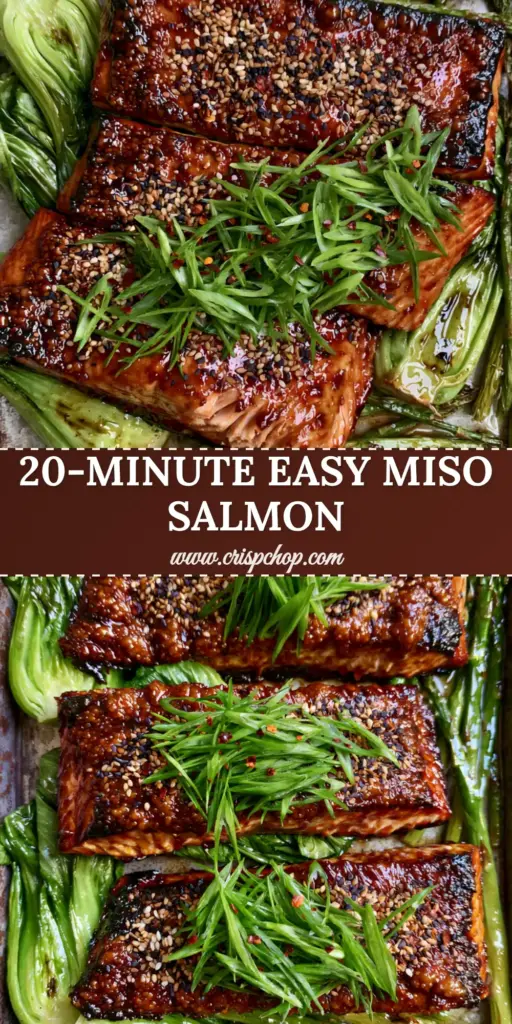
Baked Miso Salmon with Caramelized Glaze and Roasted Greens
Ingredients
Equipment
Method
- In a small bowl, whisk white miso, mirin, soy sauce, brown sugar, and sesame oil until smooth and glossy.
- Place bok choy halves and asparagus on the dark metal sheet pan. Toss with neutral oil and a pinch of salt. Arrange them around the edges to leave space for the fish.
- Place salmon fillets in the center of the pan. Brush heavily with the miso glaze until coated in a thick layer.
- Bake at 400°F (200°C) for 12-14 minutes. Switch to broiler for 1-2 minutes until glaze is mahogany and bubbling with charred edges.
- Remove from oven. Immediately sprinkle with toasted seeds, scallions, and chili flakes while the glaze is hot.
Notes
Always watch the broiler closely as the sugar in the miso can burn in seconds.
Join the Crisp Chop Community!
If this baked miso salmon has become your new favorite weeknight ritual, we want to hear about it! The combination of caramelized edges and vibrant roasted greens is a sensory experience we love to share. Please leave a comment below with your results or any unique twists you added to the glaze.
For more visually stunning and professionally tested recipes, follow us on Pinterest and sign up for our weekly newsletter. Don’t forget to snap a photo of your mahogany-glazed masterpiece and tag us—we love seeing your culinary forensics in action!