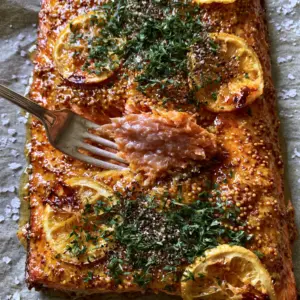
There is a specific culinary magic that happens when high-quality seafood meets the sharp, pungent tang of mustard and the mellow sweetness of wildflower honey. This baked dijon salmon isn’t just a meal; it is a sensory experience designed to hit every corner of your palate while looking like a center-fold from a high-end food magazine.
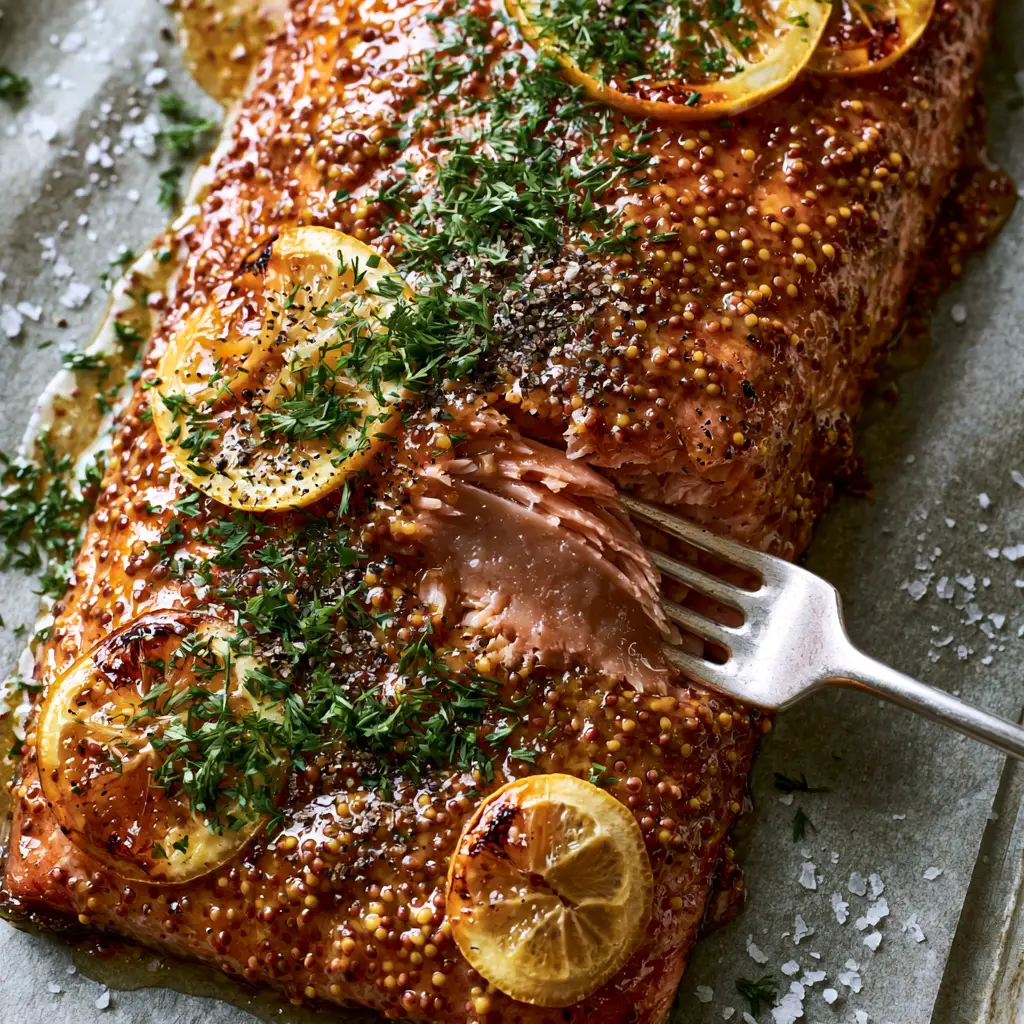
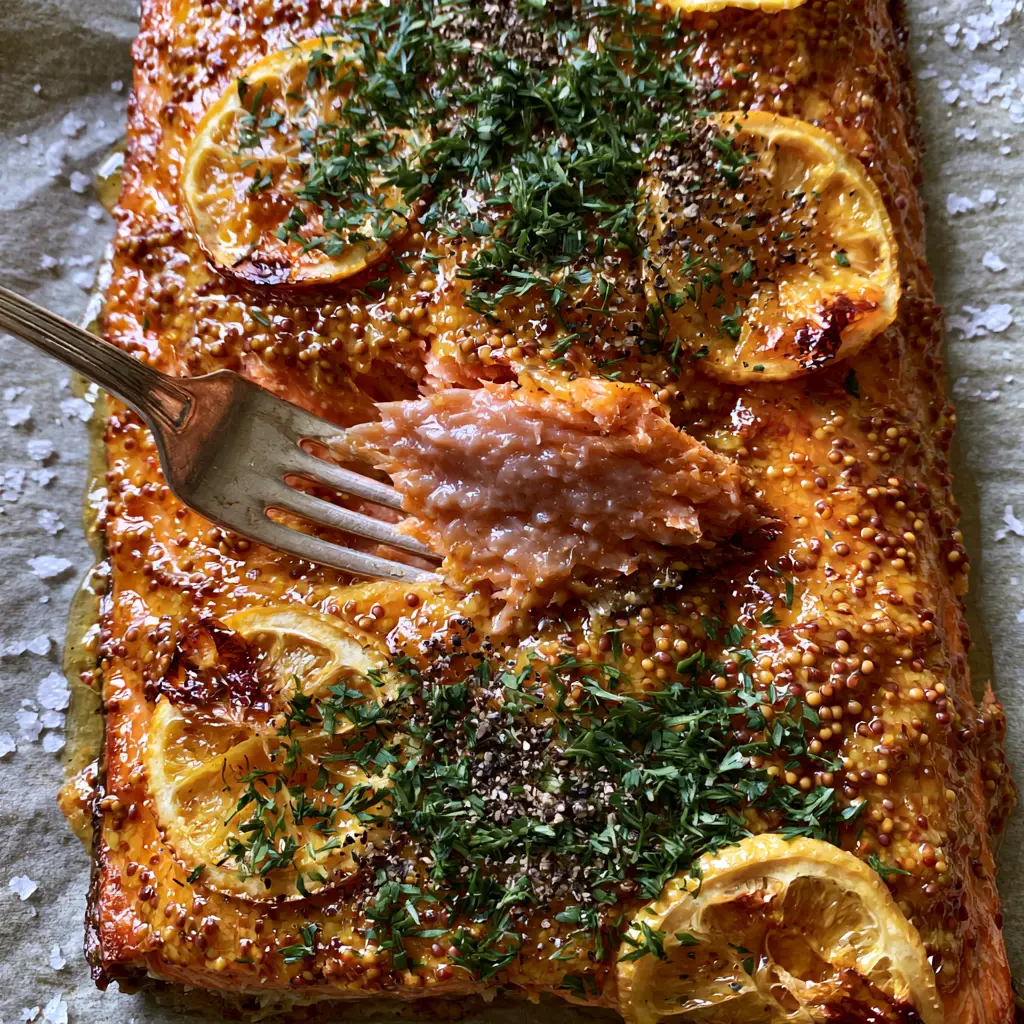
Imagine sliding your fork into a thick, center-cut fillet and watching as it effortlessly yields, revealing a moist, opaque pink interior that practically glows. The exterior is coated in a glistening, golden-brown glaze, punctuated by the rustic pop of whole grain mustard seeds and the aromatic brightness of fresh dill.
Whether you are looking for a quick weeknight victory or an impressive centerpiece for a dinner party, this recipe delivers professional results with minimal effort. By utilizing a few “forensic” culinary techniques—like charring lemon wheels directly on the fish—we elevate the humble salmon to a masterpiece of flavor and texture.
The Irresistible Appeal of This Glistening Honey-Mustard Masterpiece
What sets this baked dijon salmon apart from your standard tray-bake is the attention to textural contrast and visual detail. We aren’t just baking fish; we are lacquering it in a complex sauce that caramelizes under the heat of the oven.
- Succulent Flakiness: By controlling the internal temperature, we ensure the fish stays moist and tender, avoiding the dreaded “dry salmon” syndrome.
- Textural Harmony: The crunch of sea salt flakes and whole grain mustard seeds provides a brilliant counterpoint to the buttery softness of the salmon.
- Aromatic Depth: The combination of charred lemon slices and fresh chopped dill creates a fragrance that fills your kitchen and stimulates the appetite.
- Visually Stunning: The contrast between the golden-brown glaze and the vibrant green herbs on neutral grey parchment paper makes this dish a photographer’s dream.
The Essential Pantry Staples for the Ultimate Dijon Glaze
To achieve the visual and flavor profile described in our blueprint, every ingredient must serve a specific purpose. We don’t use fluff; we use functional components that build a better bite.
Center-Cut Salmon Fillet (1.5 lbs / 680g): We specifically choose a thick, center-cut piece because it cooks more evenly than the tail, ensuring that moist, pink interior we crave. A thick fillet provides the structural integrity needed to support a heavy layer of glaze without falling apart.
Dijon Mustard (2 tbsp / 30g): This provides the sharp, acidic backbone of the sauce. Its smooth texture acts as the primary emulsifier, helping the honey and oil bind together into a thick, paintable coating.
Whole Grain Mustard (1 tbsp / 15g): These seeds are crucial for the “forensic” look of the dish. They don’t just add a rustic aesthetic; they provide tiny bursts of vinegar-soaked texture that pop in your mouth.
Raw Wildflower Honey (3 tbsp / 60g): Honey is our primary caramelization agent. It creates that glistening, golden-brown sheen and balances the heat of the mustard with a natural, floral sweetness.
Extra Virgin Olive Oil (1 tbsp / 15ml): While the salmon has its own healthy fats, a touch of olive oil in the glaze adds richness and helps the heat penetrate the exterior of the fish for a better sear.
Fresh Lemon Wheels: Thinly sliced lemons are placed directly on the fillet. As they bake, the sugars in the fruit char, releasing a concentrated citrus oil that perfumes the entire dish.
Fresh Chopped Dill (2 tbsp / 8g): Dill and salmon are a classic pairing for a reason. Added at the very end, it provides a hit of cool, herbaceous freshness that cuts through the richness of the glaze.
Cracked Black Pepper and Sea Salt Flakes: We use “cracked” pepper rather than fine ground to ensure visible dark flecks. Sea salt flakes (like Maldon) are the finishing touch, providing a clean, salty crunch that enhances the natural sweetness of the fish.
Essential Kitchen Gear for Flawless Salmon Results
Achieving a professional-grade baked dijon salmon requires the right tools to manage heat and moisture. You don’t need a professional kitchen, but these items make a significant difference in the final result.
First, a heavy-duty rimmed baking sheet is a must. It distributes heat evenly and prevents any of the honey glaze from dripping into your oven. We line this with rustic grey parchment paper, which not only prevents sticking but provides that beautiful, neutral background for serving.
A small whisk and a silicone pastry brush are your best friends here. You need the whisk to fully emulsify the honey and mustard, and the brush to “dab” the glaze onto the fish rather than wiping it, which ensures a thick, even coating that stays in place during the bake.
Finally, a digital meat thermometer is the only way to guarantee that “moist pink interior.” Salmon can go from perfect to overcooked in less than 90 seconds, so precision is key. If you’ve enjoyed our lemon pepper salmon, you know how much we value temperature control.
Step-by-Step Architecture: Constructing the Perfect Baked Salmon
Phase 1: Preparing the Foundation and the “Liquid Gold” Glaze
Start by preheating your oven to 400°F (200°C). This high temperature is essential for the honey in the glaze to begin the Maillard reaction quickly without overcooking the center of the fish. Line your baking sheet with a piece of parchment paper, leaving a slight overhang for a rustic look.
Pat your salmon fillet dry with paper towels. This is a critical culinary step; moisture is the enemy of a good glaze. If the surface of the fish is wet, the glaze will slide off rather than adhering and caramelizing. Season the naked fish lightly with sea salt and cracked black pepper.
In a small bowl, whisk together the Dijon mustard, whole grain mustard seeds, honey, and olive oil. You are looking for a thick, syrupy consistency that holds its shape when you lift the whisk. If it’s too thin, add a teaspoon more mustard.
Phase 2: Coating and Charring for Maximum Flavor
Using your pastry brush, paint a generous, thick layer of the honey-mustard mixture over the top and sides of the salmon. You want to see the texture of the whole grain seeds sitting prominently on the surface. Don’t be shy—this glaze is the star of the show.
Arrange your thin lemon wheels directly on top of the glazed salmon. Press them down slightly so they are nestled into the sauce. This ensures the bottom of the lemon soaks up the mustard flavor while the top gets hit by the direct heat of the oven to create those charred edges.
Slide the pan into the center rack of the oven. Bake for 12-15 minutes, depending on the thickness of your fillet. At the 12-minute mark, check the internal temperature. You are looking for 125°F (52°C) for a perfect medium—the carryover heat will bring it to the ideal 130-135°F (55-57°C) as it rests.
Phase 3: The Sensory Finish and Presentation
Remove the salmon from the oven. The glaze should be bubbling and have a deep, golden-brown hue. The lemons should show visible signs of charring around the rinds. Let the fish rest on the pan for 5 minutes; this allows the juices to redistribute, ensuring that “succulent flake” we saw in the visual blueprint.
Just before serving, shower the fillet with fresh chopped dill and an extra sprinkle of sea salt flakes. Use a silver fork to gently pull away a flake from the center to show your guests (or just yourself!) that perfectly opaque, moist pink interior. Serve it directly on the parchment for a rustic, effortless vibe.
Pro-Level Secrets for That Perfect Flaky Texture
- The Resting Rule: Never cut into your salmon immediately. Resting allows the protein fibers to relax, which keeps the moisture inside the fish rather than spilling out onto the parchment.
- The Albumin Alert: If you see white bubbles appearing on the surface of the salmon, it’s a sign that the fish is cooking too fast or is slightly overdone. Reduce your oven temp by 10 degrees next time, or pull it out a minute earlier.
- Mustard Ratios: The ratio of 2:1 for Dijon to Whole Grain is the sweet spot. The Dijon provides the “glue” and the sharp flavor, while the Whole Grain provides the visual “pop” and crunch.
- Freshness Factor: Always use fresh dill. Dried dill has a completely different flavor profile that can lean “dusty,” whereas fresh dill provides the bright, anise-like finish that makes this dish sing.
Preserving Your Masterpiece: Storage and Reheating Advice
If you find yourself with leftovers, this baked dijon salmon stores remarkably well. Place it in an airtight container and refrigerate for up to 3 days. Because of the high acid content in the mustard glaze, the flavor actually deepens overnight.
When reheating, avoid the microwave at all costs—it will turn your succulent fish into rubber. Instead, place the salmon in a cold oven, set it to 275°F (135°C), and heat for 8-10 minutes until just warmed through. This gentle method preserves the moisture of the interior.
Alternatively, cold leftover salmon is incredible when flaked over a salad. The honey-mustard glaze acts as a built-in dressing that pairs beautifully with bitter greens like arugula or radicchio.
Elevate the Plate: Sophisticated Side Dish Pairings
To turn this baked dijon salmon into a complete meal, you want sides that can stand up to the bold flavors of the glaze. A crisp, refreshing salad or a hearty grain bowl works wonders here.
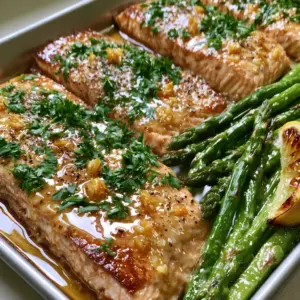
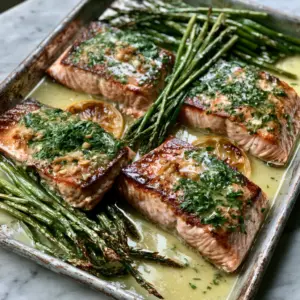
If you want to keep things in the salmon family, consider serving this alongside our sheet pan lemon garlic butter salmon for a multi-fish feast. The garlic notes in that dish complement the mustard here perfectly.
For a lighter, more vibrant pairing, our mediterranean baked feta eggs can actually serve as a unique brunch accompaniment if you’re serving the salmon for a midday celebration. And if you’re planning a summer gathering, this salmon is a fantastic main to pair with a pineapple mango rum punch to lean into those tropical, sweet notes.
For dessert, stay with the fruit theme. The acidity in the salmon glaze is beautifully balanced by something like mango pancakes or a light mango mousse cake.
Frequently Asked Questions Regarding Baked Dijon Salmon
Yes, but ensure it is completely thawed and patted extremely dry with paper towels. Any excess moisture will prevent the honey dijon glaze from caramelizing properly.
Slice the lemons very thin. This allows the heat to penetrate and caramelize the fruit’s sugars quickly during the 12-15 minute bake time.
The most reliable method is using a thermometer; pull the salmon at 125-130°F for a moist, medium finish. Visually, the fish should flake easily with a fork and the interior should be opaque pink rather than translucent.
As written, the honey adds sugar. To make it keto-friendly, replace the honey with a sugar-free liquid sweetener or simply increase the olive oil and mustard ratio.
Dijon mustard provides a smooth, pungent base that emulsifies the glaze, while Whole Grain mustard adds rustic texture and ‘pops’ of flavor from the mustard seeds, matching our visual recipe blueprint.
The Ultimate Recipe for Succulent Baked Dijon Salmon
Ready to create this visual masterpiece? Follow the measurements below for a fool-proof, high-flavor dinner that brings the “glistening glaze” and “succulent flakes” of our blueprint to life in your own kitchen.
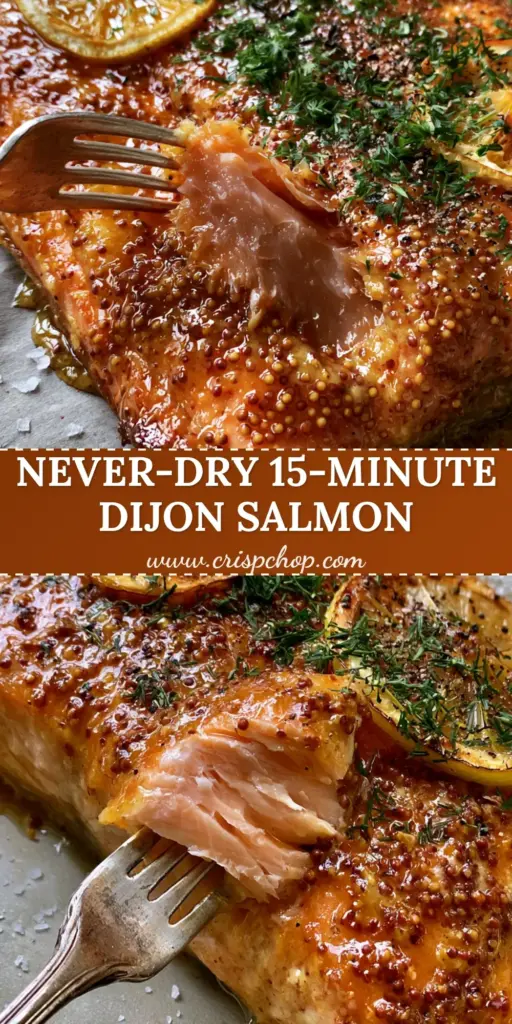
Baked Dijon Salmon with Honey and Charred Lemon
Ingredients
Equipment
Method
- Preheat oven to 400°F (200°C). Line a baking sheet with parchment paper. Pat the salmon fillet completely dry with paper towels.
- In a small bowl, whisk together Dijon mustard, whole grain mustard, honey, and olive oil until fully emulsified and thick.
- Season salmon with salt and pepper. Brush a thick layer of the glaze over the salmon. Top with lemon wheels.
- Bake for 12-15 minutes. Look for a glistening golden-brown glaze and charred lemon edges. Internal temp should hit 125-130°F.
- Let rest for 5 minutes. Sprinkle with fresh dill and extra sea salt flakes before flaking with a fork and serving.
Notes
Always pat the fish dry to ensure the glaze sticks.
Closing & Call to Action
Mastering the art of baked dijon salmon is a milestone for any home cook. It demonstrates an understanding of how simple ingredients like honey and mustard can transform a basic protein into a world-class dish. The key is in the visual cues: look for that golden-brown sheen and the charred edges of the lemon.
If you enjoyed this recipe, please leave a comment below and let us know how your glaze turned out! We love seeing your culinary recreations. Don’t forget to share your photos and follow us on Pinterest for more visually-inspired recipe blueprints. Sign up for our newsletter to get elite cooking tips delivered straight to your inbox!