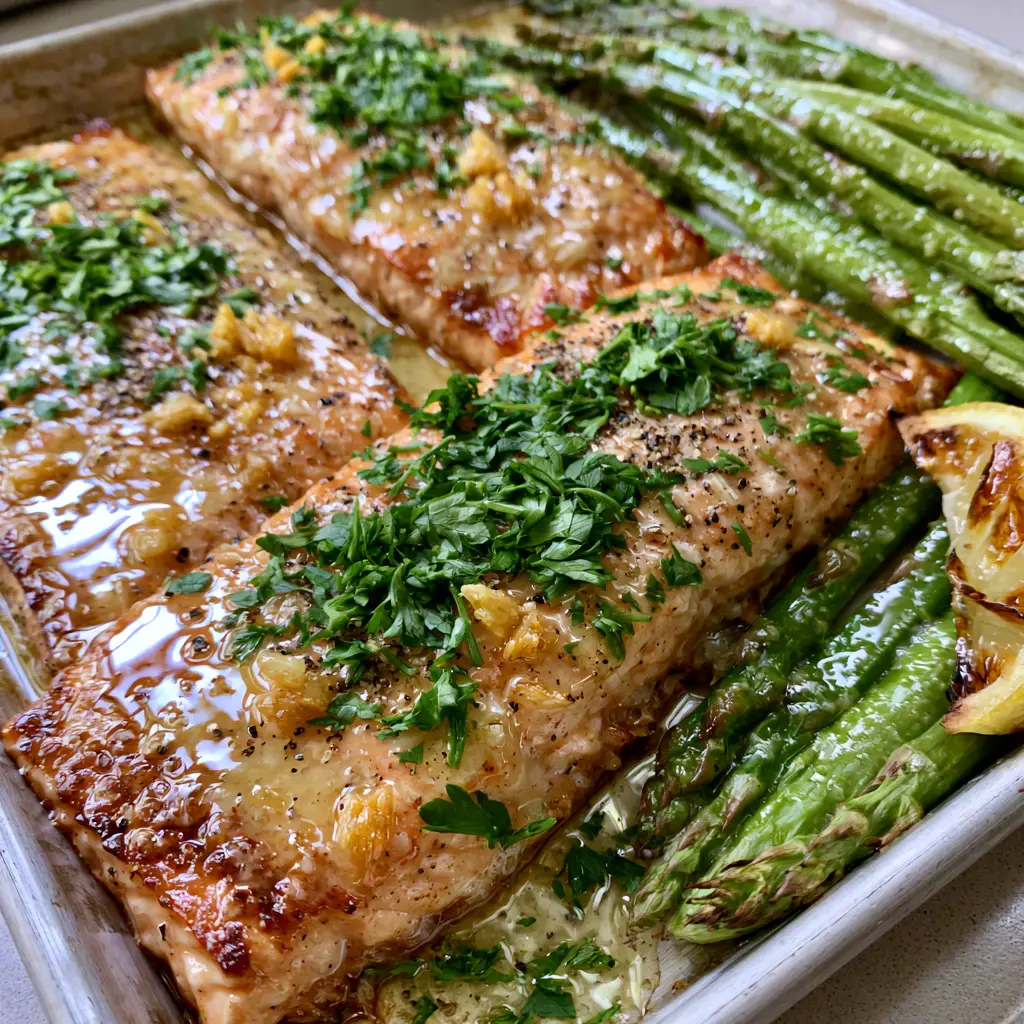
There is a specific kind of culinary magic that happens when high-quality protein meets the conductive heat of a heavy sheet pan. This Garlic butter baked salmon isn’t just a meal; it is a sensory experience designed to replicate the high-end steakhouse aesthetic right in your own kitchen. Imagine pulling a tray from the oven where the salmon fillets boast deep, golden-brown seared edges and a thick, glistening glaze of melted garlic butter that catches the light with every movement.
Achieving that perfect “restaurant look” requires a bridge between visual artistry and culinary science. We aren’t just tossing fish in the oven; we are layering flavors—from the pungent bite of golden minced garlic to the bright, citrusy lift of caramelized lemon slices. This recipe ensures that every bite is flaky, succulent, and infused with the aromatic richness of fresh parsley and cracked black pepper.
Whether you are looking for a reliable weeknight staple or a show-stopping centerpiece for a dinner party, this method delivers. By combining a quick initial sear with a controlled bake alongside fresh asparagus, we create a complete, vibrantly colored meal that is as nutritious as it is beautiful. Let’s dive into the techniques that make this Garlic butter baked salmon the only salmon recipe you will ever need.
Why This Sheet Pan Salmon Recipe Works Every Single Time
- The Perfect Texture Contrast: By utilizing a high-heat start, we achieve those coveted golden-brown seared edges while the interior remains buttery and tender.
- One-Pan Efficiency: The fresh asparagus spears cook in the exact same timeframe as the fish, absorbing the runaway garlic butter for a cohesive flavor profile.
- Visual Brilliance: The combination of vibrant green parsley, charred lemon edges, and the deep pink of the salmon creates a plate that looks professional without the fuss.
- Aromatic Depth: Using fresh minced garlic rather than powder ensures a “glistening glaze” that provides both texture and a sophisticated pungent sweetness.
The Anatomy of Flavor: Essential Ingredients for Garlic Butter Baked Salmon
To achieve the results seen in our visual blueprint, every ingredient must serve a structural or flavorful purpose. Quality matters when the ingredient list is this focused.
Salmon Fillets: You will need 4 center-cut salmon fillets, approximately 6 oz (170g) each. Center-cut fillets provide a uniform thickness, which is critical for even cooking and achieving those beautiful seared edges.
Unsalted Butter: 4 tbsp (56g) of high-quality unsalted butter acts as the fat base for our glaze. Using unsalted butter allows you to control the seasoning precisely with flakey sea salt later in the process.
Fresh Garlic: 4-5 large cloves (approx. 20g) of garlic, finely minced. The garlic becomes golden and slightly sweet during the baking process, adding a “crunch” to the glistening glaze.
Asparagus Spears: 1 lb (450g) of fresh green asparagus. Look for medium-thickness spears; they hold up best to the heat, developing charred tips without becoming mushy.
Fresh Lemon: 1 large organic lemon, half juiced and half sliced into thin rounds. The slices will caramelize on the pan, intensifying their sugars and providing a beautiful garnish.
Fresh Parsley: 1/4 cup (10g) of finely chopped flat-leaf parsley. This provides the “vibrant green” contrast mentioned in our visual prompt and adds a necessary herbaceous finish.
Seasoning Trio: 1 tsp (5g) cracked black pepper, 1 tsp (5g) flakey sea salt, and 1 tbsp (15ml) neutral oil (like avocado oil) for the initial high-heat sear. These foundational elements ensure the fish is seasoned to its core.
Professional Tools for Culinary Success
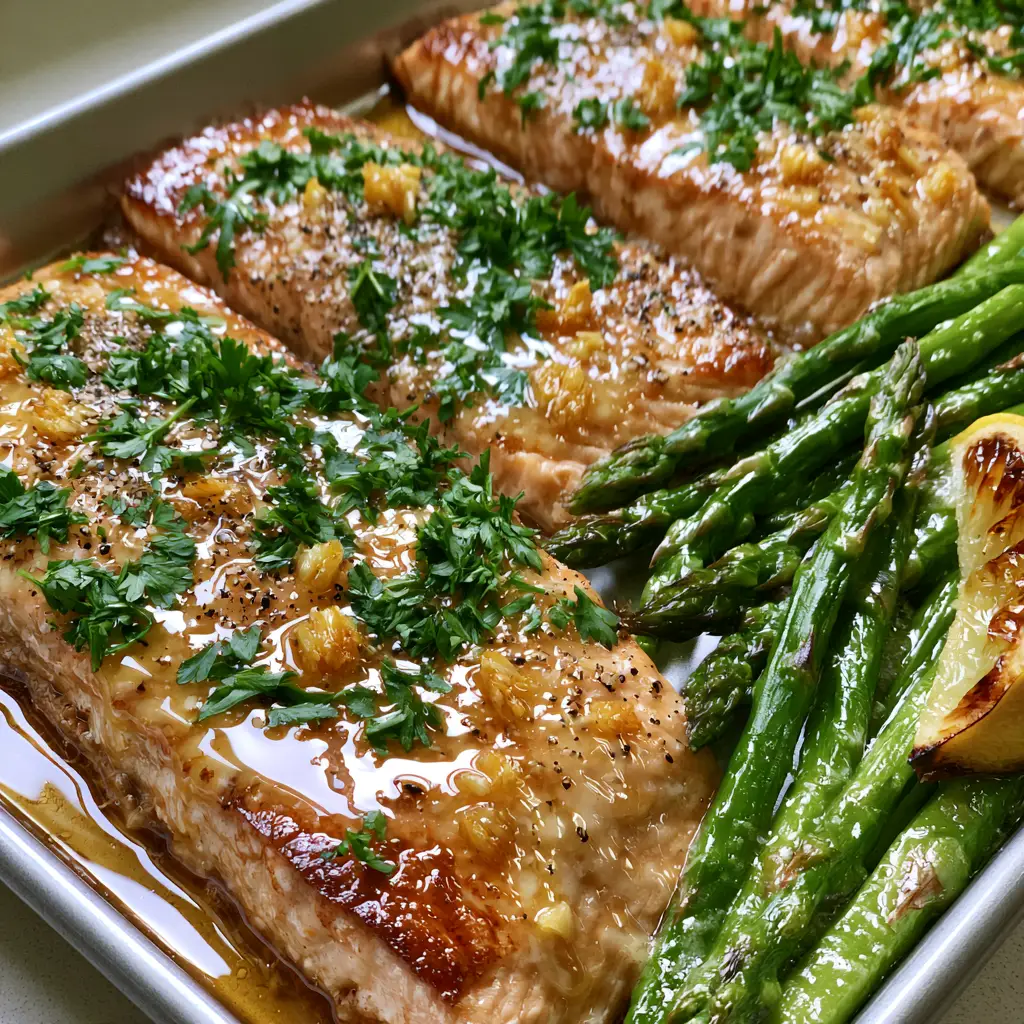
To replicate the extreme close-up, high-angle shots of perfectly cooked fish, your equipment must facilitate even heat distribution. A heavy-duty, rimmed baking sheet (half-sheet size) is non-negotiable for this Garlic butter baked salmon.
I also recommend using a well-seasoned cast-iron skillet or a heavy stainless steel pan for the initial sear. This is the secret to getting those golden-brown edges before the fish ever hits the oven. Finally, a digital instant-read thermometer is your best friend to ensure the salmon reaches an internal temperature of 145°F (63°C) without overcooking.
The Step-by-Step Blueprint for Salmon Perfection
Preparing the Salmon and Asparagus
Start by removing your salmon fillets from the refrigerator at least 15-20 minutes before cooking. Bringing the protein to room temperature ensures that the muscle fibers don’t tighten up too quickly when they hit the heat, resulting in a flakier texture.
Pat the fillets bone-dry with paper towels. This is a critical forensic step: moisture is the enemy of a good sear. If the skin or flesh is damp, it will steam rather than brown. Trim the woody ends off your asparagus and toss them in a small bowl with a drizzle of oil and a pinch of salt.
Crafting the Glistening Garlic Butter Glaze
In a small saucepan over low heat, melt the 4 tbsp (56g) of butter. Add the minced garlic and cook for just 60 seconds until fragrant but not browned. We want the garlic to finish its “golden” transformation in the oven.
Whisk in the lemon juice and half of the cracked black pepper. This emulsion will be brushed over the fish, creating that thick, glistening glaze that defines the dish’s visual appeal. Remove from heat and set aside.
The High-Heat Sear and Sheet Pan Assembly
Preheat your oven to 400°F (200°C). Heat 1 tbsp (15ml) of oil in a large skillet over medium-high heat. Once the oil is shimmering, place the salmon fillets flesh-side down. Sear for 2-3 minutes until a deep, golden-brown crust forms on the edges.
Carefully transfer the fillets to your sheet pan, skin-side down. Arrange the asparagus spears around the salmon. Tuck the lemon slices into the corners and gaps. Pour the garlic butter glaze generously over each fillet, ensuring the minced garlic bits sit right on top.
The Final Bake and Sensory Cues
Slide the tray into the oven and bake for 8-10 minutes. Watch for the visual changes: the asparagus should develop slightly charred tips and a buttery sheen, while the salmon should begin to flake easily with a fork.
The lemon slices will have caramelized edges, turning a deep amber color. This is the moment to remove the pan. The residual heat will finish the cooking process, keeping the fish moist and tender.
Expert Tips for the Ultimate Garlic Butter Baked Salmon
- The Dryness Factor: Never skip patting the fish dry. A dry surface is the only way to achieve the “golden-brown seared edges” depicted in professional food photography.
- Garlic Management: If your garlic is burning too quickly, you may have minced it too finely or your oven’s heating element is uneven. Aim for “small bits” rather than a paste.
- Crowding the Pan: Give the asparagus and salmon space. If the pan is overcrowded, the vegetables will release steam, preventing the asparagus from getting those crispy, charred tips.
- Salt Timing: Apply the flakey sea salt as a finishing touch. This preserves the crystal structure and provides a satisfying crunch that elevates the classic baked salmon experience.
Storage, Reheating, and Meal Prep
While this Garlic butter baked salmon is best served immediately to enjoy the contrast of textures, leftovers can be stored in an airtight container for up to 2 days. To reheat, avoid the microwave, which can turn salmon rubbery.
Instead, place the salmon and asparagus back on a sheet pan, cover loosely with foil, and warm in a 275°F (135°C) oven for about 10 minutes. This gentle heat preserves the integrity of the garlic butter glaze. For more seafood inspiration, check out our expertly seared tuna steak recipe for your next high-protein dinner.
What to Serve with Your Garlic Butter Salmon
This dish is a powerhouse on its own, but it pairs beautifully with light, Mediterranean-inspired sides. Consider serving it alongside baked feta dishes for a brunch-style spread, or keep it classic with a side of fluffy quinoa or roasted potatoes.
If you are planning a larger gathering, perhaps a summer holiday celebration, this salmon acts as a sophisticated alternative to traditional grilled fare. For dessert, the citrus notes in the salmon pair wonderfully with our mango lime cupcake bites.
Frequently Asked Questions
Yes, broccoli or thin green beans work well, but ensure they are cut into sizes that will cook within the same 8-10 minute window as the salmon.
Yes, but you must thaw it completely and pat it extremely dry. Frozen salmon often retains more moisture, which can hinder the searing process.
The salmon is done when it reaches an internal temperature of 145°F (63°C) or when the flesh flakes easily with a fork and loses its translucent appearance.
For this recipe, bake it uncovered. This allows the moisture to escape, ensuring the asparagus chars and the garlic butter glaze thickens into a glistening finish.
Garlic turns bitter if it burns. Ensure you are adding it to the butter over low heat and only baking until it reaches a ‘golden’ state, as per the visual prompt.
The Ultimate Garlic Butter Baked Salmon Recipe
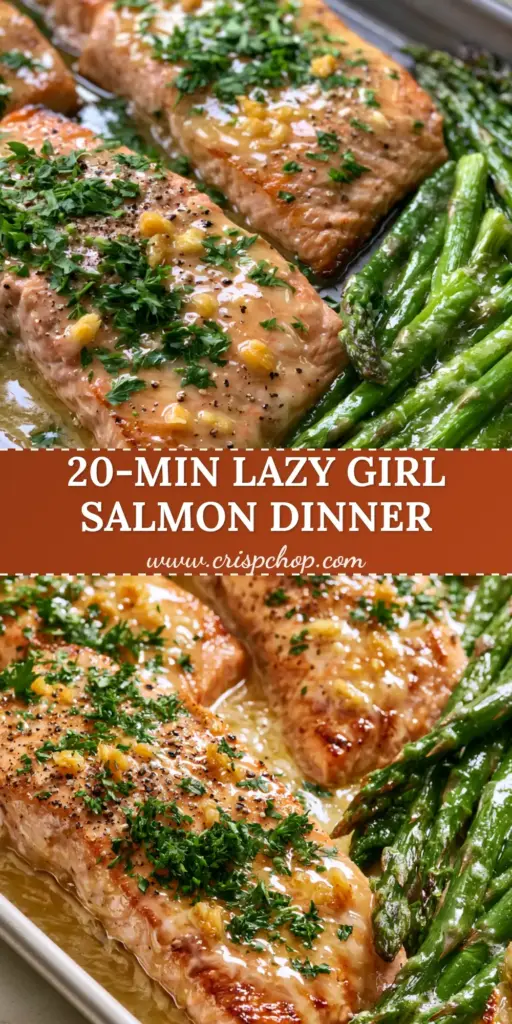
Garlic butter baked salmon with Roasted Asparagus and Caramelized Lemon
Ingredients
Equipment
Method
- Pat salmon fillets completely dry with paper towels. Season with a portion of the salt and pepper.
- Heat oil in a skillet over medium-high heat. Sear salmon flesh-side down for 2-3 minutes until golden-brown edges form.
- Place salmon skin-side down on a sheet pan. Arrange asparagus and lemon slices around it. Pour the garlic butter glaze over the fish.
- Bake at 400°F (200°C) for 8-10 minutes until fish flakes and asparagus tips are charred.
- Top with fresh parsley and extra flakey sea salt before serving.
Notes
Use a high-smoke point oil like avocado or grapeseed for the initial pan sear.
Final Thoughts and Community
Mastering the Garlic butter baked salmon is a rite of passage for any home cook looking to elevate their kitchen game. The combination of rich fats, bright acidity, and the perfect sear creates a meal that feels like a celebration of fresh ingredients. We hope this guide helps you achieve that glistening, restaurant-quality result in your own home.
Did you try this recipe? We would love to hear how your charred asparagus turned out! Leave a comment below, sign up for our newsletter for more culinary blueprints, and don’t forget to share your creations and follow us on Pinterest for more daily inspiration.