There is something inherently magical about the way Mediterranean Baked Feta Eggs transform a few humble pantry staples into a vibrant, restaurant-quality masterpiece. If you have been searching for the ultimate one-pan brunch that delivers on both flavor and visual drama, this sheet pan wonder is your new gold standard.
Imagine sliding a rustic dark grey sheet pan out of the oven to find jammy, burst cherry tomatoes mingling with golden-brown charred chunks of salty feta. The centerpiece of this dish remains the perfectly cooked eggs, featuring bright orange liquid yolks that are just waiting to be broken with a piece of crusty bread.
This recipe isn’t just about breakfast; it’s about a sensory experience that brings the warmth of the Mediterranean sun directly into your kitchen. Whether you are hosting a weekend gathering or simply craving a high-protein, low-carb start to your day, these Mediterranean Baked Feta Eggs deliver every single time.
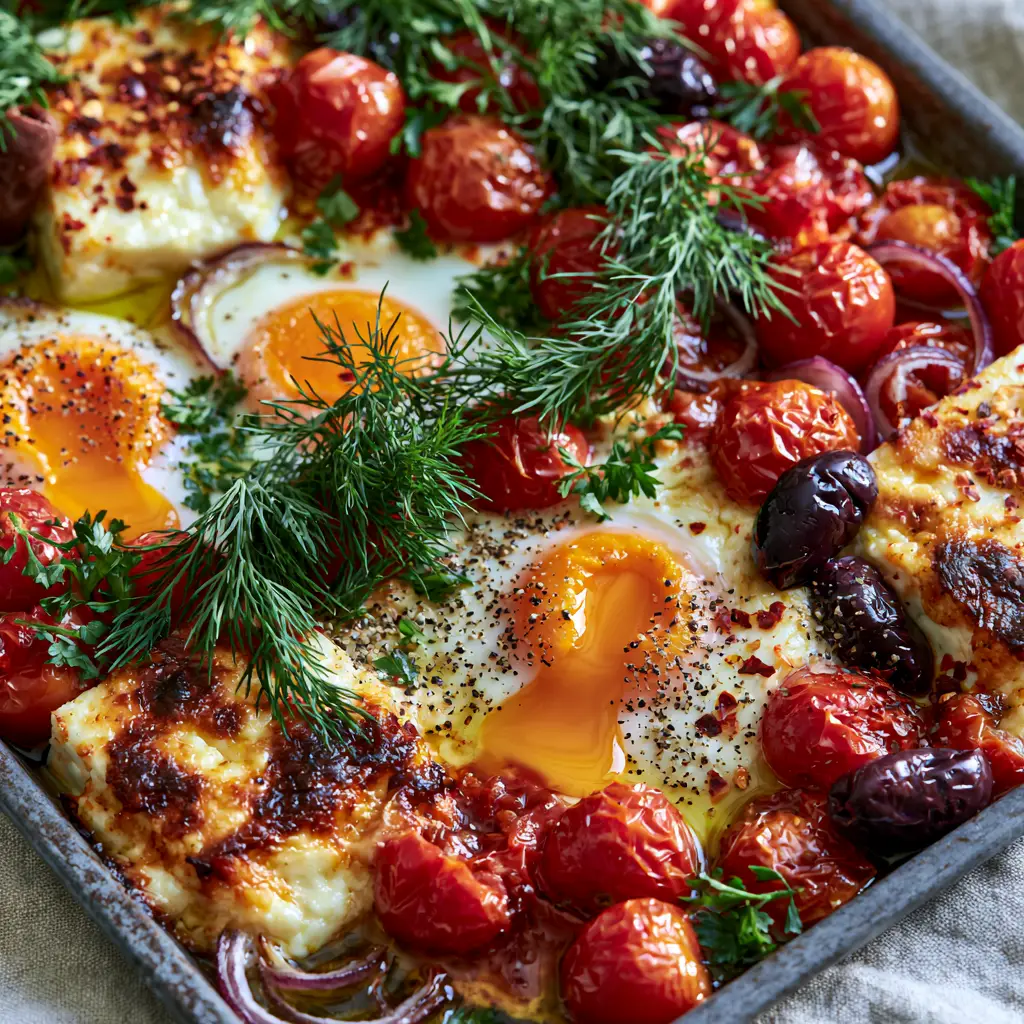
Why These Mediterranean Baked Feta Eggs Are the Ultimate Brunch Game-Changer
- Textural Contrast: You get the snap of blistered tomato skins, the creamy melt of warm feta, and the velvet-smooth richness of runny egg yolks in every bite.
- Effortless Cleanup: By utilizing a single sheet pan, you minimize the mess while maximizing the “wow” factor of your presentation.
- Vibrant Mediterranean Flavors: The combination of briny kalamata olives, sharp red onions, and fresh dill creates a complex flavor profile that feels incredibly fresh.
- Scientifically Optimized Results: This method uses a two-stage baking process to ensure the tomatoes are charred and the feta is melted without overcooking the delicate eggs.
The Mediterranean Pantry Staples You Will Need
High-Quality Feta Cheese: You need 7 oz (200g) of block feta cheese, preferably sheep’s milk feta stored in brine. The high fat content ensures it softens beautifully and achieves those iconic charred edges without drying out.
Fresh Cherry Tomatoes: Use 2 cups (300g) of ripe cherry or grape tomatoes. These are essential for creating that “jammy” texture as they burst under high heat, releasing natural sugars and acids that form a built-in sauce.
Large Farm-Fresh Eggs: 4 to 6 large eggs provide the protein base. Farm-fresh eggs often have more vibrant orange yolks, which create the stunning visual contrast seen in the macro shots of this dish.
Extra Virgin Olive Oil: You will need 3 tbsp (45ml) of high-quality EVOO. This isn’t just for cooking; it’s a foundational flavor carrier that helps blister the vegetables and adds a silky mouthfeel to the final drizzle.
Kalamata Olives: 1/2 cup (65g) of pitted kalamata olives adds a necessary briny depth. Their dark purple hue provides a gorgeous visual pop against the red tomatoes and white feta.
Red Onion: 1/2 small red onion (50g), sliced into paper-thin half-moons. These soften and caramelize slightly in the oven, providing a subtle sweetness to balance the salty cheese.
Fresh Herb Garnish: 2 tbsp (5g) each of fresh dill sprigs and chopped parsley. Never skip the fresh herbs; they provide the “vibrant green” lift that cuts through the richness of the baked cheese and eggs.
The Seasoning Duo: 1 tsp (2g) coarse cracked black pepper and 1/2 tsp (1g) red pepper flakes. The coarse pepper provides a localized “crunch” of heat, while the flakes offer a gentle, lingering warmth.
Essential Equipment for a Perfect Sheet Pan Bake
To achieve the professional results shown in our visuals, use a rustic dark grey sheet pan. The dark color absorbs and distributes heat more aggressively than shiny aluminum, which is the secret to getting those “crispy golden-brown charred edges” on the feta.
You will also need a sharp chef’s knife for thinly slicing the red onions and finely chopping the parsley. A small bowl for cracking eggs individually is also recommended to ensure no shells end up in your beautiful Mediterranean Baked Feta Eggs.
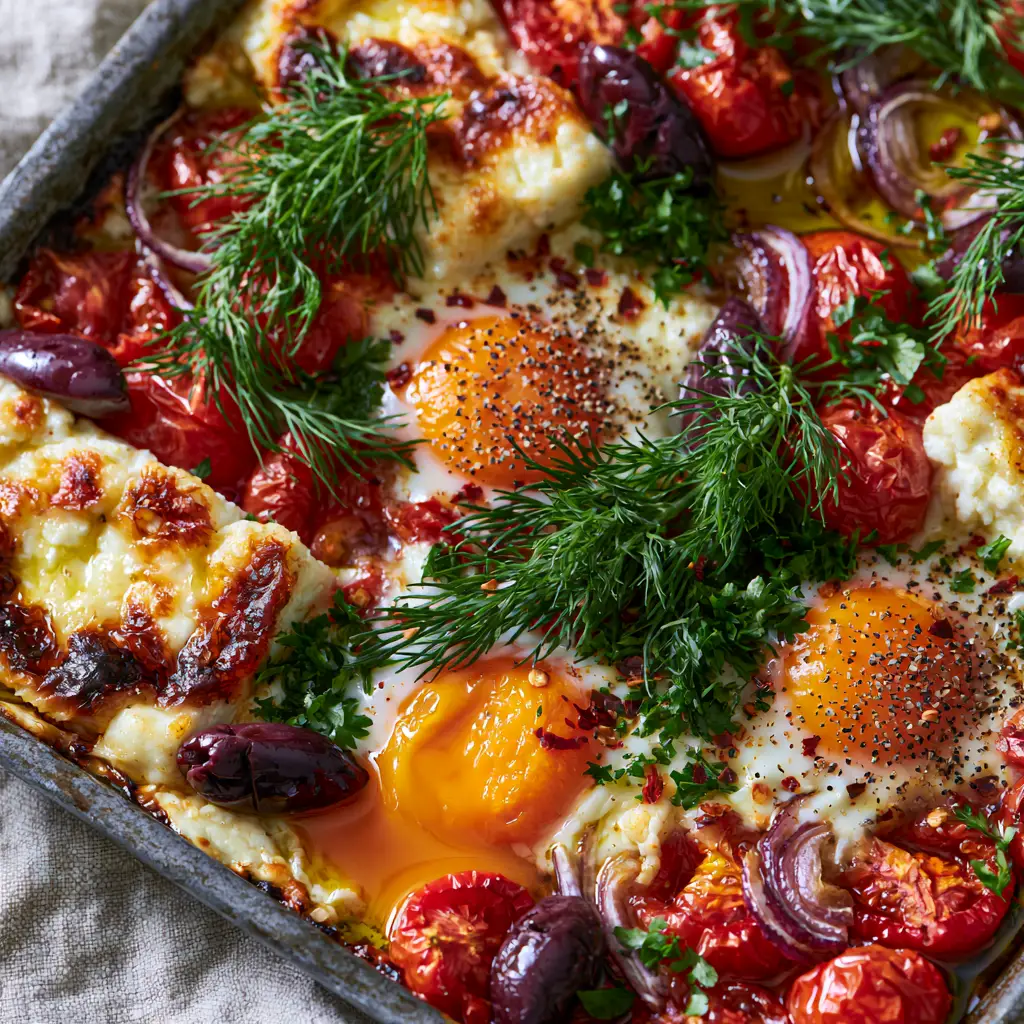
Mastering the Sheet Pan: Step-by-Step Perfection
Stage 1: Blistering the Base and Charring the Feta
Preheat your oven to 400°F (200°C). Arrange the 2 cups (300g) of cherry tomatoes, 1/2 cup (65g) of kalamata olives, and thinly sliced red onions across the sheet pan. Break the 7 oz (200g) of feta into large, rustic chunks—keeping them large ensures they don’t vanish into the sauce.
Drizzle everything generously with 2 tbsp (30ml) of extra virgin olive oil and toss lightly to coat. Roast for 12–15 minutes. You are looking for the tomatoes to “burst open” and the feta to develop those distinct golden-brown charred edges that signify deep flavor development.
Stage 2: Precision Egg Baking for Runny Yolks
Remove the pan from the oven and use a large spoon to create 4 to 6 small wells in the mixture. Carefully crack one egg into each well. Return the pan to the oven for an additional 5–8 minutes.
Watch for the “Visual Cues”: The egg whites should be opaque and set, but the yolks must remain “bright orange and liquid.” If you overcook them, you lose the dipping sauce effect that makes Mediterranean Baked Feta Eggs so famous.
Stage 3: The Final Flourish and Garnish
Once removed from the oven, immediately sprinkle the 1 tsp (2g) of coarse cracked black pepper and 1/2 tsp (1g) of red pepper flakes over the hot eggs. The heat will wake up the oils in the spices, making them more aromatic.
Shower the pan with the fresh dill sprigs and chopped parsley. Finish with a final, luxurious drizzle of the remaining 1 tbsp (15ml) of extra virgin olive oil. The contrast of the hot pan and the fresh, cool herbs is the hallmark of professional food styling.
Expert Culinary Tips for Mediterranean Success
- The “Well” Secret: Always move the tomatoes and feta aside to make a clear space on the pan for the egg. If the egg sits on top of a hot tomato, the bottom of the egg will cook too fast while the top remains raw.
- Room Temp Eggs: Take your eggs out of the fridge 15 minutes before baking. This helps them cook more evenly in the oven’s ambient heat.
- Feta Selection: Avoid pre-crumbled feta. It often contains anti-caking agents (like cellulose) that prevent it from melting properly. A block of feta in brine is essential for that jammy, charred texture.
- The Pan Color Matters: If using a light-colored aluminum pan, you may need to increase the roasting time by 3 minutes to achieve the same level of blistering.
What to Serve with Mediterranean Baked Feta Eggs
To fully enjoy those runny yolks and the juices from the blistered tomatoes, you need a high-quality carbohydrate for dipping. This Moroccan Herb Stuffed Flatbread is the perfect companion, echoing the Mediterranean flavor profile with its own herb-heavy filling.
If you are planning a full-scale brunch spread, consider adding some seafood variety to the table. A side of Baked Salmon with Lemon Butter provides a sophisticated lean protein that pairs beautifully with the acidity of the roasted tomatoes.
For a refreshing drink pairing, especially during the summer months, a Pineapple Mango Rum Punch offers a tropical sweetness that balances the saltiness of the feta and olives. This makes for a festive, high-energy brunch atmosphere.
Storage and Reheating Advice
Mediterranean Baked Feta Eggs are best enjoyed immediately while the yolks are runny and the feta is molten. However, leftovers can be stored in an airtight container in the refrigerator for up to 2 days.
To reheat, avoid the microwave, as it will turn your egg yolks into rubber. Instead, place the leftovers back on a sheet pan in a 350°F (175°C) oven for 5–7 minutes until the feta is soft again. Note that the yolks will likely firm up during reheating.
Frequently Asked Questions
Absolutely. Just ensure any high-moisture vegetables (like spinach) are sautéed briefly beforehand, or they may release too much water and prevent the feta from charring.
It is not recommended. Block feta in brine has more moisture and fat, allowing it to melt and char. Pre-crumbled feta often contains starch to keep the bits separate, which prevents proper melting.
The secret is pre-roasting the vegetables and feta first. By the time you add the eggs, the pan is scorching hot, which helps the whites set quickly (in 5-8 minutes) before the yolks have a chance to solidify.
Yes! Mediterranean Baked Feta Eggs are naturally low-carb and high in healthy fats and protein, making them an excellent choice for keto or grain-free diets.
A dark grey or heavy-duty carbon steel sheet pan is best. These pans absorb heat more efficiently than shiny aluminum, ensuring you get those crispy, charred edges on the cheese and tomatoes.
The Ultimate Mediterranean Baked Feta Eggs Recipe
Mediterranean Baked Feta Eggs with Blistered Tomatoes and Olives
Ingredients
Equipment
Method
- Preheat oven to 400°F (200°C). On a dark sheet pan, combine cherry tomatoes, olives, sliced red onions, and chunks of feta cheese.
- Drizzle with 2 tbsp of olive oil. Bake for 12-15 minutes until tomatoes burst and feta has golden charred edges.
- Use a spoon to make 4-6 wells in the vegetable mixture. Crack one egg into each well.
- Return to the oven for 5-8 minutes until whites are set but yolks are still runny and liquid.
- Immediately top with coarse black pepper, red pepper flakes, fresh dill, and parsley. Drizzle with remaining olive oil and serve warm.
Notes
Always crack eggs into a separate bowl first to avoid shells in the pan.
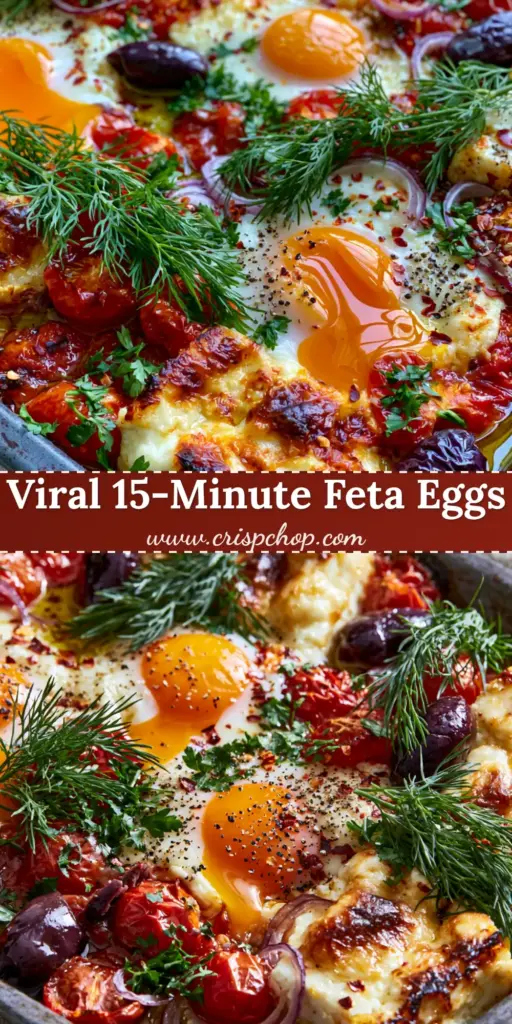
Closing & Call to Action
Mastering the art of Mediterranean Baked Feta Eggs is a surefire way to elevate your weekend routine. This dish proves that with the right technique and high-quality ingredients, simplicity is the ultimate sophistication. The combination of charred cheese, jammy tomatoes, and silky yolks is a culinary trifecta that never fails to impress.
Did you make this recipe? We would love to hear how your Mediterranean Baked Feta Eggs turned out! Please leave a comment below and share your photos with us. Don’t forget to follow crispchop and save this recipe to your breakfast boards on Pinterest for your next brunch gathering!