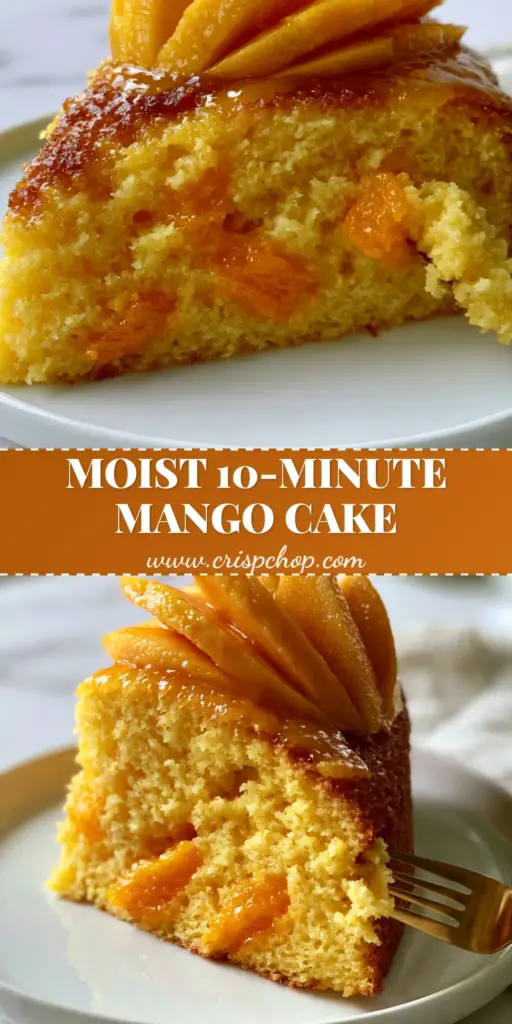
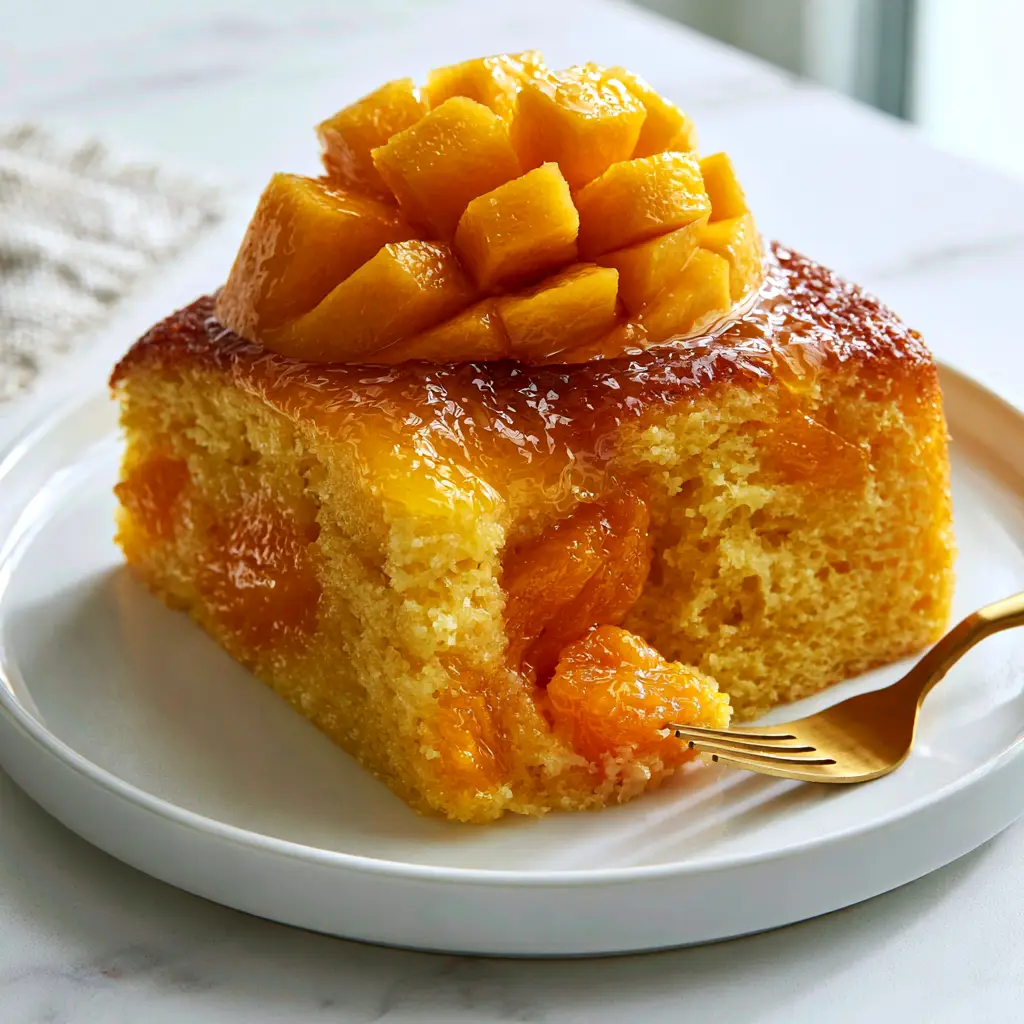
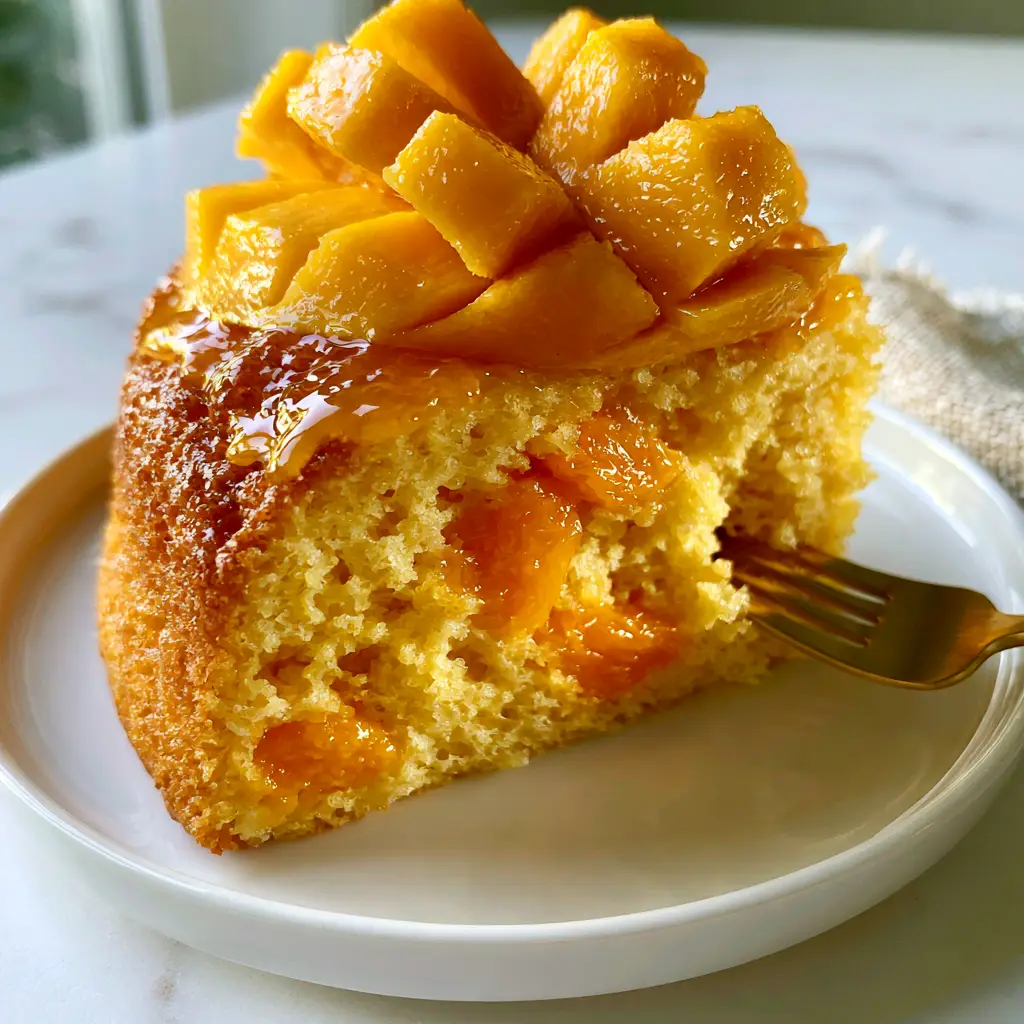
There is nothing quite like the sight of a thick, generous slice of Mango Cakes resting on a minimalist white ceramic plate. This recipe captures the essence of summer with its vibrant golden-yellow, airy sponge that reveals hidden pockets of juicy, bright orange mango chunks with every bite.
Bathed in the soft, warm natural sunlight of a lazy afternoon, this cake glows with a glossy, translucent mango nectar glaze. It is finished with a stunning cluster of perfectly ripe, fanned-out fresh mango slices that make it the centerpiece of any dessert table.
When a gold dessert fork presses into the side of the slice, the incredibly soft, moist crumb texture gives way effortlessly. This isn’t just a cake; it is a sensory celebration of the world’s most beloved tropical fruit, designed to be as beautiful on the plate as it is delicious on the palate.
Why This Is the Only Mango Sponge Recipe You Need
- Visual Masterpiece: The contrast between the fanned mangoes and the translucent glaze creates a professional bakery aesthetic at home.
- Textural Harmony: We achieve an incredibly soft, moist crumb that holds up perfectly against the juicy, fresh Alphonso mango chunks.
- Pure Fruit Intensity: By using a concentrated mango nectar glaze, we amplify the tropical notes without overwhelming the delicate sponge.
- Scientifically Tested: This recipe uses a specific ratio of fats and leavening to ensure the cake remains airy despite the heavy fruit inclusions.
Essential Elements for a Sun-Drenched Mango Sponge
Fresh Alphonso Mangoes: Known for their lack of fiber and intense sweetness, these provide the “bright orange” pockets visible in the crumb. If you cannot find Alphonso, use the highest quality Ataulfo mangoes for a similar buttery texture.
All-Purpose Flour (315g / 2.5 cups): This provides the structural foundation for our Mango Cakes, ensuring the fruit doesn’t sink to the bottom. Measure carefully to maintain the airy, golden-yellow texture.
Granulated Sugar (300g / 1.5 cups): Beyond sweetness, sugar aids in the browning process, helping us achieve that specific golden-yellow hue. It also interacts with the mango juices to keep the crumb exceptionally moist.
Neutral Vegetable Oil (180ml / ¾ cup): Unlike butter, oil remains liquid at room temperature, which is the secret to the “incredibly soft” texture seen when the gold fork hits the slice. It ensures the cake never feels dry or crumbly.
Plain Greek Yogurt (120ml / ½ cup): The acidity in yogurt reacts with the leavening agents to create those visible “airy” pockets. It adds a subtle tang that balances the intense sweetness of the mango nectar.
Large Eggs (3 units): These provide the protein structure needed to trap air during the mixing process. Ensure they are at room temperature to create a seamless emulsion with the oil and sugar.
Baking Powder (2 tsp / 10g) and Salt (½ tsp / 3g): Baking powder is the “invisible” workhorse for the rise, while salt sharpens the tropical flavors. Never skip the salt, as it makes the mango flavor truly “pop.”
Mango Nectar (240ml / 1 cup): This is used for both the batter and the translucent glaze. It provides a deep, floral aroma that fresh fruit alone cannot achieve.
Professional Tools for the Perfect Slice
To achieve the look of our “vertical high-resolution smartphone photo,” you will need a 9-inch (23cm) springform pan. This allows for easy removal without damaging the delicate fanned mangoes on top.
A sharp mandoline or a very steady chef’s knife is essential for creating those perfectly thin, fanned-out mango slices. For the glaze, a small heavy-bottomed saucepan will ensure even reduction without scorching the fruit sugars.
Step-by-Step Guide to the Perfect Mango Sponge
Preparing the Golden Alphonso Base
Start by preheating your oven to 350°F (175°C). Grease your springform pan and line the bottom with parchment paper to ensure a clean release onto your white ceramic plate.
In a large bowl, whisk together the eggs and granulated sugar for at least 3 minutes. You are looking for a pale, ribbony texture which is the first step toward that airy sponge described in our visual blueprint.
Slowly stream in the vegetable oil and yogurt while whisking constantly. Once combined, fold in 1/2 cup (120ml) of the mango nectar and a teaspoon of vanilla extract for depth.
Folding in the Bright Orange Mango Chunks
Sift the flour, baking powder, and salt over the wet ingredients. Using a silicone spatula, fold gently until just a few streaks of flour remain—overmixing will destroy the airy pockets we want to see.
Gently fold in 1.5 cups (225g) of diced fresh Alphonso mangoes. These are the “juicy chunks” that will be visible in the final slice, providing bursts of color against the golden-yellow sponge.
Pour the batter into the prepared pan and bake for 45-50 minutes. You’ll know it’s done when the top is a deep golden brown and a skewer comes out clean with just a few moist crumbs.
Crafting the Translucent Mango Nectar Glaze
While the cake cools on a wire rack, combine the remaining 1/2 cup (120ml) of mango nectar with 2 tablespoons (25g) of sugar in a saucepan. Simmer over medium heat until reduced by half.
The glaze should be thick enough to coat the back of a spoon but still “translucent” and “glossy.” This is what creates that high-end bakery glow on the white marble surface.
The Art of the Fanned Mango Topping
Once the cake is completely cool, brush a thin layer of the glaze over the top. This acts as the “glue” for our fruit decoration.
Slice a fresh mango into thin, uniform wedges. Arrange them in a circular, overlapping pattern starting from the center to create that “fanned-out” look seen in the Midjourney prompt.
Brush the remaining glaze generously over the fanned mangoes. This protects the fruit from oxidizing and adds the final “glossy” highlight that catches the natural sunlight.
Expert Tips for Tropical Cake Success
- The Flour Toss: Toss your diced mango chunks in a tablespoon of flour before adding them to the batter. This prevents the “bright orange chunks” from sinking to the bottom of the cake.
- Room Temperature Ingredients: Ensure your yogurt and eggs are not cold. Room temperature ingredients bond more effectively, resulting in a more uniform “moist crumb texture.”
- Glaze Timing: Apply the glaze while it is slightly warm but the cake is cool. This allows it to set into a “translucent” finish rather than soaking entirely into the sponge.
- Choosing the Fruit: If Alphonso mangoes aren’t in season, look for mangoes that are soft to the touch and smell floral at the stem. Avoid any fruit that feels “stringy.”
Storage and Freshness Guidelines
Because of the fresh fruit topping and high moisture content, these Mango Cakes are best enjoyed within 24 hours. Store any leftovers in an airtight container in the refrigerator for up to 3 days.
For the best experience, allow a refrigerated slice to sit at room temperature for 15 minutes before serving. This restores the “incredibly soft” feel that can be slightly firmed up by the cold.
You can freeze the sponge (without the glaze and fresh fruit) for up to 2 months. Simply wrap tightly in plastic wrap and foil, then defrost and decorate with fresh mangoes just before serving.
Sweet Pairings and Tropical Variations
To turn this into a full tropical spread, consider serving it alongside a refreshing homemade mango bingsu for a play on temperatures. The creamy texture of the cake also pairs beautifully with a chilled glass of pineapple mango rum punch during summer brunches.
If you love this flavor profile, you might also enjoy our moist mango cupcakes which use a similar Alphonso base. For a more decadent celebration, our mango crepe cake offers thin layers of fruit and cream that complement the richness of this sponge.
For those hosting a themed event, like a Hello Kitty birthday party, these vibrant yellow cakes fit perfectly into a bright, cheerful dessert table aesthetic.
Frequently Asked Questions
You can bake the sponge a day early, but for the best visual result, add the fresh fanned mangoes and nectar glaze just before serving to keep the fruit looking vibrant.
You can use thawed frozen mango for the chunks inside the batter, but always use fresh mango for the fanned topping to achieve the professional look.
Toss the diced mango chunks in a small amount of flour before folding them into the batter. This creates friction and helps them stay suspended in the airy sponge.
Alphonso or Ataulfo (Honey) mangoes are best because they are non-fibrous, buttery, and have a vibrant orange color that looks beautiful in the cake sponge.
Ensure you are using clear mango nectar rather than thick mango pulp. Simmering it slowly with sugar until it reduces creates that clear, glossy finish.
The Ultimate Moist Mango Cake Recipe
Mango Cakes: The Ultimate Moist Alphonso Sponge with Nectar Glaze
Ingredients
Equipment
Method
- Whisk eggs and sugar for 3 minutes until pale and airy.
- Slowly mix in vegetable oil, yogurt, and 1/2 cup mango nectar until smooth.
- Sift in flour, baking powder, and salt; fold gently with a spatula.
- Fold in the diced Alphonso mango chunks until just combined.
- Pour into pan and bake at 350°F (175°C) for 45-50 minutes. Cool completely.
- Simmer remaining nectar and sugar until reduced by half and translucent.
- Arrange fanned mango slices on top and brush generously with the glossy glaze.
Notes
Use Alphonso mangoes for the best 'bright orange' color and buttery texture.
Join the Crisp Chop Culinary Community
We hope this recipe brings a slice of tropical paradise to your kitchen. The combination of the moist golden sponge and the glossy mango nectar glaze is truly a match made in heaven.
If you made this recipe, we would love to see your results! Tag us in your photos and follow our journey for more culinary inspiration on Pinterest. Don’t forget to sign up for our newsletter to get the latest seasonal recipes delivered straight to your inbox!